Leonard Mine, USA — historic Butte copper locality famed for covellite, enargite, pyrite on quartz, and rare copper-sulfide specimens prized by collectors.
Key facts
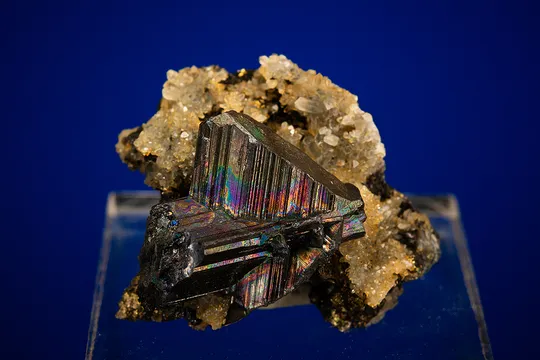
The Leonard Mine is one of the essential American sulfide-specimen localities: a Butte, Montana underground copper mine that produced not merely ore, but a distinct visual language of metallic minerals. Its best specimens came from the central copper-rich part of the Butte system, where Main Stage quartz-pyrite-sulfide veins and “horsetail” fracture zones cut the Butte Quartz Monzonite of the Boulder batholith. In collector terms, Leonard is most celebrated for vivid covellite, sharp black enargite, bright pyrite on quartz, chalcocite and chalcocite-after-covellite pseudomorphs, and rarer copper sulfides such as digenite and djurleite. Unlike oxidized copper camps that trade in azurite and malachite color, Leonard’s greatness is dark, metallic, and underground: indigo-blue covellite blades, steel-black enargite prisms, brassy pyrite, white quartz, and blue-black copper-sulfide replacement textures.
Historically, Leonard mattered on two levels at once. Economically it was one of Butte’s great copper producers, exploiting rich chalcocite-enargite ores through a long underground mining life. Mineralogically it became a working miner’s specimen source, famous by the mid-20th century for crystallized enargite, pyrite, quartz, covellite, and rare species that rode out of the mine in lunch boxes before Anaconda formally entered the mineral-specimen business in the 1970s. Its surviving specimens now carry the weight of a closed and flooded industrial world: pieces with old Butte, Leonard, level, stope, or Duane Johnson provenance are not just attractive; they are primary evidence from one of the world’s most important copper districts.
Regional View
Country View
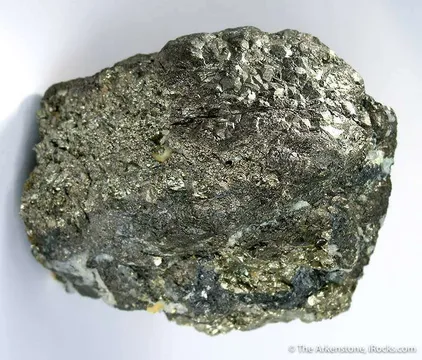
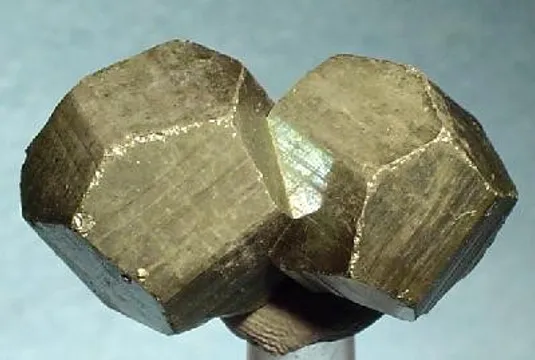
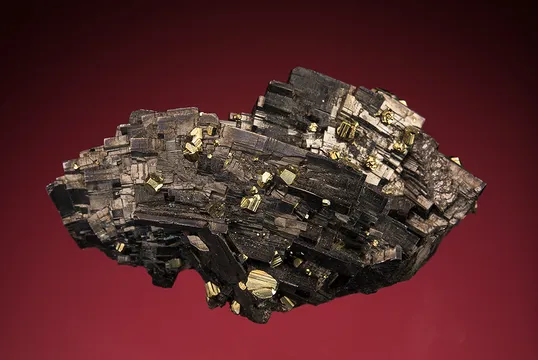
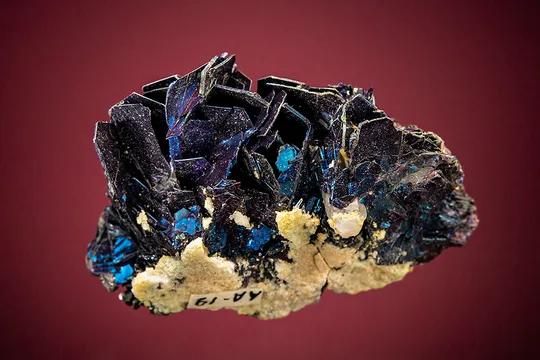
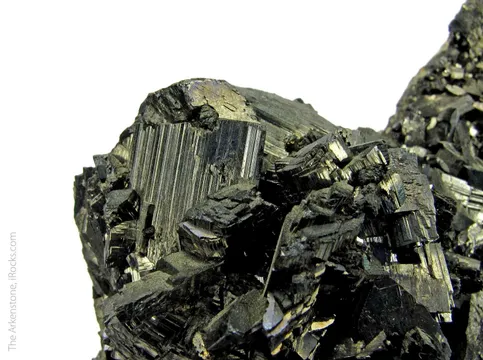
The look of a top Leonard specimen is unmistakable. Covellite may show thin tabular to bladed crystals with peacock-blue, violet, magenta, and purple iridescence, sometimes standing from a pyrite or quartz matrix rather than lying as a flat ore seam. Enargite is prized for upright, sharply terminated, vertically striated prisms with a reflective steel-gray to black luster. Pyrite can be astonishingly good: modified octahedra, pyritohedra, and cuboctahedra, often striated and bright, perched on needle-like or drusy quartz. Chalcocite appears both as rich ore and as highly collectible pseudomorphs after covellite, preserving bladed or rose-like forms in dark blue-black copper sulfide.

Photo: Wikimedia Commons

Photo: Wikimedia Commons

Photo: Wikimedia Commons
Search for specimens: View all specimens from Leonard Mine, USA
The Leonard Mine is in the Butte Mining District, historically also called the Summit Valley district, at Butte in Silver Bow County, southwestern Montana. The deposit belongs to the giant Butte porphyry copper-molybdenum and Main Stage lode-vein system. At depth and in the broader district, early porphyry-style mineralization introduced quartz-molybdenite and quartz-chalcopyrite veinlets with potassic and sericitic alteration. The specimen-producing fame of Leonard, however, rests chiefly on the later Main Stage quartz-pyrite-sulfide veins and fracture-controlled copper ores in the central copper-rich zone.
The host rocks in the Leonard workings include Butte Quartz Monzonite, quartz porphyry, and aplite. The structural picture is classic Butte: large steep veins, east-west and northwest-trending Main Stage veins, and N70°E-trending steeply dipping horsetail ore bodies. These horsetail zones were not delicate cracks; in places they reached widths on the order of hundreds of feet and furnished large tonnages of high-grade copper ore. In the Leonard-East Colusa-Berkeley Pit part of the Butte system, quartz and pyrite were abundant, while the principal copper ore minerals at Leonard were chalcocite and enargite, with lesser covellite, bornite, colusite, digenite, and djurleite.
The mine was established on the Piccolo claim, which J. N. Collins located on January 24, 1879. The Piccolo claim was first worked through a shaft on the Piccolo Discovery vein and was producing ore by 1888; it was patented on August 16, 1889. In 1890 the Boston and Montana Consolidated Copper and Silver Mining Company developed a new shaft called the Leonard, equipped with a 95-foot-tall headframe. The mine soon became one of the company’s most productive operations, outproducing the Colusa and taking its place among Butte’s great underground copper mines.
The Leonard was closely tied to the corporate and legal history of Butte. Boston and Montana was one of the great copper powers of the district, later absorbed into the larger Amalgamated-Anaconda sphere. The mine lay near F. Augustus Heinze’s Minnie Healey claim and was drawn into the notorious Butte apex litigation and underground warfare. In 1901 the Leonard carried the district’s largest pump, a 1,000-gallon-per-minute installation on the 1,200-foot level. In 1906 a new shaft, later called Leonard No. 2, was developed farther east; its steel headframe weighed 346,425 pounds, and its 3,000-horsepower hoist used 1.5-inch steel cable to raise 5-ton skips. That shaft improved ventilation and reportedly lowered underground temperatures by about 20 degrees.
The mine’s production life was long and episodic. It was developed in 1890 and produced rich copper ore for decades; later summaries describe it as an economic powerhouse through 83 years of mining operations. It closed in the late 1950s, saw renewed activity in the 1960s, and was reopened again in January 1972. During the early 1970s reopening, the Leonard was producing from deep levels and was integrated with the broader Butte underground drainage and access network, including connections to the Kelley shaft system. In September 1973 the Leonard headframe was blasted down to make room for the expanding Berkeley Pit; underground access continued from the Kelley shaft until the Leonard shut down in February 1975. With the later abandonment and flooding of the Berkeley Pit and related underground workings, the Leonard workings became flooded and inaccessible.
Collecting access today is therefore historical, not field-oriented. The Leonard Mine is not a collecting site. Serious Leonard material comes from old collections, museum dispersals, dealer stock, estate holdings, and specimens released from long-held Butte suites. Exact provenance is unusually important. A label that merely says “Butte” may still be a fine district specimen, but it should not be promoted as Leonard without supporting evidence. Old labels naming the Leonard Mine, a mine level such as the 3200, 3400, 3800, or 3859 level, a stope, or a chain through Butte collectors and dealers carry real value.
Notable collecting horizons and labels include material from the 3400 level and the 3859 level, both represented by documented covellite and sulfide specimens. The mine’s most desirable finds include iridescent covellite blades on pyrite or quartz, enargite crystal groups with striated black prisms, pyrite on clear to white quartz, chalcocite-after-covellite pseudomorphs, digenite and djurleite in copper-sulfide vugs, and rare combinations involving colusite, luzonite, wurtzite, baryte, hinsdalite, sphalerite, galena, and other Butte species. The best pieces are not merely rich in copper sulfide; they have open vug surfaces, sharp crystal form, contrast, and survival from a mine environment that was built to produce metal, not collector specimens.
Covellite is the Leonard Mine’s signature collector mineral: thin tabular to bladed crystals and foliated aggregates with indigo, violet, magenta, and peacock-blue iridescence, commonly on quartz-pyrite matrix and locally associated with enargite, sphalerite, chalcocite, digenite, baryte, and hinsdalite. Documented Leonard specimens range from miniature groups with blades around a few millimeters to 1–2 cm, through rich small-cabinet and cabinet pieces; historical Butte summaries note much larger plates, but clean, undamaged, well-displayed Leonard crystals are far scarcer than massive blue-black ore. The 3400 and 3859 level labels are especially attractive to specialists, and good pieces here are separated from ordinary ones by complete plate edges, upright presentation, saturated natural iridescence, strong contrast with brassy pyrite or white quartz, and old provenance.
Leonard Mine enargite is a classic of the Butte copper-arsenic assemblage, appearing as metallic steel-gray to black, vertically striated prismatic crystals, dense crystal crusts, and rich massive ore, most often with quartz and pyrite and locally with covellite, chalcocite, djurleite, digenite, sphalerite, wurtzite, baryte, and other sulfides. The best Leonard examples show distinct upright prisms with reflective faces and clean terminations; documented specimens include crystals to several centimeters, including a photographed Leonard piece with a dominant striated 3.5 cm crystal and other material with sharp crystals around 2 cm. Ordinary enargite-rich ore may be mineralogically important, but collector-grade Leonard enargite needs flash, separation, undamaged striations, visible terminations, and a matrix that does not swallow the black crystals into a dull sulfide mass.
Pyrite from the Leonard Mine is far more than a background sulfide: it forms bright brass-yellow to slightly iridescent cuboctahedra, modified octahedra, pyritohedra, and striated crystals on quartz or in combination with covellite, enargite, chalcocite, chalcopyrite, and sphalerite. Fine miniatures can show pyrite crystals around 7 mm perched on thin, water-clear quartz needles, while larger Leonard pieces may carry complex pyrite crystals to several centimeters on massive sulfide matrix; one documented museum-sized example was described with a central modified octahedral crystal about 3 cm on edge and a mass just under 1,300 grams. The finest Leonard pyrites combine high metallic luster, crisp modified forms, undamaged display faces, bright contrast against quartz, and association with the copper sulfides that make the mine famous.
Quartz at Leonard is the principal gangue and one of the mine’s most important aesthetic partners, appearing as white to clear crystals, drusy plates, comb quartz, and needle-like sprays that host or frame enargite, pyrite, covellite, chalcocite, baryte, hinsdalite, and other sulfides. The most desirable quartz-bearing Leonard specimens are not collected for quartz alone but for what quartz does: it gives black enargite and blue covellite contrast, lifts pyrite into open display, and preserves the vein textures of the Butte Main Stage system. Documented specimens include quartz matrix covered by lustrous black enargite crystals to 5 mm with a well-formed quartz crystal about 20 mm long; good Leonard quartz pieces are judged by clarity or clean white contrast, intact points, open structure, and the quality of the associated sulfides.
Chalcocite was one of Leonard’s principal copper ore minerals and is collectible both as dark metallic copper-sulfide ore and, more importantly, as chalcocite pseudomorphs after covellite that preserve bladed, pseudohexagonal, or semi-rose-shaped forms. Leonard chalcocite commonly appears with pyrite and quartz and may be associated with covellite, enargite, digenite, djurleite, bornite, and minor alteration minerals; strong pieces can range from small miniatures to important cabinets, with documented pseudomorph blades up to about 2.8 cm on a major cabinet specimen. Better pieces are sharply formed, visibly pseudomorphic, dark blue-black rather than merely dull black, and set against bright pyrite or quartz; ordinary massive chalcocite-rich ore is far less desirable unless it carries strong locality provenance or unusual associations.
Djurleite from Leonard is a specialist’s copper sulfide and one of the locality’s scientifically important rarities, documented as platy to pseudohexagonal steel-gray crystals and microcrystalline growths in association with enargite, pyrite, chalcocite, digenite, and quartz. Because djurleite can resemble chalcocite closely, the best Leonard attributions depend on analytical support or strong published provenance; it is a species for which X-ray diffraction has historically been central to recognition. Documented Leonard examples include platy crystals to about 1.2 cm in vugs with minor enargite and pyrite, as well as 1 cm crystal groups on typical sulfide matrix; the best pieces show clear individual crystal form, open vug placement, and reliable identification rather than merely being dark copper sulfide from Butte.
Leonard’s broader mineral list is unusually rich for a sulfide collector. Documented species include bornite, digenite, chalcopyrite, sphalerite, galena, wurtzite, tennantite-group minerals, tetrahedrite, betekhtinite, luzonite, colusite, native gold, native silver, calcite, baryte, gypsum, fluorite, scheelite, hinsdalite, hubnerite, apatite, dickite, kaolinite, pyrophyllite, diaspore, atacamite, brochantite, chalcanthite, cornwallite, hidalgoite, and others. Colusite is especially tied to the Colusa-Leonard story: it was named for the Colusa claim and is generally cited from the East Colusa type-locality context, yet historic accounts note that the mineral was first recognized on the 1200-foot level of the Leonard. Djurleite is explicitly documented as having Leonard among its co-type localities. Rarities such as colusite, luzonite, wurtzite, betekhtinite, and hinsdalite are part of what makes advanced Leonard suites so rewarding, but they require caution: small grains and look-alike copper sulfides from Butte are easy to overname without analysis.
Leonard Mine specimens demand provenance discipline. The most common authenticity problem is not an elaborate fake; it is overconfident labeling. Many old specimens are labeled only “Butte,” “Butte, Montana,” or “Butte District,” and while these can be excellent, they should not be upgraded to Leonard without an old label, a documented collection chain, a mine-level note, or a published specimen record. Leonard, East Colusa, West Colusa, Tramway, Berkeley, Kelley, Steward, and other nearby Butte sources can produce overlapping sulfide assemblages, so a specimen style alone is not always proof of mine of origin.
The other recurring risk is mineralogical misidentification within the copper sulfides. Chalcocite, djurleite, digenite, covellite, and bornite can occur together, replace one another, or mimic one another in dark, metallic, tarnished masses. Djurleite in particular should be treated cautiously unless it comes with analysis or a reliable specialist provenance. Digenite-djurleite-chalcocite distinctions may require XRD or other analytical work, and older labels sometimes reflect the naming habits and analytical limits of their time.
Covellite condition is critical. Thin covellite plates are soft, flexible-looking but brittle in specimen terms, and easily rubbed or chipped. Edge abrasion, scuffed luster, contact marks, and crushed blades are common on old Butte pieces. Strong color alone does not compensate for battered plates unless the specimen is valued as historical ore. The best Leonard covellite should be handled minimally, stored so the blades cannot touch harder specimens, and never scrubbed or chemically cleaned. Skin oils and abrasion can dull the iridescent surfaces.
Enargite and pyrite have their own condition issues. Enargite’s black metallic faces show bruising and dullness readily; a slightly contacted termination can be visually distracting because the species depends so much on reflected light. Pyrite from Butte is generally stable in well-preserved specimens, but any pyrite-rich material should be kept dry and away from humidity swings. Quartz points on Leonard combinations can be chipped or bruised, and many old specimens show mining or trimming contacts that may be acceptable if the main display face is intact.
Collectors should also be wary of the term “peacock ore.” In the general trade it is often used loosely for bornite or chemically treated chalcopyrite, and neither should be treated as a substitute for Leonard covellite. True Leonard covellite normally shows platy or bladed habit, blue to violet iridescence, and associations consistent with Butte sulfide mineralization. Overbright rainbow chalcopyrite sold as “peacock ore” has no bearing on Leonard covellite value.
Rarity varies sharply by quality. Massive Butte copper sulfide is still obtainable; modest covellite-rich or chalcocite-rich pieces surface periodically. Fine crystallized Leonard covellite, sharp enargite, elegant pyrite-on-quartz, large chalcocite-after-covellite pseudomorphs, and rare species combinations are much less common. The strongest market premium goes to specimens with a named Leonard label, mine level or stope data, old Butte or classic American collection history, publication history, excellent condition, and matrix contrast. Published or auction-documented Leonard specimens show that modest examples remain accessible, but elite crystallized covellite and large pseudomorphs can rise into serious trophy-level territory.
Leonard’s specimen story has the particular flavor of Butte: industrial, improvised, and personal. By the 1950s, the mine was already known among collectors for crystallized enargite, pyrite, quartz, and occasional rarities. Specimens were not coming from organized fee digs or carefully opened collector pockets; they were emerging from a working copper mine. Miners brought attractive pieces out in lunch boxes and sold them for extra income. The phrase “a mineral collector’s paradise,” attributed to Anaconda’s own view of the mine, feels almost startling because Leonard was not a picturesque alpine cleft or a quarry worked for display minerals. It was a deep, hot, dangerous copper mine, and yet its sulfide pockets produced some of the most admired American mineral specimens of the 20th century.
The corporate history began with the Piccolo claim, located by J. N. Collins on January 24, 1879. By 1890 a new shaft named Leonard stood under a 95-foot headframe, and the mine soon outperformed the Colusa. The name honored Leonard Lewisohn, one of the figures connected with the Boston and Montana enterprise. In 1901, the mine carried a 1,000-gallon-per-minute pump on the 1,200-foot level, the largest in the district. During the apex-law battles with Heinze’s Minnie Healey interests, mine workings and machinery became tactical instruments. When Leonard pump discharge pipes were turned toward the Minnie Healey claim, the resulting flooding helped force a halt to underground sabotage. It was geology, law, capital, and plumbing turned into subterranean warfare.
The 1906 Leonard No. 2 shaft tells the same story at engineering scale. Its steel headframe weighed 346,425 pounds. Its hoist used a 3,000-horsepower engine, 1.5-inch steel cable, and 5-ton skips. In practical terms the new shaft moved ore and men more efficiently, but one small detail catches the underground reality: the improved ventilation lowered mine temperatures by about 20 degrees. For collectors holding a bright covellite or enargite from Leonard, that number is a reminder that the specimen came out of a hot, mechanized underworld measured in horsepower, cable diameter, skip tonnage, and air flow.
Fire was an equally powerful character in Leonard’s history. In 1906 a fire that began with spontaneous combustion on the 1,100-foot level of the Minnie Healey spread into the Tramway, West Colusa, and Leonard workings, affecting levels from roughly 1,300 to 2,000 feet and reaching upward in the Minnie Healey. Fire zones had to be sealed behind bulkheads, leaving good ore inaccessible. The later response was enormous: beginning in 1917, tailings from the Black Rock mill were pumped into the fire zone. About 1,700 tons of tailings per day went underground. After five years, more than 4,000,000 tons had been placed and more than 200,000 feet of diamond drilling had been completed. The effort was not a tidy engineering footnote; it was a second mining operation inside the mine, using waste rock and water to control heat, oxygen, collapse, and danger.
Leonard’s darkest single day came on April 24, 1911, when a hoist dropped 14 men about 1,500 feet to the bottom of the shaft. Five were killed and the other nine were left severely injured. It is an episode that belongs beside, not beneath, the mineral specimens. Butte’s best pieces are beautiful, but they are also artifacts from a place where copper production carried an immediate human cost.
The last collecting chapter came as the old underground Butte world was being erased by the open pit. In August 1974, Anaconda hired geologist Duane Johnson to collect mineral specimens from Butte’s underground mines and place them on the market. That moment helps explain why Johnson provenance appears on important Butte specimens. But Leonard itself was already vanishing. Its headframe was blasted down on September 18, 1973, to make room for the expanding Berkeley Pit. Access continued through the Kelley shaft for a short time, and the mine shut down in February 1975. Later flooding made the old workings inaccessible. Every good Leonard specimen in a collector’s drawer now belongs to a finite population: once the old lunch boxes, collection cabinets, and dealer stocks are dispersed, there is no practical way to go back and collect more.