






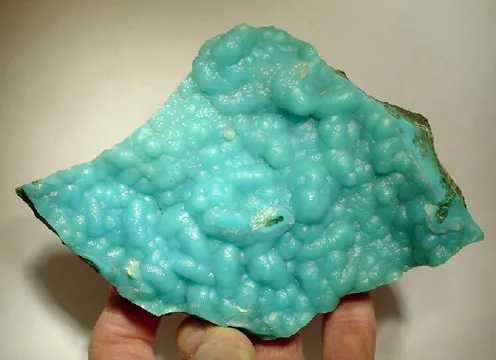
Inspiration Mine, USA - historic skarn copper locality famed for blue kinoite on apophyllite, with chrysocolla and malachite, prized by collectors.
Key facts
The Inspiration Mine area represented here is the classic Christmas Mine–Inspiration Mine collecting locality near Christmas in Gila County, Arizona, on the east flank of the Dripping Spring Mountains. It is not just another Arizona copper mine: it is a skarn-rich, porphyry-related copper system whose oxidized and retrograde calc-silicate zones produced some of the most recognizable blue mineral specimens in American collecting. The locality is especially treasured for bright electric-blue kinoite on colorless to white apophyllite, but the same mine area also yielded chrysocolla, malachite, azurite, quartz, chalcedony, dioptase, native copper, native silver, and an unusually important suite of rare calcium-copper-zinc silicates.
Geologically, the mine sits in the Banner Mining District, where copper mineralization developed in and around Paleocene Christmas Granodiorite Porphyry, Cretaceous Williamson Canyon Volcanics, and Paleozoic limestones including the Martin, Escabrosa, and Naco units. The collector specimens are the visible reward of several superposed mineralizing events: early copper sulfides and skarn minerals, later oxidation, and a remarkable low-temperature to retrograde calc-silicate assemblage that made the mine famous among micromounters and advanced systematic collectors. In hand specimens, the locality’s best material has a distinctive palette: vivid blue kinoite or chrysocolla, green malachite and gilalite, glassy apophyllite, orange-brown ruizite, colorless junitoite, and sparkling quartz or chalcedony on pale skarn matrix.
The historical name “Inspiration Mine” can cause confusion, because Arizona also has the large Miami-Inspiration copper operation north of Miami. The collectible kinoite-apophyllite suite, however, is tied to the Christmas Mine, which Mindat records with historical names including Red Bird shafts, Inspiration Mine, and Hackberry shafts. The mine’s larger story runs from early copper discovery in the 1880s through underground mining, open-pit conversion, specimen recovery in the late collecting era, and final shutdown during the copper slump of the early 1980s.
Regional View
Country View
For collectors, the finest specimens are not large showy copper-carbonate plates in the Bisbee tradition, but sharply charactered combinations: blue kinoite microcrystals sprinkled or carpeted across blocky apophyllite; chrysocolla-rich masses with dioptase, malachite, or calcite; chalcedony and quartz-lined cavities in oxidized copper ore; and rare-species pieces that reward magnification. Christmas/Inspiration specimens often look modest from across a room until the surface comes alive under light—tiny glassy tetragonal apophyllite crystals, sugary blue kinoite, green gilalite blebs, and minute but intensely colored copper-silicate coatings in skarn seams and vugs.
Search for specimens: View all specimens from Inspiration Mine area, USA
The locality is the Christmas Mine, historically also known in mineralogical usage as the Inspiration Mine, Red Bird shafts, and Hackberry shafts, near the ghost town of Christmas in the Banner Mining District of Gila County, Arizona. The mine is on the east slope of the Dripping Spring Mountains, roughly north of Winkelman and south of Globe. It was a copper-gold-silver-molybdenum-bearing operation with important skarn and porphyry-copper affinities, and the mineral specimens most valued by collectors came from the oxidized and retrograde zones where copper, calcium, zinc, silica, and carbonate-rich fluids interacted with altered limestone and skarn.
The deposit’s ore and alteration are hosted principally by the Paleocene Christmas Granodiorite Porphyry, the Cretaceous Williamson Canyon Volcanics, and Paleozoic carbonate rocks, especially the Martin, Escabrosa, and Naco limestones. Faults, including the Christmas, Joker, and No. 4 shaft faults, played an important structural role in the movement of ore-bearing fluids. The mine’s irregular ore geometry and faulted ground made underground extraction difficult; later accounts stress that the Christmas ore body was challenging because of its broken, uneven contours and the need for careful ground support and backfilling.
From a specimen perspective, the most important rock environment is the tactite or skarn assemblage, where garnet, pyroxene, wollastonite, calc-silicate minerals, sulfides, and later secondary silicates created chemically unusual pockets and fractures. Chrysocolla occurs as a supergene copper silicate associated with andradite-bearing skarn, while kinoite, gilalite, apachite, ruizite, junitoite, stringhamite, xonotlite, apophyllite, smectite, calcite, and related species belong to the mine’s celebrated retrograde to mesogene calc-silicate mineralization. These are not random dump colors; they are products of a very specific skarn-copper system.
Mining history began with copper discoveries in the broader area in the late nineteenth century, but development was delayed because early claims fell within the San Carlos Apache Reservation. After the reservation boundary was changed by executive order in December 1902, George B. Chittenden and N. H. Mellor staked claims on Christmas morning, giving the future mine and town their memorable name. Early production began in 1905, but the remote location, poor roads, limited fuel for smelting, and periodic financing trouble caused intermittent operations.
The early operators and stakeholders included Phelps, Dodge & Co., Saddle Mountain Mining Company, Gila Copper Sulphide Company, American Smelting and Refining Company, Christmas Copper Company, and later Inspiration Consolidated Copper Company. By the mid-twentieth century, U.S. Geological Survey and U.S. Bureau of Mines drilling helped re-evaluate the property, and Inspiration Consolidated Copper Company announced plans in the 1950s for deeper development. Underground mining eventually gave way to open-pit methods beginning in the 1960s, partly because unstable underground workings made continued underground operation unattractive.
Modern production summaries differ depending on the date range counted. Available historical figures show about 55 million pounds of copper produced from 1905 to 1943, while later Arizona Geological Survey reporting gives total extraction from 1905 to 1981 as about 25.8 million tons of ore yielding approximately 362.9 million pounds of copper, 55,000 ounces of gold, and 2.15 million ounces of silver. Copper grades reported for the mine ranged broadly, from low-grade open-pit material to richer underground ore.
Specimen recovery is strongly associated with the later life of the mine. A particularly important episode came in 1980, when the John Mediz rock shop in Globe secured a contract from Inspiration Consolidated Copper Company to collect mineral specimens on the property. That access produced or helped circulate important material including apophyllite, dioptase, kinoite, and silver. Much of the kinoite-apophyllite material now seen in collections comes from old stock, mine-era collecting, or earlier specimen recovery rather than from any current collecting.
The property is now controlled by Freeport-McMoRan and is closed to casual public collecting. Collectors should treat the area as private, industrial mine land requiring explicit permission. Old labels may read Christmas Mine, Inspiration Mine, Red Bird shafts, Hackberry shafts, Christmas open pit, Banner District, Dripping Spring Mountains, or simply Gila County, Arizona; the locality wording should be preserved carefully, because it can distinguish the rare skarn assemblage from the separate Miami-Inspiration copper operation to the north.
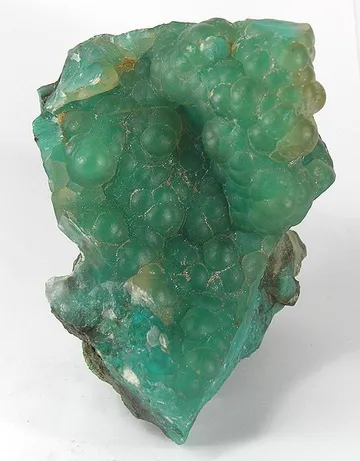
Chrysocolla from the Inspiration Mine area is a supergene copper silicate of the Christmas skarn and oxidized copper zones, commonly appearing as bright blue to blue-green coatings, botryoidal crusts, fracture fillings, and massive silica-rich material rather than as discrete crystals. It is documented as moderately common with andradite-bearing skarn in the Naco Formation, and collector pieces are most attractive when the blue chrysocolla is vivid, clean, and texturally alive—especially where it is accompanied by malachite, dioptase, calcite, apophyllite, tenorite, cuprite, or pale siliceous matrix. Ordinary pieces can be dull, massive, or chalky; good ones have saturated color, botryoidal relief, contrast against pale skarn or carbonate matrix, and no excessive abrasion on the exposed copper-silicate skin.
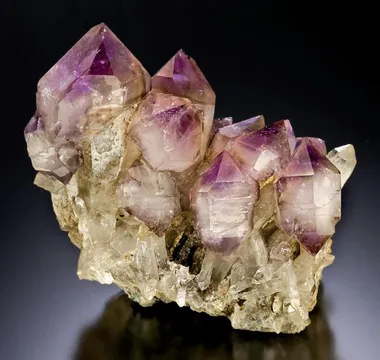
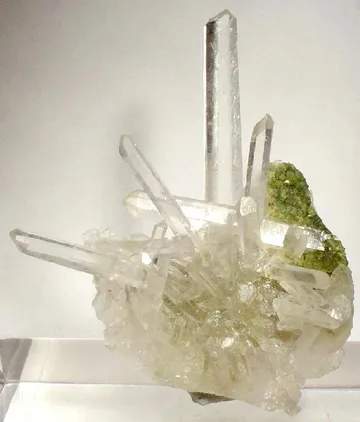
Quartz at the Inspiration Mine area is less a stand-alone crystal-mining attraction than a key textural and paragenetic partner in the copper assemblage. It is recorded from the Christmas Mine as phenocrysts in quartz-mica diorite porphyry and also appears in specimen material as drusy linings, chalcedonic to crystalline silica, and pale sparkling surfaces associated with diopside, duftite, dioptase, kinoite, fluorapophyllite-(K), ruizite, and other skarn-related minerals. The best collectible quartz specimens from here are those that strengthen the composition—clear or sparkling quartz over blue or green copper minerals, small vugs that give depth to chrysocolla or malachite, or clean siliceous matrix that frames rarer species—while plain massive quartz without the copper-silicate association is of limited locality interest.
Malachite from the Inspiration Mine area belongs to the oxidized copper suite and occurs as green coatings, fibrous to velvety surfaces, cavity linings, and massive or botryoidal material intergrown with chrysocolla, azurite, quartz, cuprite, calcite, and dioptase. Christmas Mine malachite is rarely judged against the finest velour pseudomorphs of Bisbee or Morenci; its appeal is in association and contrast—bright green beside electric blue kinoite or chrysocolla, or in small sparkling cavities within copper-rich skarn. The superior pieces show fresh green color, visible fibrous or botryoidal texture, and undamaged cavity surfaces; ordinary examples are massive, bruised, darkened, or visually overwhelmed by matrix.
Kinoite is the signature collector mineral of the Inspiration Mine area’s Christmas assemblage, even though the species was first described from elsewhere in Arizona. At Christmas it occurs in the tactite and retrograde calc-silicate environment as electric to deep blue microcrystals, crusts, bladed aggregates, and sparkling carpets, most characteristically with fluorapophyllite-(K) or hydroxyapophyllite-(K), and also with gilalite, ruizite, junitoite, xonotlite, stringhamite, smectite, native silver, cuprite, malachite, and dioptase. Fine pieces have saturated blue color visible without magnification, rich coverage on a stable pale matrix, sharp sparkling surfaces, and attractive white or colorless apophyllite contrast; weak pieces show only scattered pale-blue dusting on clunky skarn or require magnification to make an impact.
Apophyllite from the Inspiration Mine area is the classic matrix and visual foil for Christmas kinoite, occurring as colorless to white, glassy, small tetragonal crystals and sparkling crusts on skarn and calc-silicate matrix. Much historical material has been labeled broadly as “apophyllite,” while more recent mineralogical data distinguish fluorapophyllite-(K) and hydroxyapophyllite-(K), with some analyses suggesting that the Christmas material may fall toward the hydroxyapophyllite-(K) side. Collector value here depends less on large individual apophyllite crystals and more on freshness, brilliance, and association: tiny undamaged apophyllite crystals carrying blue kinoite, green gilalite, orange ruizite, or native silver make the locality instantly recognizable, while dull or bruised apophyllite crusts with sparse blue coverage are far less desirable.
Azurite is present in the Inspiration Mine area as part of the oxidized copper assemblage, but it is a supporting mineral rather than the locality’s main claim to fame. Christmas azurite appears as dark to bright blue crystals, crusts, and copper-carbonate patches associated with malachite, chrysocolla, quartz, and other oxidized copper minerals in cavities and fractures. The best pieces are those with sharp blue contrast against green malachite or pale matrix, or those that preserve undamaged small crystals in a clean vug; ordinary azurite from here is typically massive, sparse, partly altered, or subordinate to chrysocolla and malachite.
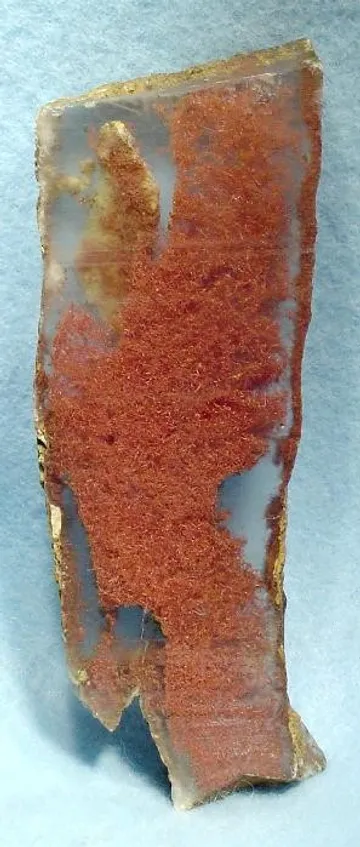
Chalcedony from the Inspiration Mine area is the cryptocrystalline quartz component of the oxidized copper system, documented from the Christmas Mine and historically tied to the same silica-rich fluids that helped preserve blue copper minerals as attractive specimen material. It occurs as pale to translucent siliceous linings, crusts, and massive chalcedonic matrix with copper staining or intergrown chrysocolla, malachite, and related oxidized minerals. Good chalcedony pieces from here are judged by their role in the composition—clean botryoidal or banded silica, attractive translucency, and strong blue-green copper contrast—rather than by size alone; plain chalcedony lacking copper color or skarn context is generally of minor collector interest.
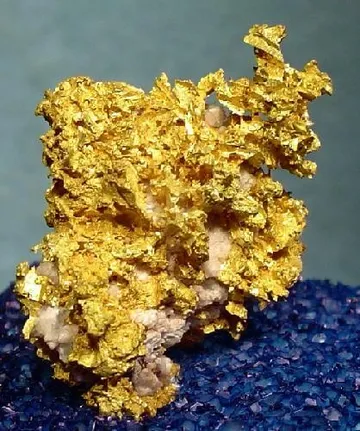
Beyond these collector staples, the Inspiration Mine area is mineralogically important for a rare-species suite that few American localities can match. The Christmas Mine is the type locality for apachite, gilalite, junitoite, and ruizite, and it is also renowned for dioptase, stringhamite, xonotlite, wollastonite, clinohedrite, tobermorite, whelanite, rosasite, mixite, native copper, native silver, cuprite, chalcotrichite, chalcopyrite, bornite, chalcocite, sphalerite, and calcite. Gilalite and apachite occur as copper-silicate products in tactite fractures and interstices; junitoite is a calcium zinc silicate associated with sphalerite, smectite, apophyllite, calcite, kinoite, and xonotlite; and ruizite, the orange-brown calcium manganese silicate, gives Christmas specimens a distinctive warm counterpoint to the blue kinoite-apophyllite assemblage.
The first authenticity issue is locality precision. “Inspiration Mine” on an old label may refer either to the Christmas Mine’s historical name in the Banner District or to the separate Miami-Inspiration operation near Miami. For kinoite, gilalite, junitoite, ruizite, and the apophyllite-rich skarn suite, the Christmas Mine/Inspiration Mine wording is appropriate; for classic drusy chrysocolla from the Miami-Inspiration or Live Oak pits, the label may point north to the Globe-Miami district instead. Serious collectors should preserve every old label, compare associated species, and avoid silently “correcting” historical locality language.
The second issue is identification. Many Christmas specimens are micro-mineralogical: blue may be kinoite, chrysocolla, gilalite, or apachite depending on habit and association; green may be malachite, gilalite, rosasite, or mixite; pale platy or glassy material may be apophyllite-group species, junitoite, calcite, or xonotlite. Visual identification is often enough for ordinary chrysocolla-malachite material, but important rare-species specimens deserve analytical support or provenance from a reliable old collection, dealer, or museum-quality source.
Documented intentional fakes are not a major theme for this locality, but mislabeling and overconfident species assignment are real market risks. A specimen sold simply as “kinoite on apophyllite, Inspiration Mine” should be checked for the Christmas association and for whether the blue mineral is actually kinoite rather than chrysocolla. Conversely, vivid chrysocolla-rich masses from Arizona are sometimes loosely assigned to famous copper localities; a good Inspiration/Christmas attribution is strongest when the piece carries old labels, typical skarn matrix, or associated Christmas species such as apophyllite-group minerals, gilalite, ruizite, junitoite, dioptase, or stringhamite.
Condition can be subtle. Kinoite and gilalite commonly form tiny crystals or crusts that abrade easily; apophyllite has good to perfect cleavage and can lose reflective faces or tips; malachite fibers can mat or break; chrysocolla can be porous, chalky, or undercut from cleaning. Avoid aggressive washing, acids, ultrasonics, and mechanical scraping. Dust gently, store pieces in individual boxes, and handle old micro-rich plates over a padded surface.
Rarity varies widely across the assemblage. Chrysocolla, malachite, quartz, and chalcedony are obtainable, though fine old Christmas-attributed specimens with strong aesthetics are scarcer than generic Arizona copper material. Kinoite on apophyllite remains the flagship; small examples appear with some regularity from old collections, but richly saturated, cabinet-scale pieces with broad blue coverage are genuinely scarce. Gilalite, junitoite, ruizite, apachite, whelanite, and strong multi-rarity combinations are systematic-collector pieces, and the best should be considered finite old-stock material rather than renewable production.
The Christmas name is one of the best stories in Arizona mining. Early copper claims were known in the area by about 1880, but their position inside the San Carlos Apache Reservation blocked development. George B. Chittenden spent years pushing for a boundary change. When President Theodore Roosevelt signed the executive order on December 22, 1902, Chittenden arranged relay riders between the telegraph office at Casa Grande and the camp. The news reached the camp late on Christmas Eve. Chittenden and N. H. Mellor headed out at once, staked the ground in the early morning, and later summed up the moment with the memorable line: “We filled our stockings and named the place Christmas in honor of the day.”
The town that grew up around the mine briefly became a seasonal postal curiosity. The Christmas post office opened in 1905 and, during its on-and-off life through 1935, received cards and packages from people across the United States who wanted a Christmas, Arizona postmark. The mine town itself had the fixtures of a working copper camp—general store, school, church, dairy, barbershop, butcher shop, pool hall, and employee housing—but the holiday name gave it a second life in envelopes. Even after the post office closed for good on March 30, 1935, holiday mail reportedly kept arriving for years and had to be forwarded to nearby Winkelman.
Mining at Christmas was never a simple matter of digging a neat orebody. The ore was irregular, faulted, and lime-rich, and underground water was a constant nuisance. A 7,300-foot Bleichert aerial tramway was installed in 1916 to carry ore from a 250-ton bin at the No. 3 shaft down to a 1,000-ton bin near the Arizona Eastern Railroad connection, dropping about 950 feet in elevation. By the early 1960s the mine was still an underground operation employing 142 men on three shifts and producing hundreds of tons of ore per day; the McDonald shaft reached 1,780 feet, and three Hazleton pumps were needed to move about 2,500 gallons of water per minute.
For mineral collectors, the most tantalizing chapter came late. In 1980, with the mine near the end of its producing life, the John Mediz rock shop of Globe obtained permission from Inspiration Consolidated Copper Company to collect specimens on the property. That brief window helped bring out the sort of material that now defines the locality in collections: blue kinoite, colorless apophyllite, dioptase, native silver, and rare skarn-silicate associations. Within only a few years, copper prices collapsed, active mining ceased, and the locality passed into the realm of old labels, dealer trays, and museum drawers.
-207486.jpg)