Butte Mining District, USA - famed copper-molybdenum vein system yielding museum-grade ore specimens, enargite prisms, covellite plates, and rich collector app…
Key facts
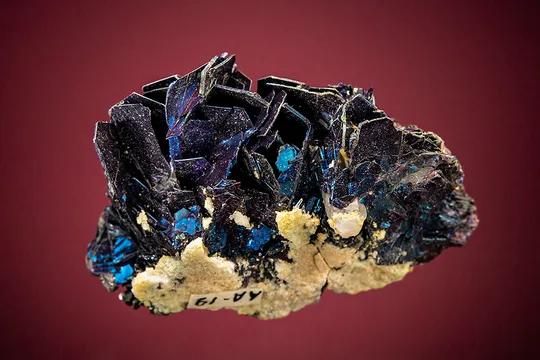
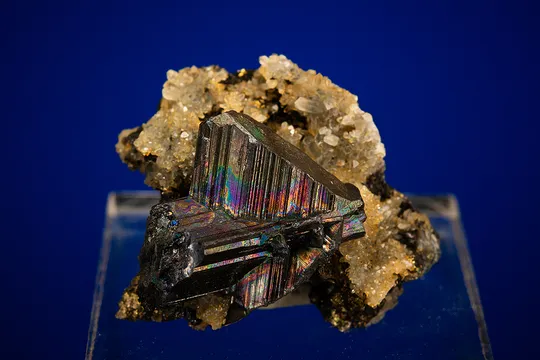
Butte is one of the indispensable names in American mineral collecting: a giant porphyry-related copper-molybdenum and polymetallic vein system built into the Butte Quartz Monzonite of the Boulder batholith, then carved for more than a century into underground stopes, shafts, open pits, and museum-grade specimen lore. To ore geologists it is a textbook district where early stockwork copper-molybdenum mineralization was overprinted by immense Main Stage lode veins with dramatic metal zoning. To collectors it is something more tactile: black metallic enargite prisms with razor striations; iridescent blue-violet covellite plates from Leonard and East Colusa; brassy pyrite on quartz; dark chalcocite, digenite, bornite, tennantite, and colusite intergrowths; and, out toward the manganese- and silver-rich parts of the system, rhodochrosite with quartz, pyrite, galena, sphalerite, and rhodonite.
The district’s fame rests on both scale and character. Butte was not a boutique specimen locality that happened to produce ore; it was “The Richest Hill on Earth,” a mining city whose shafts followed a dense three-dimensional lattice of veins and whose production helped define the copper age. The very best specimens retain that industrial identity. They are usually not airy Alpine-style objects but compact, weighty ore pieces—quartz-monzonite matrix, hard white quartz, pyrite crusts, black arsenic-copper sulfides, and sudden electric color. A fine Butte specimen looks as though it was pried from the working face of a great mine, because many of them were.
Regional View
Country View
Butte’s collector identity is centered on the Central copper zone and its famous mines—Leonard, East Colusa, West Colusa, Tramway, Steward, Anaconda, Mountain Con, Belmont, Lexington, Emma, and others—but the district is not one mineralogical environment repeated endlessly. The central copper-rich veins are the home ground of chalcocite, enargite, covellite, digenite, bornite, pyrite, and quartz. Intermediate veins bring more sphalerite, galena, tennantite-tetrahedrite minerals, manganese carbonates, and rhodonite into the picture. Peripheral veins, especially toward the older silver and manganese workings, yielded different-looking quartz-carbonate-sulfide specimens and some of the district’s prized rhodochrosite.

Photo: Wikimedia Commons

Photo: Wikimedia Commons
Search for specimens: View all specimens from Butte Mining District, USA
The Butte Mining District lies in and around Butte and Walkerville in Silver Bow County, southwestern Montana. It is also known in older literature as the Summit Valley district. The deposit is hosted chiefly by the Butte Quartz Monzonite, historically called Butte Granite, at the southern end of the Boulder batholith. The district is one of the classic examples of a magmatic-hydrothermal system in which early porphyry-style copper-molybdenum stockwork mineralization was cut, reopened, and overprinted by later Main Stage veins carrying copper, silver, zinc, lead, manganese, gold, molybdenum, arsenic, antimony, tin, vanadium, bismuth, tellurium, selenium, and other elements.
The structural pattern is fundamental. Butte is not just a single orebody but a dense array of fissure veins, veinlets, horsetail structures, replacement bodies, breccias, altered wall rock, and late faults. The classic Main Stage system is zoned outward from a copper-rich center. In the Central Zone, the collector sees the most famous Butte copper-sulfide suite: quartz, pyrite, chalcocite, enargite, covellite, digenite, djurleite, bornite, chalcopyrite, tennantite-group minerals, colusite, luzonite, sphalerite, galena, barite, fluorite, rhodochrosite, and related species. The Intermediate Zone carries more sphalerite, galena, bornite, chalcopyrite, tennantite-tetrahedrite minerals, rhodochrosite, rhodonite, and silver minerals. The Peripheral Zone is poorer in copper and richer in silver-zinc-lead-manganese assemblages, with quartz, rhodochrosite, rhodonite, sphalerite, galena, pyrite, and silver sulfosalts.
Butte’s ore bodies were mined first as placers along Silver Bow Creek in 1864, then as silver lodes beginning in the 1870s. The district’s destiny changed when deep work on the Anaconda and related properties revealed major copper mineralization in the early 1880s. Copper demand from electrification, telegraphy, power transmission, and war industries turned the hill into one of the world’s great metal producers. Claims and mines multiplied, rival companies fought for control, and the Anaconda Copper Mining Company eventually became the dominant force. By the twentieth century, shafts, headframes, hoists, concentrators, rail lines, and smelter infrastructure were inseparable from the city itself.
The underground period produced many of the specimens that collectors now prize. The Leonard Mine is the name most closely associated with the best crystallized Butte material, especially enargite, pyrite, quartz, covellite, digenite, djurleite, tennantite, colusite, bornite, and chalcocite. East Colusa and West Colusa are central to colusite, enargite, covellite, and other copper-sulfide specimens. Steward is associated with pyrite, bornite, chalcopyrite, quartz, covellite, and enargite combinations. Tramway and the upper levels of Anaconda were noted producers of chalcocite-enargite ores. Lexington and Emma are important names for rhodochrosite and manganese-silver vein material. Mountain Con is remembered for chalcopyrite veins and rare red octahedral fluorite in older accounts. The district’s mineral list is enormous, but serious collectors tend to organize Butte by mine, vein zone, and sulfide paragenesis rather than by district name alone.
Large-scale underground mining gradually gave way to open-pit methods after the Berkeley Pit opened in 1955. The Berkeley operation consumed earlier mine ground and even whole residential neighborhoods as open-pit mining expanded. The underground pumps were shut down after the end of historic mining, and the flooded workings and Berkeley Pit became part of the modern Superfund landscape. Today the district is still an active mining and exploration area rather than a public collecting locality. Montana Resources operates the Continental open pit adjacent to the Berkeley Pit, and modern exploration has returned attention to the historic silver-zinc-lead veins of the Rainbow Block. Collecting access is therefore highly constrained: old underground workings are closed, open pits and dumps are controlled industrial or reclaimed ground, and many historic sites lie within environmental-management zones, private property, or unsafe mine landscapes. Contemporary collector material is chiefly old-stock, estate, museum deaccession, dealer inventory, and occasional material with documented historic provenance.
Specimen pockets at Butte were not “pockets” in the pegmatite sense so much as open spaces, vugs, brecciated vein faces, late-stage cavities, and ore shoots where quartz, pyrite, copper sulfides, sulfosalts, and manganese minerals had room to crystallize. The great finds were made where mining intersected these favorable structures before the ore went to the mill. By the 1950s the Leonard Mine had become famous for quantities of crystallized enargite, pyrite, and quartz, with rarer pockets or seams yielding covellite, digenite, djurleite, tennantite, colusite, bornite, and related copper-sulfide associations. In 1974 the Anaconda Company even entered the mineral-specimen market directly, employing geologist Duane Johnson to collect specimens from the Butte underground mines for sale. That late corporate recognition is telling: by then, the collector value of Butte’s crystallized ore minerals was impossible to ignore.
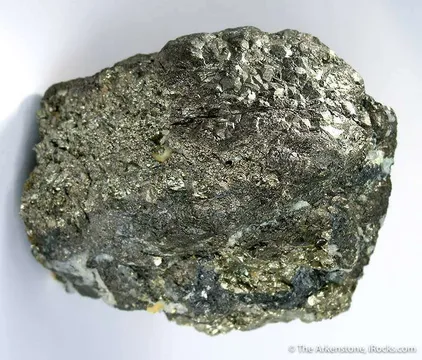
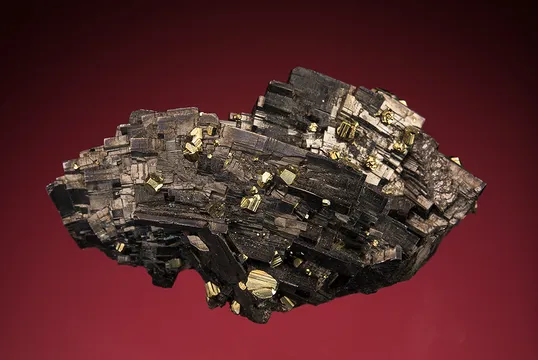
Pyrite is one of the structural minerals of Butte collecting: not merely a common accessory, but the brassy framework against which many of the district’s darker copper sulfides are displayed. Leonard Mine pyrite is especially familiar as sharp cubes, octahedra, modified crystals, and intergrown crusts on white to gray quartz, commonly associated with covellite, enargite, chalcocite, bornite, digenite, chalcopyrite, galena, tennantite-group minerals, and quartz-monzonite matrix. Good Butte pyrites tend to be miniatures and small cabinets with crisp metallic crystals rather than massive granular ore; octahedral crystals to a few centimeters are known from Leonard material, and combination pieces with blue covellite, black enargite, or clear quartz rise well above ordinary mine-run pyrite. Condition matters: many pieces came from hard sulfide ore and show contacted faces, bruised corners, or oxidation along pyrite seams, while the desirable examples retain bright luster, geometric definition, and an old-mine association that clearly says Butte.
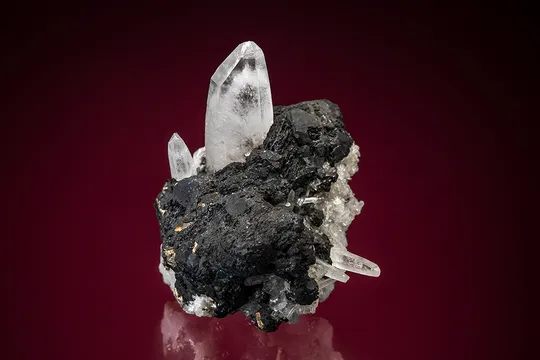
Quartz is the indispensable gangue of the Butte vein system and the stage on which many of the district’s sulfides perform. In the central copper veins it occurs as white vein quartz, gray massive quartz, drusy crusts, needle-like crystals, and small clear prisms with pyrite, enargite, covellite, bornite, chalcocite, digenite, chalcopyrite, tennantite, colusite, and quartz-monzonite wall rock; farther outward, quartz is a major companion to rhodochrosite, rhodonite, sphalerite, galena, pyrite, and silver-bearing minerals. The best collector pieces are not simply “quartz from Butte” but contrast specimens: lustrous quartz supporting black enargite prisms, brassy pyrite, blue covellite plates, charcoal bornite crystals, or pink rhodochrosite. Butte quartz is usually valued for association and locality context rather than for isolated perfection, and strong old labels from Leonard, Steward, Lexington, Emma, East Colusa, West Colusa, or related mines add greatly to its appeal.
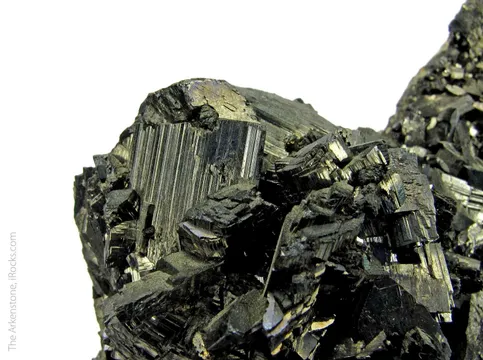
Enargite is one of Butte’s defining specimen minerals and among the reasons the district belongs in every serious American sulfide collection. It occurs in the copper-rich central veins as steel-gray to iron-black, metallic, vertically striated prisms and tabular-prismatic crystals, commonly with pyrite and quartz and locally with chalcocite, covellite, bornite, digenite, sphalerite, colusite, and tennantite-group minerals. Historic descriptions and specimen records show crystals in the centimeter range, with classic Butte enargites from Leonard, West Colusa, East Colusa, Steward, Tramway, Badger State, and related workings prized for sharp terminations, bright luster, strong striation, and clean separation from the matrix. The best pieces avoid the visual monotony of black ore by showing crisp individual crystals on contrasting pyrite or quartz; ordinary pieces are massive, broken, crushed, or too densely intergrown to show the species’ elegant orthorhombic form.
Butte covellite is a classic of the world copper-sulfide suite: deep indigo to blue-black in body color, but flashing violet, magenta, electric blue, purple, and bronze from platy cleavage surfaces. Leonard Mine and East Colusa specimens are especially coveted, with Steward and broader Butte-labeled pieces also seen; habits range from foliated masses and stacked plates to thin tabular hexagonal crystals, locally several centimeters across, on quartz, pyrite, chalcocite, digenite, bornite, and enargite-bearing matrix. Historic reports even mention very large masses of covellite ore, but collector-grade pieces are judged by exposed crystal faces, color intensity, undamaged plate edges, and convincing old provenance. Many massive blue-black Butte copper sulfides are visually ambiguous, so the finest covellites are the ones that show unmistakable platy habit and natural iridescence rather than merely a dark “blue ore” surface.
Rhodochrosite marks the manganese-rich side of Butte’s mineral story and gives the district a softer color palette than its black copper sulfides suggest. Butte produced large tonnages of high-grade rhodochrosite ore, and collector specimens are known especially from mines such as Lexington and Emma, where pink to deep cherry-red rhodochrosite occurs with quartz, pyrite, galena, sphalerite, siderite, calcite, and rhodonite. The best Lexington-style specimens show translucent, rich red rhodochrosite crystals or crystal groups on drusy quartz and sulfide matrix; more common material is massive pink carbonate, vein-filling rhodochrosite, or rhodochrosite mixed with rhodonite and sulfides. Fine Butte rhodochrosite is much scarcer on the modern market than the district’s production figures might imply, and good pieces are valued for color depth, crystal definition, association, and a mine-specific label rather than for size alone.
Chalcocite was one of the major copper ore minerals of Butte’s Central Zone and is most closely associated with the Leonard, Tramway, Anaconda, and related copper-rich veins. As a specimen mineral it appears as dark gray to bluish-black metallic masses, plates, pseudohexagonal twins, prismatic crystals, replacements, and intimate intergrowths with enargite, covellite, digenite, djurleite, bornite, pyrite, quartz, and tennantite-group minerals. Good Butte chalcocite is rarer than its abundance as ore would suggest because much of it is massive or visually confused with other dark copper sulfides; collectible examples show distinct crystal form, sharp twinning, iridescent surfaces, or revealing associations with pyrite and quartz. The finest pieces carry the dense gravity of rich ore while still giving the eye something crystallographic to read.
Bornite at Butte is both ore mineral and specimen mineral, occurring through several parts of the district but especially important in the intermediate copper-rich assemblages and in association with chalcocite, enargite, chalcopyrite, pyrite, quartz, sphalerite, covellite, and tennantite-group minerals. Collectible bornite appears as charcoal-gray to purplish brown crystals, pseudo-dodecahedral forms, rough “melted” aggregates, replacement forms after chalcocite, and lightly iridescent masses on quartz or pyrite. Specimen records show crystals commonly in the centimeter range, with larger examples known but uncommon; the best Butte bornites have recognizable crystal form, attractive but not artificially gaudy tarnish, and a strong association such as quartz, enargite, or pyrite. Because “peacock ore” is an abused trade term, Butte bornite should be bought for crystal habit, provenance, and association, not simply for rainbow color.
Chalcopyrite is present throughout Butte’s system but is less dominant in the classic Central Zone collector suite than chalcocite, enargite, and pyrite; it becomes more conspicuous in outer and deeper portions of the mineralized system and in some intermediate assemblages. Butte specimens show brassy chalcopyrite as crystals, crusts, botryoidal or drusy masses, coatings, and intergrowths with pyrite, quartz, bornite, sphalerite, enargite, galena, and tennantite-group minerals, with Steward and Mountain Con among the names associated with notable chalcopyrite-bearing material. The best pieces have bright brassy luster, clean crystal surfaces, and clear contrast against white quartz or dark sulfides; ordinary examples are massive brass-colored ore or altered coatings that are difficult to separate visually from bornite, pyrite, or tarnished mixed sulfides. For Butte, chalcopyrite is most interesting when it helps document the district’s paragenesis rather than when it stands alone.
Amethyst is a minor and easily over-assumed Butte occurrence, best treated by collectors as a rare quartz variety documented from the district rather than as one of its signature species. In Butte-labeled material it should be expected as pale to modest violet quartz in vein cavities, drusy crusts, or small crystal groups, not as the large pegmatitic amethyst scepters from nearby Boulder batholith localities outside the mining district. Associations and labels are therefore crucial: a credible Butte amethyst specimen should fit the district’s hydrothermal vein context and ideally show old provenance or accompanying Butte sulfides, carbonates, or quartz-monzonite matrix. Good pieces are small, honest, and locality-specific; spectacular smoky-amethyst pegmatite specimens labeled only “near Butte” should not be casually folded into the Butte Mining District without supporting documentation.
Smoky quartz is another documented but secondary quartz variety in the Butte Mining District, far less central to the locality than sulfide-bearing vein quartz. District material is best understood as gray to smoky quartz associated with hydrothermal veins, drusy cavities, quartz-monzonite host rock, and sulfide assemblages rather than as the large collectible smoky crystals from regional pegmatite and miarolitic localities around the Boulder batholith. The most desirable Butte smoky quartz pieces are those with convincing mine provenance and mineral context—pyrite, bornite, enargite, chalcopyrite, tennantite, or other Butte minerals—rather than anonymous smoky points. As with amethyst, the main collector task is locality discipline: “Butte area” smoky quartz may be geologically nearby yet not from the Butte Mining District in the classic specimen sense.
Tennantite-group minerals are part of Butte’s arsenic-rich copper-sulfosalt story and appear as black to gray-black complex crystals, granular masses, and replacements in association with quartz, pyrite, chalcocite, bornite, enargite, sphalerite, galena, chalcopyrite, and related sulfosalts. Leonard Mine material is especially desirable, including lustrous black crystals on sparkling drusy quartz and rare pseudomorphs after enargite; Steward and other central to intermediate mines also produced tennantite-bearing combinations. Good Butte tennantite is usually a thumbnail to miniature-scale collector object judged by crystal sharpness, luster, and paragenetic interest, not by bulk. Because tetrahedrite-tennantite members can be visually indistinguishable without analysis, careful labels, old collection history, and conservative naming are important for higher-value pieces.
Beyond these headline minerals, Butte is a paradise for advanced systematic collectors. Colusite, Cu13VAs3S16, is the district’s great type-locality mineral, named from the Colusa claims and classically associated with Leonard and East Colusa copper-sulfide ores; Butte crystals are small, commonly millimeter-scale, but the locality is central to the species’ history. Djurleite is also important in Butte collecting as a co-type or early defining locality species from Leonard material, though it is notoriously difficult to recognize without analysis because of its resemblance to chalcocite. Digenite from Butte, especially Leonard and East Colusa material, is among the finest crystallized material known for the species. Luzonite, wittichenite, betekhtinite, stromeyerite, native silver, acanthite, polybasite, pyrargyrite, stephanite, canfieldite, hübnerite, scheelite, molybdenite, barite, fluorite, cassiterite, sphalerite, galena, rhodonite, calcite, ankerite, dolomite, kaolinite, dickite, pyrophyllite, muscovite/sericite, topaz, apatite, and rare uranium- or rare-earth-bearing species round out a district list that rewards careful labels and analytical humility.
Butte specimens are locality minerals first and pretty objects second. The safest buying strategy is to ask: which mine, which zone, which association, and what provenance? A specimen labeled simply “Butte, Montana” may be perfectly legitimate, but Leonard, East Colusa, West Colusa, Steward, Lexington, Emma, Tramway, Anaconda, Mountain Con, Belmont, or another mine-specific label usually adds both scientific and market value—provided the label is plausible for the species. Leonard labels on rhodochrosite, for example, deserve caution because rhodochrosite specimens attributed to Leonard are often considered suspect or at least less secure than Lexington or Emma material.
The greatest authenticity issue is not a large documented industry of fabricated Butte specimens; it is misidentification and overconfident labeling among visually similar dark copper sulfides. Covellite, chalcocite, digenite, djurleite, bornite, enargite, luzonite, and mixed copper-sulfide intergrowths can be deceptively alike when massive or tarnished. Fine covellite should show platy or foliated habit and natural blue-violet iridescence. Chalcocite should not be assumed from every dark metallic mass. Djurleite usually requires analytical confirmation. Tennantite versus tetrahedrite is often not safe by sight alone. Colusite is typically small and dark, and true type-locality specimens should carry strong provenance or analytical support.
Beware the trade term “peacock ore.” In mineral shops it is often used loosely for bornite, acid-treated chalcopyrite, tarnished chalcopyrite, or mixed copper sulfides. Butte produced genuine bornite and covellite with natural iridescence, but gaudy rainbow color alone does not make a specimen Butte bornite or covellite. Artificially enhanced chalcopyrite sold as “peacock ore” should not be accepted as a Butte copper-sulfide classic unless the species, locality, and treatment status are clear.
Condition is a major value driver. Butte sulfides commonly came from tough ore shoots and hard quartz-pyrite matrix, so contacted faces, bruised pyrite corners, broken enargite terminations, cleaved covellite plates, rubbed iridescent surfaces, and old oxidation are common. A little honest contact is expected; heavy abrasion, dull cleaning, or unstable pyrite alteration is not. Covellite is soft and has excellent cleavage, so its plates should be protected from rubbing and handled only by the matrix. Enargite and tennantite are brittle sulfides; pyrite-rich pieces should be kept dry and away from fluctuating humidity. Rhodochrosite is softer than quartz and can be scratched or dulled by careless cleaning.
Fluorescence is not a central reason to collect Butte’s classic sulfide specimens, though some associated carbonates, secondary minerals, or museum display material may show modest responses. Handling concerns are more chemical and mechanical than fluorescent: enargite and tennantite are arsenic-bearing copper sulfosalts, and many Butte ores contain lead, arsenic, cadmium, zinc, copper, or other metals. They are stable display specimens when treated responsibly, but collectors should wash hands after handling, avoid dust generation, never cut or grind sulfide ore without proper controls, and keep small fragments away from children and pets.
Market availability is uneven. Massive and modest Butte sulfide pieces still appear, as do old pyrite-quartz and covellite-bearing specimens. Fine crystallized enargite, sharp covellite plates, good Leonard tennantite, well-crystallized digenite or djurleite, and translucent Lexington rhodochrosite are significantly scarcer. Old labels from respected collections—especially specimens that passed through mid-twentieth-century American collections, Anaconda-related material, or well-documented dealer inventories—carry real weight. The best Butte specimens are no longer just species examples; they are historic ore specimens from one of the world’s defining mining districts.
Butte’s mineral story begins small enough to fit in a gold pan. In 1864 prospectors worked the gravels of Silver Bow Creek, and the camp that grew around them became Butte. Within a decade the hill above the creek was no longer merely placer ground; silver lodes were being mined, and by the early 1880s deep copper ore transformed the camp into an industrial city. The collector looking today at a thumb-sized enargite on quartz is holding a quiet fragment of that pivot: the moment when a Montana silver camp became the copper capital of the electrical age.
The numbers still feel implausible. Five square miles of Butte ground produced an extraordinary share of the world’s copper at the turn of the twentieth century. The hill was drilled by thousands of miles of underground workings, and the headframes that survive above Butte are not scenic props but the steel punctuation marks of that subsurface city. “A Mile High, A Mile Deep” was not just a slogan attached to the Mountain Con headframe; it captured the physical contradiction of Butte itself, a city on a high hill whose wealth came from shafts dropping toward hot, wet, dangerous ground far below the streets.
Specimen collecting at Butte had its own late industrial chapter. By the 1950s the Leonard Mine was already famous among mineral people for crystallized enargite, pyrite, and quartz, with occasional rarer minerals emerging from favorable ore faces. The underground mines were still working mines, not specimen quarries, and countless crystals went through the crusher because ore was the business. Then, in August 1974, the Anaconda Company crossed a revealing threshold: it hired geologist Duane Johnson to collect mineral specimens from the underground mines and place them on the specimen market. Few localities show so clearly the moment when a mining company recognized that the crystallized byproducts of ore extraction had become valuable in their own right.
The darkest Butte story is fixed to the night of June 8, 1917. At the Granite Mountain shaft, crews were lowering a three-ton electric cable as part of a fire-safety system when it slipped, fell, and tangled below the 2,400-foot level. The lead covering tore, exposing paraffin-oiled insulation. Around 11:30 p.m., men went down to inspect the damage; a carbide lamp touched the insulation, and the cable caught. The shaft became a chimney. Flame and smoke moved through the Granite Mountain and connected Speculator workings, and the fire consumed the breathable air. Of the 410 men lowered into the mine for the shift, just over half escaped from the depths of the Granite Mountain side. By the close of rescue work on June 16, eight days after the fire began, 168 men were dead.
The tragedy left details too specific to become abstract. Some miners built bulkheads and survived long enough to write farewell notes. Families far from Butte sent telegrams asking whether husbands, sons, or brothers had been in the mine that night. Rescue crews moved through smoke, gas, heat, and uncertainty while the city waited above. The Granite Mountain/Speculator fire remains the deadliest hard-rock mining disaster in United States history, and it reshaped Butte’s labor history almost immediately. Two days later, on Miners’ Union Day, a spontaneous gathering helped give rise to the Metal Mine Workers’ Union, which quickly claimed about 1,000 members. In Butte, geology, labor, and grief were never separate stories.
The Berkeley Pit changed the city in a different way: not by suddenly killing men underground, but by slowly eating the surface world above the ore. Open-pit mining began in 1955, and as the pit expanded it consumed ground that had once been streets, homes, churches, and neighborhoods, including Meaderville, McQueen, and East Butte. The shift from underground cages to open benches remade both the skyline and the social geography of the district. Where earlier specimens had come from deep stopes and vein faces, the later pit era exposed the broader geometry of the orebody while erasing parts of the city that had grown from it.
Today, the old hill is both museum and mine. The World Museum of Mining sits at the Orphan Girl Mine. The Montana Tech Mineral Museum displays Butte minerals within sight of the district that produced them. The Berkeley Pit, flooded underground workings, tailings, capped waste areas, treatment systems, and reclaimed corridors are part of a Superfund landscape still being managed. And yet mining has not entirely ended: the Continental Pit continues, and modern exploration has returned to old silver-zinc-lead veins. Butte has never been an inert historical site. It is a living district where specimens, headframes, archives, reclamation, and new drilling all occupy the same hill.