A collector's guide to Bohemia, Czech Republic: its geology, mining history and notable minerals, illustrated with the 200 specimens documented from this locality on EarthWonders.
Key facts
Bohemia is not a single mine locality in the usual specimen-label sense; it is an entire historic mineral province within the Bohemian Massif, and collector labels reading simply “Bohemia” usually point to one of several classic districts: the silver–lead–zinc veins of Příbram and Březové Hory, the five-element Ag-Co-Ni-Bi-U-As veins of Jáchymov, the medieval silver ores of Kutná Hora, the Pb-Zn district of Stříbro, and the South Bohemian moldavite fields around Besednice, Chlum nad Malší, Nesměň, Ločenice, Slavče, and neighboring villages. The result is a locality name with extraordinary range: heavy metallic sulfides in quartz and carbonate vein-stone, dark ruby silver minerals on native arsenic, wire silver altered to acanthite, pyromorphite and cerussite from oxidized lead zones, and bottle-green tektites etched into forms so distinctive that the best Besednice pieces are instantly recognizable across a room.
The setting is equally varied. Příbram’s old base-metal veins cut Cambrian graywackes and sandstones near Březové Hory, with mineralized structures closely associated with diabase dikes and influenced by the Central Bohemian granitic massif. Jáchymov lies in the Krušné hory, the Czech side of the Erzgebirge, where steep hydrothermal veins in metamorphic rocks carried the classic “five-element” association: native silver and silver sulfides, cobalt and nickel arsenides, bismuth minerals, uranium minerals, native arsenic, quartz, calcite, and other carbonates. South Bohemia’s moldavites are not vein minerals at all, but natural impact glass deposited in Tertiary sediments after the Ries impact event; for collectors, their locality value comes from sculpture, color, preservation, and field provenance rather than crystallography.
Historically, few European mineral regions have had such broad influence. Kutná Hora helped finance medieval Bohemia through silver; Jáchymov’s Joachimsthaler coins gave their name to the thaler and ultimately the dollar; Příbram was both a famous silver-lead district and later one of the great uranium districts of postwar Czechoslovakia. The scientific record is just as rich: Jáchymov is a type locality for numerous uranium and silver-bearing minerals, Příbram is tied to classic descriptions of cronstedtite and diaphorite, and Bohemian moldavite is fundamental to the study of Central European tektites.
Regional View
Country View
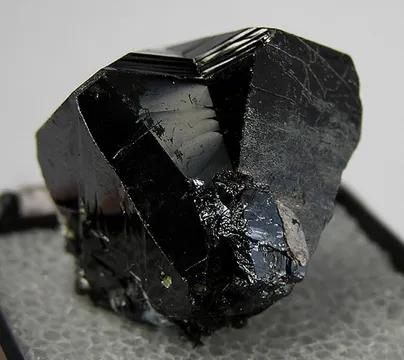
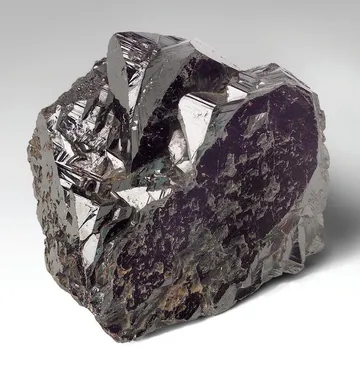
The best Bohemian cabinet pieces tend to show unmistakable locality character. Příbram sulfide pieces often carry lustrous brown to black sphalerite, lead-gray galena, milky or smoky quartz, siderite, calcite, and occasional silver minerals in old, weighty vein fragments. Jáchymov specimens can be more compact but more mineralogically dramatic: dark native arsenic or carbonate matrix with proustite, acanthite, nickeline, skutterudite-group minerals, and radioactive yellow-green alteration crusts. Moldavites occupy a separate aesthetic world: translucent olive to forest-green glass, naturally etched into ridges, pits, blades, curls, disks, droplets, and the celebrated spiky “hedgehog” forms of the Besednice area.

Photo: H. Raab / Wikimedia Commons

Search for specimens: View all specimens from Bohemia, Czech Republic
For specimen purposes, “Bohemia” should be read as a regional umbrella rather than a precise mine name. The most important mineral-specimen sources are hydrothermal vein deposits. Příbram–Březové Hory is the great Central Bohemian lead-silver-zinc district, where metalliferous veins follow dike-related structures in Cambrian sedimentary rocks and carry repeated generations of sphalerite, galena, quartz, siderite, calcite, dolomite, barite, pyrite, silver minerals, and oxidation products. Jáchymov is the classic Erzgebirge five-element vein district: silver, cobalt, nickel, bismuth, arsenic, and uranium mineralization in a complex vein system of “Morning” and “Midnight” veins, with mineralized clusters that yielded both primary silver-arsenide ores and an exceptional suite of supergene uranium, copper, and arsenate minerals.
Příbram’s old paragenetic sequence is one of the most useful guides to its specimens. Early sphalerite, galena, quartz, and siderite formed the backbone of the veins; later carbonate and barite stages introduced calcite, dolomite, additional galena, and pyrite; still later oxidation produced cerussite, smithsonite, hemimorphite, pyromorphite, campylite, wulfenite, and other secondary species. The deep, fine-grained quartz-sulfide “krusek” ore was less visually showy than the banded upper-zone vein material, but it was important economically and mineralogically. Collectors should expect old Příbram pieces to be labeled under older German or Czech spellings such as Pribram, Přibram, Březové Hory, Birkenberg, Bohutín, Bytíz, Háje, and related shaft or vein names.
The uranium era transformed the Příbram district. From 1948 to 1991, uranium mining exposed more than 2,500 hydrothermal veins across the district, with uranium mineralization in well over a thousand of them and base-metal or silver mineralization in a smaller number. The Háje–Bytíz sector became especially important in the uranium period, while the old Březové Hory mines remained central to the district’s identity as a lead-silver locality. Much underground access is closed, flooded, remediated, reused, or administered through state entities; modern collecting is therefore mainly a matter of legal access to dumps, traded old collection material, museum-quality legacy specimens, and recently recovered pieces from permitted or tolerated surface localities. Radioactive specimens from the uranium districts require additional caution in storage, transport, dust control, and labeling.
Jáchymov’s specimen story begins with rich silver ore and passes through uranium into modern systematic mineralogy. The early ores were spectacular enough to support the Schlick family’s minting of Joachimsthaler coins in the 16th century. In the veins, silver occurred as native silver, acanthite/argentite, proustite, pyrargyrite, stephanite, chlorargyrite, and other Ag minerals, commonly with native arsenic, nickeline, skutterudite-group minerals, rammelsbergite, bismuth minerals, calcite, dolomite, and quartz. The Geister vein at the Rovnost 1 shaft is a particularly famous specimen source, known historically for rich silver ore and later for a diverse supergene suite including uranium, copper, and arsenate minerals. Uraninite from Jáchymov is historically central to the development of radioactivity science, while the district’s later secondary minerals make it one of the most important uranium-mineral localities in the world.
Kutná Hora contributes the older medieval chapter of Bohemian silver collecting. Its ore zones produced silver-bearing polymetallic sulfide ores dominated by sphalerite, pyrite, and Ag-bearing galena, with Pb-Sb and Ag-Sb sulfosalts, tetrahedrite–freibergite, bournonite, berthierite, stibnite, carbonates, and gangue minerals. The district was Europe-famous in the Middle Ages; by the late 13th and 14th centuries it had become one of the economic engines of the Bohemian kingdom. Specimens from Kutná Hora are generally less common on the international collector market than those from Příbram and Jáchymov, and good pieces with old labels deserve careful preservation.
Stříbro, historically Mies, is another Bohemian Pb-Zn district that matters to collectors of galena, sphalerite, cerussite, pyromorphite, and, more rarely, wulfenite. Its veins are less species-rich than Jáchymov’s, but the lead-zinc assemblage produced attractive crystals in drusy cavities: galena and sphalerite with quartz, barite, calcite, fluorite, and secondary lead minerals. Stříbro cerussite and pyromorphite are especially characteristic, while confirmed wulfenite from the Dlouhá vein adds a modern mineralogical note to an old mining district.
South Bohemian moldavite localities form the region’s non-metallic collector axis. Moldavites occur in sediments of the České Budějovice and Třeboň basin region and nearby subfields, with individual collecting areas prized for different surface sculpture and color. Besednice material is most famous for sharp, torn, spiky forms; Chlum nad Malší pieces are commonly appreciated for balanced shapes and clean translucency; other localities such as Nesměň, Slavče, Ločenice, Vrábče, Olešnice, and related fields have their own textural signatures. Most serious moldavite collectors now insist on locality documentation, because the difference between “South Bohemia” and “Besednice” can be the difference between a good commercial tektite and a premium locality specimen.
Bohemian galena is most familiar from Příbram, Stříbro, and Kutná Hora, where it served as both a lead ore and an important carrier or companion of silver mineralization. At Příbram it appears in multiple generations: early galena intergrown with sphalerite, quartz, and siderite, and later galena associated with calcite and the old “steinmannite” habit—octahedral-looking crystals with rounded corners, now understood within the galena field rather than as a separate valid species. Stříbro is known for galena crystals, including cube-form material that could be overgrown by younger quartz, while Kutná Hora’s Ag-bearing galena belongs to the medieval silver-bearing sulfide assemblage with sphalerite and pyrite. The best Bohemian galena specimens are not merely massive lead ore; they show crisp metallic crystal faces, old vein associations, contrast with quartz or carbonate gangue, and ideally a specific district or shaft provenance rather than the vague label “Bohemia.”
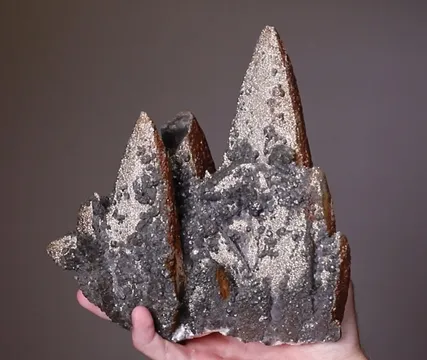
Calcite is one of the great organizing minerals of the Bohemian vein districts because it records late hydrothermal openings, rehealing, and repeated shifts in fluid chemistry. At Příbram, old paragenetic work separated several calcite generations, with calcite appearing after early sphalerite–galena–quartz–siderite deposition, recurring with pyrite, galena, silver minerals, cerussite, and still later vein stages. At Jáchymov, calcite is a common gangue around silver and arsenide minerals and may accompany proustite, acanthite, native arsenic, quartz, and uranium-bearing assemblages. Collectors should look for transparent to white scalenohedral or rhombohedral crystals in good contrast with dark sulfides, or old-time carbonate vein pieces where calcite frames silver, sphalerite, galena, or ruby-silver minerals without excessive bruising or post-mining iron staining.
Bohemian moldavite is the region’s most instantly recognizable mineral-market material, though technically it is a natural tektite glass rather than a crystalline mineral. The collector-grade stones come mainly from South Bohemian strewn fields associated with Tertiary sediments around the České Budějovice and Třeboň basin region, especially the famous fields near Besednice, Chlum nad Malší, Nesměň, Ločenice, Slavče, Vrábče, and related localities. Color ranges from yellow-green and olive to rich forest green and brownish green, and the best specimens preserve natural sculpture: flanged drops, disks, curls, deeply etched pits, and the elite spiky Besednice “hedgehog” forms. Good pieces are judged by locality, complete natural skin, translucency, form, damage, and lack of artificial etching; broken edges, polished jewelry pieces sold as natural, and undocumented “Czech moldavite” from generic dealers should be treated with caution.
Quartz is the structural backbone of many Bohemian ore specimens, especially from Příbram and Jáchymov. At Příbram it occurs in early vein fillings with sphalerite, galena, and siderite, as later quartz generations, and as the fine-grained quartz-sulfide “krusek” ore that marks deeper, less symmetrically banded portions of the veins. Smoky and milky quartz from Příbram can carry sphalerite, siderite, galena, pyrite, calcite, and silver minerals; at Jáchymov, quartz forms part of the matrix for acanthite, proustite, pyrite pseudomorphs, native arsenic, and other silver-arsenide assemblages. The most desirable quartz specimens from Bohemia are not just isolated points but association pieces—clean crystals or vein cavities that place the quartz into its ore context, especially with lustrous sphalerite, lead-gray galena, pyrite, calcite, or ruby-silver minerals.
Sphalerite is one of the defining Bohemian sulfides, particularly at Příbram, Kutná Hora, and Stříbro. In Příbram’s classic sequence it occurs in an early generation with galena, quartz, and siderite, and again later with apatite and other vein minerals; attractive pieces show black, brown, or reddish “ruby-jack” sphalerite in sharp crystals or lustrous aggregates on quartz, siderite, or calcite, often with galena and pyrite. Kutná Hora’s 20th-century ore mineralogy regarded sphalerite as economically important, while Stříbro’s Pb-Zn veins contain sphalerite with galena, quartz, barite, calcite, and fluorite. Strong Bohemian sphalerite specimens stand out by luster, transparency at edges, association, and old locality documentation—especially Březové Hory, Bohutín, Bytíz, Stříbro, or Kutná Hora rather than a bare “Bohemia” label.
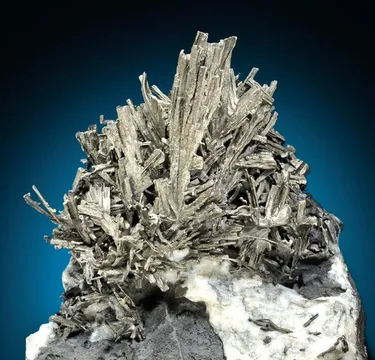
Native silver is the mineral that made Bohemia politically and numismatically famous. Jáchymov produced rich silver ore in the 16th century, including large native silver pieces from the cementation zone, and its silver minerals supported the minting of Joachimsthaler coins; Příbram also yielded native silver, often partly altered to acanthite/argentite, within carbonate-quartz-sulfide vein assemblages. Fine Příbram silver specimens may show wires or sculptural masses coated by dark acanthite and associated with quartz, sphalerite, calcite, and pyrite, while Jáchymov silver is commonly tied to native arsenic, acanthite, proustite, pyrargyrite, chlorargyrite, and nickel-cobalt arsenides. The best pieces retain three-dimensional silver form, visible wire or dendritic texture, and honest old patina; overly bright, acid-cleaned, or poorly documented wires deserve careful scrutiny.
Acanthite is central to Bohemian silver collecting because older labels may use “argentite,” especially for high-temperature or historically described silver sulfide material now represented at room temperature by acanthite. At Příbram, metallic silver was noted as partly changed to argentite, and old combination pieces show acanthite on silver with sphalerite, quartz, calcite, and pyrite. At Jáchymov, acanthite occurs in the classic silver-arsenide assemblage, including Geister vein material with native silver, proustite, nickeline, skutterudite-group minerals, chlorargyrite, quartz, and calcite. Good acanthite from Bohemia is rarely about large isolated crystals; it is about association, history, and texture—dark metallic coatings or crystals that clearly belong to a silver-rich vein assemblage and ideally preserve the form of the silver or the pocket context.
Bohemian pyromorphite is especially characteristic of oxidized lead zones at Příbram and Stříbro. In Příbram’s old paragenetic scheme it follows cerussite, smithsonite, hemimorphite, and manganese-iron oxides as one of the frequent gossan minerals, with campylite historically treated alongside it; specimens range from drusy crusts to small barrel-shaped or prismatic crystals in green, brownish, grayish, or yellowish tones on limonitic lead-ore matrix. Stříbro material is typically more compact, with green to brown pyromorphite in small fan-like or barrel-like aggregates associated with cerussite, galena, sphalerite, and quartz from the Dlouhá and related veins. The best pieces combine saturated color, discernible hexagonal form, and stable matrix; ordinary ones are dull earthy crusts with little crystal definition or uncertain locality.
Cerussite is a classic secondary lead mineral in Bohemia, particularly from Příbram and Stříbro. Příbram produced cerussite in numerous forms and commonly twinned crystals as part of the oxidized sequence following primary galena, while Stříbro is known for cerussite as one of the most important secondary minerals of its Pb-Zn district, associated with galena, sphalerite, pyromorphite, quartz, and limonitic matrix. Fine Bohemian cerussite tends to be colorless to white, grayish, or lightly iron-stained, and the best pieces show sharp twinning, bright adamantine luster, or attractive contrast with dark galena and oxidized matrix. Because cerussite is brittle and dense, edge damage is common; old specimens with intact twins, uncleaned patina, and a precise Příbram or Stříbro sublocality are much more desirable than generic oxidized lead-ore fragments.
Nickeline, historically “niccolite,” belongs most naturally to the Jáchymov five-element assemblage, where nickel arsenides occur with native silver, acanthite, chlorargyrite, skutterudite, rammelsbergite, native arsenic, bismuth minerals, calcite, and quartz. The Geister vein literature records historically attractive primary pieces containing silver minerals, acanthite, chlorargyrite, nickeline, skutterudite, rammelsbergite, and related arsenide material; Příbram also includes niccolite in older mineral lists, but Jáchymov is the stronger collector association. Bohemian nickeline specimens are usually valued as rich arsenide-silver assemblages rather than isolated crystal specimens, and quality depends on fresh copper-red to pale bronze metallic color, visible contrast against dark arsenic or carbonate gangue, and careful identification because several Ni-Co-Fe arsenides can look deceptively similar in hand specimen.
Bournonite is a notable Bohemian sulfosalt from Příbram and Kutná Hora, and it is one of the species that rewards collectors who look beyond the more obvious galena-sphalerite-silver labels. Příbram’s old descriptions record bournonite as occurring in large tabular twinned crystals of simple combinations, placing it among the district’s lead-copper-antimony sulfosalts associated with galena, sphalerite, quartz, siderite, calcite, pyrite, tetrahedrite, and other silver-bearing minerals. In Kutná Hora, bournonite belongs to the younger mineralization stages, especially in the southern part of the district with Pb-Sb sulfosalts, Ag-Sb sulfosalts, tetrahedrite–freibergite, berthierite, stibnite, and carbonates. Good Bohemian bournonite should show recognizable cogwheel or tabular twinned form, metallic luster, and meaningful association; massive gray sulfosalt fragments require confirmation and are much less collectible.
Pyrite is widespread in the Bohemian ore districts, but Příbram gives it especially clear paragenetic context. The old sequence places pyrite with early calcite, then a later pyrite generation with younger silver sulfosalts such as pyrargyrite, proustite, polybasite, and pyrostilpnite, and finally a late pyrite generation; pyrite also appears in pseudomorphs after pyrrhotite and polybasite. At Jáchymov, pyrite can occur with proustite, acanthite, quartz, calcite, and rare silver-iron minerals, including pyrite pseudomorphous after argentopyrite in polished or ore-microscopy associations. The best Bohemian pyrite specimens are not ordinary cubes but association pieces—sparkling brassy microcrystals highlighting silver, sphalerite, calcite, or quartz, or old sulfide-vein specimens where pyrite helps date the pocket within the paragenesis.
Wulfenite is a minor but attractive Bohemian secondary lead mineral. Příbram’s classic mineral list records wulfenite as formerly more frequent, occurring in gray prismatic and tabular crystals within the late oxidized sequence after pyromorphite and associated secondary lead minerals. Stříbro has recently become more interesting for the species because confirmed wulfenite from the Dlouhá vein occurs as orange to brownish-yellow elongated dipyramidal crystals and aggregates up to about 5 mm on drusy quartz coated with limonite. Bohemian wulfenite is not normally the broad orange plate material of the great Mexican or American localities; desirable pieces here are locality-rich, small-crystal specimens with documented Příbram or Stříbro provenance, fresh color, and clear distinction from pyromorphite, mimetite, limonite staining, or altered lead minerals.
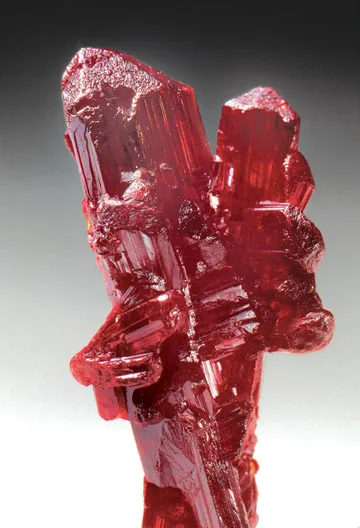
Proustite is one of the signature Bohemian silver minerals, especially from Jáchymov, where deep red trigonal crystals and crystalline masses occur with native arsenic, acanthite, pyrargyrite, stephanite, calcite, quartz, and other silver-arsenide minerals. Jáchymov material ranges from small, brilliant blood-red crystals on dark arsenic to historically important specimens large enough to anchor museum displays; Příbram also produced proustite as part of the later pyrite–silver sulfosalt stage with pyrargyrite, polybasite, and pyrostilpnite. Quality depends on luster, transparency, saturated red color, sharp form, and protection from light, since proustite darkens on exposure. The finest old Bohemian proustites are among the most romantic European silver specimens, but they are also among the easiest to ruin by careless display lighting.
Other documented Bohemian minerals include native arsenic, bismuth, antimony, copper, pyrargyrite, stephanite, polybasite, diaphorite, tetrahedrite–freibergite, stibnite, wurtzite, millerite, skutterudite-group minerals, rammelsbergite, uraninite, torbernite, zippeite, johannite, uranopilite, lindackerite, voglite, cronstedtite, barite, siderite, dolomite, witherite, smithsonite, hemimorphite, mimetite, erythrite, annabergite, pharmacolite, goethite, and many modern uranium secondary species. Jáchymov is one of the world’s great type-locality districts, with uraninite, torbernite, zippeite, johannite, sternbergite, lindackerite, uranopilite, voglite, and many later-described species tied to its mines. Příbram is historically important for cronstedtite, diaphorite, and later rare species from the uranium district, while the “Bohemia” label also covers classic tin, tungsten, silver, and gold occurrences outside the main specimen groups treated above.
Bohemian labels deserve unusually careful reading. “Bohemia” alone may be perfectly acceptable on an 18th- or 19th-century specimen, but for modern collecting it is imprecise. A collector should try to distinguish Příbram from Jáchymov, Kutná Hora, Stříbro, or South Bohemian moldavite fields, and then look for tighter sublocality information: Březové Hory, Bohutín, Bytíz, Háje, Rovnost, Geister vein, Svornost, Werner, Besednice, Chlum nad Malší, Ločenice, or Dlouhá vein. Old German names—Joachimsthal, Sankt Joachimsthal, Mies, Kuttenberg, Birkenberg, Pribram—are common and should not be dismissed as vague if the label is otherwise credible.
Moldavite is the most frequently faked Bohemian material. Green glass imitations, artificially etched bottle glass, molded “hedgehog” forms, and misrepresented Chinese or Southeast Asian glass are widespread in the metaphysical and jewelry market. Genuine moldavite should show natural aerodynamic form or sediment-etched sculpture, internal lechatelierite or flow features when examined properly, and believable Czech locality history. Documentation matters: “Besednice” should not be accepted simply because a piece is spiky, and “Chlum” should not be used as a catchall for every smooth olive-green stone. Polished, drilled, wire-wrapped, or faceted moldavite may be authentic but has lower natural-specimen value unless the cutting is the collecting goal.
Radioactive Bohemian specimens, especially uraninite and secondary uranium minerals from Jáchymov and Příbram, require discipline. Avoid inhaling dust, never grind or trim indoors, store specimens in closed boxes with labels, keep them away from children and food preparation areas, and use proper radon and dose awareness for rich pieces. Bright yellow, green, or orange coatings from Jáchymov and Příbram may be poorly crystallized, mixed, or efflorescent; some are scientifically interesting, but many need analytical confirmation before a species name is trusted.
Silver minerals bring their own problems. Native silver from Příbram and Jáchymov is commonly darkened or coated by acanthite; this is normal and often desirable. Harsh cleaning can strip the old surface and destroy value. Proustite and pyrargyrite should be protected from strong light; historic “ruby silver” specimens are best kept in dark drawers or displayed only briefly under low-intensity lighting. Acanthite/argentite nomenclature is another recurring issue: old labels using argentite may be historically meaningful, but at room temperature many such specimens are properly treated as acanthite or acanthite after argentite.
Condition expectations should be realistic. Příbram and Stříbro lead-zone specimens are heavy, brittle, and commonly bruised along cerussite, pyromorphite, and galena edges. Jáchymov arsenide specimens may be compact, dark, and visually subtle but mineralogically exceptional. Calcite can be cleaved or iron-stained, sphalerite edges can chip, and old sulfide specimens may have been lacquered, trimmed, or mounted. Market availability remains good for Příbram galena-sphalerite-quartz associations, pyromorphite, calcite, and some silver pieces; Jáchymov proustite, rich native silver, and well-documented uranium secondaries are much scarcer; premium Besednice moldavite is increasingly expensive and intensely faked.
In the early 16th century, Jáchymov changed from a mountain mining settlement into one of Europe’s great silver towns almost overnight. Silver was found in the area in 1512, the settlement of Joachimsthal was founded in 1516, and by 1534 it had grown into the second-largest town in Bohemia after Prague. The Counts of Schlick became wealthy on the early silver boom, and from 1520 their mint struck the Joachimsthaler—the “thaler” whose name traveled through European currencies and ultimately into the word dollar. A mineral locality rarely leaves such a visible mark on everyday language.
The Jáchymov miners also knew a heavy black mineral that seemed to bring bad news. It often accompanied silver and cobalt ore, but it did not yield useful metal by their methods, and the old mining name “pitchblende” stuck. In 1727, Franz Ernst Brückmann used Jáchymov material for the first scientific description of pitchblende, now uraninite. More than a century later, that apparently unhelpful black ore altered the direction of physics and chemistry: the residues from uranium processing at Jáchymov became the feedstock from which Marie and Pierre Curie isolated radium and polonium. The district’s specimen story therefore runs from Renaissance silver to the birth of radioactivity research.
One of Jáchymov’s great cabinet legends is the “imperial proustite” in Prague’s National Museum. The specimen is described as a large druse of proustite from Jáchymov, donated by Emperor Francis I, and it remains a symbolic centerpiece of Czech silver mineralogy. Proustite is always a mineral of atmosphere—dark mine, red crystal, light-sensitive beauty—but a Bohemian proustite large enough to become an imperial museum object gives the species an almost theatrical presence.
Příbram’s drama is more industrial. In 1875, the Vojtěch, or Adalbert, shaft reached a vertical depth of 1,000 meters, a world record celebrated with medals made from Příbram silver. At the time, Březové Hory was one of the world’s great mining centers, with thousands of workers and a scale of underground development that made the district a technical landmark as well as a mineral locality. A specimen from Příbram is therefore not just a galena or sphalerite; it belongs to a district that pushed 19th-century mining engineering to its limits.
The same district also holds one of Bohemia’s darkest mining stories. On 31 May 1892, a fire broke out in the Marie Mine at Březové Hory. Smoke and toxic gases spread through connected workings into neighboring mines, and 319 miners died. The catastrophe left hundreds of widows and orphans and became the worst mining disaster in Czech history. For collectors, the old Příbram label carries the weight of that human history as surely as it carries the weight of lead ore.
South Bohemian moldavite has a very different kind of folklore. The stones are not the product of miners following a vein underground, but of farmers, diggers, quarry workers, and collectors searching sediments for green glass thrown across Central Europe by the Ries impact. The best Besednice forms are nicknamed for hedgehogs because their sculpture can bristle into sharp, ragged ridges; a fine complete example feels less like a gemstone than like a frozen splash of green light. That sculptural individuality is why moldavite locality names—Besednice, Chlum, Nesměň, Slavče—matter so strongly to collectors. A good Bohemian moldavite is a place-name you can see.