ExploreMarketCollectors
Login or Register
GuidesEventsBlog
AllFeaturedJust droppedUnder $500Statement piecesGreenBluePurpleAmethystQuartzFluoriteTourmalineMalachiteAzuriteRhodochrosite🇳🇦Tsumeb🇲🇽Mexico🇧🇷Brazil🇮🇳India

Earthwonders

The global marketplace for authentic geological specimens. Connecting passionate collectors with trusted dealers worldwide.

Get on the list for the latest from EarthWonders
Privacy Policy
Join Our Community
InstagramLinkedInFacebookYouTube
Discover

Browse Market

Browse specimens

Collector Profiles

Learn

Guides

All Policies

Blog

Newsletter

Company

About Us

Our Story

Contribute

API for developers

Careers

© 2026 earthwonders
    34 views
    Login to Edit Guide
    By Eugene·Updated on June 25, 2026

    铵铝矿:从蓝到蓝绿色的针状晶簇,具丝质光泽;脆弱,收藏者珍视;著名产地包括 Ojuela、Kelly、Tsumeb。

    Key facts

    Mineral
    Aurichalcite
    Translated from English—See original

    Aurichalcite Collectors Guide

    Overview

    Aurichalcite is a delicate copper-zinc carbonate hydroxide [formula (Zn,Cu)5(CO3)2(OH)6] treasured for its ethereal blue to blue‑green color and feathery, silky luster. It typically forms as fine, acicular needles grouped in radiating sprays and tufted “fuzzy” aggregates, often draping over brown gossan, limonite-goethite, or contrasting white calcite and dolomite. While crystals can be microscopic to a few centimeters across, the visual impact of a well-placed, vivid cyan spray is high—especially when perched on dark matrix or paired with complementary species such as smithsonite, hemimorphite, rosasite, and calcite. Because the needles are extremely soft and fragile (Mohs ~1–2), pristine, undisturbed sprays and superb compositions are much rarer than the mineral’s overall abundance suggests, making fine pieces surprisingly hard to find.

    Popularity

    Collectors prize aurichalcite for pure color and delicate aesthetics. It is a mainstay for thumbnail and miniature collectors, micromounters, and those who love oxidized-zone copper suites. Classic localities—Ojuela Mine (Mexico), Kelly Mine (USA), Tsumeb (Namibia), and Lavrion (Greece)—have produced iconic pieces spanning “cottony” carpets, radiating starbursts, and sculptural combinations with calcite or smithsonite. Although smaller sprays and modest specimens remain accessible, truly outstanding examples with vivid saturation, intact terminations, and strong contrast command significant premiums. The fragility of the species, the difficulty of extraction without shedding, and the dwindling of production at historic mines all contribute to the enduring desirability of top aurichalcite.## 顶级收藏地

    尽管方氧闪石铜锌矿区的氧化带广泛出现金铜矿,仍有少数产地因美观与品质而尤为著名。

    Ojuela 矿区,Mapimí,墨西哥

    Loading locality...

    Ojuela 矿区是当前氧化闪石铜铜矿的现代基准。该地出产的花朵状呈天蓝到蓝绿的喷发状晶群,常形成厚厚的地毯和半球状的辐射簇,生于巧克力色的褐铁矿和针铁矿上。颜色通常鲜明,标本常与方解石、方解石透镜石、玫瑰辉石形成引人注目的对比。教科书级的晶体显示出密集、丝状的针状晶,覆盖良好且脱落极少,有时在 cavernous 石脉的赭红岩基上形成 sweeping veil般的覆盖。产量呈周期性波动;2000年代初期的脉洞出产大型亮丽晶块,但在美观基质上保持良好、未损伤的喷发状晶体日益稀少。

    Kelly 矿区,Magdalena,新墨西哥,美国

    Loading locality...

    以方铅矿闻名的 Kelly 矿区也出产经典的氧化闪石铜,在褐铁矿和方解石上形成细腻的天蓝色喷发状晶群。最佳标本色彩卓越,优雅的辐射簇托在对比强烈的深基质上,或 nestled 在雪白的方解石菱形之中。这些是早期发现的标本;真正来自 Kelly 的高成分、损伤极少的氧化闪石铜极为稀缺,深受收藏美式经典的爱好者追捧。

    Related reading

    Aurichalcite

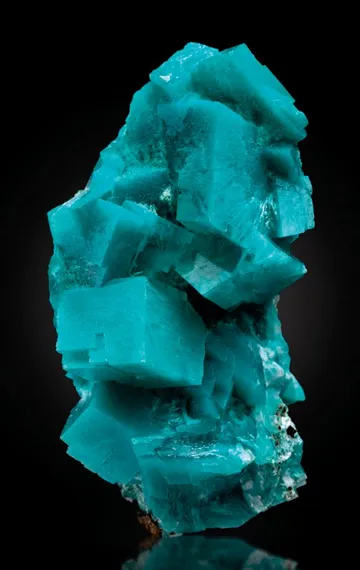
    Aurichalcite 来自纳米比亚姆塞布

    氯霞石铜铝矿

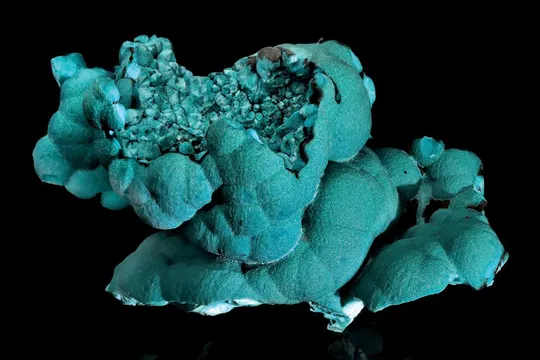
    氯霞石铜铝矿 来自墨西哥 Mapimí 的 Ojuela 矿区

    灵黄铜矿

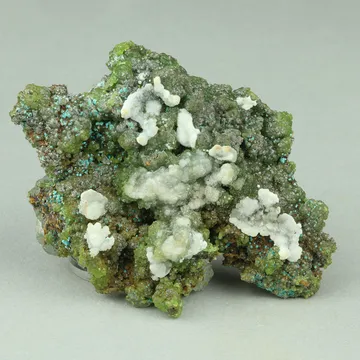
    灵黄铜矿 来自希腊拉夫里翁矿区

    氯銅矾

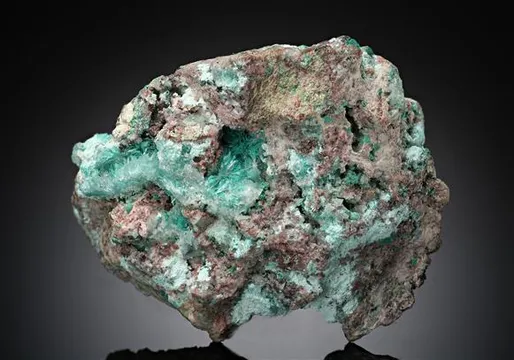
    氯銅矾 来自美国新墨西哥州马格达兰的凯利矿井

    On this page

    • Overview
    • Popularity
    • Ojuela 矿区,Mapimí,墨西哥
    • Kelly 矿区,Magdalena,新墨西哥,美国
    • 茨姆布(Tsumeb),纳米比亚
    • Ophir and Tintic Mining Districts, Utah
    • 评估样品质量
    • 发现修复或处理的方法

    茨姆布(Tsumeb),纳米比亚

    Loading locality...

    茨姆布的材料独具特色:更尖锐、更孤立的辐射状喷发晶簇,甚至在三维上表现出惊人的立体感,有时还坐落在白云石方解石或铁氧物上。颜色范围从冷蓝到绿松石,通常具有高丝状光泽和对单个针晶的极佳定义。与大多数茨姆布物种一样,顶级标本兼具优雅、平衡和历史渊源——这些品质使它们持续备受收藏界的热烈追捧。

    ### Lavrion Mining District, Greece

    Loading locality...

    Lavrion is a Mediterranean classic, producing fine, feathery aurichalcite in sky‑blue tufts, often intergrown with rosasite, smithsonite, hemimorphite, and aragonite in ancient slag- and ore‑rich workings. The best pieces show vivid color with attractive associations—white aragonite needles or calcite rhombs can provide superb contrast. While not as abundant as Ojuela, top Lavrion aurichalcite has an old‑world charm, with specimens valued for historic significance as much as their beauty.

    Ophir and Tintic Mining Districts, Utah

    Loading locality...

    The Ophir and Tintic regions of Utah's old mining country have produced aurichalcite blooms in brilliant sky-blue to blue-green tufts—needle-thin crystals lining cavities in oxidized zinc-copper ore. Feathery sprays of aurichalcite are often associated with malachite, azurite, smithsonite, hemimorphite, and rosasite. Good specimens from older finds are rarely on the market today and highly valued by collectors.

    ## 收藏者指南

    评估样品质量

    • 颜色:艳丽的青蓝至蓝绿色最受追捧。稍微偏绿的色调也很迷人,但颜色若发黯或灰暗则不太理想。通常不需要背光;最好的样本在环境光下会“发光”。
    • 光泽与细腻度:理想状态是丝滑至缎光的光泽,密集细针读作“柔软”却在放大镜下仍然清晰、尖锐。较粗、稀疏的纤维看起来会显得杂乱;超细、均匀辐射的喷射更加优秀。
    • 晶体形态与喷射质量:寻找完整的径向扇形和半球状簇群,端部完好。断裂或结块的区域会降低整体效果。大体喷射罕见;平衡的布置——扇形框在方解石空腔周围,或不同高度的多喷射——会大大提升美观度。
    • 基质与对比度:深色的褐铁矿脉/褐铁矿、蜂黄褐色的针铁矿,或纯白的方解石/菱镁矿提供明显对比。与赭磷铜矿、硬玉矿、方解石或 Rosasite 的结合可增加视觉趣味和产地“签名”感。
    • 体积与成分:Aurichalcite 在拇指甲至小柜子尺寸时最佳。在较大尺寸时,重在整体构图的连贯性——清晰的焦点喷射、平衡与深度,而不仅仅是覆盖面积。
    • 状态:本种极为脆弱。检查:
      • 纤维被压碎或结块(尤其是边缘与高点)。
      • 喷射处出现秃斑,纤维脱落处。
      • 过度固化剂(光滑薄膜连接纤维,或在方解石空腔处聚集)。即使是微小的损失也很常见;关键在于在常规展示中是否分散注意力。
    • 原产地:经典产地(Ojuela、Kelly、Tsumeb、Lavrion、Bisbee、Chessy)价格更高,尤其是带有较早标签的。

    发现修复或处理的方法

    • 固化:由于纤维易断落,加工者有时会涂覆透明固化剂。微妙、专业应用的稳定剂可以接受,但用力过猛会留下玻璃状薄膜、使颜色变暗,或“不自然”地把纤维粘在一起。用放大镜和斜光检查;留意不自然的光泽或针之间的桥接。要求披露。
    • 重新粘接:脱离的花片可能重新粘附到基质上。线索包括胶晕、界面处颜色变化、或光泽不均匀。检查大块簇的边缘及主要喷射的底部。
    • 误鉴:Rosasite 在颜色上可能模仿 Aurichalcite,但通常形成球状团块而非羽状针状,光泽也不同。Cyanotrichite 也是另一种蓝色纤维状矿物(通常更深蓝、往往更细且更脆弱)。如有疑问,请依赖信誉良好的商家与清晰的产地信息。
    • 伪品/着色剂:虽少见但可能。留意由染色纤维制成的“簇絮”——纤维长度过于均匀、染料在组织或酒精棉签上渗出,或呈现人工塑料光泽,都是警示信号。## Care and Storage

    Aurichalcite is one of the most delicate common secondary copper minerals. Thoughtful care is essential.

    • Handling:
      • Avoid touching sprays directly; hold matrix only.
      • Use two hands and cradle larger pieces; minimize vibration and shock.
      • For transport, immobilize the specimen in soft foam so sprays cannot brush against padding.
    • Display:
      • A closed case or bell jar is ideal to prevent dust (impossible to remove safely once embedded).
      • Gentle LED lighting is fine; colors are generally light-stable. Avoid heat from strong lamps.
    • Cleaning:
      • Do not wash or soak; water and capillary forces will mat or detach fibers.
      • Never use ultrasonic/steam cleaners or compressed air at close range.
      • Dust only with a photographer’s bulb blower at a respectful distance; if dust is persistent, consider professional conservation.
    • Environment:
      • Room temperature and moderate humidity (roughly 30–50%) are best. Avoid extreme dryness (promotes static/dust) or high humidity (can affect matrix or past consolidants).
      • Keep away from chemical fumes and solvents that may attack carbonates or adhesives used in past stabilization.
    • Mounting:
      • Use minimal, inert mineral tack under matrix contact points only; never let tack touch fibers.
      • For unstable pieces, a custom cradle is safer than adhesives.
    • Long-term Care:
      • Periodically check for loose grit, shedding, or any change in sheen that might indicate aging consolidants.
      • Document provenance and any known stabilization for future custodians.

    With conscientious handling and protective display, aurichalcite’s luminous blue sprays will retain their otherworldly beauty for years to come.