A collector's guide to Argentina: its geology, mining history and notable minerals, illustrated with the 36 specimens documented from this locality on EarthWonders.
Key facts
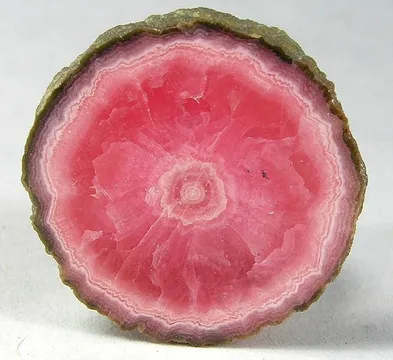
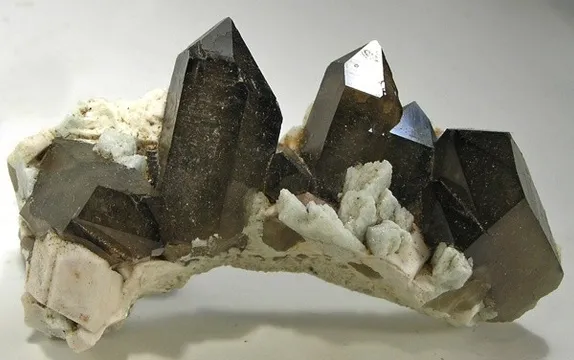
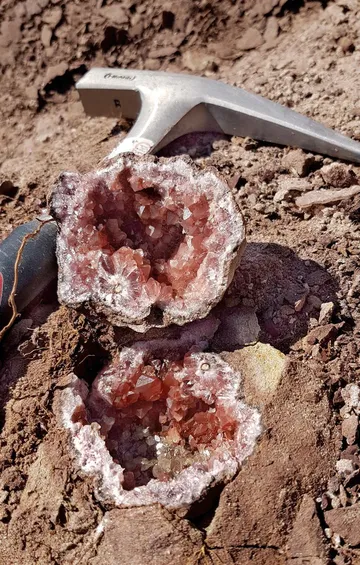
Argentina matters to collectors because it is not a single-look mineral country. It is a long Andean and Patagonian mineral province whose best specimens come from sharply different geological worlds: epithermal veins at Capillitas in Catamarca, oxidized volcanogenic massive-sulfide mineralization at Santa Elena in San Juan, miarolitic and rare-element pegmatites around Papachacra, and geode-bearing evaporitic rocks at El Choique in Neuquén. The result is a national suite with both old classics and modern market surprises: banded “Rosa del Inca” rhodochrosite, orange-red botryogen with pale copiapite, smoky quartz and topaz from granitic cavities, and the now-famous Patagonian “pink amethyst” quartz geodes.
For specimen collectors, the two great visual signatures of Argentina are color and texture. Capillitas rhodochrosite is valued not only for its pink to raspberry-red color but for its concentric stalactitic growth, complex cross-sections, and occasional brown capillitite bands. Santa Elena pieces are almost the opposite: friable, acidic, intensely colored secondary sulfates, where botryogen forms orange-red crystals and radial sprays in a crusty matrix of copiapite, butlerite, parabutlerite, fibroferrite, alunogen, and related sulfate minerals. Papachacra contributes a cleaner pegmatite aesthetic: transparent to translucent topaz, smoky quartz, microcline, albite, muscovite, schorl, fluorite, and amethyst in cabinet-sized combinations. El Choique adds the recent geode material: pale rose, lilac, and peach-toned quartz crystals in cavities, commonly with calcite and other evaporite-associated minerals.
Argentina’s historical importance is unusually broad. Capillitas was known for metal mining before its rhodochrosite became the country’s emblematic ornamental stone; its veins were worked at different times for copper, gold, silver, lead, and zinc, and the district has yielded more than 120 described minerals. Santa Elena is a small but mineralogically intense polymetallic deposit that became a reference locality for rare hydrated sulfates and arsenate-sulfates, including the type locality for sarmientite. Papachacra helped put Argentine topaz on the specimen map with gemmy, prismatic crystals from a locality that is still far less familiar than comparable Brazilian, Pakistani, or U.S. pegmatites. El Choique, first entering the international market in the late 2010s, gave collectors a new quartz variety story from Patagonia.
Regional View
Country View
The best Argentine specimens are not interchangeable with generic “South American” material. Capillitas stalactitic rhodochrosite has a diagnostic architecture: rings, tubes, branching forms, and slabbed cross-sections that resemble botanical or agate-like structures. Santa Elena botryogen is prized when crystals stand proud and recognizable rather than collapsing into powdery sulfate crusts. Papachacra topaz is desirable when the crystal is lustrous, transparent, undamaged on edges and terminations, and still seated with feldspar or smoky quartz. El Choique quartz is strongest when the geode form is intact, the pink coloration is natural-looking and evenly distributed, and associated calcite or baryte adds contrast without overwhelming the quartz.

Photo: Wikimedia Commons

Photo: Wikimedia Commons
Search for specimens: View all specimens from Argentina
Argentina’s specimen localities fall into several deposit families, and serious labels should name the mine or district whenever possible. The country-level label “Argentina” is acceptable for older material only when the exact mine has been lost; for well-known modern specimens, the locality can usually be refined to Capillitas mining district, Santa Elena Mine, Papachacra pegmatites, La Preciosa Argentina Mine, or El Choique Mine.
Capillitas, in the Andalgalá Department of Catamarca Province, is the most culturally recognizable Argentine mineral district. It is an epithermal vein system related to the Farallón Negro Volcanic Complex and the Capillitas diatreme, with veins cutting volcanic rocks and the adjacent Capillitas granite. The broader geological setting includes Miocene volcanic activity imposed on older granitic basement. Mineralization is polymetallic, with copper, lead, zinc, gold, silver, arsenic, antimony, bismuth, tin, tungsten, germanium, and indium present in a complex ore assemblage. The celebrated rhodochrosite is gangue rather than the original economic target; it occurs with quartz, baryte, sulfides, and later supergene minerals. Principal veins and mines recorded for the district include Capillitas, Carmelitas, La Rosario, Ortiz, Restauradora, and 25 de Mayo, and published work on the stalactitic rhodochrosite particularly emphasizes the 25 de Mayo and Nueve veins.
The Capillitas ore system has been divided by researchers into multiple mineralizing stages, reflecting changing hydrothermal temperature, fluid chemistry, sulfidation state, and later oxidation. The rhodochrosite stalactites formed in cavities where Mn- and bicarbonate-rich epithermal fluids entered transiently vapor-filled spaces. Published measurements describe stalactites ranging from a few centimeters to 1.36 meters in length and up to 8 cm in diameter, with cross-sections varying from simple concentric rings to complex branching and “poker-chip” textures. Color is not merely decorative: raspberry-red, pale pink, white, and brown bands reflect chemical substitutions involving Ca, Fe, Zn, and Mg in the rhodochrosite structure; the brown ferroan-zincian variety is locally called capillitite.
Capillitas also has one of Argentina’s richest mineralogical records. More than 120 minerals have been described from the district, and several new species have been described from its ore assemblages. It is a locality where collector aesthetics and micro-mineralogy meet: a slabbed rhodochrosite stalactite may be a lapidary object, while a polished ore section from the same district may contain indium-, germanium-, copper-, silver-, and gallium-bearing sulfides of real scientific interest.
Mining at Capillitas predates the modern specimen trade. Indigenous and colonial mining activity preceded 19th-century Argentine and foreign ventures. In the 17th and 18th centuries the district was worked by Jesuits, and from the 1850s onward Argentine and English companies became involved. The English-linked Capillitas Copper Company Limited later built an aerial cable system from the mines toward the Muschaca metallurgical works to solve the transport problem imposed by steep terrain. In the 20th century the property became associated with Argentina’s Dirección General de Fabricaciones Militares, and in the 21st century it has been worked chiefly for rhodochrosite specimen and ornamental material. Recent Argentine government and provincial sources record Capillitas as an active rhodochrosite-producing site and a controlled mining area, not a casual collecting locality.
Santa Elena Mine, at Quebrada Alcaparrosa in the Calingasta area of San Juan Province, is the key Argentine locality for copiapite and botryogen. Geologically it is a small Pb-Zn-Ag-Au polymetallic deposit in the western Precordillera, classified in SEGEMAR’s database as a mafic-siliciclastic volcanogenic massive-sulfide deposit of Besshi type. The host environment includes shales, sandstones, basalts, and related rocks of the Alcaparrosa Formation, with mineralization interpreted as Ordovician and associated with submarine mafic volcanism. The recorded deposit form is irregular and vein-like, with a length of roughly 250 meters and an average thickness recorded around 6.5 meters. Primary ore minerals include pyrite, sphalerite, galena, chalcopyrite, arsenopyrite, and silver sulfosalts; the colorful collector species are largely products of oxidation and hydration of those sulfides under arid, acidic conditions.
Santa Elena’s production history is modest in tonnage but important mineralogically. SEGEMAR records production from 1941 to 1974 of about 7,000 metric tons of ore, plus a measured, indicated, and inferred resource estimate from 1983 of about 43,500 metric tons with reported lead, zinc, silver, gold, and copper grades. Those figures explain the scale of the locality: Santa Elena is not a giant orebody, but its weathered sulfate zone is exceptional for mineral specimens. The locality is the type locality for sarmientite, and it has produced aluminocopiapite, copiapite, botryogen, butlerite, parabutlerite, fibroferrite, amarantite, alunogen, coquimbite, epsomite, goslarite, gypsum, halotrichite, melanterite, pickeringite, römerite, slavíkite, szomolnokite, and related species.
Papachacra, in Belén Department, Catamarca Province, is the principal Argentine pegmatite field for topaz specimens. The Papachacra pegmatites and related granite are part of the El Portezuelo–Papachacra granitic system, described in the literature as A-type granite with associated miarolitic pegmatites and greisen mineralization. The collector pockets produce prismatic topaz with smoky quartz, microcline, albite, muscovite, schorl, fluorite, and amethyst. The La Preciosa Argentina Mine is specifically recorded as a topaz mine within the Papachacra pegmatite field. Topaz from this locality may be colorless, pale brown-orange, clear, or greenish-blue, and documented crystals reach up to about 10 cm along the c-axis, though the more commonly cited available sizes are in the 3 to 5 cm range. The best pieces combine transparency, luster, intact terminations, and matrix association.
El Choique Mine, in Pehuenches Department, Neuquén Province, represents a much newer Argentine collector story. It is recorded as an active mine producing “pink amethyst” quartz geodes in Late Cretaceous anhydrite rock. The deposit was first discovered in 2013, and the geodes first appeared internationally at a Brazilian gem fair in 2017. The geodes are lined by quartz crystals whose pink to lilac coloration is linked to iron-related features and microscopic hematite inclusions, and they may contain calcite, baryte, celestine, gypsum, analcime, and lithiophorite. The locality is on private property and is not a public collecting site.
Argentine copiapite of collector quality is most closely associated with the Santa Elena Mine at Quebrada Alcaparrosa, where it formed in the oxidation zone of a small polymetallic sulfide deposit rather than as an isolated species in a simple sulfate crust. It occurs as yellow to beige coatings, drusy carpets, granular crusts, and locally recognizable small crystals, commonly with orange-red botryogen, butlerite, parabutlerite, fibroferrite, alunogen, and other hydrated sulfates. Good Santa Elena copiapite is not just “yellow powder”: the better pieces show stable-looking crystallized coverage, sharp contrast against red botryogen, and enough relief to show the paragenesis, while ordinary examples are friable, dull, or poorly distinguished from mixed sulfate efflorescence.
Argentina’s notable botryogen comes from Santa Elena, where studied crystals are red-orange, translucent to transparent in small fragments, vitreous, short-prismatic, and elongated along the c-axis, with individual crystals documented to about 0.5 cm in formal mineralogical work and collector specimens showing sharp crystals, clusters, and radial sprays that may reach larger display dimensions. It is associated with copiapite, butlerite, parabutlerite, fibroferrite, gypsum, epsomite, melanterite, and other sulfate minerals derived from weathered pyritic and polymetallic ore. The finest Argentine pieces show distinct, free-standing orange-red crystals or sprays on matrix; lesser pieces are massive, crusty, altered, or partly overgrown by paler copiapite-like coatings that blur the botryogen habit.
Argentine topaz specimens are chiefly associated with the Papachacra pegmatites of Catamarca, especially the La Preciosa Argentina Mine, where idiomorphic prismatic crystals occur in miarolitic pegmatite assemblages with smoky quartz, amethyst, microcline, albite var. cleavelandite, muscovite, schorl, and violet to green fluorite. The crystals range from colorless through pale brown-orange to greenish-blue, and published locality descriptions record prisms reaching about 10 cm along the c-axis, although 3 to 5 cm crystals are more typical of material seen on the specimen market. The best Papachacra topaz is glassy, transparent, sharply terminated, and undamaged along edges and prism faces; matrix examples with smoky quartz and feldspar are especially desirable because loose crystals can lose much of their locality character.
Quartz from Argentina is collectible in several distinct forms rather than one national style: smoky quartz and rock crystal occur in the Papachacra pegmatites with topaz, microcline, albite, muscovite, schorl, and fluorite; quartz is a major gangue mineral at Capillitas with rhodochrosite and polymetallic sulfides; and El Choique in Neuquén produces the modern “pink amethyst” geodes for which Argentina has become widely known in the trade. The strongest Papachacra quartz specimens are lustrous smoky crystals in balanced pegmatite combinations, especially when topaz is present, while the best El Choique quartz geodes preserve natural cavity form, delicate pink to lilac crystal color, and contrasting white calcite or other evaporite-associated minerals. Ordinary examples tend to be overtrimmed, heavily polished, mislabeled as rose quartz, or sold with a vague Patagonia label instead of a mine-level locality.
Beyond these featured species, Argentina is a serious type-locality country. Mindat records 56 valid type-locality minerals for Argentina as a whole. Santa Elena is the type locality for sarmientite, Fe3+2(AsO4)(SO4)(OH)·5H2O, a rare arsenate-sulfate named for Domingo Faustino Sarmiento. Capillitas has produced new and rare ore minerals including putzite, ishiharaite, and catamarcaite, and it remains one of the country’s most species-rich districts. Argentina is also inseparable from rhodochrosite: Capillitas stalactitic material is among the most recognizable lapidary and specimen forms of the species anywhere, with the brown ferroan-zincian variety capillitite named from the locality.
Locality precision is the first authenticity issue. “Argentina” alone is too broad for most modern specimens. Copiapite and botryogen should generally be labeled Santa Elena Mine, Quebrada Alcaparrosa, Calingasta Department, San Juan Province. Topaz and associated smoky quartz should be labeled Papachacra pegmatites, and better still La Preciosa Argentina Mine if that is documented. Pink amethyst-type quartz should be labeled El Choique Mine, Pehuenches Department, Neuquén Province. Capillitas rhodochrosite should normally be labeled Capillitas mining district unless the vein-level provenance is documented; published locality guidance notes that many rhodochrosite specimens cannot be reliably distinguished by vein once separated from mine records.
Santa Elena sulfates require special handling. Copiapite, botryogen, alunogen, melanterite, halotrichite, and related hydrated sulfates are soft, brittle, water-sensitive, and humidity-sensitive. They should be kept dry, not washed, not oiled, and not cleaned ultrasonically. Avoid breathing dust from crumbling sulfate specimens, and avoid storing them directly against carbonate specimens, polished metals, or paper labels that could be affected by acidic alteration products. A small sealed box with stable low humidity is often safer than an open display cabinet in a damp room. Expect some older Santa Elena specimens to show edge crumbling, powdering, dehydration, or overgrowth changes.
For Argentine topaz, the common issue is damage rather than fakery. Papachacra crystals have cleavage and sharp edges that chip easily; inspect terminations, prism edges, and contact points. Loose topaz crystals from Argentina can be attractive, but matrix pieces with smoky quartz, feldspar, albite, muscovite, or schorl carry stronger locality evidence. Be wary of generic “Argentine topaz” labels on tumbled, faceted, or irradiated commercial stones unless the seller can document the source.
For quartz, the main problem is terminology. “Pink amethyst” is a trade name, not a separate mineral species, and it should be understood as quartz from a specific style of geode occurrence rather than as classic purple amethyst or massive rose quartz. El Choique material is legitimate when properly labeled, but the market also contains pink quartz, dyed or altered agate, flower-agate-style material, and Brazilian or other geodes sold under similar romantic names. Natural El Choique pieces are best judged by crystal habit, geode context, associated calcite or evaporite minerals, and credible provenance.
Capillitas rhodochrosite is widely available in slabs, cabochons, carvings, and stalactite cross-sections, but top-quality material is still selective. Look for strong raspberry color, sharp concentric banding, complete stalactite rind, minimal fractures, and minimal filler. Many slabs are polished, which is normal for this material; polishing is not a treatment in the deceptive sense, but repairs, resin filling, and assembled fragments should be disclosed. Whole stalactites and natural, unsawn specimens are scarcer than slices and lapidary objects.
The great Argentine mineral story begins high in the Sierra de Capillitas, where a deposit first valued for metals slowly became famous for something miners once had reason to ignore: the pink carbonate gangue. Early literature records rhodochrosite at Capillitas in the 19th century, when the district was still understood chiefly as a copper, lead, zinc, silver, and gold mining camp. In the old workings, rhodochrosite grew as stalactites in cavities rather than as ordinary vein fill. Later mineralogical study showed just how extraordinary those forms could be: single and combined cylinders from a few centimeters to 1.36 meters long, up to 8 cm across, with cross-sections ranging from simple bull’s-eye rings to irregular, branching, poker-chip-like textures. When slabbed, those old mineral forms became the “Rosa del Inca” look that almost every collector can recognize from across a room.
One of the most memorable Capillitas episodes belongs not to a pocket but to engineering. In the early 1900s, the Capillitas Copper Company Limited tried to solve the district’s old transport problem by building an aerial cableway from the mines toward Muschaca. The system descended almost 2,000 meters over a route of about 27.5 km through broken mountain topography. It required not only the cableway but roads for operation, maintenance, and general cargo. It was ambitious, expensive, and fragile. The line was intended to move copper ore out of a remote Andean district, but after years of construction and repeated difficulties it was finally abandoned in 1913. Today the ruins around Muschaca, with traces of transport towers, furnaces, chimneys, slag yards, and refractory brick, are part of the historical landscape behind every polished Capillitas rhodochrosite slice.
The Santa Elena story is quieter and more mineralogical, but for sulfate collectors it is just as compelling. The orebody was small: SEGEMAR records roughly 7,000 metric tons of ore produced between 1941 and 1974, with later resources measured in only tens of thousands of tons. Yet in that weathered zone, primary sulfides turned into a remarkable sulfate laboratory. Pyrite, sphalerite, galena, chalcopyrite, and arsenopyrite altered under arid conditions to crusts and crystals of copiapite, botryogen, butlerite, parabutlerite, fibroferrite, alunogen, and sarmientite. In 2000, Lorenzo Francisco Aristarain described Santa Elena botryogen crystals in detail: red-orange, vitreous, short prismatic, elongated along the c-axis, fragile, and only up to about half a centimeter in the studied material. On the collector market, the magic is in the rare pieces where those tiny sulfate minerals become sculptural: orange-red botryogen crystals rising from pale copiapite and butlerite, colorful but always delicate.
Papachacra’s field-note character is different again: less about old industrial ruins and more about pockets. The locality became known among mineral collectors for Argentine topaz in pegmatite cavities, a style of specimen that appeared in small numbers rather than as a steady flood. Dealer and auction records from the 2000s and later describe glossy, gemmy thumbnails and small cabinet pieces, sometimes with topaz perched on feldspar, sometimes with smoky quartz, albite, muscovite, and microcline. One reason the material stands out is that Argentina is not the first country most collectors associate with topaz. A sharp Papachacra crystal, especially one still anchored in its pegmatite matrix, therefore carries both beauty and locality surprise.
El Choique is the modern plot twist. The mine was discovered in 2013, and its geodes first appeared on the international market in 2017 at a gem fair in Brazil. By 2020, the locality had received a dedicated article in The Mineralogical Record. The pieces were immediately recognizable: geodes lined by pale pink to lilac quartz crystals, often with white calcite, and different enough from both massive rose quartz and classic purple amethyst to provoke debate over naming. For collectors, the important part is not the trade-name argument but the geology: a Patagonian occurrence in Late Cretaceous anhydrite, on private property, producing quartz geodes unlike the older Argentine classics from Catamarca and San Juan.