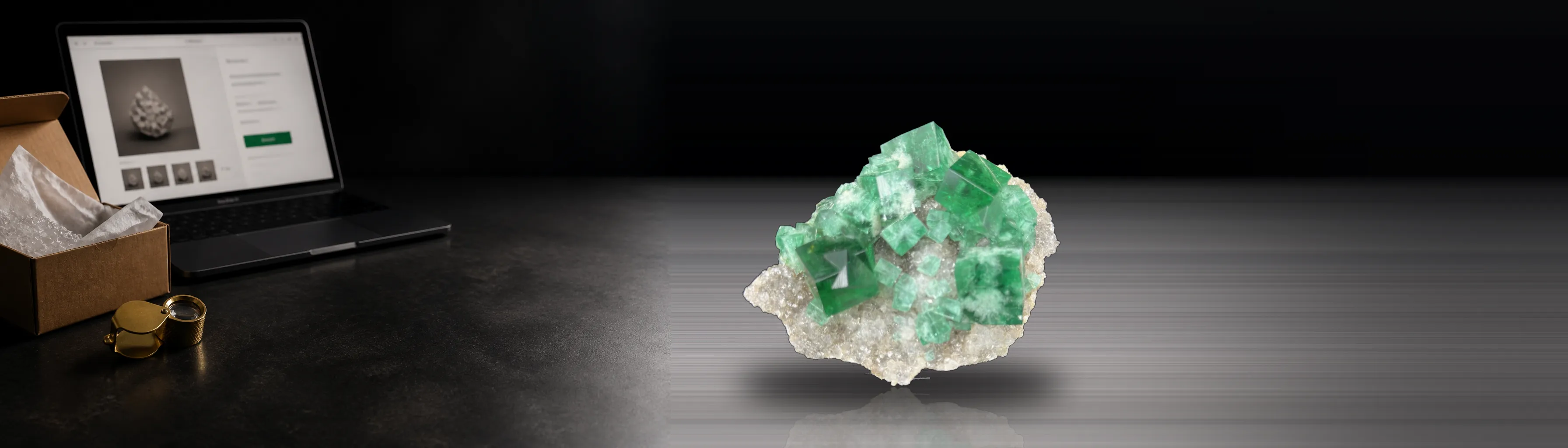
Sooner or later most collections get sold - refined down to a tighter focus, thinned to fund better pieces, or passed on entirely. And the difference between a good sale and a painful one is rarely the specimens. It's preparation, pricing, and picking the right channel.
The trap is treating "sell my collection" as one decision. It's really three: what you're selling (a few pieces or everything), how fast you need the money, and who the buyer should be. Get those straight first, because they point to completely different paths.
Every selling channel trades speed against price. You can have a quick, certain sale or the highest number - rarely both. Be honest about which you actually need before you choose how to sell.
| Channel | Typical speed | Typical return | Effort for you | Best when |
|---|
| Outright sale to a dealer | Fast | Lowest (wholesale) | Minimal | You need certainty and speed, or it's a large estate |
| Consignment (dealer/gallery) | Slow | Higher, minus commission | Low | You'll wait for the right buyer and trust the dealer |
| Auction house | Scheduled | Variable — can soar or flop | Low–medium | Signature pieces with broad demand |
| Direct marketplace / platform | Your pace | Highest, minus low fees | Medium | You'll photograph and describe pieces yourself |
| Mineral shows | Event-based | Mid–high | High | You enjoy selling in person and have a booth |
A dealer buying outright pays wholesale because they're taking on the risk and the wait - that's a fair trade for speed, not a rip-off. Selling direct keeps the most, but the work (photos, descriptions, pricing, shipping, questions) lands on you. There's no universally right answer, only the one that matches your timeline and appetite.
Most lost value happens before the sale, in skipped preparation. Four steps do the heavy lifting:
1. Catalog what you're selling. A buyer - and your own pricing - needs species, locality, size, condition, and provenance. If your collection is already documented, you're ready; if not, this is the moment, and our cataloging guide is the fast path.
2. Photograph honestly and well. Online, buyers judge almost entirely on images. A clean, true-color, multi-angle set with scale sells a piece; an over-saturated phone snap kills trust. You don't need a studio — an iPhone and a turntable are enough.
3. Gather provenance and old labels. A documented chain of ownership and prior collection labels add real, sometimes substantial, value — and credibility. Never discard the old labels; photograph them and sell them with the piece.
4. Disclose condition plainly. Note contacts, repairs, and restoration up front. A disclosed repair lowers the price honestly; a discovered one detonates the sale and your reputation. Honesty is the cheapest insurance a seller has.
The most common pricing error is anchoring on what you paid or what a hopeful listing asks. The market doesn't care about either. Price from comparable sold prices - what genuinely similar pieces, from the same locality and quality class, actually changed hands for.
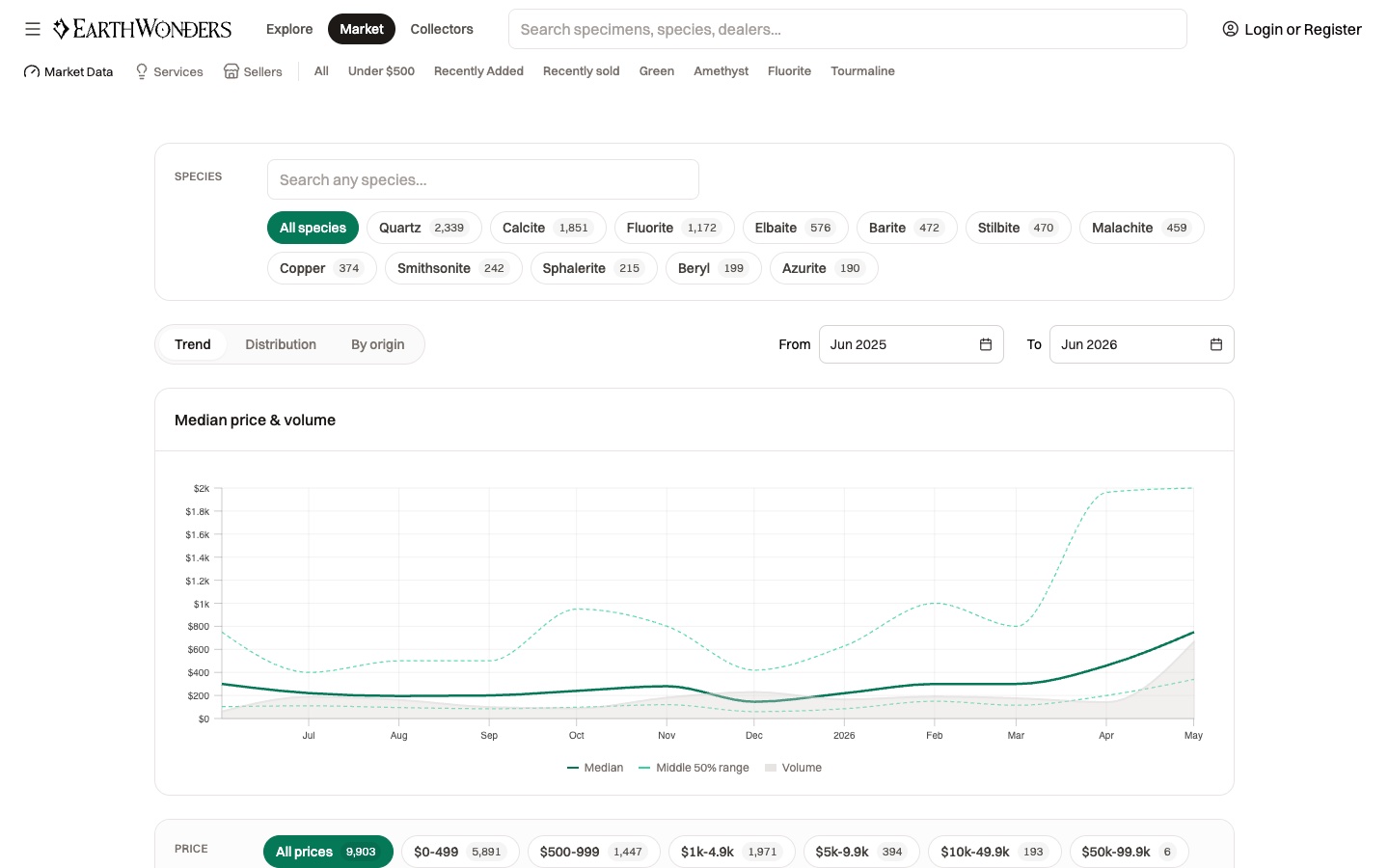
Price against reality: median sold values over time, filterable by species, locality, and price band. This is the difference between a number you can defend and one buyers ignore.
Decide which value you're after, too. Fair market value is the honest "what's it worth" number for an unhurried sale; liquidation value is what a quick, today sale realizes, and it's lower. An estate sold in a weekend lands near liquidation; the same collection sold piece by piece over a year approaches fair market. Our valuation guide walks through both.
Selling everything at once is fast and simple, but you'll accept a discount for the convenience - buyers pay less per piece to take the whole lot. Selling the best pieces individually and the bulk in lots almost always nets more, because most collections follow a power law: a small number of signature pieces hold the majority of the value. Appraise and list those individually; group the mid-range and study-grade material into lots. The effort concentrates where the money is.
If you're willing to do the photographing and describing, selling direct to collectors keeps the most in your pocket - especially on a platform built for it, where your catalog and your storefront are the same thing.
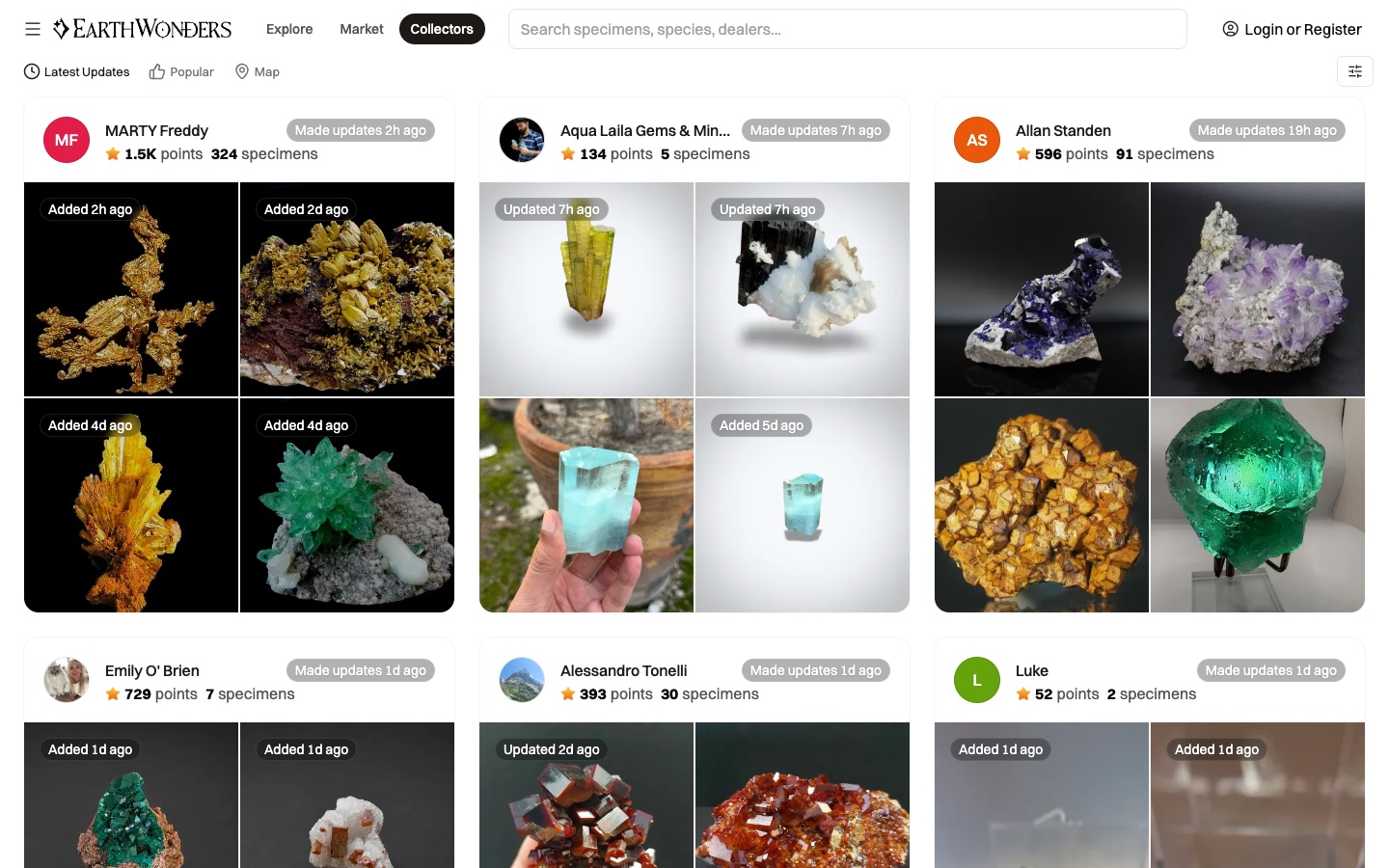
Your collection and your storefront in one place: list pieces for sale from the same records you already keep, on a profile collectors can browse and follow.
On EarthWonders the flow is built for exactly this:
- List a specimen with its photos, details, and provenance, set your price and shipping, and it goes live instantly — often straight from a record you already have.
- Reach serious buyers automatically: your piece surfaces in search, on its species page, and in the want-list alerts of collectors looking for exactly that.
- Ship and get paid — confirm the order, ship with tracking, and receive monthly payouts after safe delivery, with checkout and processing handled for you.
It's free to list, with a 5% commission only when a piece actually sells — so listing your collection costs nothing until it earns. And because everything stays private until you publish it, you can prepare the whole sale quietly and go live when you're ready.
Inherited collections are where the most value is lost, because heirs rarely know what they have. Before selling, resist two urges: don't dump it fast to the first buyer, and don't assume it's worthless. Get it cataloged and roughly valued first — even a tiered estimate (here's how) prevents the classic tragedy of a five-figure suite sold for pocket change. If the collection is significant, a qualified appraiser pays for themselves.
- Selling in a hurry when you didn't have to, and accepting liquidation prices for no reason.
- Bad photos that make good pieces look mediocre.
- Hiding condition issues that surface later and kill trust.
- One price for everything, ignoring that a few pieces carry most of the value.
- Tossing the old labels and erasing provenance that added real money.
- Pricing on nostalgia — what you paid, not what the market pays now.
Avoid those and selling becomes what it should be: not a loss, but the moment your documentation and care finally pay you back.
Ready to sell? List on EarthWonders for free — only a 5% commission when a piece sells, real market data to price with confidence, and a built-in audience of collectors. Prepare privately, then go live when you choose.