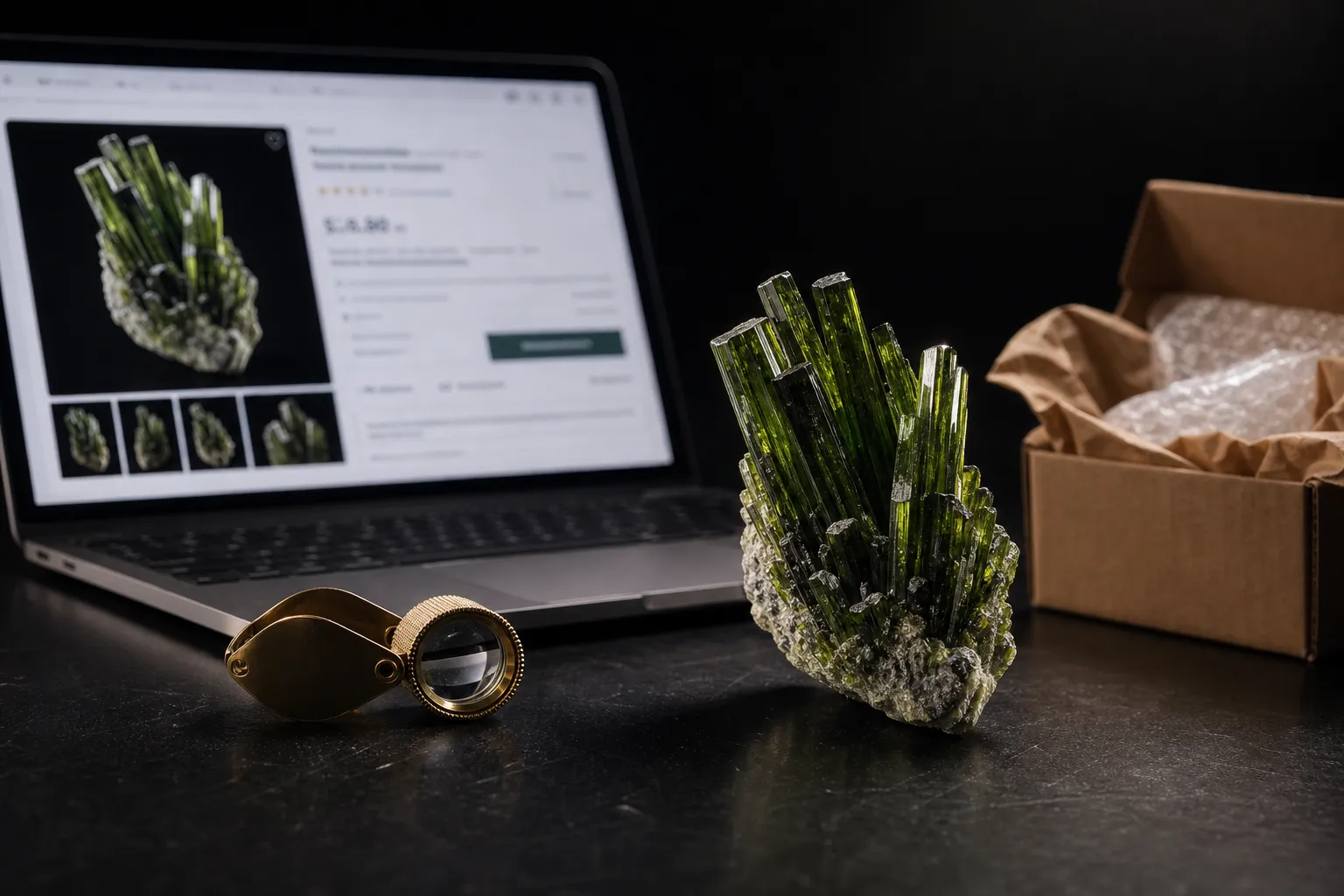
The real risks of buying specimens you can't hold - fakes, undisclosed repairs, treated color, and faked localities - and a practical routine for buying with confidence
Buying a mineral online means buying something you can't pick up, turn over, or weigh in your hand. You're trusting a few photos and a stranger's description - and most of the time that's fine. But the gap between what you see and what arrives is exactly where collectors lose money, and the losses are avoidable with a little discipline.
This isn't a warning to stay offline; the best material in the world trades online every day. It's a routine for buying well - knowing what goes wrong, reading a listing like evidence, and never paying serious money on a single flattering photo.
Four problems account for most online buying regret:
A listing's images are your only inspection, so demand that they do the job:
If the images don't let you evaluate the piece, ask for more before you bid. A seller's willingness to send extra photos is itself a signal.
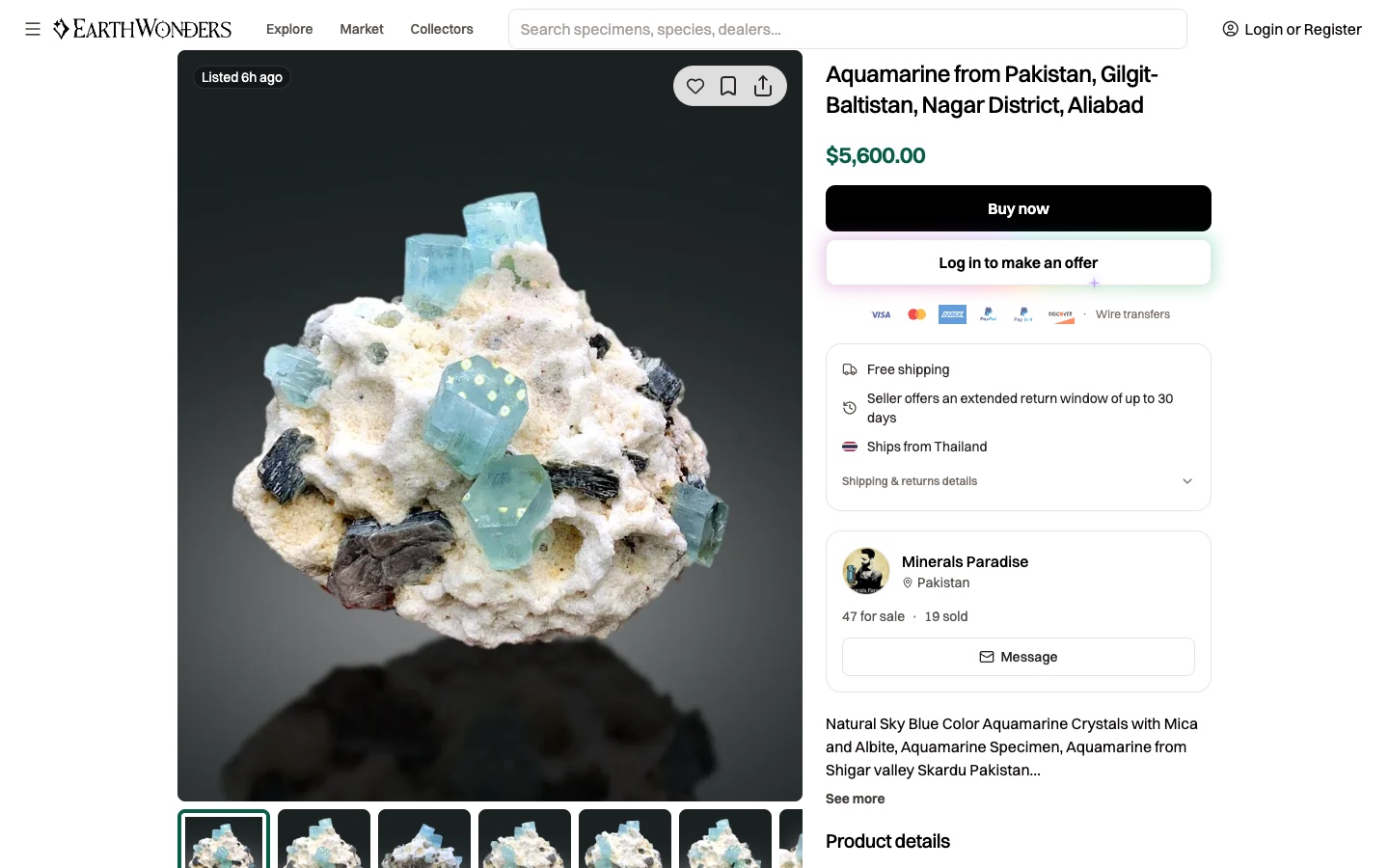
What a trustworthy listing looks like: a clear, true-color photo, a named seller, the full structured locality with a map, and exact dimensions. Everything you need to evaluate is on one screen - and the locality is a verifiable place, not just a flattering label.
Before money changes hands, ask directly:
The answers matter, but so does the manner of answering. Evasion, irritation, or vagueness on these points is information.
The single best defense against overpaying is knowing what comparable pieces actually sell for - not what hopeful listings ask. Real sold prices used to be locked in dealers' heads; now you can look them up.
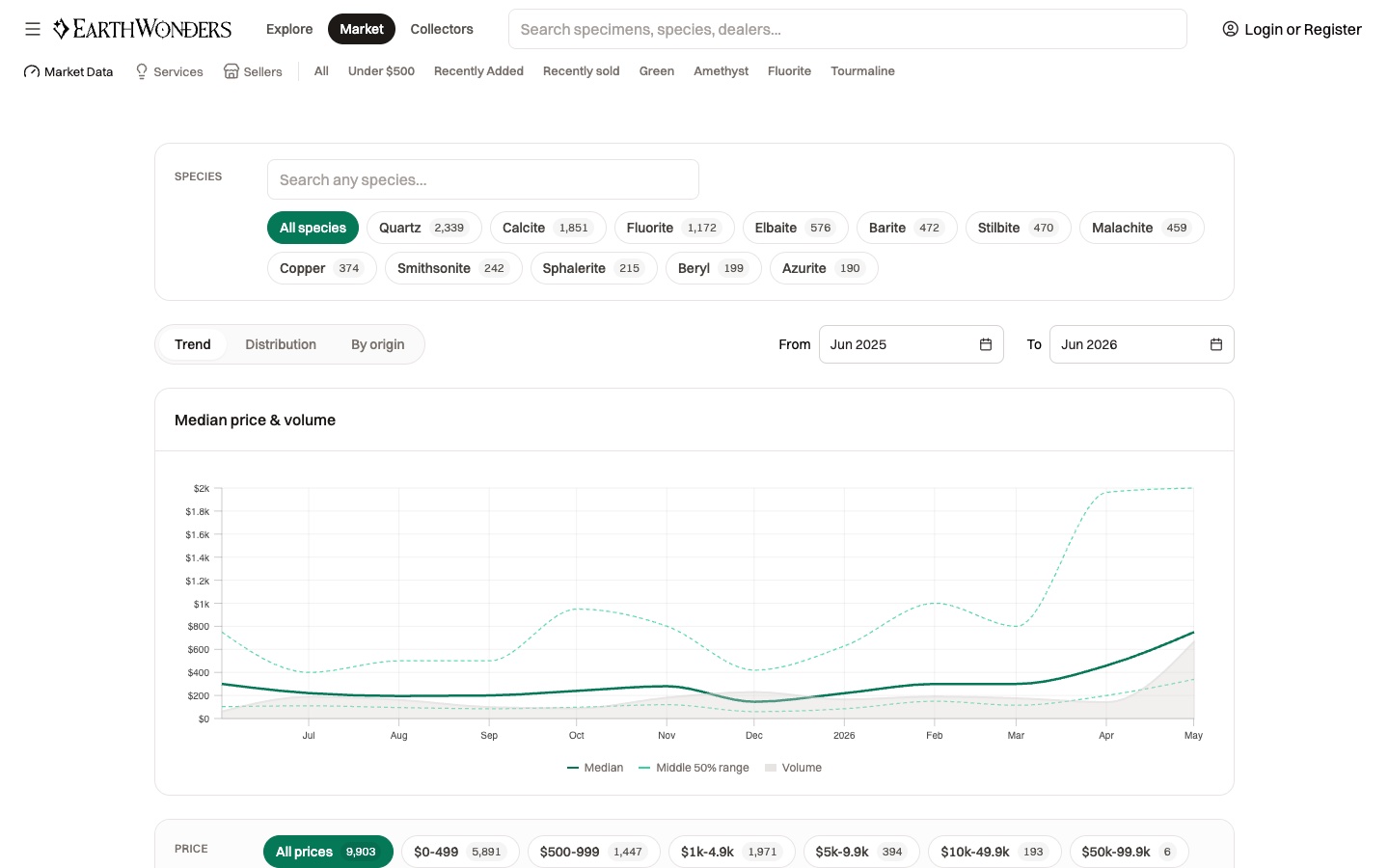
Before you commit, compare against real transactions - filterable by species, locality, and price band. An asking price is a hope; a sold price is a fact. (We go deeper in How Much is Your Mineral Collection Worth)
If a price sits far above comparable sales, you need a reason - exceptional quality, rare locality, strong provenance. If you can't find one, walk.
Buy the seller as much as the specimen. Look for a track record: how long they've been active, other listings, reviews, and how they handle questions. On a platform where collections and sellers have visible histories and profiles, that due diligence takes minutes.
Provenance is both a value-add and a trust signal. A specimen that arrives with old collection labels and a documented chain of ownership is more credible than an identical piece with none - and that history increasingly travels with the piece. On EarthWonders, ownership history is modeled as real data rather than a free-text note, so a specimen's past can follow it from collector to collector instead of getting lost at every sale.
The deal isn't done when the box shows up, it's done when you've checked the piece against the description, while your return window is open:
If it doesn't match what was promised, use the return policy. A reputable seller would rather take a return than earn a reputation.
Buying minerals online is safe when you stop trusting a single photo and start running a process: read every angle, ask the blunt questions, check the price against real sales, vet the seller, and inspect on arrival. Do that and the online market becomes what it should be - the widest access to great material collectors have ever had - instead of a place you get burned.
Buy smarter with real data. EarthWonders is free - browse specimens with full structured localities, check market and sales data before you commit, and keep your own collection private until you choose to share it.






