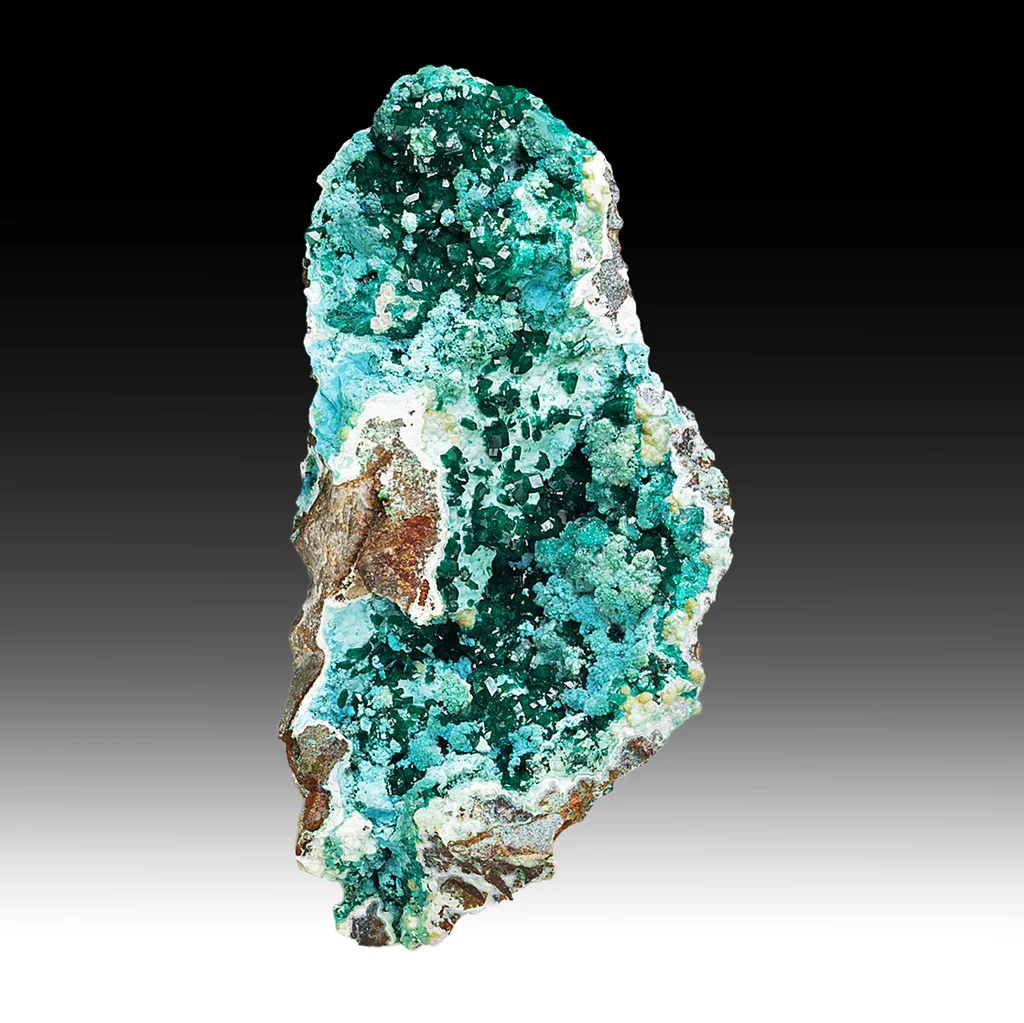
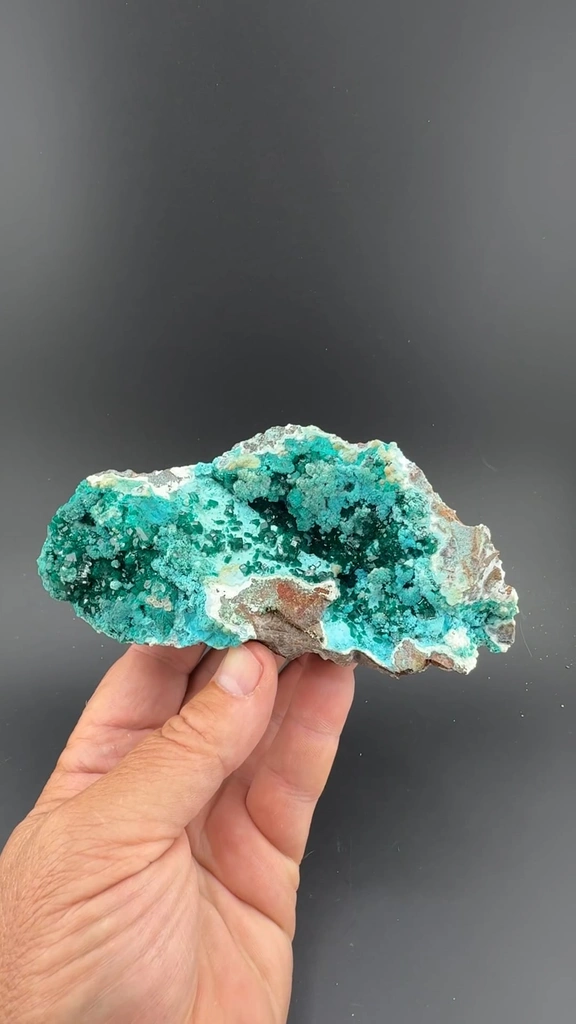
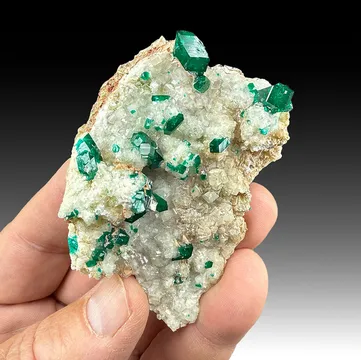
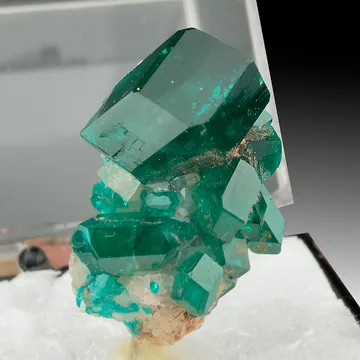
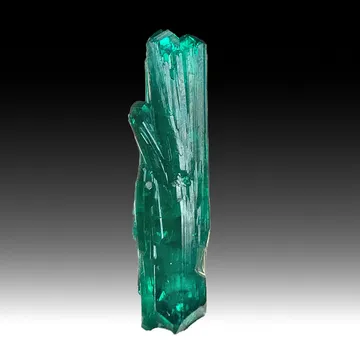
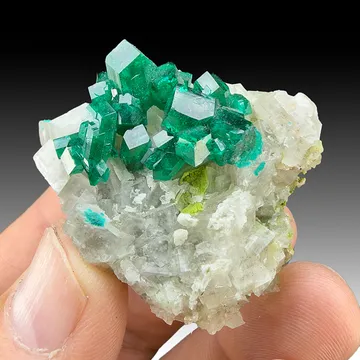
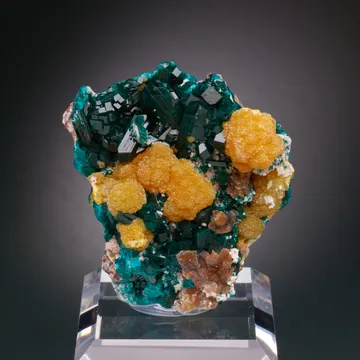
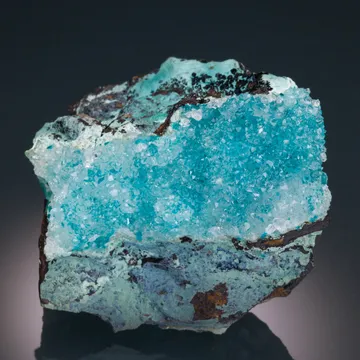
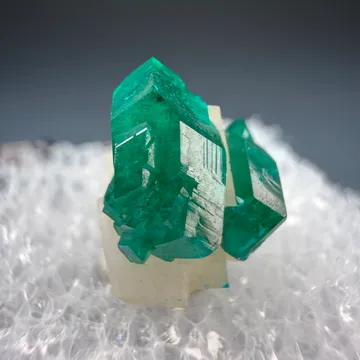
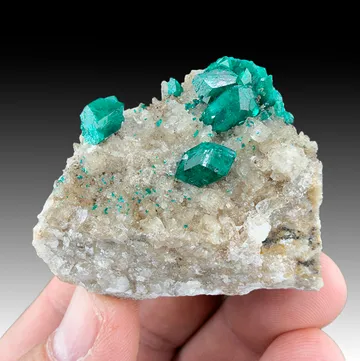
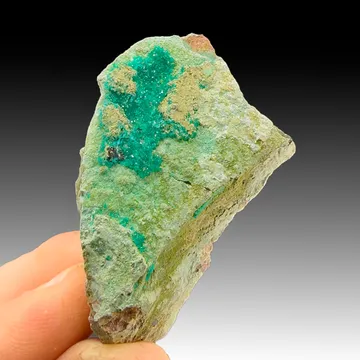
Glistening green crystals of dioptase measuring to 0.5 cm in size across the front of this matrix with blue crystallized plancheite. This is in good condition.
The Sanda Hills, located in the Mindouli district of the Pool Department in the Republic of the Congo, have a long, phased operational history. Indigenous copper extraction in the broader Niari basin dates back to the 13th to 14th centuries. Modern industrial and colonial exploitation began in the early 20th century under the Compagnie Miniere du Congo Francais, followed by more structured French colonial operations recorded between 1948 and 1960. Industrial metal mining eventually wound down due to exhaustion and changing economic viability, though the area has seen episodic small-scale specimen collecting in the 21st century.
Geologically, the occurrences sit within a compact belt of polymetallic copper-lead-zinc mineralization hosted in silicified Neoproterozoic carbonate rocks and sandstone sequences. The interaction of copper-bearing hydrothermal fluids with carbonate strata and silica-rich solutions created open vugs and fractures. These unique conditions fostered the growth of brilliant emerald-green dioptase (a hydrous copper cyclosilicate), frequently associated with glassy quartz and the rare copper silicate type-mineral plancheite.


 Ships from USA
Comments