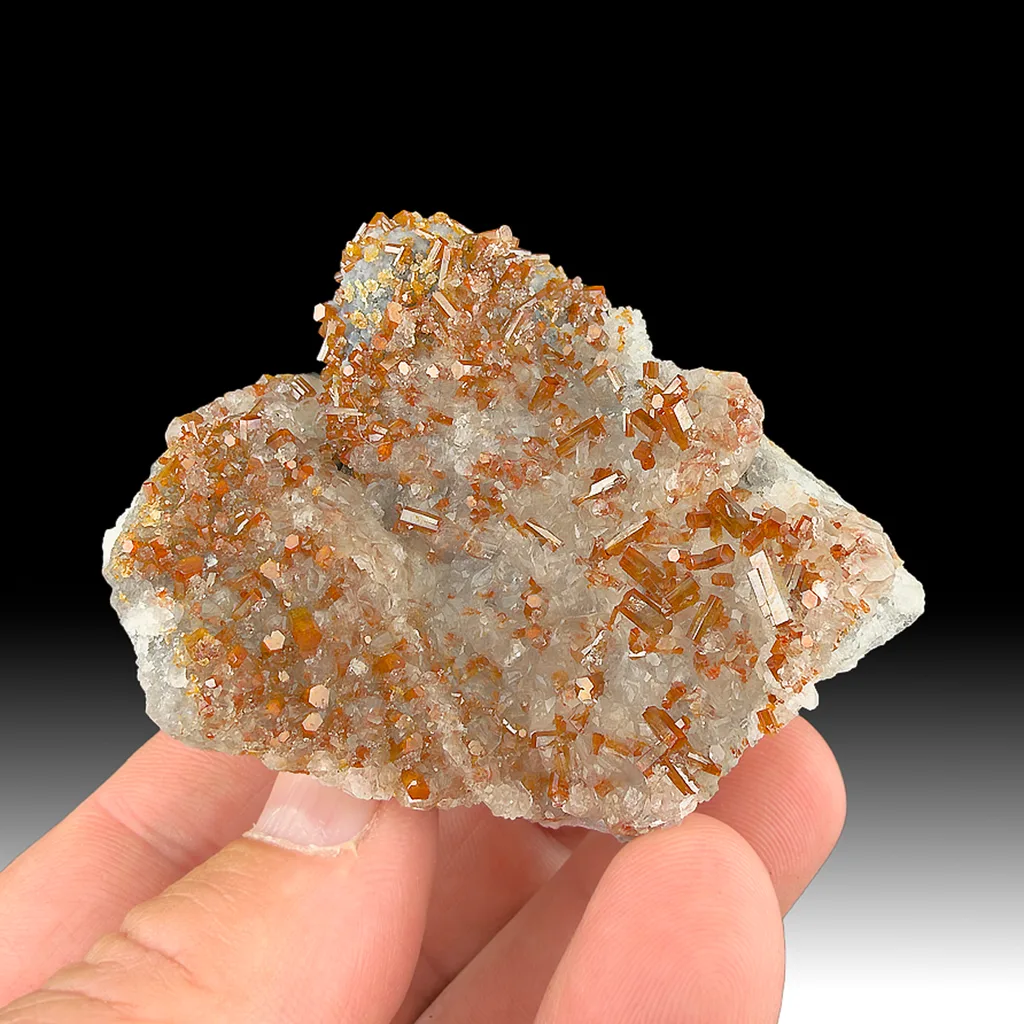
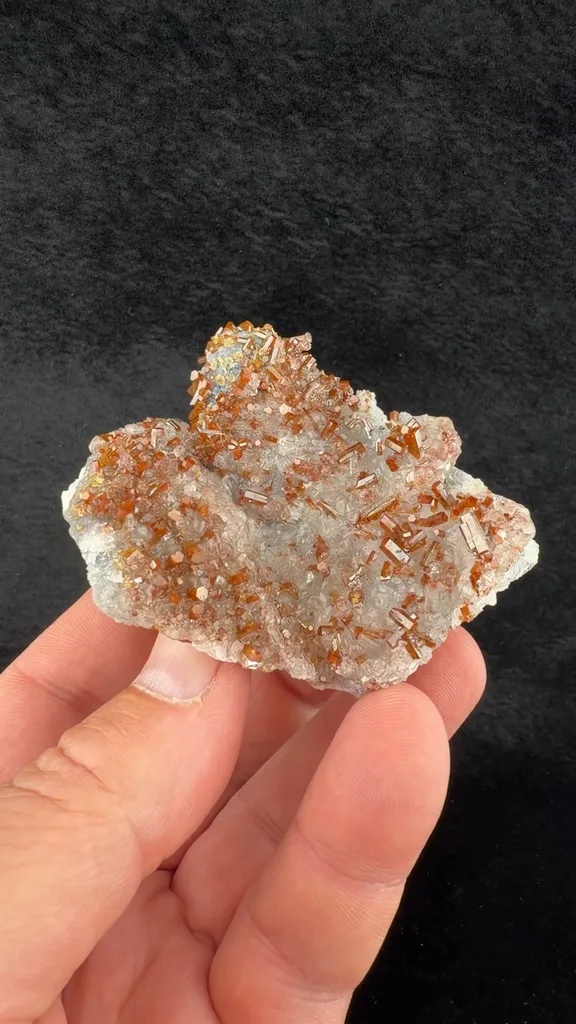
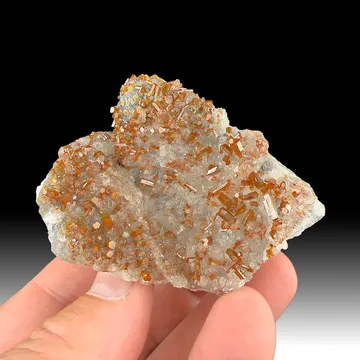
Lustrous prismatic crystals of mostly brown vanadinite to 0.4 cm in length scattered across the front of this brecciated matrix which is mostly coated with colorless crystalline calcite. Minimal damage present. The specimen comes with a previous label from the collection of Ray DeMark. He acquired the piece while in Mexico in 1973.
Situated in the Manuel Benavides Municipality of Chihuahua, Mexico, the Apex Mine (also known as the San Carlos Mine) is a historic lead and silver deposit developed within heavily oxidized, skarn-influenced limestone strata. Commercial underground mining operations were conducted through the mid-twentieth century by industrial firms such as ASARCO, leaving behind extensive secondary oxidation zones rich in lead and vanadium. Weathering of primary lead sulfides in the presence of vanadium-bearing hydrothermal fluids created ideal conditions for the crystallization of prized secondary minerals inside vugs and fractures. Among these, vanadinite occurs in exceptional forms, ranging from classic bright orange-red or hexagonal prismatic crystals to distinctive caramel- and honey-brown tabular aggregates often perched on contrasting white matrix or calcite. Although long inactive for commercial ore production, major specimen recoveries in recent decades have solidified the locality's reputation among mineral collectors as a source for world-class vanadinite and associated secondary species.
Comments