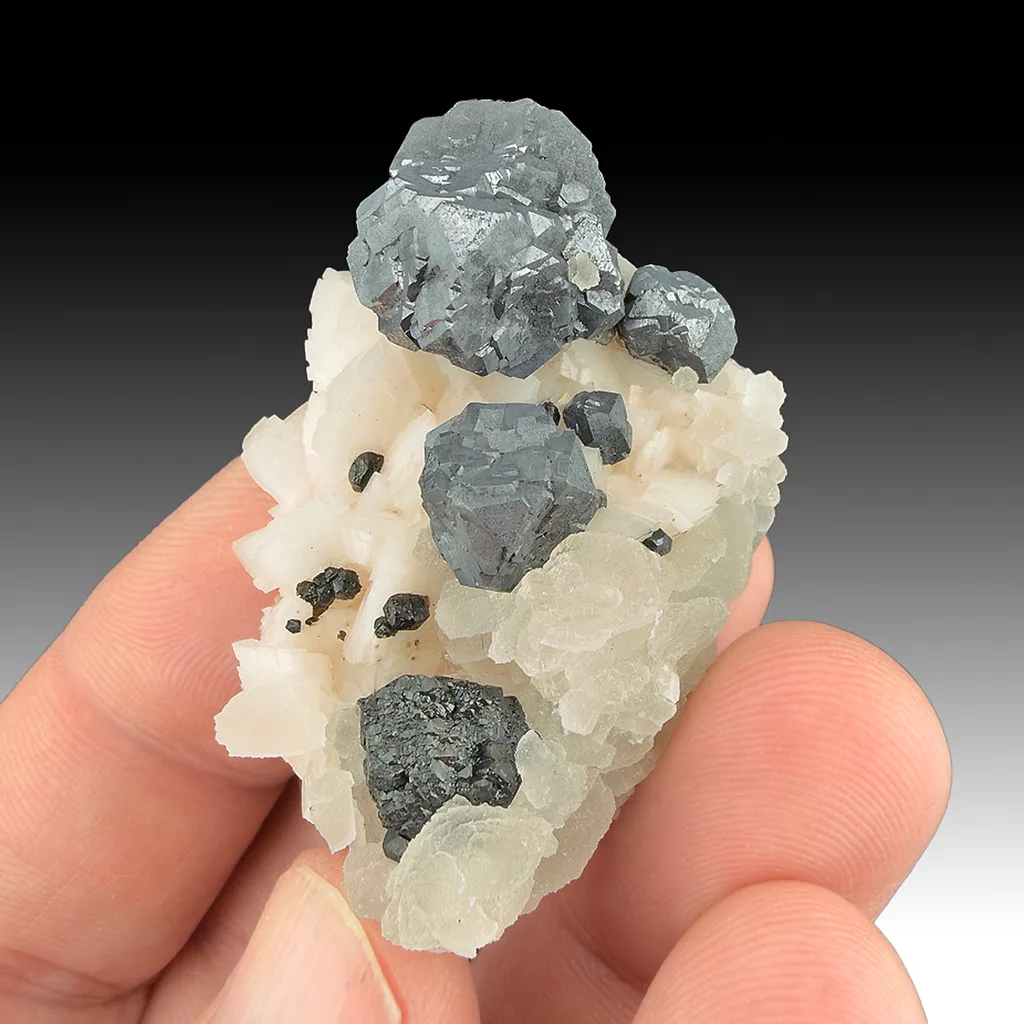
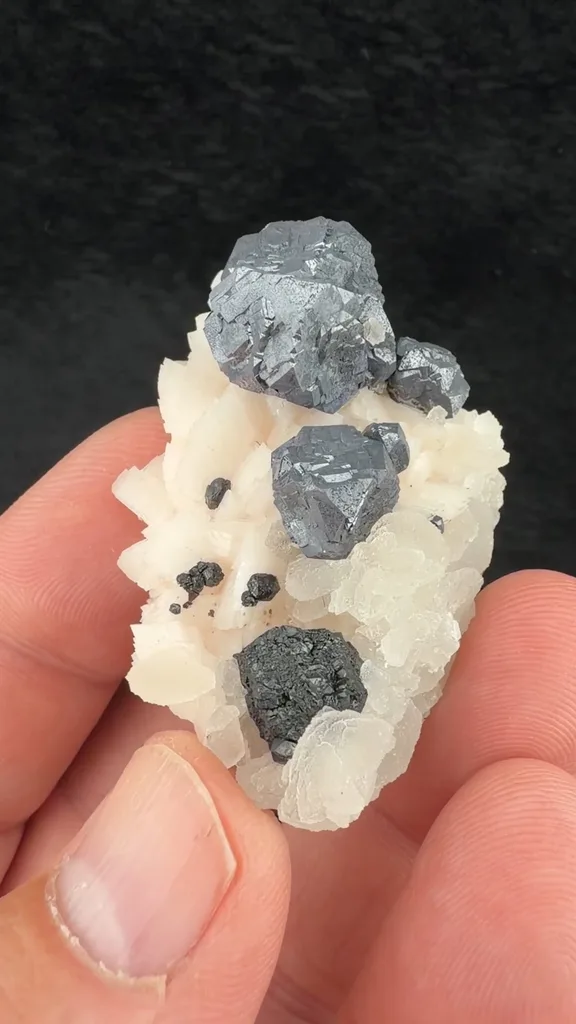
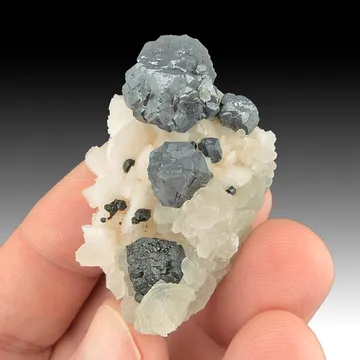
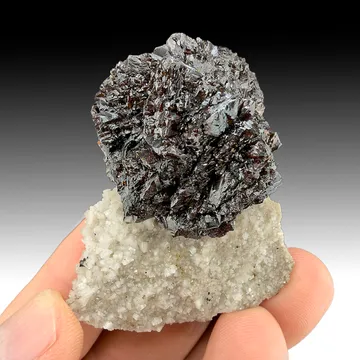
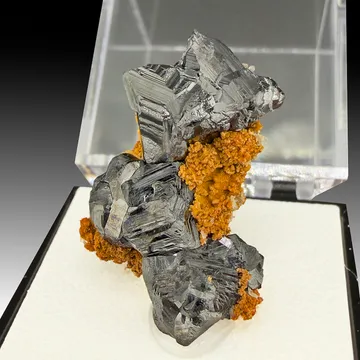
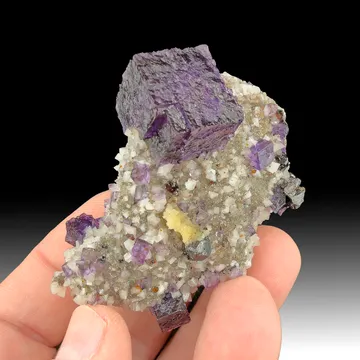
Nice combination piece for the species and locality, semi lustrous cubic crystals of galena measuring to 1.0 cm in size, one cluster of crystals is measuring 1.5 cm across, set up on a light pink dolomite crystal matrix with sphalerite and minor calcite. In great condition. The specimen comes with a previous label from the collection of Jan Erik Larsen.
Touissit, located in the Oriental province of Morocco near the Algerian border, is a historic mining district whose major commercial production began in the early 20th century, specifically around the 1920s, and continued through various phases until operations declined toward the end of the century. Geologically, the deposit is hosted within carbonate-rich sedimentary sequences of Jurassic age, where hydrothermal lead and zinc mineralized fluids circulated through fault systems and replacement horizons. Mineralogically, the district is world-famous among collectors for producing exceptional, highly lustrous specimens of azurite, often associated with vibrant anglesite, cerussite, and vanadinite crystals that developed within oxidized zone cavities.
Comments