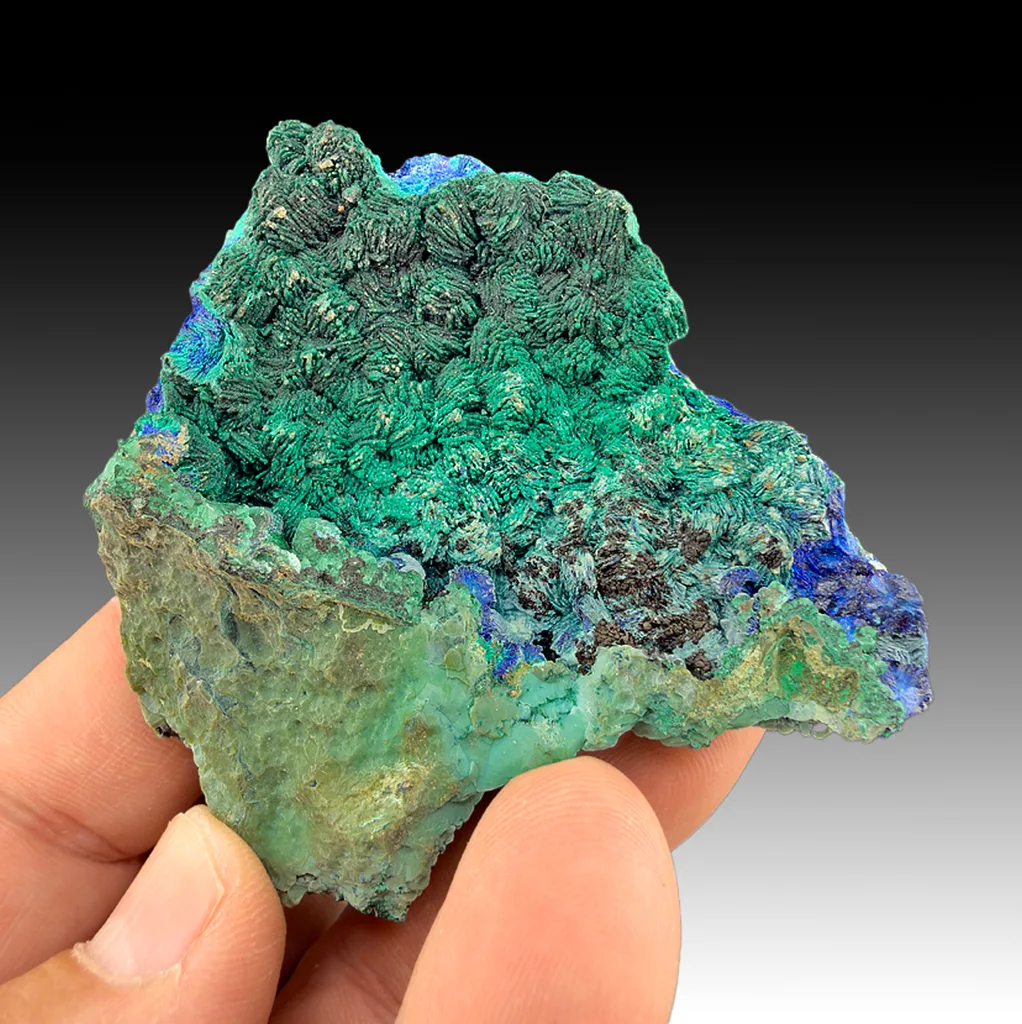
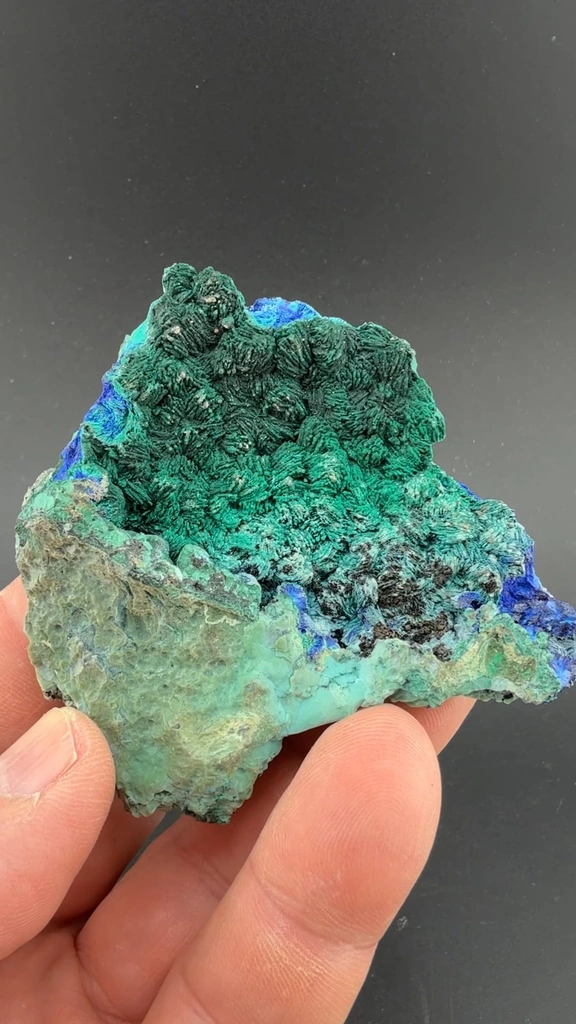
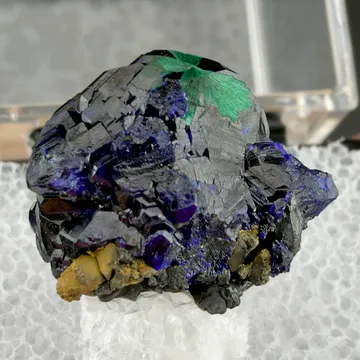
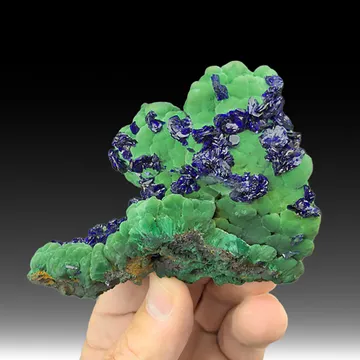
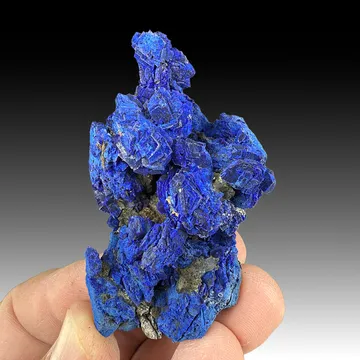
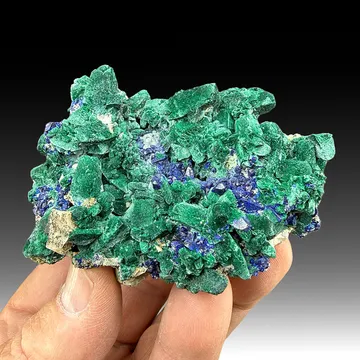
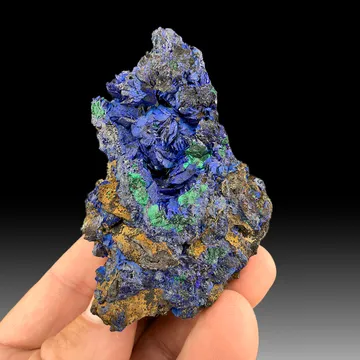
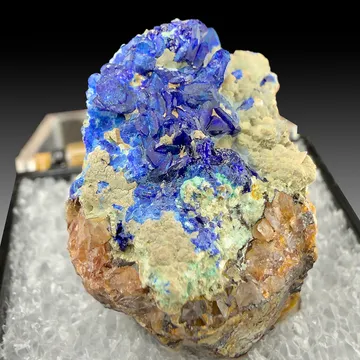
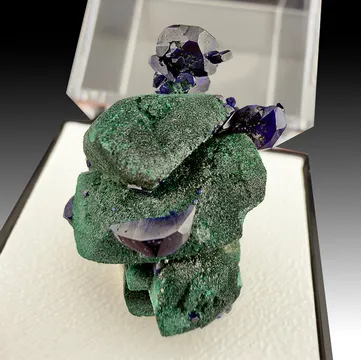
Green pseudomalachite forming replacements after previous bladed crystals of azurite. In good condition. The identity has been confirmed. Collected in 1989 from the 5500 foot level on the south side of the pit.The Chino Mine, located in Santa Rita, Grant County, New Mexico, has a rich history spanning over two centuries, with organized mining initiated around 1804 and large-scale open-pit operations beginning in 1910. Although production has fluctuated over the decades due to economic and operational shifts, including temporary suspensions around 2001 and subsequent revivals, the mine remains a major active producer. Geologically, the deposit is centered on the 58-million-year-old Santa Rita granodiorite stock that intruded older Paleozoic and Cretaceous sedimentary rocks, resulting in extensive porphyry copper mineralization within a heavily faulted structural block known as the Cobre Mountains.Pseudomorphs form through a geological replacement process where one mineral substitutes another while preserving the original external crystal shape and morphology. A fascinating example is pseudomalachite after azurite, wherein phosphate-rich weathering solutions replace precursor azurite crystals with a secondary copper phosphate mineral. This transformation leaves the resulting crystal aggregate wearing the distinct tabular or prismatic habit of the original carbonate species, capturing a snapshot of fluid-rock reactions in oxidized copper deposits.
Comments