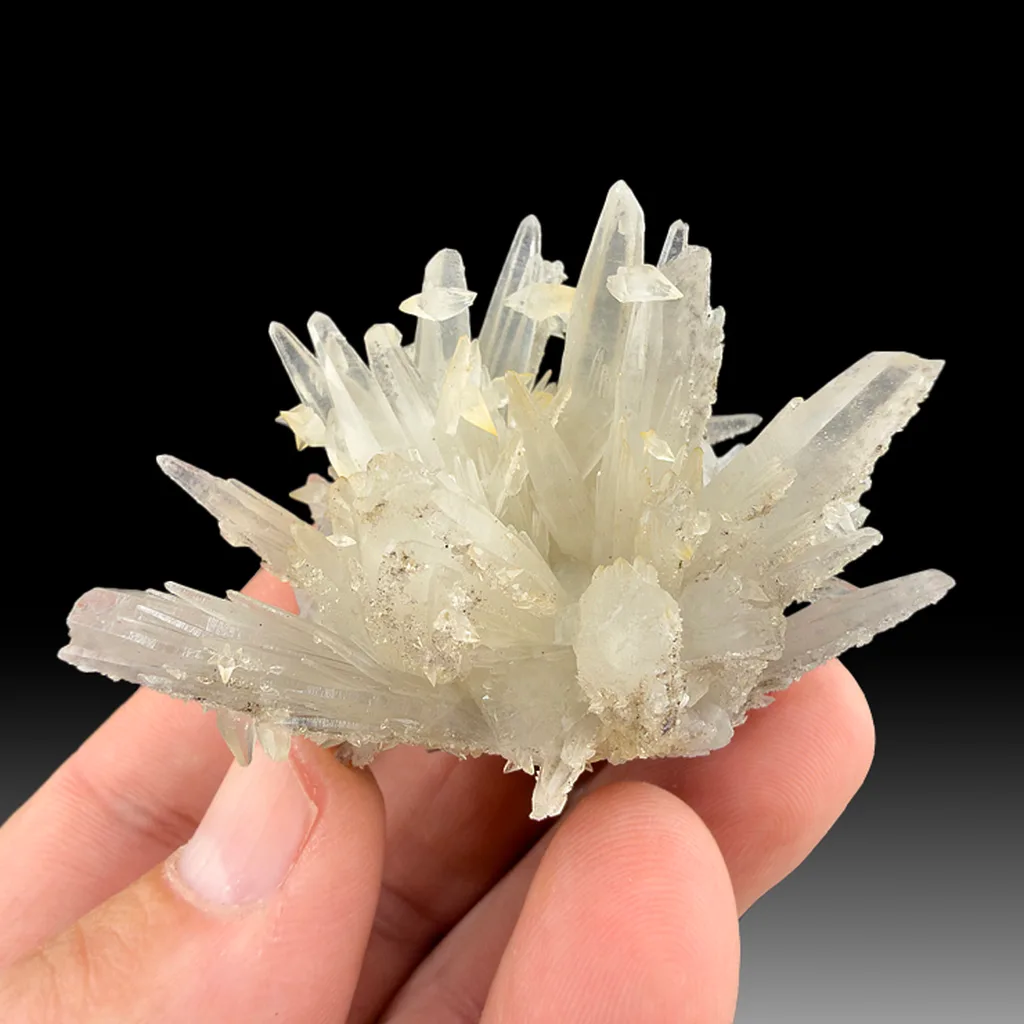
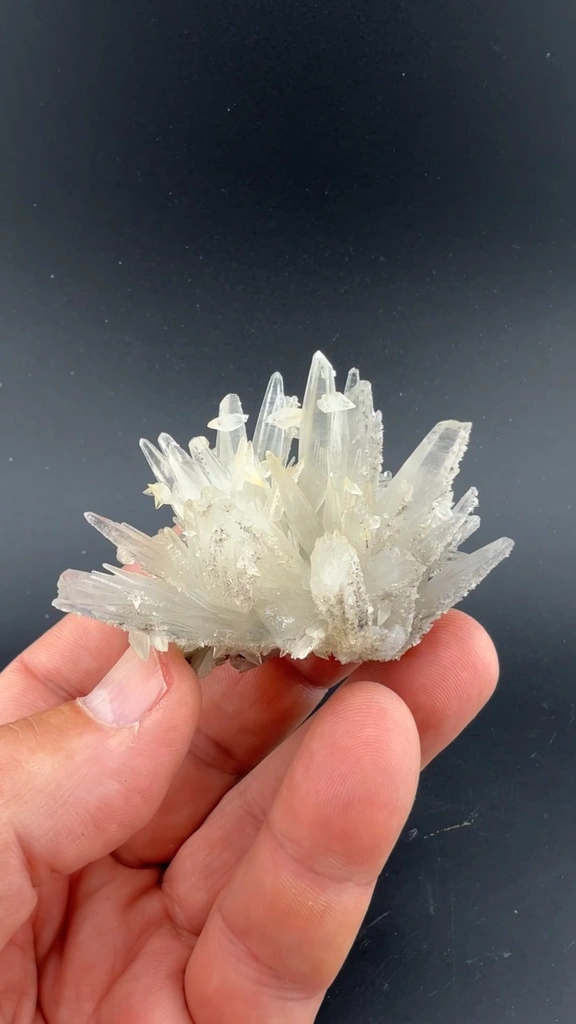
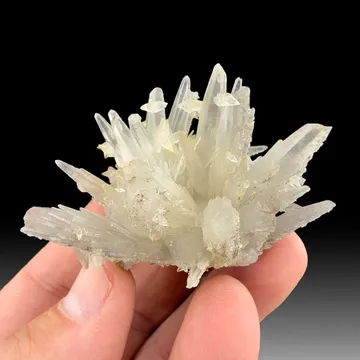
Spiky prismatic colorless and gemmy crystals of aragonite across the top of matrix, small crystals of scalenohedral calcite scattered throughout. Minimal micro-cleaving present, this still in good condition. An excellent example for the species, especially for this famous Mexican locality.The Ojuela Mine, located in Mapimi, Durango, Mexico, was discovered by Spanish prospectors in 1598 and operated intermittently for over 350 years before closing commercially in 1932. Geologically, the deposit is hosted within deformed Cretaceous limestone units that have been intruded by Tertiary igneous rocks, creating an extensive hydrothermal pipe and vein system. Intense secondary oxidation processes acting on primary sulfide mineralization have produced a world-renowned zone of rich secondary mineral assemblages, making the mine famous for its exceptional variety of colorful arsenates, carbonates, and oxides.
Comments