$320Median
169Sold (12 mo)
$150Last sale
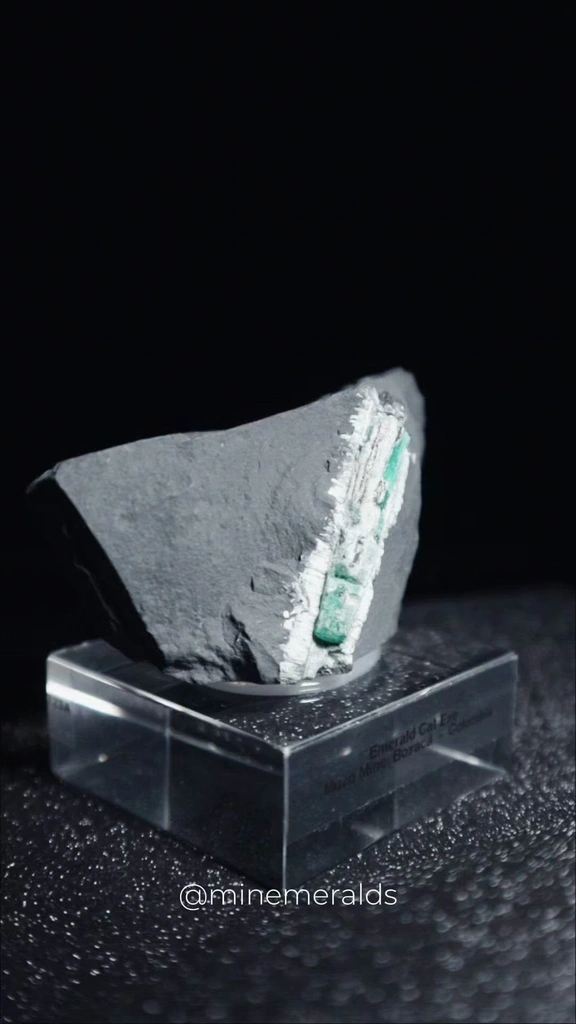
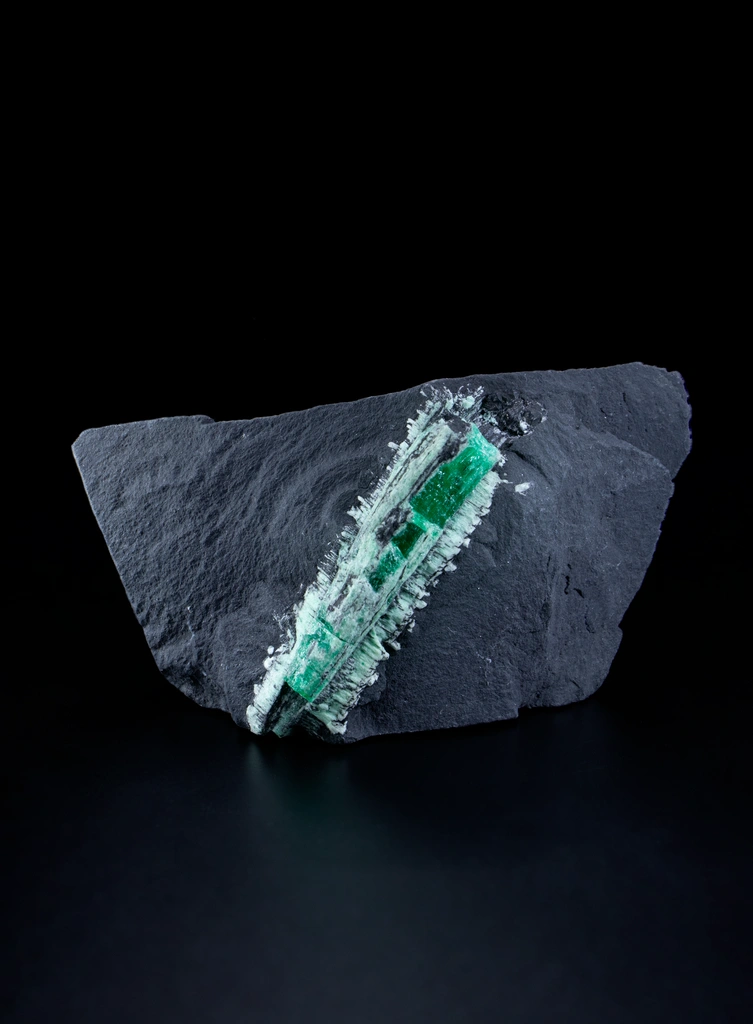
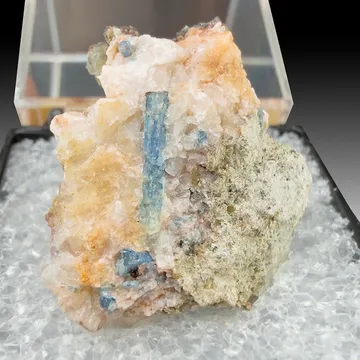
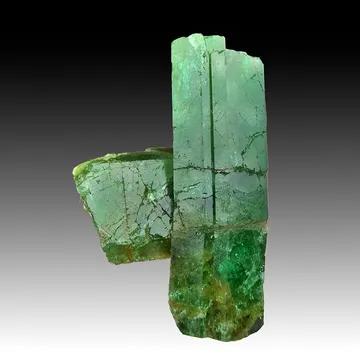
This remarkable specimen features a prismatic emerald crystal bordered by parallel blades of albite on a black carbonaceous shale matrix, a classic mineral association from Colombia's Western Emerald Belt. The emerald displays a pronounced internal structure oriented parallel to the crystallographic C-axis, a characteristic feature of the rare cat's-eye emerald variety. The vivid green crystal contrasts beautifully with the white albite and dark shale, producing an aesthetically striking specimen while faithfully preserving its geological setting.
It is important to distinguish that the cat's-eye (chatoyant) effect is not visible in the rough crystal itself. Rather, chatoyancy becomes apparent only after the crystal has been correctly oriented and fashioned into a cabochon. The phenomenon is produced by densely aligned tubular and fibrous internal structures running parallel to the crystal's length, which reflect light as a single luminous band. Many crystals displaying this internal architecture originate from trapiche emeralds or trapiche-related overgrowths, as both share comparable growth environments that generate the oriented inclusions and tubular structures responsible for this rare optical phenomenon.
The preservation of the crystal in its natural matrix provides valuable insight into the geological environment in which this uncommon emerald variety formed. Combining crystallographic interest, gemological significance, and excellent aesthetics, the specimen represents an outstanding example of one of the rarest and most fascinating growth habits found in natural emeralds.
minID: 1QQ-V9P
Comments