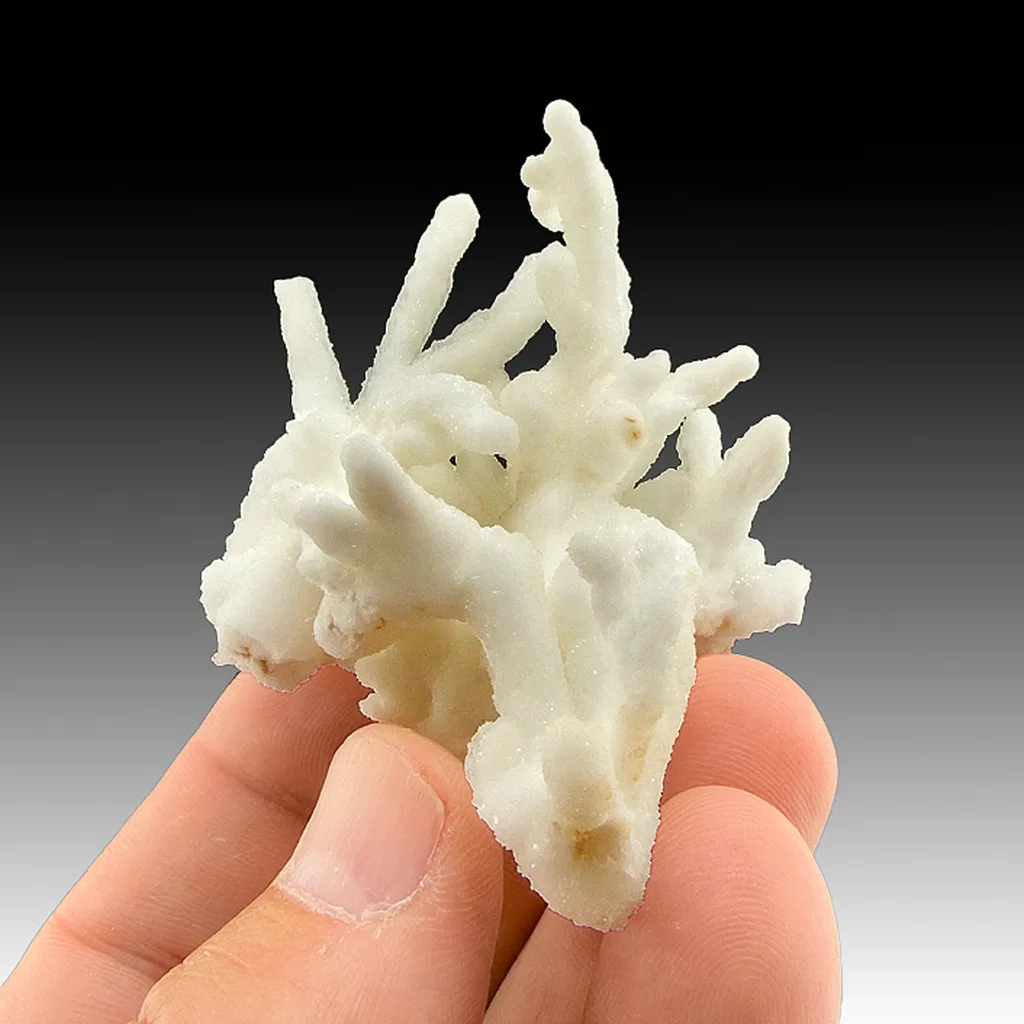
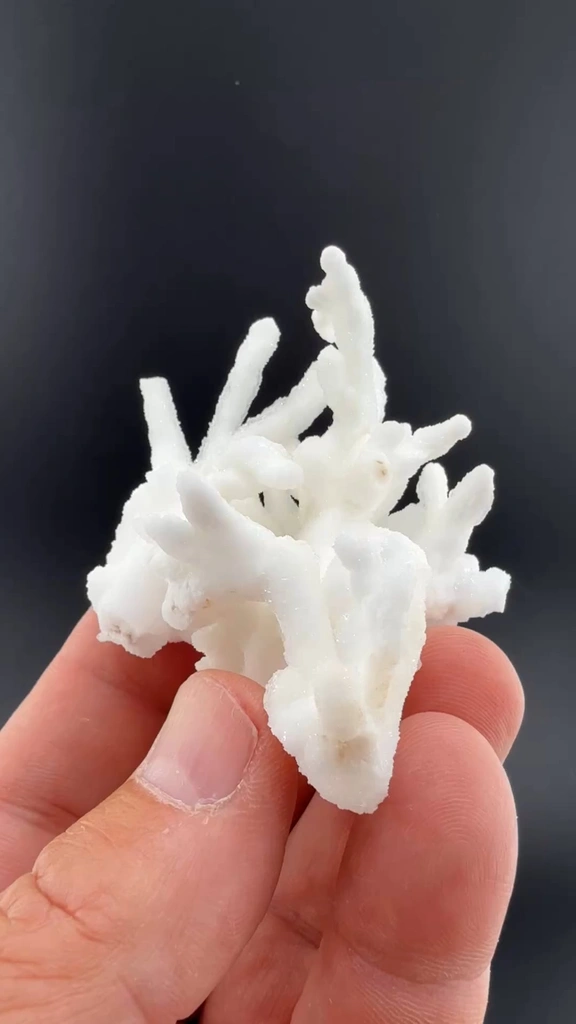
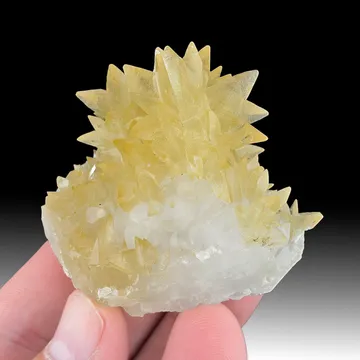
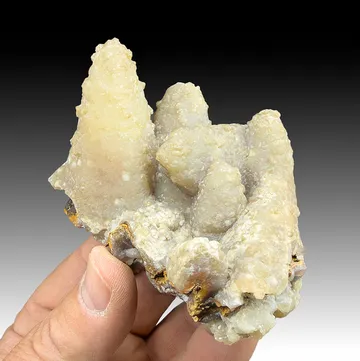
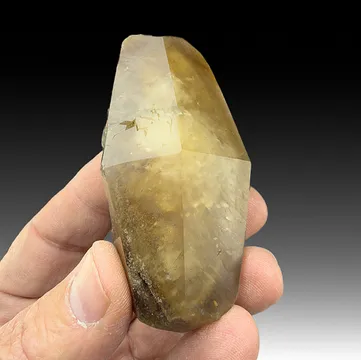
Sparkling stalactitic crystallized calcite. In good condition with only one damaged stalactite.
The San Antonio Mine is located in the East Camp of the historic Santa Eulalia mining district in Chihuahua, Mexico. The geology of the mine is characterized by a carbonate replacement deposit where zinc-lead-silver skarns and peripheral massive sulfide bodies are hosted within Lower Cretaceous limestone. These deposits developed as hydrothermal fluids associated with Oligocene felsite dikes, intruded approximately 26.6 million years ago, replaced the surrounding limestone along the San Antonio Graben. Historically, while the Spanish first discovered mineralization in Santa Eulalia in 1591, major mining in the East Camp intensified in the nineteenth and twentieth centuries as operations targeted deep, unoxidized sulfide ores beneath the surface oxide zones. The San Antonio Mine became especially famous among mineralogists for producing exceptional specimens of multi-colored smithsonite, which occurred near the local water table where deep mining operations frequently encountered severe groundwater flooding.
Comments