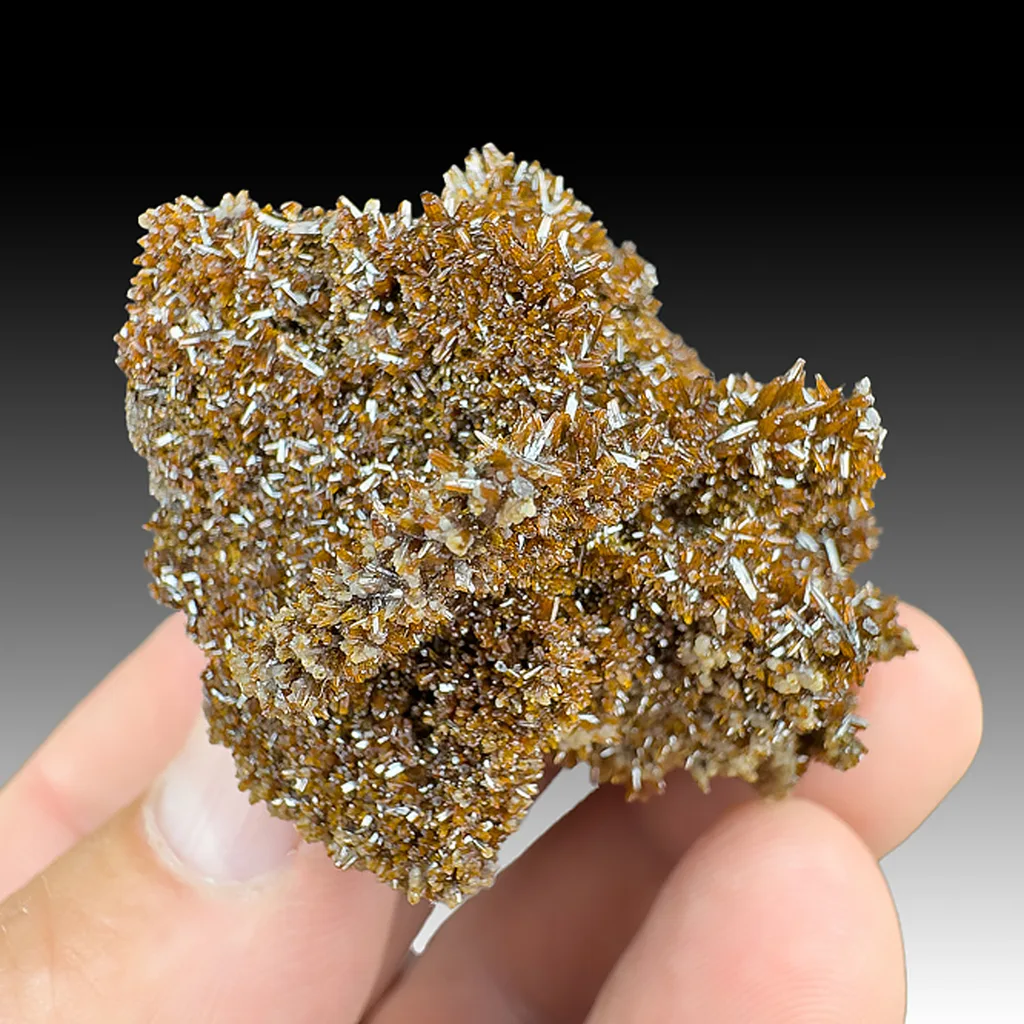
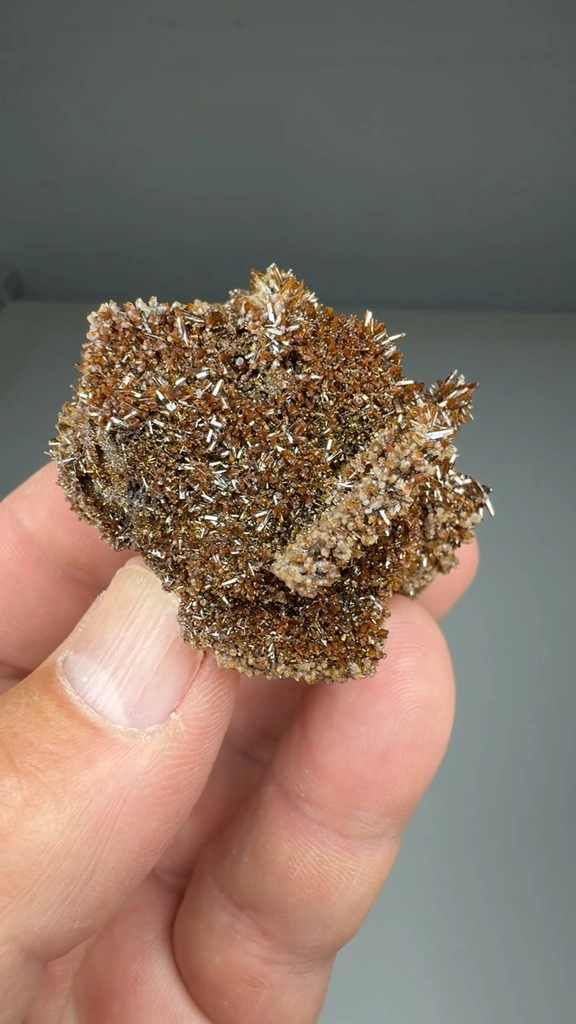
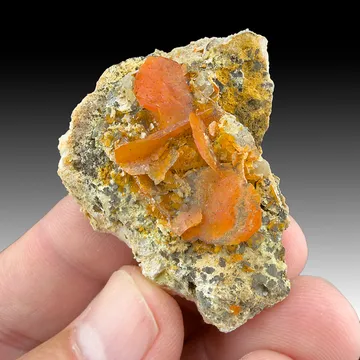
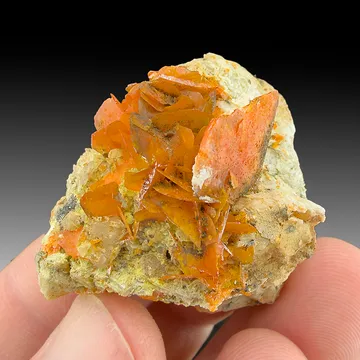
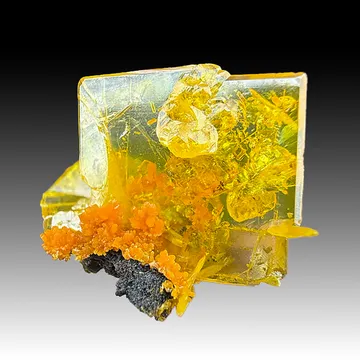
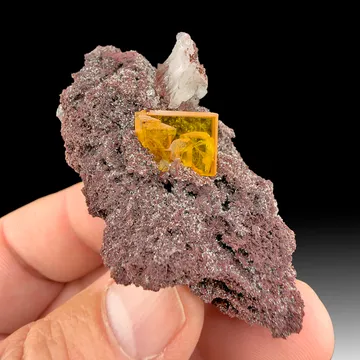
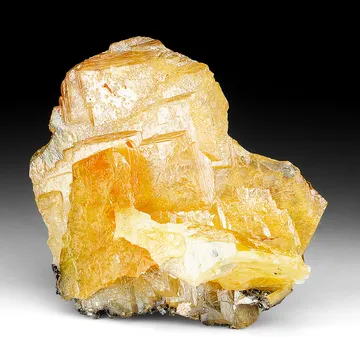
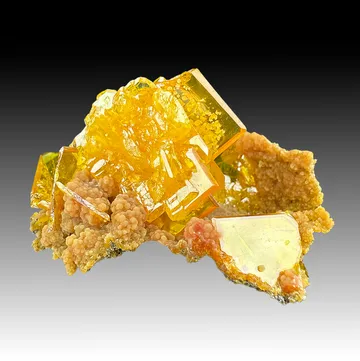
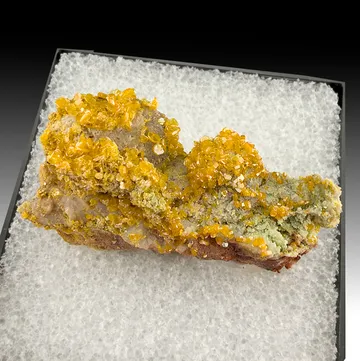
A cluster of tabular crystals of what were once wulfenite measuring to 3.5 cm on edge is now completely replaced by needlelike sparkling crystals of vanadinite. In great condition all around with no points of attachment. Neat specimen for this famous locality.
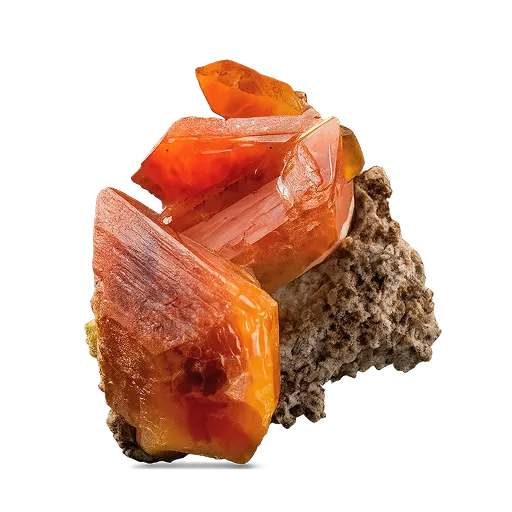
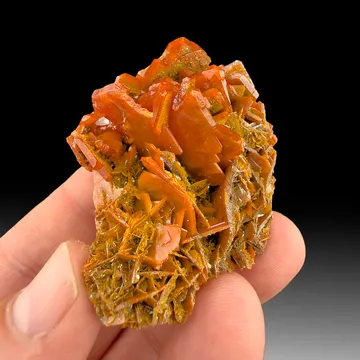
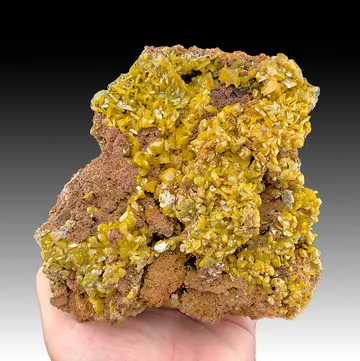
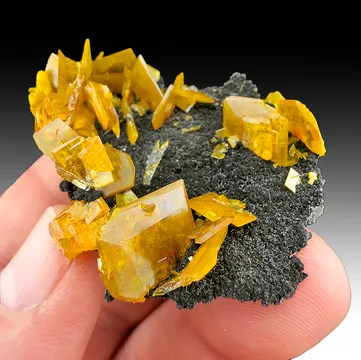
The Erupcion mine (also known as the Ahumada-Erupcion complex), situated in the Los Lamentos Mountains of the Ahumada Municipality within Chihuahua, Mexico, is a historic underground mining operation renowned for producing fine mineral specimens of bright orange-to-red wulfenite crystals. Geologically, this deposit is classified as a classic lead-zinc-silver carbonate replacement system (manto deposit) hosted within Cretaceous-age limestones. Intense supergene oxidation of the primary galena and sphalerite sulfide bodies by circulating groundwater allowed dissolved molybdenum and lead to react, precipitating thick, robust, tabular wulfenite crystals on a highly porous matrix of iron oxides and sand carbonate, often associated with vanadinite and descloizite. Historically, the mineralized outcrops were discovered in 1907, with formal commercial underground production beginning around 1912 under the Erupcion Mining Company. Production expanded dramatically in the 1920s when a specialized railroad line was constructed to haul high-grade lead-silver carbonate ores to smetlers, but the easily accessible primary manto reserves were depleted by the early 1930s, leading to the cessation of large-scale corporate operations in 1932.
A pseudomorph of vanadinite after wulfenite represents a fascinating chemical replacement process where early-formed crystals of lead molybdate (wulfenite) are structurally and chemically transformed into lead chlorovanadate (vanadinite) while perfectly maintaining the original shape. This phenomenon typically occurs in the highly oxidized, supergene zones of lead-bearing ore deposits located in arid regions. As low-temperature, vanadium-rich meteoric waters circulate through the fractured rock, they interact with preexisting, sharp, square tabular wulfenite crystals, causing a gradual chemical exchange where vanadium and chlorine atoms substitute for molybdenum. The resulting specimen retains the distinctive, flat, tabular morphology and crystalline habit of the original wulfenite, but possesses the deep red, orange, or brown color and chemical composition of the replacing vanadinite. This precise replacement provides geologists with critical information regarding changing fluid chemistry, pH fluctuations, and the sequential evolution of secondary mineralization within weathering ore bodies.
Comments