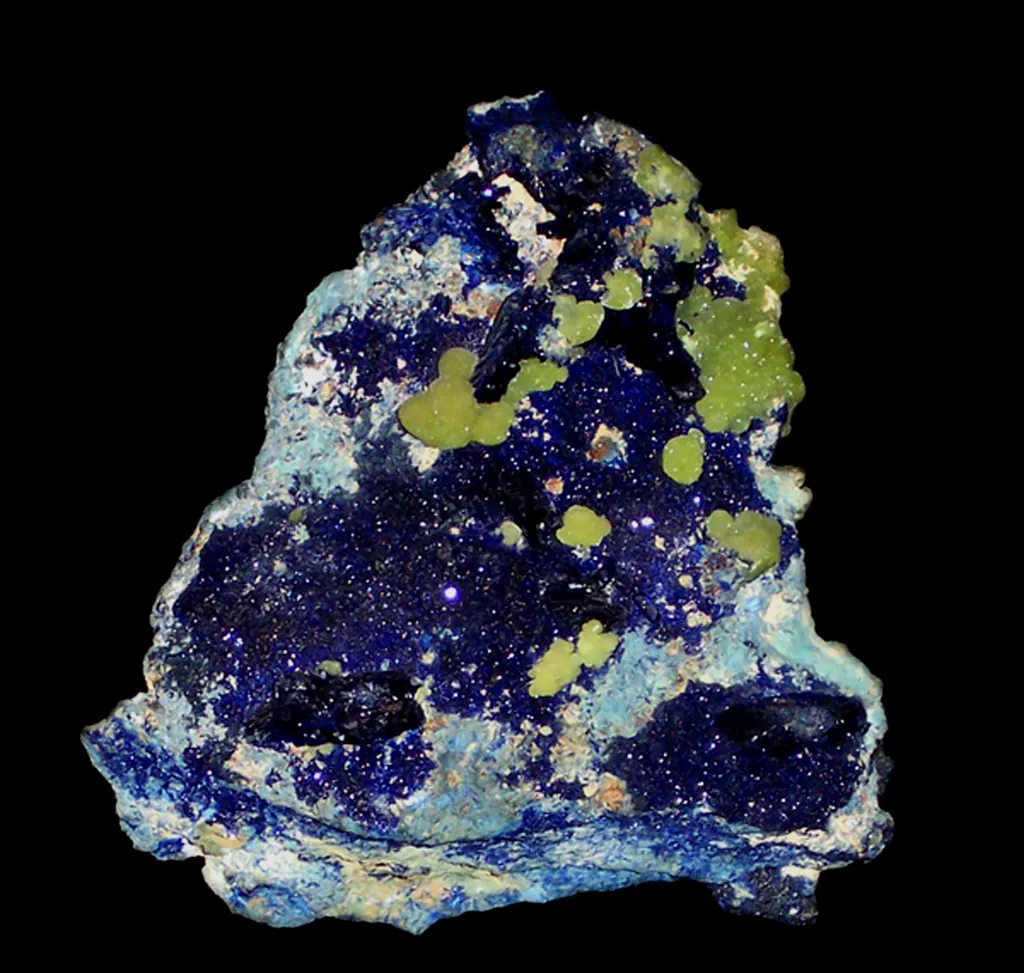
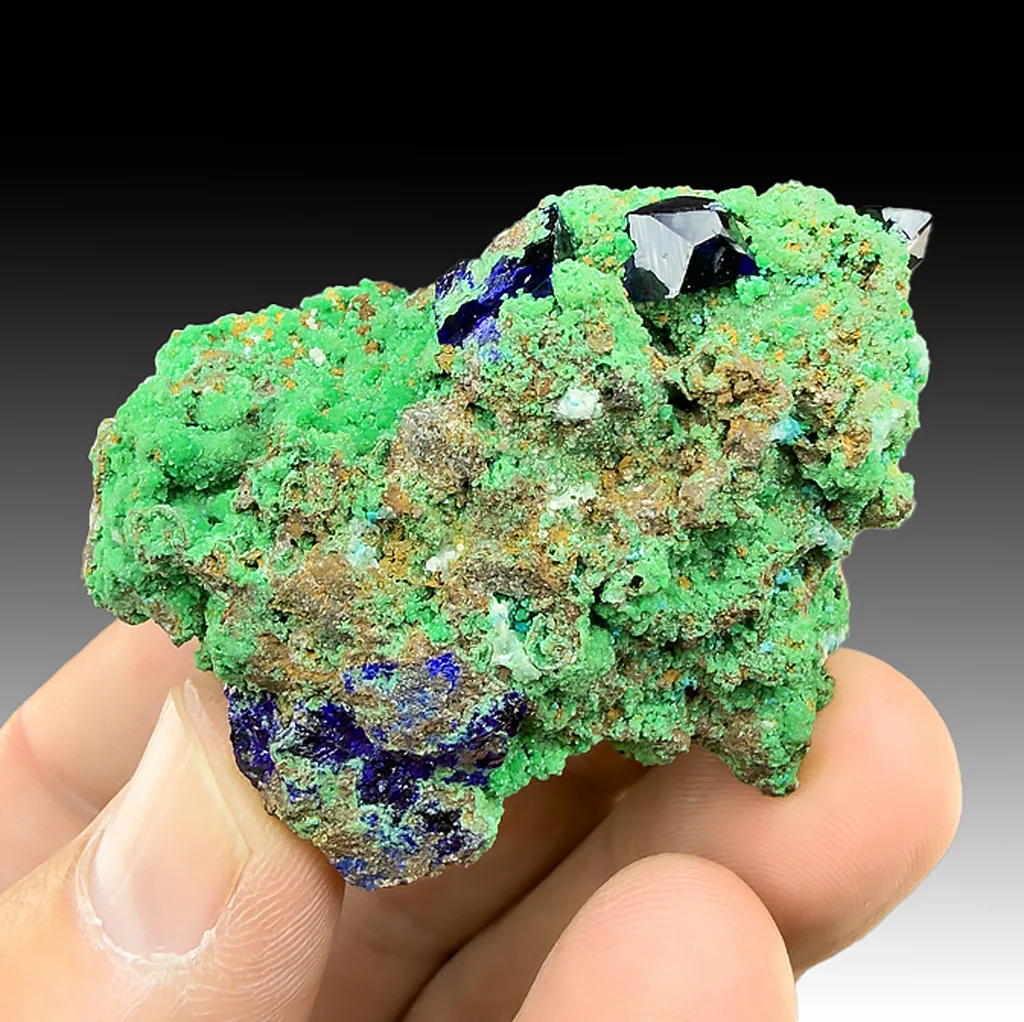
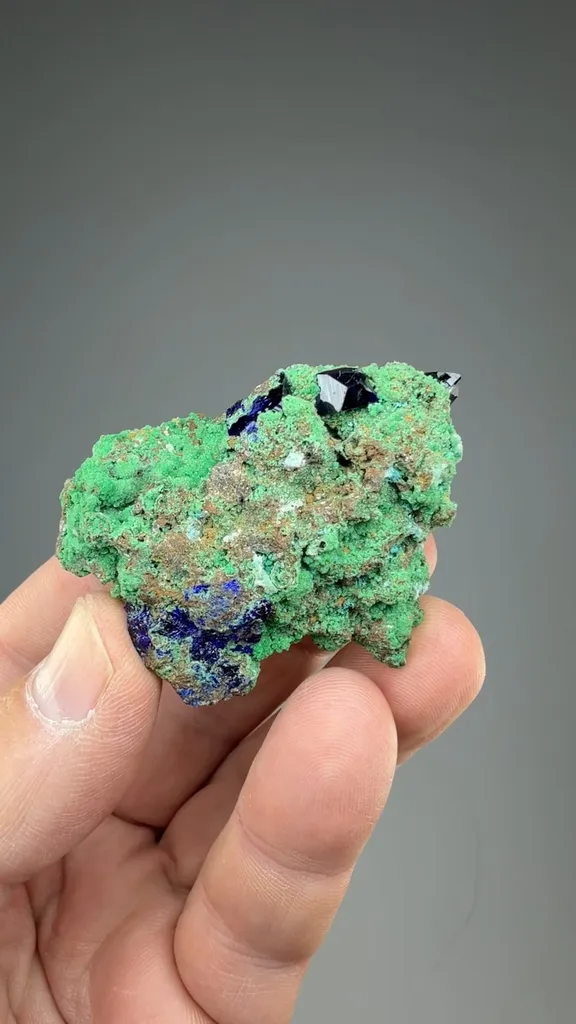
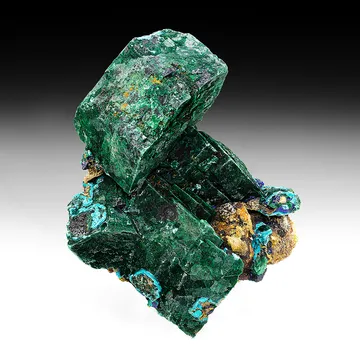
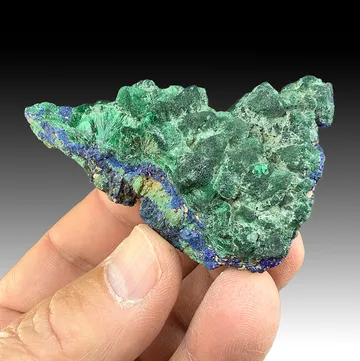
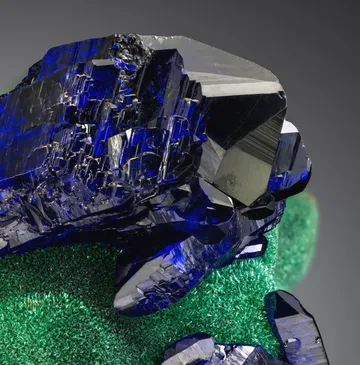
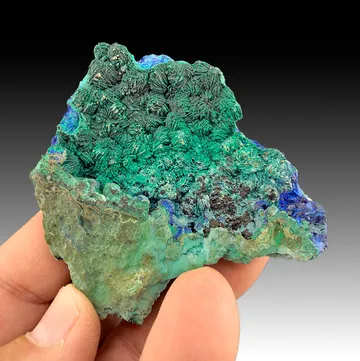
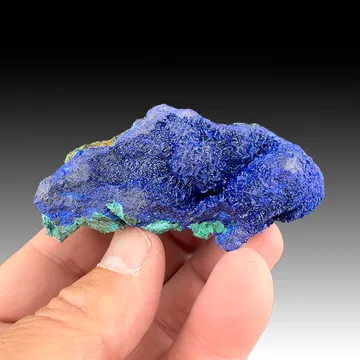
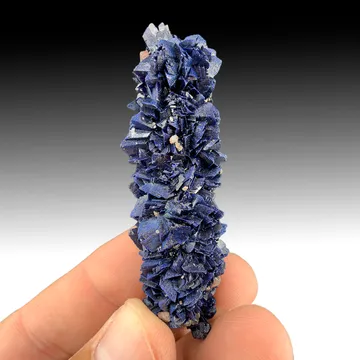
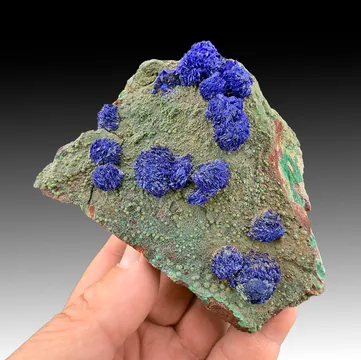
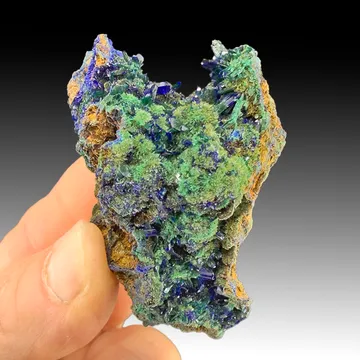
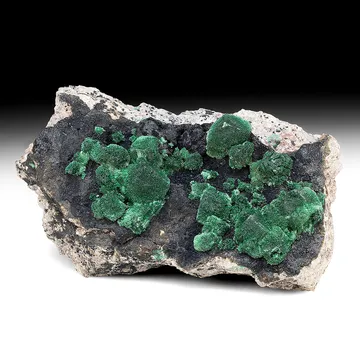
Classic historical specimen from this famous locality, lustrous blocky blue crystals of azurite to 0.8 cm in size across the top of matrix green crystallized arsentsumebite. In good condition with very minimal damage present. The specimen comes with an antique label as shown at the end of the video dates to 1913.The Tsumeb mine, located in the Oshikoto Region of northern Namibia and historically operated under German colonial and South African administrations, is internationally recognized as the premier mineral locality on Earth, having produced over three hundred distinct mineral species, including dozens of unique type localities. Geologically, this world-class deposit is a massive, pipe-like polymetallic replacement structure hosted within a steeply dipping karsified syncline of Neoproterozoic-age dolostones belonging to the Otavi Group. High-temperature hydrothermal fluids ascended through an intricate breccia pipe framework, depositing immense zones of primary copper, lead, zinc, silver, and arsenic sulfides which were subsequently subjected to millions of years of deep, multi-stage supergene oxidation, creating three distinct, deeply buried oxidation zones where stunning, brightly colored secondary crystals like dioptase, azurite, cerussite, wulfenite, and mimetite precipitated inside vast open caverns. Historically, indigenous San people surface-mined the rich copper outcrops for centuries before formal, deep-level European underground extraction and surface quarrying were initiated by the Otavi Minen- und Eisenbahn-Gesellschaft in 1900. The mine operated with immense industrial intensity under various corporate entities, most notably the Tsumeb Corporation Limited starting in 1947, running almost continuously for nearly a century through world wars and political transitions until escalating deep-level pumping costs, labor strikes, and economic depletion forced the permanent closure of all underground mining operations in 1996.Arthur Kusche, operating out of Munich (Muenchen), Germany, during the early twentieth century, was a prominent mineral dealer who supplied high-quality regional and international specimens to notable European and global private collectors, academic institutions, and museums. Registered commercially as Arthur Kusche GmbH, his dealership functioned alongside other well-known contemporary Munich firms like Wilhelm Maucher and the Mineralogisches Institut, actively sourcing choice mineral specimens during the peak of central European geological exploration and mining activity. Geologically and historically, Kusche was instrumental in preserving and documenting the provenance of classic alpine, Scandinavian, and eastern European mineralized deposits, acquiring specialized pieces from legendary localities such as the silver mines of Freiberg, the polymetallic systems of Romania, and regional German pegmatites. Historical archives, museum catalogs, and acquisition logs from institutions like the Royal Scientific Society in Trondheim and the State Geological Museum of Lausanne confirm his commercial activities were highly vibrant throughout the 1910s and 1920s, showing that he routinely curated, cataloged, and sold pristine specimens embedded in calcite, quartz, and fluorite gangue matrices.
Comments