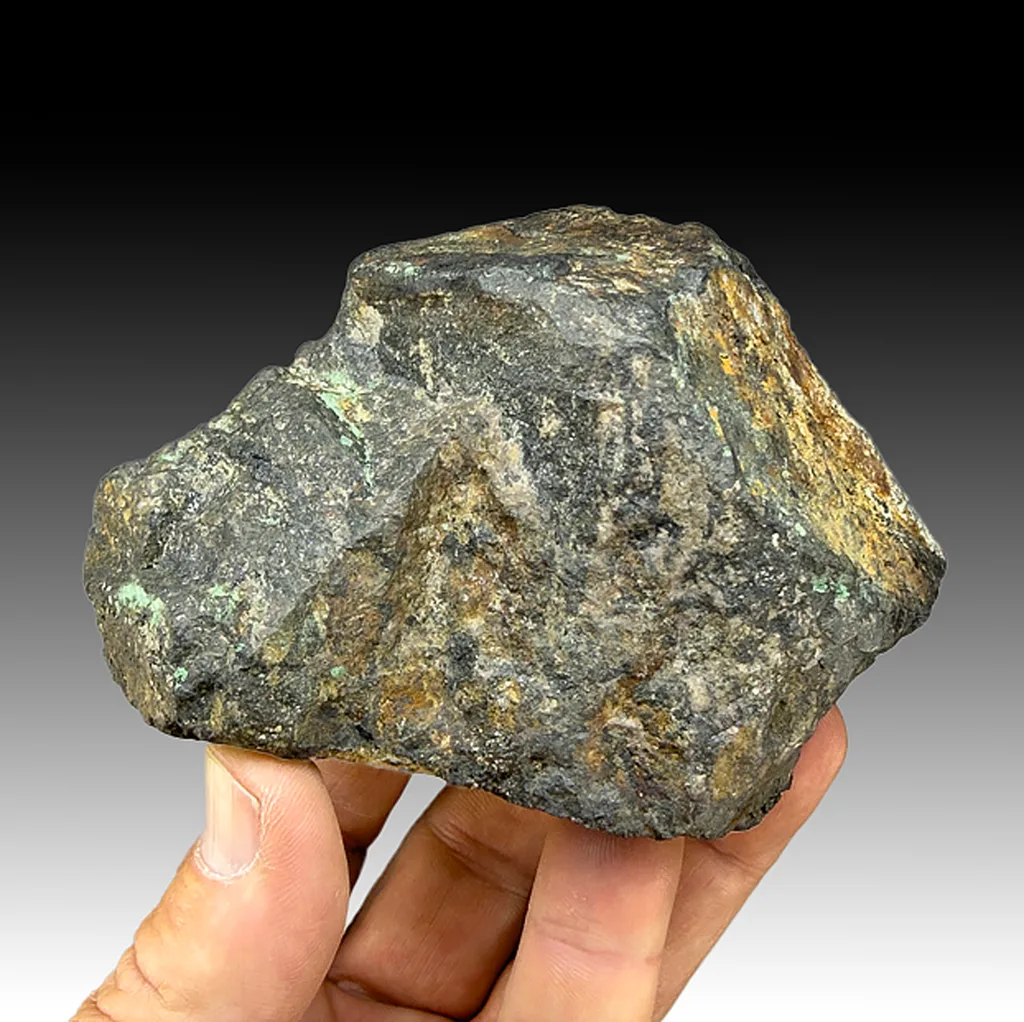
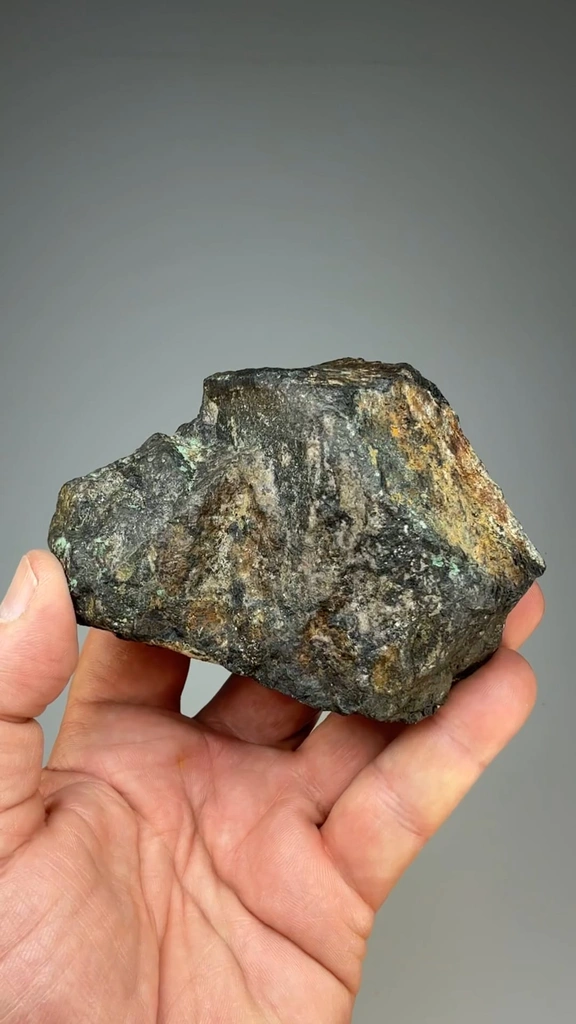
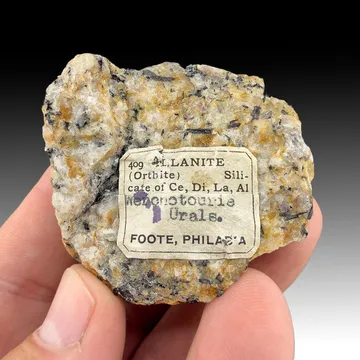
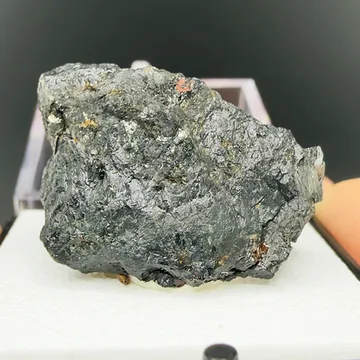
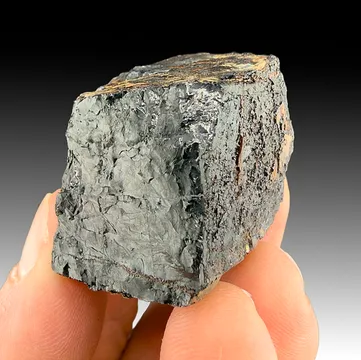
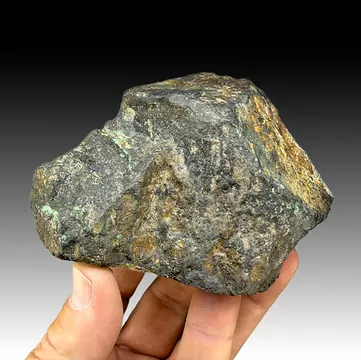
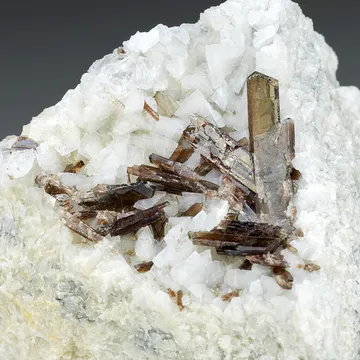
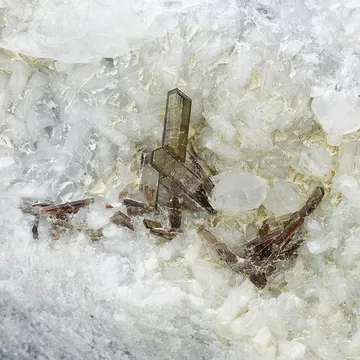
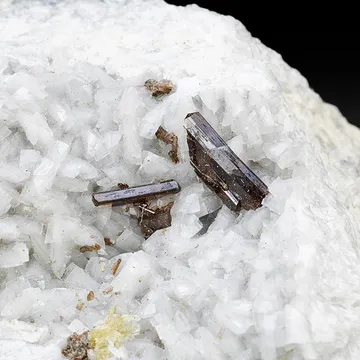
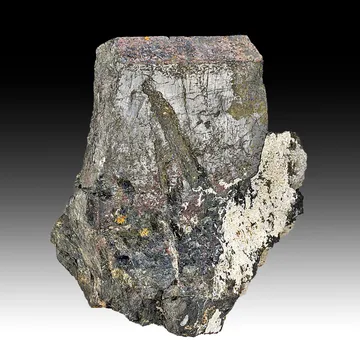
Black masses of allanite-Ce throughout matrix. The specimen comes with an antique label as shown at the end of the video.
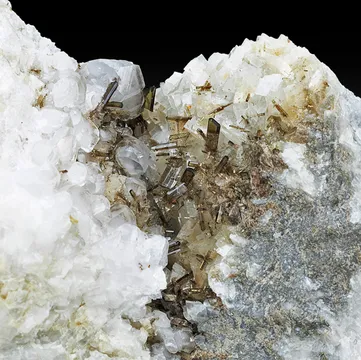
The Hidra island mining district (formerly known as Hittero), situated within Flekkefjord Municipality in Agder County, Norway, was a historically significant source of feldspar and rare-earth minerals, specifically renowned for its exceptional crystals of allanite. Geologically, the island is positioned within the Sveconorwegian orogenic belt and is characterized by a dense network of complex, coarse-grained granitic pegmatite dikes that intruded massive Proterozoic-age anorthosite and norite bedrock complexes. Intense igneous fractionation concentrated incompatible elements within these pegmatites, forming large, tabular crystals of allanite (a complex calcium cerium iron aluminum silicate mineral) embedded within microcline feldspar and quartz, alongside accessory minerals like gadolinite, xenotime, and euxenite. Historically, small-scale quarrying for quartz and feldspar began along the coastal cliffs in the early nineteenth century, with formal commercial operations expanding rapidly after 1850 to supply raw materials to the European porcelain and ceramic industries. During these operations, large volumes of allanite and other rare minerals were systematically recovered as byproducts of the feldspar extraction, attracting intense international scientific study and mineral collectors to major local workings such as the Narestad, Rasvaag, and Urstad quarries. Commercial extraction across the island's pegmatite deposits operated continuously through the late nineteenth and early twentieth centuries, but rising production costs and the exhaustion of easily accessible, high-purity feldspar zones led to a steady industrial contraction, culminating in the permanent cessation of all commercial corporate quarrying operations on Hidra by 1965.
Ward's Natural Science Establishment, located in Rochester, New York, is one of the oldest and most influential scientific supply houses and mineral dealerships in United States history. Founded in 1862 by Henry Augustus Ward, a prominent professor of natural sciences at the University of Rochester, the institution began as a specialized studio to create, preserve, and distribute high-quality geological collections, taxidermy, and anatomical models for museums and universities. Geologically and mineralogically, the company became a primary global conduit for classic mineral specimens, systematically sourcing, cataloging, and distributing rare and aesthetic reference pieces from important international discoveries throughout the late 19th and 20th centuries. Historically, the business operated out of its iconic, sprawling College Avenue complex from 1869 until a devastating fire destroyed a large portion of its inventory and historical archives in 1930, prompting a relocation to its modern facilities on Ridge Road. The establishment played a foundational role in professionalizing American museum curation, serving as a training ground for legendary museum builders, and establishing standardized mineral kits that educated generations of geologists.
Comments