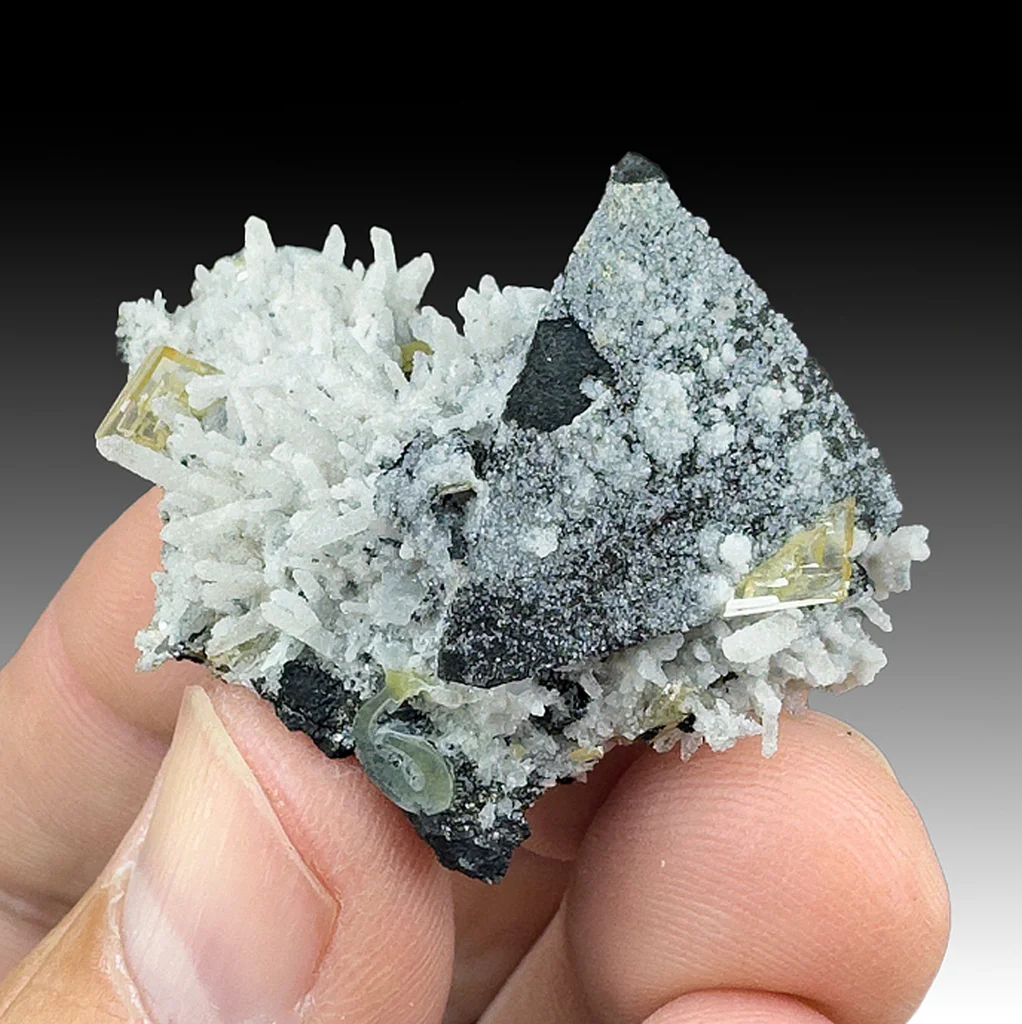
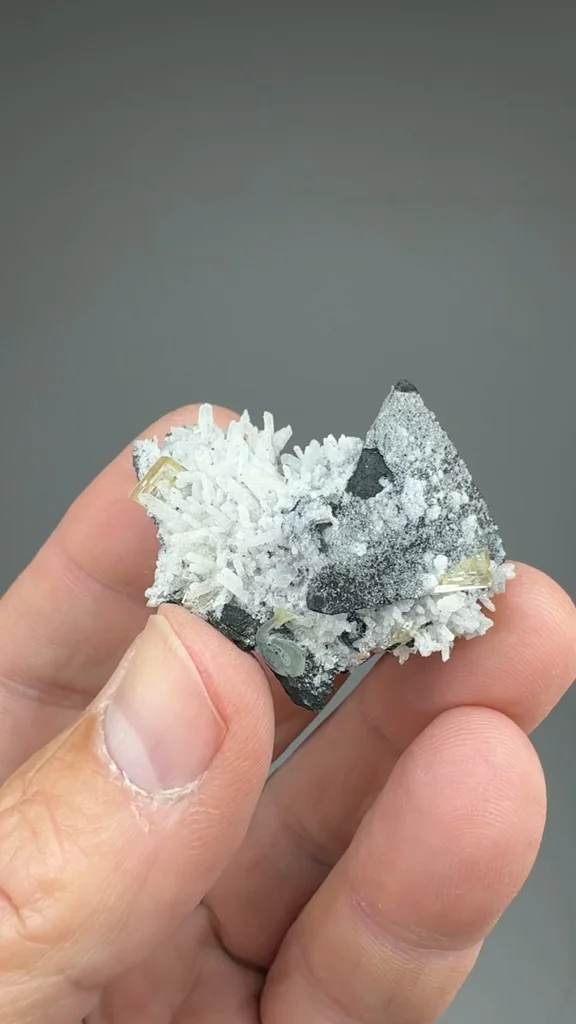
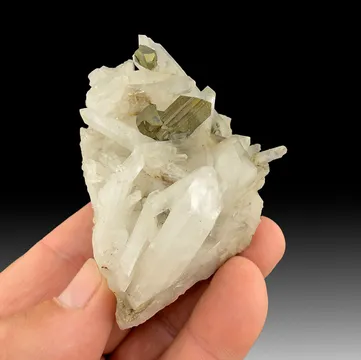
Fine large sharp crystal of tennantite measuring 2.5 cm across on a crystallized quartz matrix with several thin platy gemmy crystals of wulfenite. This is in good condition. Classic locality for the species.The Tsumeb Mine, located in northern Namibia, is widely regarded as one of the most prolific and diverse mineral localities on Earth. Geologically, it is a polymetallic pipe-like deposit hosted within the Precambrian Otavi Group carbonates, specifically within a karst-controlled breccia pipe that extends over 1000 meters deep. The ore body formed through the circulation of metal-rich hydrothermal fluids that replaced the host dolostone with massive sulfides, later undergoing intense oxidation that produced a legendary array of secondary minerals. Historically, mining began in 1907 under German colonial administration and continued through various ownerships, including the Tsumeb Corporation Limited, until the mine finally closed in 1996. The site is world-famous for its exceptional tennantite specimens, which often occur as large, well-formed tetrahedral crystals with a metallic, dark grey to black luster. These tennantite crystals are frequently found in association with other copper and arsenic minerals, sometimes acting as a substrate for vibrant secondary species like azurite or smithsonite, making them highly prized by systematic collectors and mineralogists alike.
Comments