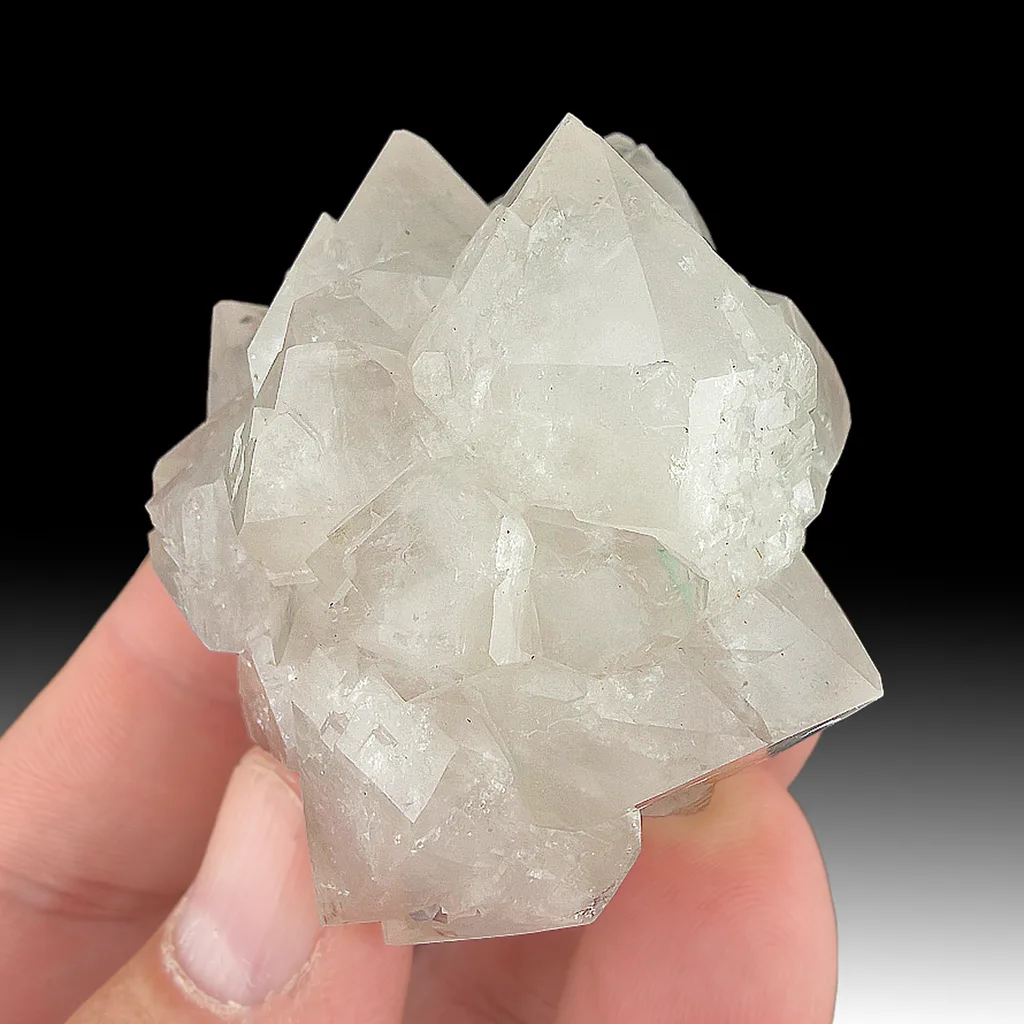
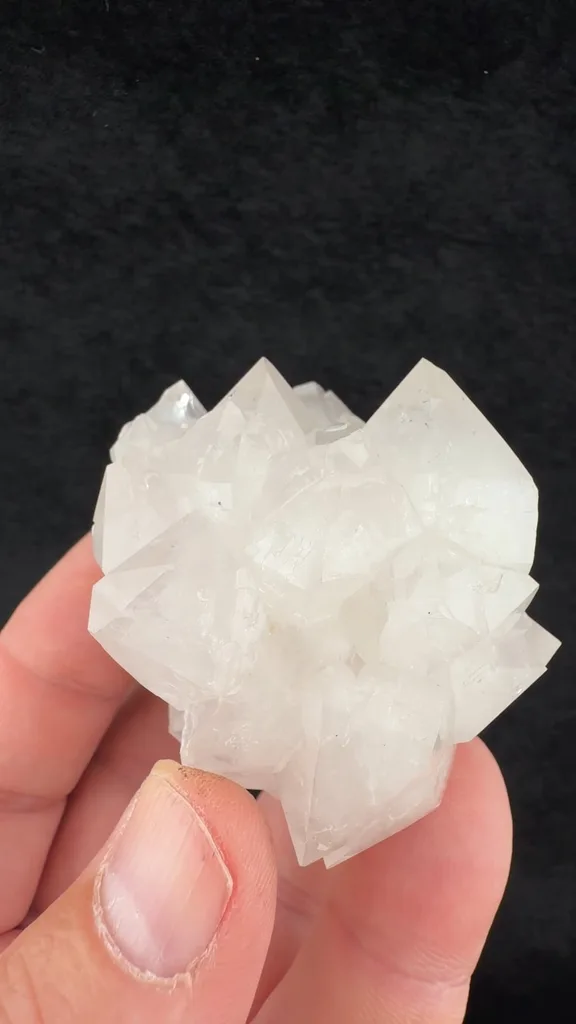
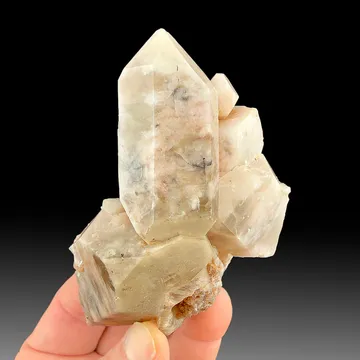
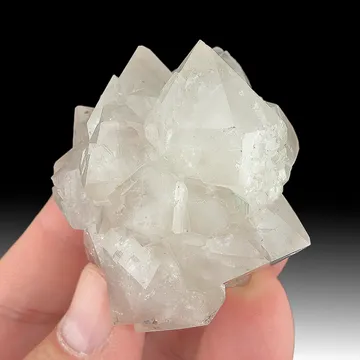
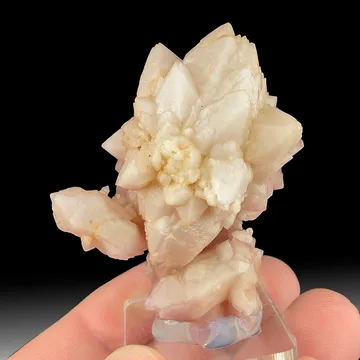
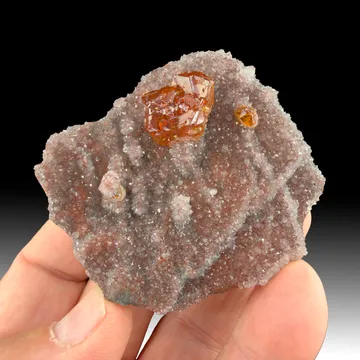
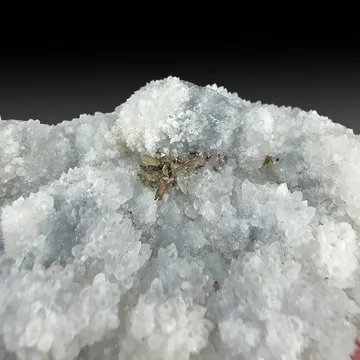
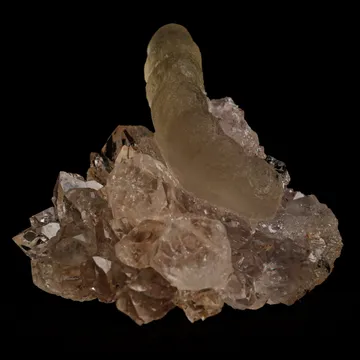
Good locality example for the species, glassy translucent colorless thick crystals of quartz measuring to 2.5 x 2.3 x 1.5 cm in size covering matrix. This is sort of a knob shaped grouping, slight damage present in one area. The specimen comes with a previous label from the collection of Ray DeMark, he collected the piece on March 10, 1990.
The Sunshine #3 Tunnel is part of the historic Blanchard Mine complex in the Hansonburg District of Socorro County, New Mexico, situated along the fault-block uplift of the Oscura Mountains. Geologically, the deposit consists of low-temperature hydrothermal Mississippi Valley-Type (MVT) mineralization, where mineralizing fluids filled cavities, solution collapse breccias, and fractures within Pennsylvanian-age limestones and sandstones. Originally prospected in the late nineteenth century for copper and lead, the Sunshine #3 adit was developed primarily during the mid-twentieth century during expanded underground exploration for commercial lead and barite. Although large-scale industrial mining proved economically marginal, the tunnel became world-renowned among mineral collectors and researchers for its remarkable vugs lined with intense blue linarite, sky-blue caledonite, deep blue azurite, bright green malachite, lead compounds like cerussite and anglesite, and spectacular cubic fluorite. Mining operations eventually ceased, but organized collecting trips and scientific mineral studies have maintained the reputation of the Sunshine #3 Tunnel as one of the premier micro-mineral and secondary lead-copper localities in the American Southwest.
Comments