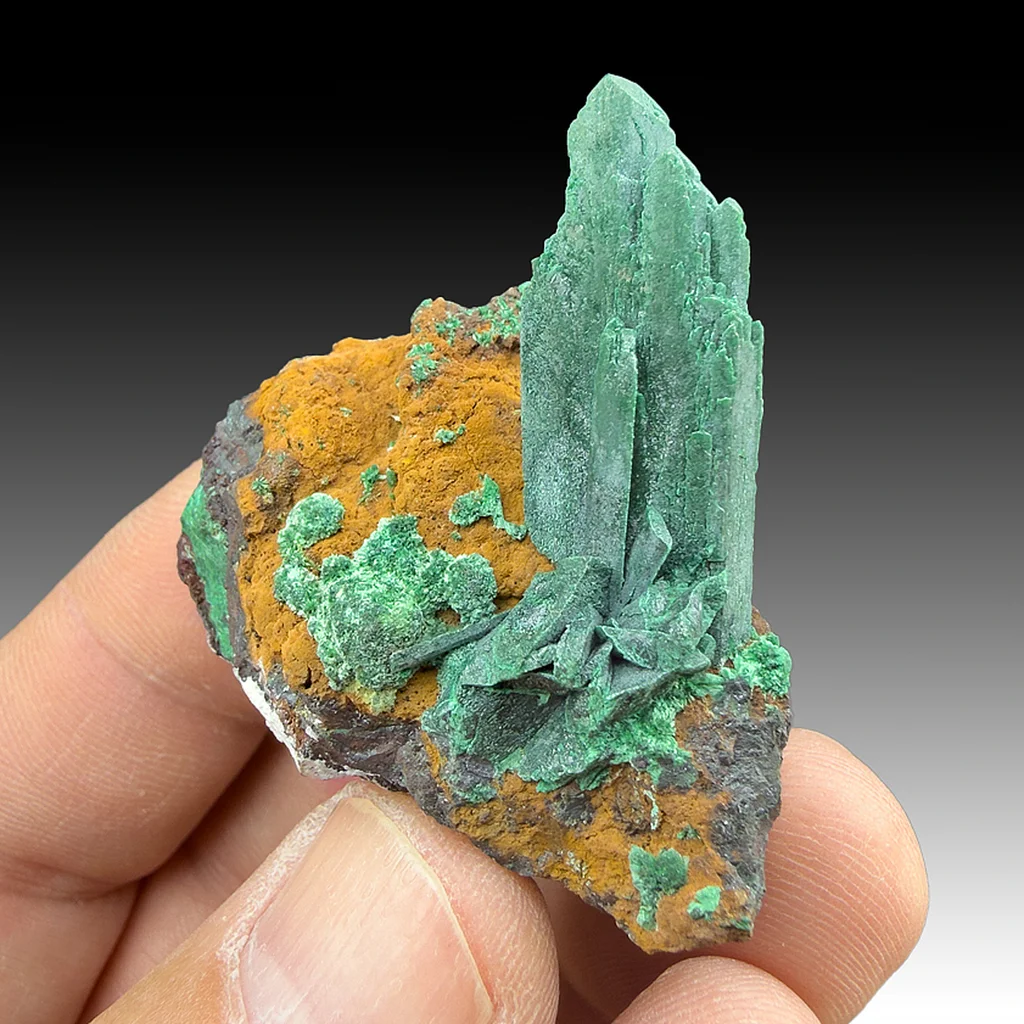
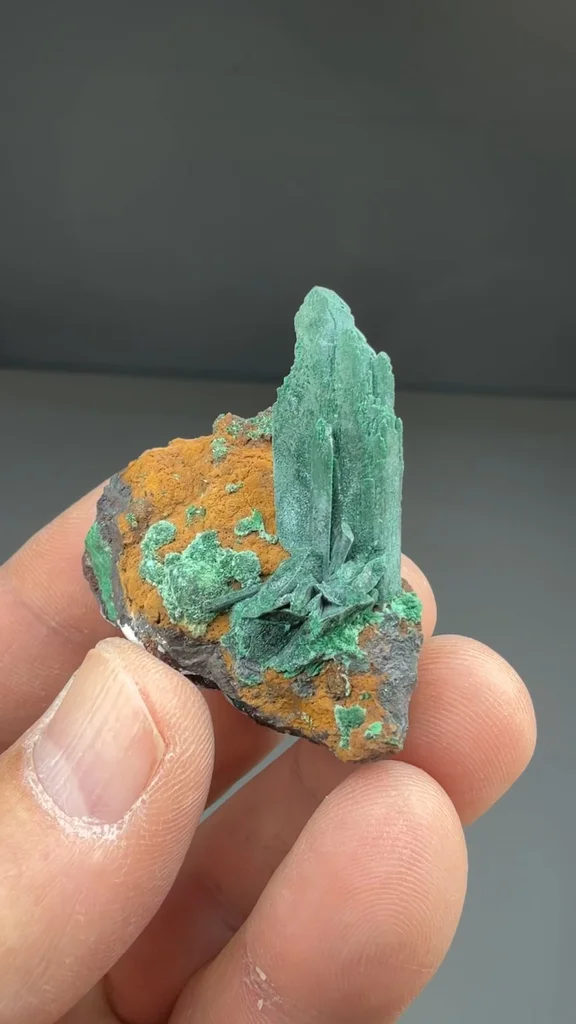
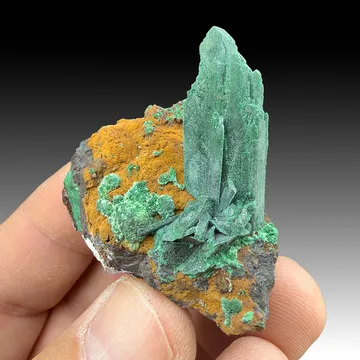
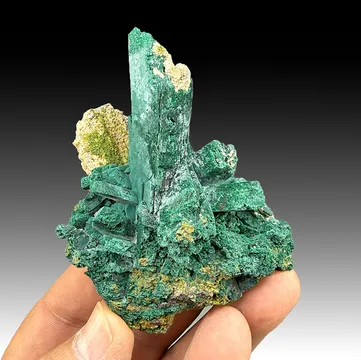
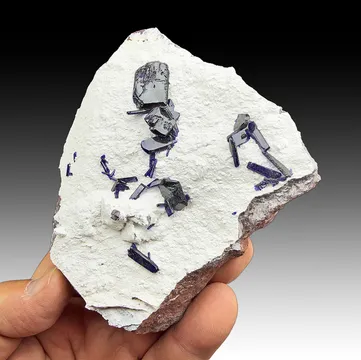
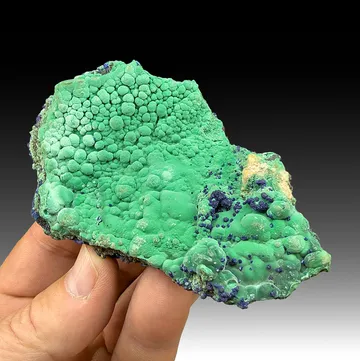
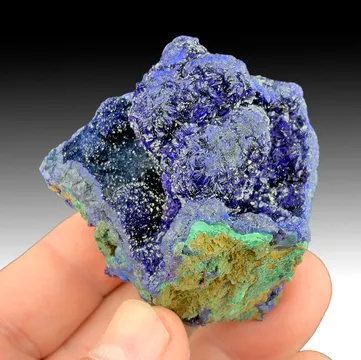
Terminated prismatic crystals of what were once azurite to 3.2 cm in height coming off matrix and replaced by velvety green crystallized malachite. This is in great condition. Choice miniature for this Arizona classic. This
Bisbee, Arizona, is one of the most famous historic copper mining districts in the United States, with major development beginning in the 1880s after rich copper deposits were discovered in the Mule Mountains. The Sacramento Mine was one of the important underground workings developed in the district and was operated as part of the larger Copper Queen mining system. The mine produced copper rich ore along with lead and other associated minerals. Like other Bisbee mines, the Sacramento Mine also yielded many well crystallized secondary copper minerals formed in the oxidized zones of the deposit, including azurite, malachite, and cuprite that are highly valued by mineral collectors.
A pseudomorph is a mineral specimen in which one mineral replaces another while preserving the external crystal shape of the original mineral. Malachite after azurite is a common example found in the oxidized zones of copper deposits. In this process, azurite crystals are gradually altered by chemical reactions involving water and carbon dioxide, causing the azurite to convert to malachite. Although the internal composition changes to green malachite, the original crystal form of the blue azurite is preserved, producing well defined pseudomorphs that are highly valued by mineral collectors.
Comments