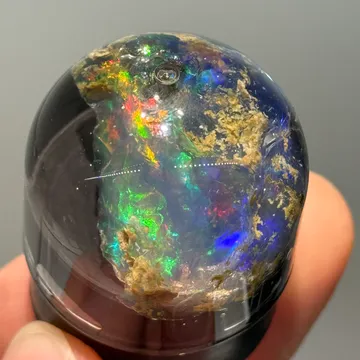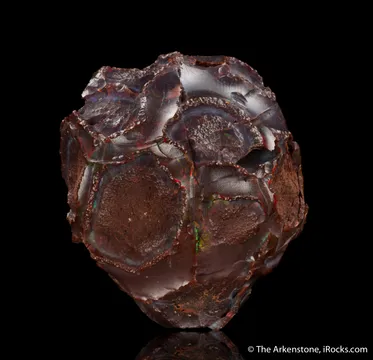
Tsehay Mewcha, Ethiopia - a noted opal locality famed for bright white to fire opal with digit patterns, hydrophane opal-CT, and pedogenic formation.
Key facts
Tsehay Mewcha is the name serious collectors should know behind much of the finest “Welo” or “Wollo” opal. The locality lies in the Delanta area of the Ethiopian highlands, northeast of Wegel Tena, where deep canyons cut into a high volcanic plateau and expose a remarkably productive opal-bearing horizon. Unlike the older Ethiopian chocolate-opal occurrences at Mezezo, Tsehay Mewcha announced a new visual identity for Ethiopian opal after its 2008 discovery: bright white, crystal, pale yellow, orange fire, and occasional darker precious opal with saturated spectral play-of-color. Its best pieces can look almost impossibly alive—translucent to milky opal with broad flashes of red, orange, yellow, green, blue, and violet, commonly arranged in mosaic patches or the locality’s now-famous finger-like “digit patterns.”
Geologically, Tsehay Mewcha is not a classic sedimentary Australian-style opal field, nor a simple cavity-filling volcanic opal locality in the Mexican manner. The opal occurs in weathered rhyolitic ignimbrite within a thick Oligocene volcanic sequence of basalt and ignimbrite associated with the development of the Ethiopian plateau and East African Rift system. Laboratory and field studies have made the locality important well beyond the gem trade: the opal is widely interpreted as a pedogenic product, formed when pauses in volcanic activity allowed soils to develop on ignimbrites, volcanic glass and feldspar altered to clay, silica-rich waters moved through the weathered layer, and opal precipitated in pores, cavities, fractures, and granular microstructures. Plant traces and microscopic fossil structures preserved in the opal make the deposit a rare meeting point of gemology, volcanology, soil formation, and paleobotanical texture.
Regional View
Country View
For the collector, the signature material is hydrophane opal-CT: light in dry body color, often surprisingly porous, and capable of becoming more transparent when immersed in water. That behavior is part of the locality’s fascination and also part of its caution. Fine examples are judged less by size alone than by the strength, distribution, and survival of their color. The most desirable specimen pieces retain natural matrix or skin, show strong play-of-color from multiple viewing angles, and preserve sculptural mass rather than being cut down into anonymous calibrated gems.
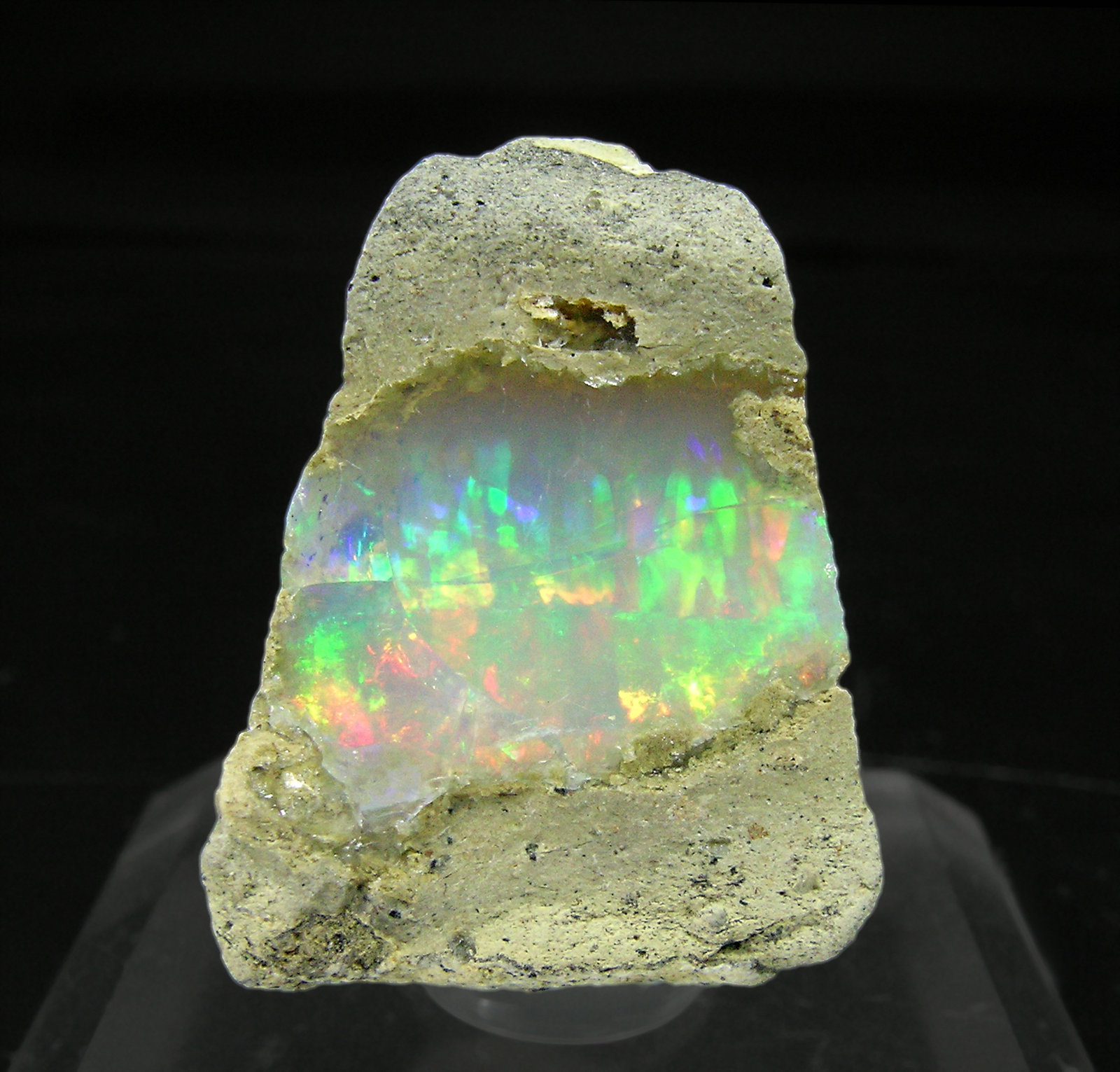
Photo: Fabre Minerals
Search for specimens: View all specimens from Tsehay Mewcha, Ethiopia
Tsehay Mewcha is an opal mining area in Delanta Woreda, North Wollo Zone, Amhara Region, Ethiopia, about 14 km north-northeast of Wegel Tena by modern locality summaries and commonly described in the older gem literature as near Wegel Tena in Wollo Province. The deposit sits on the dissected highland plateau at roughly 3,000–3,200 m elevation, where steep canyons expose a sub-horizontal volcanic pile. Early reports describe access by four-wheel-drive vehicle followed by a descent on foot into canyon workings, with individual diggings reached after steep walks of roughly half an hour to more than an hour.
The host sequence is a thick volcano-sedimentary succession, more than 3,000 m in regional thickness, made of alternating basalt and rhyolitic ignimbrite layers. The important collector material is hosted by a specific weathered ignimbrite horizon, not randomly scattered throughout the volcanic pile. Field descriptions emphasize a thin, nearly horizontal opal-bearing layer exposed in canyon walls hundreds of meters below the plateau surface. Later studies expanded the model from a single spectacular outcrop to a district-scale system: opal occurs in lenticular horizons within unwelded ignimbrite, with several opal-bearing levels locally stacked in the sequence, implying repeated episodes of soil formation, silica release, and opal precipitation between volcanic events.
The “ore body” here is best understood as a stratiform gem horizon rather than a vein or lode. Opal may cement grains of volcanic debris, fill irregular spaces between altered fragments, occupy fractures and small cavities, or occur as nodules with adhering weathered matrix. The opal-bearing rock is friable, clay-rich, and strongly altered compared with adjacent ignimbrite. Volcanic glass is altered to smectite and related clays; cavities may carry illuvial clay coatings; and plant-root traces, desiccation features, and granular soil fabrics all point to formation in an ancient weathering profile. The silica was likely supplied by breakdown of volcanic glass and feldspar, then trapped and reorganized as opal during burial beneath younger volcanic layers.
Mining began after farmers discovered the deposit in early 2008. By January 2009, published accounts described about 200 local miners working the opal using homemade tools, picks, hammers, and shovels. The earliest workings followed the exposed seam along canyon walls and penetrated only a short distance into the mountain, but later artisanal activity in the broader Delanta field developed longer cliffside tunnels along the opal seam. Local mining has been organized through cooperatives and miners’ associations, with rough moving from miners to local cooperative offices, brokers in Delanta, lapidaries, exporters, and eventually cutting centers and international dealers. A 2015 field-based development report described legal opal production in Tsehay Mewcha and Gosh Meda as cooperative-based, with 28 cooperatives in the woreda comprising about 3,800 members, although women’s roles were largely peripheral to underground production.
Production was already substantial by 2010, when researchers reported more than 1,500 kg of rough extracted from the newly discovered Wegel Tena/Tsehay Mewcha deposit. Government and development reports later treated Wollo opal as the dominant Ethiopian colored-gem export by value, while also noting serious problems: rudimentary mining methods, limited miner knowledge of quality and pricing, illegal trading channels, low local value addition, and hazardous unsupported tunnels. Miners interviewed in Delanta reported that early tunnels could yield approximately 2–3 kg of rough opal per tunnel per month, but that known accessible workings later became less productive, forcing teams deeper into the mountain or toward new sites.
Collecting access at Tsehay Mewcha should be considered restricted. Standard locality records note that only locals have permits to mine near Tsehay Mewcha, and the active workings are dangerous cliff and tunnel environments, not recreational collecting ground. The best route for collectors is through documented specimens and reputable dealers who can distinguish Tsehay Mewcha/Wegel Tena material from broader Wollo opal, from Stayish black opal to the north, and from treated hydrophane opal sold under vague Ethiopian labels.
The memorable finds are not “pockets” in the quartz-vein sense but productive lenses, seams, and opal-rich sections of the weathered ignimbrite horizon. Collectors prize matrix specimens showing the opal seam in rhyolitic ignimbrite, bright hydrophane nodules with natural rind, cabinet pieces with large continuous windows of play-of-color, and rare “opal within opal” examples in which a multicolored internal zone appears to float inside a more transparent yellow to honey outer body. Fine cut stones from the locality can exceed 20–40 ct, and published research samples of rough included pieces from a few grams up to nearly a kilogram, though clean, durable, strongly colored display material is far scarcer than the bulk production numbers imply.
Opal from Tsehay Mewcha is chiefly precious opal-CT, SiO2 · nH2O, occurring as irregular nodules, seam pieces, fracture fillings, cavity fillings, and cement between altered rhyolitic ignimbrite fragments. The classic collector look is white to translucent milky opal with broad, saturated patches of red, orange, yellow, green, blue, and violet play-of-color; colorless crystal opal, pale yellow opal, orange fire opal, “chocolate” brown pieces, and rare darker examples are also documented. Sizes range from small thumbnail nodules and cuttable fragments to multi-centimeter matrix specimens and large rough pieces, but the finest specimens combine strong color, transparency, depth, minimal crazing, and attractive natural matrix. Good Tsehay Mewcha opal is separated from ordinary Wollo parcel material by vivid multi-directional fire, clean body, preserved sculptural form, and especially by digit patterns: rounded, finger-like columns of transparent play-of-color opal intergrown with more turbid common opal, a feature strongly associated with Ethiopian opal from this district and Mezezo.
The formal collectible species list for Tsehay Mewcha is short because the locality is overwhelmingly an opal locality rather than a diverse crystal mine. However, laboratory studies of the opal and matrix have documented several important associated phases and inclusions: microscopic pyrite; barium-manganese oxides, probably including hollandite-group material; native carbon or graphitic carbon; tiny titanium oxides, probably rutile; chalcedony-like silica in plant-related tubular inclusions; smectite and other alteration clays; iron oxy-hydroxides; altered and relict alkali feldspar; and rhyolitic ignimbrite matrix. No type-locality mineral is tied to Tsehay Mewcha in the standard mineralogical records; its scientific importance rests instead on the formation model and the exceptional gemological behavior of the opal.
The first concern with Tsehay Mewcha material is locality precision. “Welo,” “Wollo,” “Wegel Tena,” “Delanta,” and “Tsehay Mewcha” are often used loosely in the trade. Tsehay Mewcha is the specific mining area near Wegel Tena that produced the famous white and crystal hydrophane opal beginning in 2008. Stayish, the natural black opal deposit reported in 2013, lies farther north near Gashena and should not be casually merged with Tsehay Mewcha material. Older Mezezo opal from Shewa is different again, typically more orange, reddish brown, or chocolate in body color and often less stable.
Treatment is the central authenticity issue. Much Ethiopian hydrophane opal is porous enough to accept dye, smoke, sugar-acid treatment, oils, and other liquids. Dyed blue, pink, purple, green, and artificially darkened stones are well documented in the gemological literature, and smoke-treated Wollo opal has been used to imitate black opal. Natural dark Ethiopian opal does exist, especially from Stayish, but “black Welo” offered cheaply should be approached with skepticism unless supported by strong provenance or laboratory testing. Warning signs include unnatural body colors, color concentrated in surface pits or scratches, darkening that follows cracks, suspiciously uniform black body tone in otherwise typical hydrophane material, and prices far below untreated natural black-opal equivalents.
Condition matters more than many first-time buyers expect. Tsehay Mewcha opal can be surprisingly tough compared with some other Ethiopian and Mexican opals, and published tests found translucent Wegel Tena opals resistant to repeated wet-dry cycling and accidental drops. Even so, the material is hydrophane and locally prone to crazing, especially in fire opal and near-colorless crystal opal varieties. Rough should be inspected under magnification for incipient cracks, chalky zones, weak seams, sand-filled pits, and clayey matrix that may undercut during cleaning or polishing. Bright white-to-yellow-to-brown opaque and translucent pieces have generally been reported as more stable than some transparent fire and crystal material, but each specimen must be judged individually.
Collectors should avoid soaking display specimens casually. Water can temporarily increase transparency, change apparent body color, intensify or mute play-of-color, and alter weight; the change is usually reversible as the stone dries, but absorbed liquids can carry contaminants. Keep specimens away from oils, perfumes, detergents, ultrasonic cleaners, solvents, dye-bearing liquids, and rapid heat. Dry storage at ordinary room conditions is usually appropriate for stable pieces, but avoid strong sun, heated display cases, and repeated wetting for demonstration. If a piece is mounted in jewelry, warn the wearer that showering, swimming, lotion, and household chemicals may temporarily or permanently affect appearance.
Under ultraviolet light, Tsehay Mewcha opal may show variable whitish, bluish white, yellowish white, or greenish fluorescence, with short-lived phosphorescence in some samples. This can be attractive, but UV reaction is not a stand-alone locality test. More diagnostic features include hydrophane behavior, opal-CT Raman spectra, elevated barium in white material, microscopic digit structures, and the characteristic volcanic ignimbrite matrix and inclusion suite.
Market availability remains good for small cut stones and loose rough sold broadly as Welo opal, but specific, well-documented Tsehay Mewcha specimens with size, natural matrix, strong color on multiple faces, and no treatment are much scarcer. Thumbnail and miniature nodules appear regularly; cabinet-class matrix pieces and large “opal within opal” specimens are exceptional. The best buys are pieces with honest locality labels, stable condition over time, disclosed treatment status, and enough natural surface or matrix to preserve the story of the deposit rather than simply its color.
The discovery story has the plain, improbable shape of many great gem finds: farmers working in the high country near Wegel Tena noticed play-of-color opal in 2008, and within a year the canyon walls below Tsehay Mewcha were being worked by about 200 local miners. From the plateau, the opal layer was not an inviting tunnel mouth but a thin horizon partway down a steep canyon system. Reaching the workings meant driving as far as the road allowed and then walking down the canyon for 30 minutes to more than an hour. The seam lay in a cliff roughly 350 m below the plateau top, set among alternating bands of basalt and rhyolitic ignimbrite. It is easy to understand why the first scientific descriptions dwell as much on access and danger as on beauty: the opal was exposed in a place where a misstep, a falling rock, or an unsupported dig could be fatal.
The earliest published mining account is stark. The mineralized layer extended for hundreds of meters along the canyon flank, but the diggings then went only 1–2 m into the mountain and were unsupported by timbers. Miners worked with homemade tools, picks, hammers, and shovels. By 2010, at least 20 miners had died in collapses. That number should stay in the mind of anyone admiring a luminous white Welo opal in a case; these stones came not from tidy benches and mechanized shafts but from friable volcanic ledges cut by men working the seam by hand.
The opal itself supplied another kind of field surprise. Some pieces that looked opaque or milky white in the hand became markedly more transparent after immersion in water, sometimes shifting from white to nearly colorless in minutes to an hour. One published anecdote records a customer who wore her opal constantly and complained that it changed when she showered, swam, or put her hands in water. The gem always returned to its original appearance after drying. For a jeweler, that was a customer-service problem; for a gemologist, it was the hydrophane character of Tsehay Mewcha opal demonstrating itself in daily life.
The researchers studying the material also found that its internal world could be stranger than its color. One sample contained elongated cylindrical inclusions about 800 µm across and 1 cm long—silica-filled tubes interpreted as chalcedony-like structures, probably linked to plant material. Other work documented microscopic plant fossils in the opal and cellular structures preserved well enough to argue that living roots and plant tissues had been entombed during opal formation. In the formation model that followed, the opal was not merely filling empty holes in volcanic rock; it was recording an Oligocene pause between eruptions, when a soil formed on fresh volcanic ash, plants colonized it, groundwater leached silica from glass and feldspar, and a later volcanic layer sealed the system.
A later development report adds a human-scale picture of the mine economy after the first rush. In Tsehay Mewcha and Gosh Meda, miners were organized into cooperatives by local authorities so they could work legally. The same report counted 28 cooperatives with about 3,800 members in the woreda, only 132 of them women. Women were largely excluded from digging by local assumptions about underground labor, but they still appeared in the mining economy as caterers and as people collecting and re-sorting the leftover opal-bearing soil known locally as hajara. That detail—women picking through the rejected earth while men followed the seam inside the cliff—captures the unevenness of an opal boom that brought money into Delanta but did not distribute risk, labor, or reward equally.
Miners interviewed in Delanta described the practical gamble of each tunnel. They worked on their own money and risk. If they found no opal, there was no payment. Opening a new tunnel could require an overburden investment of roughly ETB10,000–15,000, often funded from previous sales. Early in a productive phase, a tunnel might yield 2–3 kg of rough opal per month, but later the miners reported that production was no longer as good and that they had to push deeper into the mountain to reach the mineralized layer. When opal was found, the team leader collected the stones, took them to the cooperative office in Delanta, and later distributed proceeds according to team shares. The sorting described by the miners was basic—color and size—while gemologists and exporters were valuing a much more complex set of qualities: play-of-color, clarity, body tone, stability, hydrophane behavior, pattern, and cutting yield.