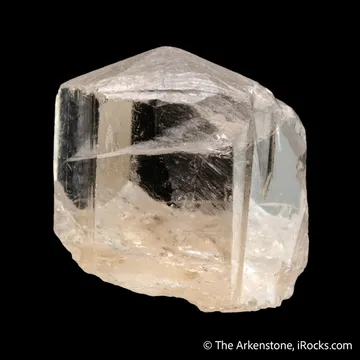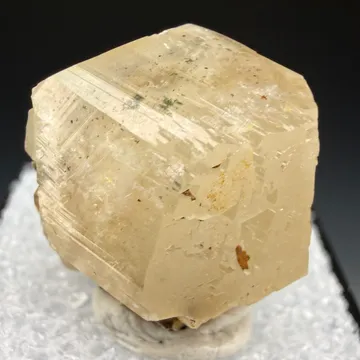
Phenakite - rare Be2SiO4 boasting brilliant luster, high clarity, and gem-like crystals; forms in pegmatites/miarolitic cavities, prized by connoisseurs.
Key facts
Phenakite (Be2SiO4) is a rare beryllium silicate celebrated for its brilliant luster, high hardness (7.5–8), and exceptional transparency. Its name comes from the Greek for “deceiver,” because clear crystals were historically mistaken for diamond. In nature, phenakite forms in topaz- and beryl-bearing granitic pegmatites and alpine-type miarolitic cavities. Crystals range from sharp rhombohedral to short-prismatic or tabular forms, often with glassy faces and a bright, adamantine-to-vitreous sheen. Most are colorless to pale straw, but faint pinks or honey tones occur. Associations commonly include smoky quartz, aquamarine, feldspars (microcline/albite), fluorite, muscovite, and occasionally black tourmaline. Fine gemmy single crystals and aesthetic matrix pieces—especially ones contrasting against white albite or perched on smoky quartz—are highly prized. While never common, phenakite occurs in a handful of storied districts and remains a connoisseur’s choice among pegmatite minerals.
Phenakite occupies a sweet spot in the collector world: it is rarer than beryl or topaz but still obtainable, with top pieces offering jewel-like clarity and crisp, geometric forms. Historic Russian crystals from the Urals helped establish phenakite’s reputation in the 19th century, and classic American material from Colorado’s Mount Antero cemented its status among North American collectors. Modern finds in Madagascar and Myanmar have added a flow of transparent crystals to the market, some facetable, many kept as specimens for their sharp habit and bright luster. Prices scale with clarity, size, and aesthetics; small, sharp thumbnails can be accessible, while large, gemmy matrix specimens from renowned localities can be fiercely contested and expensive. Because phenakite bridges the worlds of gemstone and specimen collecting, it has enduring cross-appeal and a devoted following.
While phenakite occurs in a variety of pegmatite and alpine environments, a few localities stand out for producing distinctive, collectible crystals.
Colorado’s Mount Antero is an iconic American source of phenakite. Crystals occur in high-elevation miarolitic cavities alongside aquamarine, smoky quartz, fluorite, microcline, and albite. The best specimens show sharply developed rhombohedral to short-prismatic crystals, colorless to very pale straw, with brilliant glassy luster. Sizes vary from thumbnail singles to multi-centimeter crystals, occasionally on attractive matrix. Collectors prize pieces that display well without the need for backlighting—especially those perched on white cleavelandite or contrasting smoky quartz. Intact matrix clusters are scarce because alpine pockets and extraction conditions are unforgiving, so pristine, unrepaired pieces command premiums.
Mogok, famous for ruby, also yields superb phenakite from both primary pockets and alluvial gravels. Crystals are typically water-clear, often prismatic with beveled faces and intense vitreous luster. Many show a refined, “gemmy” look and are prized as thumbnails to small cabinet singles. Though matrix pieces are less common, the transparency and brilliance of Mogok phenakite can be extraordinary, rivalling classic Russian material for clarity and sharpness. Facetable rough from Mogok underscores the species’ dual role as gemstone and specimen.
Color and Transparency: Most collectors prize colorless, limpid crystals with strong internal clarity. Pale honey or straw tints can be attractive, but any brownish cast, heavy inclusions, or internal stress cracks lower the appeal. Backlighting can reveal internal fractures; the best pieces look bright even without backlight.
Luster and Faces: Phenakite should have crisp, glassy faces and a high, reflective luster. Dull, etched, or overly frosted faces detract unless the etching is uniform and aesthetically interesting. Watch for lightly abraded edges—small rubs can show as matte spots on otherwise glossy surfaces.
Crystal Form: Textbook rhombohedral or short-prismatic crystals with sharp terminations are most desirable. Symmetry and proportion matter: stout, well-balanced crystals typically display better than overly flattened or poorly terminated pieces. Distinct bevels and clean edges enhance the geometric “gem” look that phenakite is known for.
Size and Matrix: Larger, transparent crystals are scarce and command strong premiums. Matrix specimens, especially well-composed arrangements on albite, microcline, or smoky quartz, add context and visual contrast. However, many classic localities yield loose crystals; a superb, damage-free single can still outshine a mediocre matrix piece.
Condition: Chipped tips or bruised edges are the main pitfalls. Examine terminations and ridges under a loupe. On matrix, check contact points where extraction damage or reattachment is common. Invisible or near-invisible repairs on significant specimens are often market-acceptable, but should always be disclosed.
Aesthetics: The best phenakites combine high clarity, bright luster, elegant form, and a pleasing stance on matrix or as a freestanding crystal. Good orientation (e.g., a main crystal standing proud with minor associates providing contrast) can dramatically lift a specimen’s visual impact.
Repairs/Reattachments: Phenakite’s brittleness makes repairs relatively common for matrix pieces. Look for faint, straight glue lines, slight misalignments in growth striations, or glossy seams at crystal–matrix interfaces. A longwave UV torch may reveal fluorescing epoxy lines in some adhesives.
Polished Terminations: Because natural faces can look “cut-like,” beware of polished repairs. Polishing produces an unnaturally uniform mirror without microscopic growth textures. Compare the luster of suspected faces with the rest of the crystal and inspect under magnification.
Treatments: Color treatments are virtually unknown for phenakite specimens, and syntheses/impostors are rare. Glass fakes typically show gas bubbles and lack natural growth patterns. As always, provenance and reputable sellers are your best safeguards.
Phenakite is hard (7.5–8) and chemically durable, but it can be brittle. Sensible handling preserves its sharp edges and brilliant luster.
Handling and Display:
Light and Temperature:
Cleaning:
Storage:
By focusing on clarity, luster, and crisp form—and by targeting proven localities—you can build a phenakite suite that radiates the jewel-like brilliance that makes this species so compelling to serious collectors.