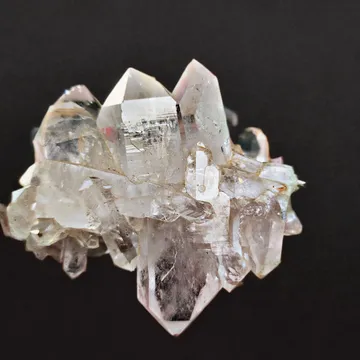
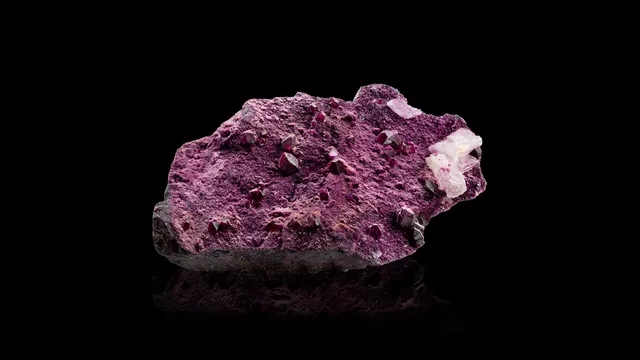
Muğla Province, Türkiye — renowned for İlbir Mountain gem diaspore crystals, large, clear V-twins, plus corundum and aluminous minerals prized by collectors.
Key facts
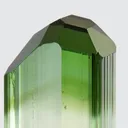
Muğla Province sits at the southwestern corner of Anatolia, where the Aegean coast, the Menderes Massif, and the western Tauride ophiolites meet in unusually mineral-rich country. To specimen collectors, however, “Muğla” most often means the gem diaspore mines of the İlbir Mountains near Pınarcık in the Milâs district: a metamorphosed karst-bauxite system in marble, cut by later hydrothermal fractures that yielded some of the largest, clearest, and most dramatic diaspore crystals known. The best pieces are not ordinary bauxite minerals pulled from massive ore; they are glassy, striated, often V-twinned crystals with a subdued but unmistakable shift from olive, yellow-green, or pale champagne tones in daylight to lavender, rose, amber, or reddish tones under warmer incandescent light.
Regional View
Country View
The province is not a single-mine story. Around Milâs and Yatağan, diasporite and emery horizons in the Menderes Massif have produced diaspore, corundum, chloritoid, margarite, calcite, muscovite, hematite, rutile, and related aluminous minerals. At Sodra near Milâs, later work documented gemological-quality diaspore in metabauxite close to limestone contacts. In the Yatağan district, a much newer collector story emerged when topaz crystals were found near Esenköy in a pegmatitic setting exposed after the 2021 wildfire. Farther south and east, the province’s ophiolitic belts carry chromite deposits with a platinum-group mineral micro-assemblage of interest mainly to ore mineralogists rather than cabinet collectors.

Photo: Wikimedia Commons
What made Muğla famous in the mineral world is the leap in scale and aesthetics. Diaspore is widespread as a microscopic or massive constituent of metamorphosed bauxite, but the İlbir Mountain material changed the species’ standing among collectors: large loose singles, V-twins, interlocking twin groups, gem fragments, and the rare matrix specimens on pale margarite or associated vein material. The ideal specimen has transparency, intact termination, saturated pleochroic color, sharp twinning or sculptural form, and minimal bruising along cleavage. Matrix specimens are scarcer still, because mining historically favored gem rough rather than the careful recovery of crystallized mineral groups.
Search for specimens: View all specimens from Muğla Province, Türkiye
The principal collector locality in Muğla is the İlbirdağı diasporic metabauxite deposit near Pınarcık, in the Milâs district between the Aegean coast and Bafa Lake. The deposit lies on the southern edge of the Menderes Massif, a large metamorphic complex of western and southwestern Türkiye. In this part of the massif, the relevant host sequence includes gneisses, schists, and marbles; the bauxite horizon developed on a karstified carbonate surface and was later metamorphosed into diasporite. The collectible crystals formed after the bauxite had already become a hard, brittle, diaspore-rich ore. Open fractures and dissolution cavities along the contact between marble and diasporite provided space for hydrothermal remobilization, allowing coarse diaspore, muscovite, chloritoid, calcite, specular hematite, and goethite to crystallize from material largely derived from the surrounding rock.
The ore body is best understood as a metamorphosed karst-bauxite system, not as a pegmatite or alpine cleft. The original karst surface trapped Al-, Fe-, and Si-rich bauxitic sediment; later regional metamorphism converted the ore to diasporite and associated aluminous assemblages. At İlbir Mountain, the large crystals occur mainly in fracture zones near the boundary of brownish-black diasporitic metabauxite and gray marble. Published descriptions place the mineralized zones as lens-like bodies a few yards wide, continuing at a fairly constant elevation for roughly a mile, with the broader diasporite belt trending northwest-southeast and dipping steeply southwest. The matrix of crystallized specimens is commonly an earthy to massive mixture of goethite, ferroalluaudite, corundum, diaspore, and quartz, with more displayable companions including calcite, chloritoid, muscovite, margarite, hematite, rutile, and locally other bauxite-related minerals.
Mining history matters because it explains why so many specimens are loose crystals rather than matrix pieces. Metabauxite in the area was identified in the late 1940s, and state exploration through MTA and related work established the economic value of the ore in the following decades. Etibank mined diasporite as an aluminum ore from 1972 to 1982, when the value of transparent crystals as gem rough and collector specimens was poorly appreciated. Large quantities of V-twins and gem-quality crystals reportedly left the area unofficially during the late 1970s and early 1980s, while early cut stones began to appear in gemological literature and at major shows. After changes in Turkish mining law, private commercial development followed; the trade name “Zultanite” was introduced for color-change gem diaspore, and the deposit became internationally known in both the gem and mineral-specimen markets.
Two named workings, Küçük Çamlık Tepe and Büyük Çamlık Tepe, are central to the classic Pınarcık story. The mines produced the species-defining cabinet material: isolated transparent prismatic crystals, thick V-twins, groups of contact twins, and occasional matrix specimens with margarite, muscovite, chloritoid, and calcite. A second Muğla diaspore area, Sodra near Milâs, has been documented as a metabauxite-hosted gem diaspore occurrence in which crystals occur with chloritoid and muscovite in altered zones close to metabauxite-limestone contacts and in cracks within the metabauxite. The Sodra ore zone is smaller and close to Milâs and Güllük, and published reserve and production figures describe it primarily as a bauxite body rather than a long-established specimen locality.
Collecting access today should be treated as restricted. The significant diaspore occurrences are in mine areas or mineral-rights ground, and casual collecting is not appropriate without explicit permission from the landholder and rights holder. Even where old dumps or peripheral exposures exist, the same caution applies: marble-hosted bauxite pits, altered fracture zones, and steep excavations are not safe collecting environments, and Turkish mining and export rules should be respected. The best modern collector material reaches the market through dealers, older collections, and occasional saved pockets rather than through public fee collecting.
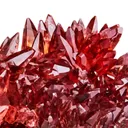
Topaz from Muğla is a separate and much newer story. Near Esenköy in the Yatağan district, a reported 2024-documented find produced gem-quality prismatic crystals in a pegmatite-related setting, with calcite and quartz matrix pieces and pink, red, sherry, peach, champagne, and white crystals. The locality was exposed after the August 2021 wildfire burned forest and pine-needle cover from the area; subsequent field trips by Turkish collectors recovered small early crystals, then larger red and pink examples, and finally matrix specimens that preserved more geological context. This is an emerging occurrence rather than a classic, long-mined specimen locality, so attribution and analytical confirmation deserve more caution than they do for the long-established İlbir diaspore.
Diaspore from Muğla is centered on the İlbir Mountain/Pınarcık metabauxite deposit and related Milâs occurrences, where it occurs as single prismatic crystals, V-shaped contact twins, groups of twins, cleavages, and rare matrix pieces with margarite, muscovite, chloritoid, calcite, goethite, and hematite. The typical collector crystal is elongated and striated, commonly pale yellow-green, olive-green, champagne, grayish, or brownish by daylight, with lavender, rose, amber, or reddish tones under warmer light; published examples include V-twins across more than 7 cm, a documented crystal fragment from a 12 cm crystal, and exceptional matrix pieces with crystals around 3–4 cm, while the broader market more often sees thumbnails to small cabinet-size loose crystals. The finest Muğla specimens combine transparency, strong luster, visible color change, complete or gracefully complex terminations, and undamaged twinning; ordinary pieces are cleavage fragments, bruised gem rough, opaque pale-green prisms, or loose crystals lacking termination and form.
Topaz from Muğla is best documented from the recent Esenköy occurrence in the Yatağan district, where collectors recovered well-formed gemmy prismatic crystals in pegmatitic exposures associated with calcite and quartz. The reported material includes white and champagne-colored singles from early collecting, followed by larger red and pink crystals, plus sherry-to-peach crystals on calcite and quartz matrix; documented photographed pieces include matrix specimens around 4 cm, 6 cm, and 11 cm across with topaz crystals from about 1 to 2 cm. Good specimens from this locality are those that retain natural color, sharp prism form, transparency, and matrix context, because the occurrence is new enough that well-documented, unaltered crystals on calcite-quartz matrix are more important to collectors than loose, anonymous pale crystals.
Other documented minerals from Muğla Province show how diverse the province is beyond its two best-known collector species. At the İlbirdağı deposit and related Milâs-Sodra bauxites, the suite includes chloritoid, corundum, gibbsite, goethite, hematite, specularite, ilmenite, muscovite, ferroalluaudite, calcite, margarite, quartz, rutile, and locally sapphire-grade corundum in the Milâs-Yatağan region. The Kozağaç emery mine in Yatağan is noted for chloritoid, corundum, margarite, rutile, sillimanite, calcite, and hematite in an emery setting. In the Ortaca and broader Muğla ophiolite chromitites, the important species are microscopic ore-mineral assemblages rather than display specimens: chromite with inclusions of laurite, erlichmanite, Os-Ir alloys, base-metal sulfides, silicates, and related platinum-group phases in harzburgite and dunite.
Muğla diaspore is one of the few localities where the most valuable mineral specimens overlap strongly with the gem trade, so provenance, identity, and condition deserve unusual scrutiny. “Zultanite,” “Csarite,” “Ottomanite,” “Turkizite,” and “Turkish diaspore” are trade or marketing names, not separate mineral species; the species is diaspore, AlO(OH). For mineral specimens, a label should ideally say Muğla Province, Milâs District, Pınarcık or İlbir Mountain, or a more precise mine name such as Küçük Çamlık Tepe/Büyük Çamlık Tepe when supported by the seller’s documentation. Older labels may simply read “Mugla, Turkey,” which is common and not automatically suspicious, but a top-quality specimen with no chain of ownership should be treated carefully because the value difference between a documented crystal and anonymous gem rough is substantial.
The principal authenticity issue in the gem market is not synthetic diaspore crystals, but imitation material—especially color-change glass—sold as Zultanite or diaspore. Faceted stones, tourist jewelry, and dramatic green-to-red “diaspore” gems should be checked by a competent gemological lab if value matters. For specimen crystals, the risks are different: broken and polished cleavage fragments may be represented as natural crystals; loose gem rough may be assigned overly precise mine names; and color-change claims can be exaggerated with lighting. Natural Muğla diaspore often changes subtly rather than theatrically, and the color seen in a photograph can depend strongly on the lamp used.
Condition is the great limiting factor. Diaspore has perfect cleavage, so crystals bruise, split, and chip along cleavage planes with distressing ease. Even large transparent crystals commonly show edge nicks, internal cleavage flashes, or rehealed-looking surfaces. Many terminations from the İlbir deposit are naturally complex, irregular, or “melted-looking,” so a collector must distinguish natural growth from fresh damage; a hand lens and side lighting are essential. Strongly striated faces are normal. Curved or bent crystals can be natural deformation related to post-depositional tectonic movement rather than mishandling.
Matrix specimens are significantly rarer than loose crystals. Mining historically emphasized gem rough, and associated minerals were often not preserved. A transparent diaspore crystal still attached to margarite, muscovite, chloritoid, or calcite-rich matrix is consequently much more desirable than an equivalent loose crystal, assuming the attachment is natural and not repaired. Repairs should be expected in large matrix pieces and disclosed; examine contact points under magnification for glue, unnatural fill, or matrix reconstruction.
Fluorescence is not a major collecting feature for Muğla diaspore. Gemological reports have emphasized pleochroism, color change, Raman and FTIR identification, and trace-element chemistry rather than showy ultraviolet response. The color-change effect is best evaluated under controlled daylight-equivalent light and a warm incandescent or candlelike source, not under mixed LEDs in a show hall. Avoid prolonged rough handling, ultrasonic cleaning, heat shock, and pressure on terminations; a fine diaspore should be mounted or boxed like a delicate cleavable gem crystal, not like quartz.
Market availability is uneven. Small loose crystals and cleavage pieces appear periodically, but fine V-twins, sharp terminated singles, and especially matrix specimens are scarce and expensive. Recent dealer reports of 2023 pocket material describe gemmy V-twins and single crystals in the 3.7–6 cm range, with prices already in serious-collector territory. Topaz from Esenköy is much newer and should be bought with even more attention to documentation; the locality is promising, but the body of published analytical work and long-term market history is still young.
The classic Muğla diaspore story begins as an ore story, not a gemstone romance. In the late 1940s the bauxite was recognized in the İlbir Mountains, and for years the deposit was understood mainly as an aluminum resource. When Etibank mined the diasporite from 1972 to 1982, the big transparent crystals were present in the rock, but the official inventory did not treat them as a separate gemstone or specimen product. In hindsight that is almost painful to read: a mine cutting through what would become one of the world’s defining diaspore occurrences, while the most distinctive crystals were peripheral to the accounting.
By the late 1970s the crystals had begun moving in another world entirely. Reports describe several tons of V-twins and gem-quality crystals collected and illegally exported, especially between 1978 and 1982. Cut diaspore gems began appearing in gemological literature by 1980, and crystals were offered at Munich, Basel, and Tucson before many mainstream mineral collectors fully understood what the Turkish material was. The species had suddenly acquired a modern classic locality, but much of the early movement was informal, poorly labeled, and optimized for gem rough rather than mineral preservation.
One photograph from the 2011 Rocks & Minerals article captures the human scale of that transition better than a production chart. Hakki Babilik and Dr. Halil Sarp of the Natural History Museum in Geneva are shown examining diaspore gem rough at the home of a local miner. It is an intimate scene: not a polished corporate mine office, but rough crystals on a local table, with academic mineralogy, the gem trade, and village-scale recovery all meeting over a new material that had not yet been fully absorbed into collector culture.
The crystals themselves supplied the drama. A fragment from a 12 cm diaspore crystal was reported at nearly 500 grams, and published V-twins measured 8.5 cm and 7.4 cm across. One celebrated interlocking V-twin group measured 9 × 5.6 × 3 cm and was photographed in daylight while in the Leonard Himes collection, then in incandescent light as the Jim and Gail Spann specimen. That two-photo comparison became a concise lesson in what Muğla diaspore does best: not a neon trick, but a refined shift of body color that depends on illumination, orientation, and the crystal’s own subtle trace-element chemistry.
The Esenköy topaz discovery has a very different rhythm: fire first, then fieldwork. In August 2021, a wildfire burned roughly 10,000 hectares of forest in the area. It removed dense vegetation and the pine-needle blanket that had hidden bedrock exposures; firefighting also opened access by cutting forest roads. After that, local collectors could inspect pegmatite exposures that had previously been difficult to see. The first trip yielded small white and champagne-colored crystals. A second trip brought larger finds, including red and pink topaz. A third trip added more singles and, crucially, matrix specimens on calcite and quartz—the kind of material that allows a new locality to be understood geologically rather than merely consumed as loose gem crystals.
Murat Hatipoğlu and Steven C. Chamberlain, “A Gem Diaspore Occurrence near Pinarcik, Mugla, Turkey,” Rocks & Minerals, 86(3), 242–249, 2011. The essential collector-oriented paper for the Pınarcık/İlbir Mountain diaspore occurrence, including mining history, geology, habits, colors, twinning, and associated minerals.
Murat Hatipoğlu, Necdet Türk, and Steven C. Chamberlain, “Mineralogical characteristics of unusual ‘Anatolian’ diaspore (zultanite) crystals from the İlbirdağı diasporite deposit, Turkey,” Journal of African Earth Sciences, 57(5), 525–541, 2010. A detailed mineralogical study separating the primary microscopic diaspore of the ore from later hydrothermal-remobilized macroscopic gem crystals.
Murat Hatipoğlu, “Gem-Quality Diaspore Crystals as an Important Element of the Geoheritage of Turkey,” Geoheritage, 2, 1–13, 2010. Frames the İlbirdağı diaspore deposit as a geosite and discusses its geological heritage significance and conservation concerns.
“Metabauxite horizons containing remobilized-origin gem diaspore and related mineralization, Milas-Muğla province, SW Turkey,” Ore Geology Reviews. A mine-geology treatment of the Milas-Muğla metabauxite horizons, including underground and open-pit levels, remobilized gem diaspore, and associated mineralization.
Eyyüp Hikmet Kinaci and Alican Ozturk, “Gemological features of diaspore in Sodra—Milas (Mugla) region,” Frontiers in Earth Science, 11, 2023. Documents the Sodra occurrence near Milâs with petrography, SEM-EDS, Raman, FTIR, geochemistry, and gemological observations.
Tony H. Gill, “New Topaz Find in Esenköy, Yatağan, Muğla, Türkiye,” Mindat.org, 2024; last updated 10 January 2025. The key public record for the new Esenköy topaz occurrence, including the wildfire-related discovery story, field team, crystal colors, matrix specimens, and preliminary geological interpretation.
İbrahim Uysal et al., “Mineralogy and composition of the chromitites and their platinum-group minerals from Ortaca (Muğla-SW Turkey): evidence for ophiolitic chromitite genesis,” Mineralogy and Petrology, 83(3), 219–242, 2005. Important for the province’s ore-mineral side: chromitites in the Marmaris Peridotite near Ortaca and their platinum-group mineral inclusions.
Hatipoğlu M. and Çoban E., “Gem-quality blue sapphires (Al2O3-corundum variety) from the Milas-Yatağan region, Muğla, Turkey,” Academia Letters, Article 4085, 2021. A short gemological report on sapphire-quality corundum from the same broader Milâs-Yatağan aluminous province.
Che Shen and Ren Lu, “The Color Origin of Gem Diaspore: Correlation to Corundum,” Gems & Gemology, 54(4), 2018. Uses UV-Vis, LA-ICP-MS, and Raman work on Turkish and Burmese diaspore to explain chromophores and color-change behavior.
Xiaoyan Yu, Bijun Guo, Xue Jiang, and Weirui Kang, “Color-Change Glass as a Zultanite Imitation,” Gems & Gemology, 52(4), 2016. Useful for authentication context, especially the gem-market problem of color-change glass sold as Zultanite or diaspore.
“Mining Natural Color Change Zultanite Crystals” — Zultanite Gems LLC. A mine-media page with video and photographs describing the remote İlbir Mountain Zultanite/diaspore operation and the practical challenges of mining at elevation.
“Minerals of Mugla Province” — Wikimedia Commons category. A small but useful media set of Muğla diaspore and diaspore-margarite specimen photographs, including Rob Lavinsky images released under Creative Commons licensing.
Muğla Province, Turkey — Mindat.org — Regional mineral list and locality framework for Muğla Province, including bauxite, gemstone, chromium, and recorded species entries.
Ilbirdagı diasporic metabauxite deposit — Mindat.org — Locality page for the İlbirdağı deposit, with commodity, rock, and mineral lists tied to the 2023 Sodra/Milas diaspore work.
Kozağaç mine, Yatağan District — Mindat.org — Emery-mine locality with chloritoid, corundum, margarite, rutile, sillimanite, calcite, and hematite.
Diaspore from Menderes River, Yatağan District — Mindat.org — Historical locality entry for diaspore in the Yatağan district, with reference to Schuiling’s work on the Menderes Massif.
New Topaz Find in Esenköy, Yatağan, Muğla, Türkiye — Mindat.org — The most specific public account of the recent Esenköy topaz discovery.
Gemological features of diaspore in Sodra—Milas (Mugla) region — Frontiers in Earth Science — Open-access analytical study of diaspore from Sodra near Milâs.
A Gem Diaspore Occurrence near Pinarcik, Mugla, Turkey — ResearchGate copy of Rocks & Minerals article — The most useful single article for specimen habits, mining history, and collecting significance of Pınarcık diaspore.
Gem-Quality Diaspore Crystals as an Important Element of the Geoheritage of Turkey — ResearchGate — Geoheritage perspective on the İlbirdağı diaspore occurrence and conservation issues.
The Color Origin of Gem Diaspore: Correlation to Corundum — GIA Gems & Gemology — Authoritative gemological explanation of the color-change mechanism in Turkish diaspore.
Color-Change Cat’s-Eye Diaspore — GIA Gems & Gemology — Useful note on diaspore optical effects, inclusions, and trade names.
Color-Change Glass as a Zultanite Imitation — ResearchGate copy of Gems & Gemology note — Practical authentication reference for the most common imitation problem affecting color-change diaspore in jewelry.
Diaspore-Margarite-215043.jpg — Wikimedia Commons — Creative Commons image record for a rare Muğla diaspore-on-margarite matrix specimen.