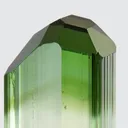
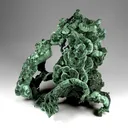
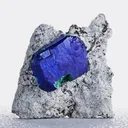
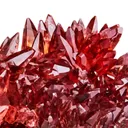
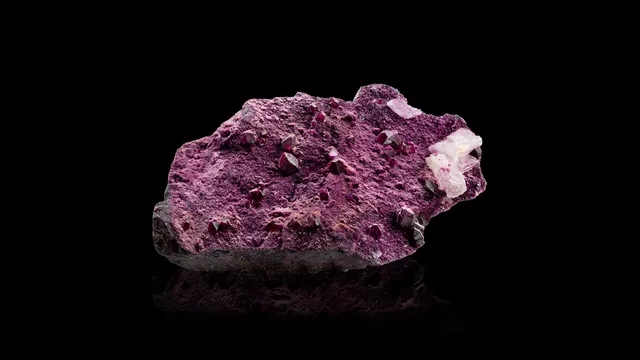
Türkiye - a mineral province in Anatolia, famed for western borate basins (colemanite, ulexite) and gemmy Kestelek crystals, with diverse evaporite assemblages.
Key facts
Türkiye matters to mineral collectors because it is not a single-locality story. It is a whole mineral province at the hinge of Anatolia, where Alpine-Himalayan tectonics, Tethyan sutures, young volcanism, arid Miocene lake basins, carbonate-hosted base-metal systems, chromite-bearing ophiolites, epithermal precious-metal belts, and borate evaporites all overlap within one country. For display specimens, three Turkish narratives dominate the current collector market: the great western Anatolian borate basins, especially for colemanite; the recent Hakkâri epidote-quartz material from southeastern Anatolia; and a broader suite of quartz, amethyst, sulfides, chromite-associated species, gem diaspore, and rare borates that give Türkiye a wider mineralogical depth than its best-known export minerals alone would suggest.
The western Anatolian borate deposits are Türkiye’s classic contribution to world mineralogy. The important districts—Emet in Kütahya Province, Bigadiç in Balıkesir Province, Kestelek in Bursa Province, Kırka in Eskişehir Province, and the older Sultançayırı district—formed in Neogene lacustrine and playa settings during episodes of volcanism and extensional basin development. Their collector appeal lies in a mineral assemblage that is unmistakably evaporitic but far from simple: colemanite, ulexite, borax/tincal, probertite, hydroboracite, gypsum, calcite, celestine, realgar, orpiment, glauberite, halite, and an exceptional set of rare borates and sulfate-borates. Türkiye is not merely an important source of boron industrially; it is one of the world’s defining places for calcium borate mineralogy.
Regional View
Country View
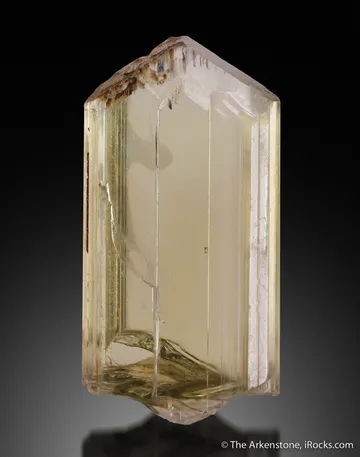
The best Turkish colemanite specimens are not anonymous industrial ore. They are bright, sharp, glassy to honey-brown monoclinic crystals, sometimes richly twinned, set on granular borate matrix or scattered through clayey pockets. Kestelek material is especially admired for gemmy, lustrous crystals; Bigadiç and Emet have produced both crystallized and nodular material, including specimen-grade pieces that show the strange beauty of borates grown in soft lake sediments rather than in hard-rock veins.

Photo: Wikimedia Commons
The other modern collecting face of Türkiye is the Hakkâri epidote-quartz association from the rugged southeast. These specimens arrived on the international market in the 2020s and are often sold under informal names such as “forest epidote” or “fairy forest quartz.” The better pieces are visually memorable: bright pistachio to olive-green epidote druses and blades forming mossy ridges, walls, and sprays across glassy quartz, often with enough open structure to give the specimen depth and sparkle. Their exact mine-level locality has not always been disclosed consistently, so experienced collectors value labels that state Hakkâri District or Şemdinli/Yüksekova area carefully rather than over-precisely.
Search for specimens: View all specimens from Türkiye
Türkiye’s collector mineral localities fall into several geological families, but the country’s signature specimen-producing systems are the western Anatolian borate basins and, more recently, the Hakkâri quartz-epidote occurrence. The borate deposits are non-marine evaporitic deposits formed in Miocene lacustrine to playa environments. They are enclosed in volcano-sedimentary successions of claystone, marl, limestone, tuff, volcaniclastic units, and locally basaltic to rhyolitic volcanic rocks. Their formation is generally tied to closed-basin evaporation under arid to semi-arid conditions, with boron supplied by volcanic ash, leaching of volcanic rocks, thermal-spring input, and basin brines.
At Bigadiç, Paleozoic and Mesozoic basement rocks are overlain unconformably by Miocene volcanic and sedimentary units. The borate-bearing sequence is divided into lower and upper borate-bearing units separated by tuffaceous intervals, a geometry that explains why collectors and miners speak of separate borate horizons rather than one simple bed. Colemanite and ulexite are the principal collector minerals, with the best crystallized pieces coming from pockets and clay-rich ore zones where borate growth had room to develop lustrous faces.
Emet is the great colemanite-probertite system of Türkiye. Its principal ore minerals are colemanite with probertite, ulexite, and hydroboracite, but the district is famous mineralogically because it also contains sporadic rare species including meyerhofferite, veatchite-A, tunellite, terrugite, cahnite, realgar, orpiment, and the rare sulfate-borate fontarnauite. The Hisarcık and Espey open pits are the main modern mining areas of the Emet operation. The Emet sequence is particularly important because the borates occur with arsenic minerals and sulfate-rich units; this unusual chemistry is the reason the district is so prominent in the literature on rare borates and sulfate-borates.
Kırka, in Eskişehir Province, is the great sodium-borate locality, dominated by tincal/borax rather than by colemanite. Its collector specimens are less commonly seen as durable cabinet material because hydrated sodium borates are much less stable in ordinary room conditions than quartz, epidote, or colemanite. For locality suites, however, Kırka is indispensable because it represents the central sodium-borate facies of the Turkish borate province. Kestelek, near Mustafakemalpaşa in Bursa Province, is much better known to specimen collectors for sharp colemanite crystals, including honey-brown and colorless crystals from a small 2005 find that placed the mine briefly in the spotlight among borate collectors.
Mining history in the Turkish borate fields reaches back to the nineteenth century. The old name “pandermite,” now treated as a synonym of priceite, preserves the historical connection with Panderma, the old name of Bandırma, a Marmara Sea port associated with the early trade in Turkish borates. Modern borate mining is state-controlled. Eti Maden, the Turkish state boron enterprise, operates the major boron works and produces refined and concentrated boron products from the Emet, Bigadiç, Kırka, Kestelek, and related operations. These are active industrial sites, not open collecting grounds.
Collecting access today should be regarded as restricted. Active Eti Maden operations are industrial mines with safety, environmental, and legal controls. Specimens in collections generally come through mine personnel, old dealer stocks, mine-run material released through commercial channels, or historical finds that reached European and North American markets decades ago. The same caution applies to Hakkâri epidote-quartz: much of the specimen stream has come through dealers and miners rather than through publicly documented collector access. A label giving only “Turkey” is common, but for serious collections the label should preserve the most precise reliable data available—Kestelek Mine, Bigadiç Mine, Emet/Hisarcık or Espey, Kırka, Hakkâri District, Şemdinli, or Yüksekova—without adding an unverified mine name.
Quartz from Türkiye is most familiar on the current specimen market in the Hakkâri epidote-quartz material, where clear to milky, glassy crystals and drusy quartz plates are coated, edged, or partly engulfed by bright green epidote; documented Mindat specimens from Hakkâri include examples around 9 cm, 11.2 cm, 12.7 cm, and larger cabinet plates exceeding 20 cm across, while market pieces range from thumbnails to dramatic cabinet specimens. The strongest examples have undamaged quartz terminations, sparkling open pockets, crisp contrast between colorless quartz and pistachio to olive epidote, and a three-dimensional “forest” texture rather than a flat green crust. Beyond Hakkâri, Türkiye also produces amethyst and other quartz varieties, including Balıkesir amethyst occurrences and smoky quartz from Kütahya Province, but Hakkâri quartz with epidote is the association that has most distinctly entered modern collector circulation.
Epidote from Türkiye is best known today from Hakkâri Province, where it occurs with quartz as lustrous mossy druses, blades, ridges, sprays, and small prismatic crystals in bright grass-green, pistachio, olive, and darker green tones; better pieces show epidote standing proud from quartz or forming parallel walls and windblown-looking textures across the specimen. Published and dealer-documented examples include small-cabinet to large-cabinet pieces, with individual epidote crystals typically small but collectively producing a rich, glittering surface. What separates good Turkish epidote from ordinary material is color and architecture: lively green rather than dull black-green, open quartz windows between epidote growths, no heavy bruising on the fragile tips, and a label that honestly reflects the currently known locality information rather than inventing a precise mine.
Colemanite is Türkiye’s classic collector borate and one of the minerals that makes the country essential in a systematic collection: it occurs in the Emet, Bigadiç, and Kestelek deposits as transparent to translucent colorless, white, honey-brown, and amber-brown monoclinic crystals, granular masses, nodules, rosettes, and pocket linings in clay-rich borate ore. Kestelek is especially prized for lustrous twinned crystals on matrix, including honey-brown crystals from a small 2005 find and large colorless crystals reported from older European collections; Bigadiç is important for colemanite with ulexite and for small sharp crystals, while Emet is the great colemanite-probertite system and the scientific center of Turkish rare-borate mineralogy. Fine specimens show sharp faces, glassy luster, internal fire, minimal clay abrasion, and stable, dry surfaces; ordinary pieces are often chalkier, massive, bruised, or industrial-looking rather than crystallized.
Other minerals documented from Türkiye give the country unusual breadth. The Emet borate district is the type locality for fontarnauite, a rare sulfate-borate from the Doğanlar boreholes, and has yielded the still-discussed “emetite” material described as a new sulfate phase requiring further work for full approval. The same district is notable for rare borates and borate-associated species such as probertite, hydroboracite, meyerhofferite, veatchite-A, tunellite, terrugite, cahnite, realgar, and orpiment. Bandırma/Panderma is historically tied to the old name pandermite, now a synonym of priceite. Outside the borate province, Türkiye is also represented in collections by chromite and chromian clinochlore/kämmererite from ophiolitic settings, gem-quality color-change diaspore from Muğla Province, amethyst from Balıkesir, and base-metal minerals including sphalerite, galena, smithsonite, hemimorphite, cerussite, baryte, and quartz from carbonate-hosted Pb-Zn systems such as those in Hakkâri.
For Turkish specimens, locality precision is the first authenticity issue. “Turkey” is a country label, not a locality label, and it covers very different mineral systems. A colemanite specimen should ideally be tied to Kestelek, Bigadiç, Emet, Hisarcık, Espey, or another named borate mine or district. Hakkâri epidote-quartz should not be upgraded casually to a specific mine unless the chain of ownership supports it. In the 2020s, many Hakkâri pieces have been sold under appealing trade names such as “forest epidote,” “fairy forest quartz,” “chlorite quartz,” or “epidote chlorite quartz.” Those names may be useful visually, but the mineral identity should be checked: bright, glassy, grass- to pistachio-green material on quartz is commonly consistent with epidote, while true chlorite tends to look softer, duller, darker, and more micaceous.
Colemanite presents different problems. It is not commonly faked in the sense of being laboratory-grown for deception, but it is easily over-described. Massive or granular borate ore may be sold as specimen-grade colemanite; clay-stained, etched, or bruised crystals may photograph better than they display; and old labels may confuse Kestelek, Bigadiç, Emet, and Bandırma because specimens moved through the borate trade rather than through collector field trips. Good colemanite should be inspected for bruised crystal edges, contact damage, loose matrix, and chalky alteration. Many specimens benefit from dry storage; borates should not be soaked or aggressively cleaned. Colemanite is much more stable than tincal/borax, but it is still softer and more chemically vulnerable than quartz, and acids are inappropriate.
Tincal/borax, ulexite, and some hydrated borates from Türkiye require special caution. Sodium borates can dehydrate, powder, or alter in ordinary indoor air, especially in dry or warm conditions. Ulexite is soft and fibrous and can be damaged by handling, moisture, and cleaning. Realgar and orpiment from Emet require the normal arsenic-mineral precautions: avoid dust, wash hands after handling, and keep specimens away from strong light and heat that can degrade color and structure. Turkish colemanite can fluoresce, with some specimens showing attractive responses under longwave and shortwave ultraviolet light, but fluorescence is variable and should not be treated as a sole test of identity.
Market availability is uneven. Hakkâri epidote-quartz has been readily available in recent years, from inexpensive small pieces to large show specimens, but top examples with sharp quartz, lively epidote color, and no crushing are already separated sharply from bulk material. Turkish colemanite is common as a species but not common as a fine aesthetic specimen; Kestelek cabinet pieces with sharp, isolated crystals and strong luster are much scarcer than industrial ore or small crystallized fragments. Emet rare-borate species and type-locality material are usually academic, micromount, or reference-suite minerals rather than cabinet display pieces.
The oldest Turkish borate story reads almost like a mineralogical detective tale. “Pandermite” was not first celebrated as a cabinet mineral at all. It was a white, marble-like material from the Panderma area—modern Bandırma—used for carving. In 1865, a carved object was analyzed by the French amateur chemist Desmazures and found to be unusually rich in boron. The material was later described as a calcium borate, but by then the American name priceite had priority, leaving “pandermite” as a historical synonym. For collectors, the charm is in the reversal: a substance handled as sculptural stone turned out to be part of one of the great borate provinces of the world.
A second story belongs to the mines and shows. One of the notable Kestelek colemanite specimens published on Mindat was described as coming from an old European private collection and originally obtained from a source in Türkiye—identified in the account as the mine engineer—who quietly sold such pieces at the Munich show during the 1990s and early 2000s. That detail fits the way many Turkish borate specimens entered the collector world: not by open field collecting, but through narrow channels between industrial mines, local insiders, European shows, and collectors alert enough to recognize that a “technical” boron mineral could also be a superb display specimen.
The Hakkâri epidote-quartz story is still unfolding in public. Early collectors and dealers treated the material cautiously because exact locality information lagged behind the specimens themselves. In a 2024 Mindat discussion, a collector posted a piece labeled from Şemdinli, Hakkâri Province, and another participant noted that the material was described by the dealer as a fairly new discovery. The sensible conclusion in that exchange was conservative: use Türkiye or Hakkâri unless a better-supported locality emerges. That is exactly how a new specimen locality matures—first through market excitement, then through labels, photographs, comparison specimens, and, eventually, a more stable locality record.
[Helvacı, Cahit. “Review of the Occurrence of Two New Minerals in the Emet Borate Deposit, Turkey: Emetite, Ca7Na3K(SO4)9, and Fontarnauite, Na2Sr(SO4)B5O8(OH)2.” Bulletin of the Mineral Research and Exploration 151, 269–283, 2015.](https://dergipark.org.tr/tr/pub/bulletinofmre/article/238679) A key paper for the Emet rare-borate and sulfate-borate assemblage, including fontarnauite and the proposed emetite material.
Fontarnauite mineral data, Mindat. Type-mineral record for fontarnauite from the Doğanlar boreholes near Emet, including formula, physical properties, type-locality information, associated minerals, and repository information for type material.
Doğanlar village, Emet District, Kütahya Province, Türkiye, Mindat. Locality page documenting the Doğanlar assemblage, including fontarnauite as a type-locality mineral and associated borates, sulfates, arsenic minerals, and evaporites.
Erkül, Fuat, Cahit Helvacı, and Hasan Sözbilir. “Stratigraphy and Geochronology of the Early Miocene Volcanic Units in the Bigadiç Borate Basin, Western Turkey.” Turkish Journal of Earth Sciences 14, 227–253, 2005. Important geological work on the volcanic and lacustrine framework of the Bigadiç borate basin.
Helvacı, Cahit, and Orhan Alaca. “Geology and Mineralogy of the Bigadiç Borate Deposits and Vicinity.” Bulletin of the Mineral Research and Exploration 113, 31–63, 1991. A foundational description of the Bigadiç borate stratigraphy and mineralogy.
Helvacı, Cahit. “A Review of the Mineralogy of the Turkish Borate Deposits.” Mineralogical Magazine 42, 257–260, 1978. Classic concise review of Turkish borate mineralogy and the differences among the major districts.
Palmer, Martin R., and Cahit Helvacı. “The Boron Isotope Geochemistry of the Neogene Borate Deposits of Western Turkey.” Geochimica et Cosmochimica Acta 61, 3161–3169, 1997. Boron-isotope study covering the major Turkish borate deposits and numerous major and minor borate species.
Republic of Türkiye Ministry of Energy and Natural Resources — Boron Official overview of Türkiye’s boron reserves, principal deposits, production, and national role in the boron industry.
Eti Maden — Boron in Turkey Official Eti Maden summary of Turkish boron deposits, major boron minerals, and state control of boron production.
Eti Maden — Colemanite Official description of colemanite occurrence, mining, processing, and properties in the Turkish borate fields.
Eti Maden — Emet Official page for the Emet Boron Works, useful for current operational context around the Hisarcık and Espey colemanite operations.
Eti Maden — Bigadiç Official page for Bigadiç Boron Works and its colemanite-ulexite production setting.
USGS — The Mineral Industry of Turkey Authoritative country-level mineral industry summary, including current boron reserve and production data.
Mindat — Hakkâri Province, Türkiye Mineral locality record for Hakkâri Province, including quartz, epidote, and carbonate-hosted Pb-Zn assemblages.
Mindat — Epidote from Hakkâri District Focused occurrence record for Hakkâri epidote, with associated quartz and specimen photographs.
Mindat — Quartz with Epidote, Hakkâri District photo record Documented specimen photograph of clear quartz with epidote blades from Hakkâri District.
Mindat discussion — Identity Help: Hakkari, Türkiye Useful collector discussion showing the epidote-versus-chlorite labeling issue for Hakkâri quartz specimens.
Mindat — Pandermite Historical note on pandermite, the Bandırma/Panderma name, and its relationship to priceite.
Freely licensed photograph of a classic Kestelek colemanite specimen by Rob Lavinsky.
Hanilçi, Nurullah, Hüseyin Öztürk, and David Banks. “Geological, Geochemical and Microthermometric Characteristics of the Hakkari Region Zn-Pb Deposits, SE Turkey.” Ore Geology Reviews 125, 2020. Useful context for the carbonate-hosted Zn-Pb systems and gangue assemblages of southeastern Türkiye.
Hakkâri District, Hakkâri Province, Türkiye, Mindat. Locality record for the Hakkâri District, including quartz, epidote, Pb-Zn minerals, carbonates, iron oxides, and related species.
Colemanite from Kestelek Mine, Mustafakemalpaşa District, Bursa Province, Türkiye, Mindat. Photo-rich occurrence record for Kestelek colemanite specimens.
Colemanite specimen R63-35H, Kestelek Mine, Mindat. Published specimen record describing large, sharp, gemmy to translucent colemanite crystals from Kestelek and documenting older market provenance.