A collector's guide to Mamuju Regency, Indonesia: its geology, mining history and notable minerals, illustrated with the 53 specimens documented from this locality on EarthWonders.
Key facts
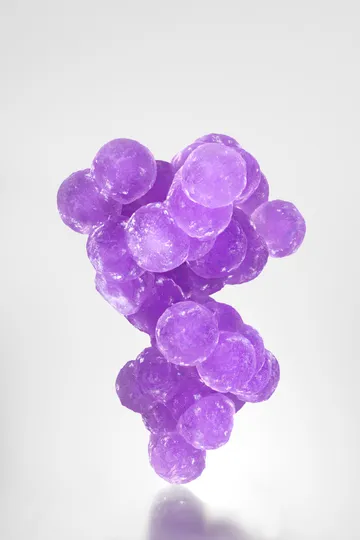
Mamuju Regency, on the western coast of Sulawesi in Indonesia’s West Sulawesi Province, became a modern classic almost overnight through the discovery and export of the material sold as “grape agate,” “grape chalcedony,” “grape amethyst,” Batu Manakarra, or Batu Ngalo. For serious collectors, the appeal is not merely novelty. The best Mamuju specimens are among the most instantly recognizable quartz-group specimens of the 21st-century market: three-dimensional clusters of lavender, violet, gray-green, blue-green, and occasionally mixed-color spheres, each sphere a tiny radiating quartz aggregate, often dusted with sparkling microcrystals. A fine piece looks like a mineralogical contradiction—part amethyst, part botryoidal chalcedony, part sculptural volcanic-cavity specimen—and that ambiguity is exactly why the locality matters.
Mineralogically, Mamuju’s celebrated grape material is better treated with care than with habit-name shorthand. The trade name “grape agate” is convenient and now entrenched, but the material is not true banded agate in the strict sense. Published gemological work on Manakarra material identified the purple grape-like spheres as quartz, with a coarser radiating structure than typical cryptocrystalline chalcedony. Under magnification, good specimens show bundles, radial growth, and glittering microcrystalline surfaces rather than the waxy, continuous fabric expected of ordinary agate. The purple color is amethystine; green and blue-green spheres owe their color to included mineral matter, with clay minerals playing an important role in the locality’s color range.
Regional View
Country View
The geologic setting is volcanic and altered, not a conventional vein-amethyst district. The collector material occurs in pockets, seams, and clay-rich zones in weathered volcanic rocks, especially around altered pillow-lava margins and associated volcanic units of the broader Mamuju–Adang volcanic terrain. That setting explains both the spherical quartz habit and the frequent intimate association with blue-green clay, iron staining, earthy matrix, and sparkling drusy quartz. Regionally, the Mamuju area is also known to geologists as a high natural background radiation area tied to uranium- and thorium-bearing volcanic rocks of the Adang volcanic complex; that radioelement-rich environment is significant because radiation is part of the color-center story of amethystine quartz.

Photo: Wikimedia Commons
Historically, Mamuju is unusually young as a world-famous specimen locality. Indonesian accounts connect early local recognition of Batu Ngalo or Batu Manakarra with coastal finds around Pantai Ngalo and the Indonesian batu akik, or ring-stone, boom of the mid-2010s. International gemological and collector literature describes the grape-like quartz discovery near Mamuju in 2014, with better, fresher, more lustrous purple and blue-green material reaching the wider market by about 2016. In only a few years, a regional ornamental stone became a global mineral-show staple.

Photo: Wikimedia Commons
The best specimens are judged less like ordinary quartz and more like sculpture. Collectors prize separated, rounded “grapes,” saturated but natural-looking violet or lilac color, a lively wet-to-vitreous luster, translucency at the sphere edges, clean drusy sparkle, and an undamaged display face. Mixed purple and green specimens can be especially desirable when the color contrast is natural and the composition is balanced. Ordinary pieces are abundant: dull gray, brownish, chalky, fractured, contacted, or clay-choked material is common compared with the small percentage of truly fine display specimens.
Search for specimens: View all specimens from Mamuju Regency, Indonesia
The collector locality is best described as the “Grape Agate” mines of Mamuju Regency, West Sulawesi Province, Indonesia: not one old named mine with a shaft and a company history, but a group of small specimen-producing workings spread through volcanic terrain near the west coast of Sulawesi. Published locality records and trade usage place the occurrence in the Mamuju area, with field accounts linking the first beach material to Pantai Ngalo and later, better collector-grade material to inland and upland workings in the Tapalang–Mamuju belt, including names such as Takandeang and other local Mamuju-area sites.
The deposit type is volcanic-hosted, silica-rich, clay-associated quartz mineralization. The grape-like aggregates form as spheroidal quartz in pockets and seams within altered volcanic rocks. The commonly cited field model places the material in clay pockets between weathered pillow lavas, where silica-bearing fluids interacted with volcanic glass and altered lava. The greenish clay zones are not incidental dirt; they are part of the mineralizing environment and help explain the green and blue-green coloration in some spheres. In hand specimens, the “ore body” is better imagined as irregular, discontinuous specimen pockets rather than a continuous mineable quartz vein.
The broader Mamuju district is geologically important beyond the grape quartz itself. Regional studies of the Adang volcanic-rock area describe a volcanic complex with lava, breccia, lava domes, volcanic conglomerate, limestone, reef limestone, and alluvium. Other work on the Adang Volcanic Complex records leucite-bearing alkaline volcanic rocks and uranium-thorium enrichment, including thorianite, davidite, gummite, autunite, and REE-bearing minerals in parts of the district. These radioactive-mineral studies do not mean every grape-agate specimen is an ore specimen, but they do give the amethystine quartz a meaningful geologic context: Mamuju is a silica-and-volcanic alteration story set inside one of Indonesia’s best-known high-background-radiation terrains.
Mining for collector material is local and small-scale. Specimens are extracted from weathered slopes, clay seams, pockets, and shallow workings rather than from a large, formal quartz mine operated for industrial production. Indonesian reporting on Batu Manakarra describes a local craft and export chain: miners supply rough material, Mamuju artisans and dealers clean or work it, and export-oriented sellers move it onward to Indonesian and international buyers. Some material is sold as natural clusters; other material enters the lapidary and ornamental trade as small spheres, pyramids, rings, pendants, desk objects, and suiseki-style display stones.
Production is essentially a modern phenomenon. Local narratives place the earliest discovery of Batu Manakarra or Batu Ngalo in the early 2010s, while the international mineral and gem literature places the new quartz material near Mamuju in 2014 and notes better-quality material appearing by 2016. That timing explains the sudden arrival of “grape agate” at mineral shows, dealer tables, online auctions, and social-media mineral circles: the locality did not have a long classic-era specimen history, but it produced an image so distinctive that it became instantly memorable.
Collecting access today should be treated as commercial and permission-based, not as a casual public rockhounding opportunity. The productive sites are rural working localities in tropical, weathered volcanic terrain, and they involve private land, local miners, excavation hazards, unstable clay and rock, and access issues best handled through local contacts. For most collectors outside Indonesia, the ethical route is buying documented specimens through reputable dealers who can supply a full West Sulawesi, Mamuju Regency provenance rather than vague “Indonesia grape agate” labels.
The notable finds are not famous named pockets in the older Alpine or American sense, but distinct waves of material. Early beach and near-surface pieces were often duller, more fragile, and brownish to gray. The material that built the locality’s international reputation consisted of fresher purple to lavender clusters and rarer green to blue-green examples, including mixed-color pieces. Thumbnail and miniature specimens are common; small cabinet specimens are readily available; large cabinet plates with sharp color, full three-dimensional form, intact spheres, and bright sparkle are much scarcer. Individual spheres are often only a few millimeters across, but documented descriptions note larger orbs approaching the high-teens millimeter range and, in Mindat’s locality description, up to about 20 mm.
Quartz from Mamuju Regency is collected almost entirely for its spherical, colloform-to-botryoidal habit rather than for conventional prismatic crystals: the best pieces are clusters of rounded quartz spherules with visible radial structure, drusy sparkle, and lavender, violet, gray, green, or blue-green coloration. The spheres grew in clay-rich pockets and altered volcanic cavities, commonly with saponite or other green clay minerals, limonite staining, occasional pyrite or calcite, and remnants of volcanic matrix. Ordinary Mamuju quartz can be dull, pale, brownish, contacted, or crust-like, while fine specimens show rounded separate “grapes,” lively microcrystalline luster, a clean three-dimensional silhouette, and minimal broken high points; cabinet-size specimens exist, but many of the most elegant examples are thumbnail to miniature clusters where the form remains crisp.
Mamuju amethyst is the purple expression of the locality’s grape-form quartz, occurring as lavender to rich violet spheroidal aggregates rather than as the familiar pointed crystals of Brazilian or Uruguayan geodes. Published gemological work links the amethystine color to iron-related color centers and the radioactive character of the host-rock environment, with heating experiments showing loss of purple color at high temperature, as in ordinary amethyst. The finest Mamuju amethyst specimens combine saturated but believable violet color with translucent sphere edges, sparkling drusy skins, and complete, undamaged grape clusters; mediocre pieces are easy to recognize by chalky luster, broken or abraded spheres, muddy gray-purple color, or suspiciously even dyed-looking violet in cracks and porous areas.
Agate from Mamuju Regency is best understood as a market category rather than a strict mineralogical diagnosis: most specimens sold as “grape agate” are the locality’s spheroidal amethystine quartz or quartz/chalcedony aggregates, not banded agate in the classic sense. The habit is what drives the name—rounded purple, lavender, gray-green, or blue-green balls grouped like a bunch of grapes—and the better pieces show open, rounded clusters with micro-drusy sparkle instead of massive, waxy, banded interiors. Collectors should value Mamuju “agate” pieces by the standards of this locality: natural color, lustrous separate spheres, sculptural form, secure provenance, and freedom from obvious dye, glue, repairs, or assembled loose orbs.
Other minerals documented from the Mamuju grape-agate locality include calcite, pyrite, limonite, saponite, a phillipsite-subgroup zeolite, and possible celadonite; saponite is especially important because it has been identified by XRD on material associated with the Indonesian grape quartz. The wider Mamuju district is also notable for radioactive and rare-earth mineralization in the Adang volcanic rocks, including thorianite, davidite, gummite, autunite, britholite, aeschynite, monazite, thorite, thorutite, and related REE-Th-U phases reported in geologic studies. The regency is not important to collectors as a type-locality district for newly named display minerals; its mineralogical fame rests on an extraordinary quartz habit, a young collector history, and the unusual overlap between amethyst coloration, clay-rich volcanic pockets, and a radioelement-enriched volcanic province.
The first authenticity issue is nomenclature. “Grape agate” is a trade name, not a species name, and not a reliable statement that the specimen is true banded agate. Serious labels should read something like “quartz var. amethyst, grape-agate habit,” “amethystine quartz, trade name grape agate,” or “quartz/chalcedony, grape-agate habit, Mamuju Regency, West Sulawesi Province, Indonesia.” Older or casual labels reading “chalcedony,” “agate,” “grape chalcedony,” or “grape amethyst” are common and not necessarily dishonest, but they should be understood in the context of published Raman and optical work.
The second issue is color treatment. Mindat’s locality entry specifically warns that poorly colored specimens are sometimes dyed violet. Natural Mamuju material can be vividly purple, so strong color alone is not proof of treatment. More telling warning signs include an unnaturally uniform neon-purple tone, purple color concentrated in cracks, clay seams, or broken surfaces, staining on matrix, or a color that looks inky rather than amethystine. A good natural specimen usually shows subtle variation: slightly paler sphere edges, zones of lavender and gray-violet, or differences between spheres rather than one flat artificial tone.
Assemblage and repair deserve attention. The grape habit tempts tampering: loose individual spheres can be glued to a cluster, broken plates can be stabilized, and display “trees” can be assembled for visual effect. Inspect the backs and attachment points. Natural clusters generally show coherent growth relationships, interlocking spheres, clay or matrix continuity, and believable broken-contact areas. Suspicious pieces may show glossy adhesive in recesses, isolated balls perched on improbable contact points, mismatched color or luster between adjacent areas, or an overly perfect silhouette with no natural base.
Condition is central to value. Quartz is hard, but Mamuju clusters are structurally delicate because the spheres are exposed and connected along small contact points. Broken front-facing grapes, abraded high spots, chipped drusy skins, clay-packed recesses, sawed backs, and dull weathered patches all reduce value. On larger plates, some contact and breakage are normal; what matters is whether damage distracts from the display face. The best specimens hide their contacts on the underside, back, or natural attachment edge.
Cleaning should be conservative. Warm water, soaking, a soft brush, and patience are usually safer than acids, ultrasonic cleaning, or aggressive mechanical picking. Clay is part of many specimens, and removing it too forcefully can loosen small spheres or strip the piece of useful geologic context. Avoid oiling or coating specimens to intensify luster; a coated Mamuju grape cluster may look temporarily “wet,” but it becomes less desirable to mineral collectors who want an untreated surface.
Radiation is a contextual concern, not a reason for alarm with ordinary cabinet specimens. Mamuju is a documented high natural background radiation area, and regional volcanic rocks host uranium- and thorium-bearing minerals; some specimens with abundant attached matrix may come from that geologic environment. Sensible handling is enough for typical quartz display pieces: do not grind or inhale dust, avoid cutting unknown matrix without proper lapidary ventilation, wash hands after handling earthy material, and store large matrix-rich lots thoughtfully. For most collector specimens, the practical risk is far less about display and more about dust generation during cutting, trimming, or heavy cleaning.
Market availability remains broad but uneven. Small pale clusters, inexpensive thumbnails, and decorative purple grape pieces are common in the trade. Fine miniatures with sharp grape separation, saturated natural amethyst color, vivid sparkle, and no distracting damage are much harder. Rarer green, blue-green, and mixed purple-green specimens command interest when natural-looking and well formed. Large cabinet specimens are available periodically, but top large examples with bright color, intact rounded spheres, and a balanced three-dimensional form are substantially scarcer than the volume of ordinary Mamuju material might suggest.
The Mamuju story begins on the coast rather than in an old mine dump. Local Indonesian accounts preserve the names Batu Ngalo and Batu Manakarra, linking the material to Pantai Ngalo and to Mamuju’s Manakarra identity. That matters because the international name “grape agate” can make the locality sound like a commodity. In Mamuju, the stone entered public life first as a local object: a strange clustered quartz, shaped like grapes or coral, found in a place where beach, jungle, and volcanic hills meet.
By 2016, the story had acquired the unmistakable color of Indonesia’s batu akik boom. A Liputan6 report from March 10, 2016 described hunters still traveling steep mountain routes in pursuit of Manakarra stone. A young collector named Awin, then 22 and identified as a resident of Botteng village, said the stone was hard to find because it lay about 5 meters below the surface. The same report described search rituals involving offerings, incense, cigarettes, and the sacrifice of a black Cemani chicken. Read as folklore, belief, or showmanship, the details capture the moment when a geological curiosity became an object of desire, rumor, and risk.
The local trade soon became practical as well as mythical. DetikSulsel profiled Abdul Rasyid, a Mamuju craftsman, in September 2022. He described Batu Manakarra as an original Mamuju crystal stone that he had begun exporting in 2015, during the viral ring-stone period. The destinations he named—China, France, and the United States—show how quickly the stone escaped its regional setting. Yet the route was not simple: Rasyid said shipments were being sent first through a friend in Sukabumi because export paperwork was easier there. One monthly shipment, he said, could weigh about 500 kilograms and produce a profit of about Rp 40 million. In his workshop, the same material admired by mineral collectors as natural grape clusters could also become mini spheres, pyramids, rings, pendants, and other small objects.
Another Mamuju dealer, Faisal Ridwan of Padang Panga in Karema, was profiled by iNewsMamuju in December 2022. He described orders from inside Indonesia and overseas, naming Sukabumi, China, America, and Russia. His account gives a useful glimpse of the unromantic middle of the specimen trade: cleaning crusts and skins from the stone, preparing crystal material for shipment, and relying on online marketing. The quoted prices were in the hundreds of thousands of rupiah per kilogram, while monthly turnover could reach tens of millions of rupiah. For a collector looking at a small purple cluster in a case, those numbers are a reminder that Mamuju grape quartz is also a rural livelihood chain.
The scientific story unfolded almost as quickly. In 2018, Brendan Laurs and George Rossman published a Journal of Gemmology note on grape-like Manakarra quartz, documenting the material’s identity and structure. Their work helped move the collector conversation away from “Is it agate?” and toward a better question: what kind of quartz growth can produce these separate, rounded, grape-like forms? The answer—radiating quartz aggregates with multiple nucleation points—made the specimens more interesting, not less. Mamuju did not simply add another purple quartz to the market; it forced collectors to look closely at the boundary between habit name, trade name, and mineral identity.