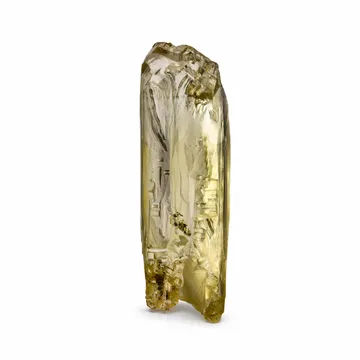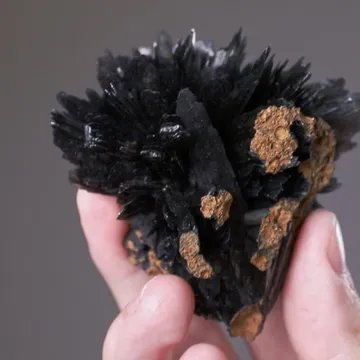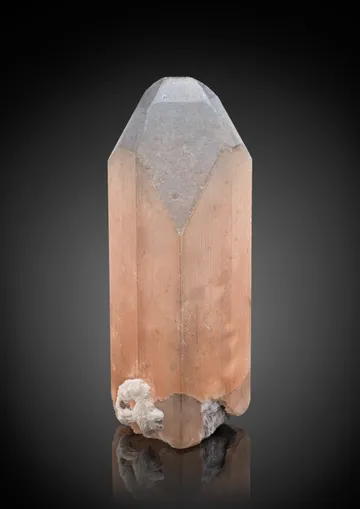
Khoroshiv Raion, Ukraine - Volyn pegmatite locality famed for heliodor yellow beryl and topaz; giant gemmy chambers yield crystals prized by collectors.
Key facts
Khoroshiv Raion, long known to collectors under the Soviet-era name Volodarsk-Volynskii and in mineral literature as the Volyn pegmatite field, is one of the great chamber-pegmatite localities of the mineral world. Its classic specimens come from giant miarolitic cavities in Paleoproterozoic granites on the southwestern margin of the Korosten anorthosite–mangerite–charnockite–granite complex of the Ukrainian Shield. These are not ordinary granitic pockets: the Volyn chambers formed as large, gas- and fluid-inflated cavities in a highly evolved, fluorine-rich pegmatite system, then grew crystals of quartz, topaz, beryl, albite, fluorite, mica, and rare accessory minerals on a scale that still feels improbable even to seasoned pegmatite collectors.
The locality is famous above all for yellow to yellow-green beryl—heliodor—often in gemmy, sharply prismatic crystals with the unmistakable Volyn surface: glossy faces broken by dramatic natural etching, rectangular pits, deep channels, bevels, dissolved edges, and the sculptural look of a crystal partly remade by late fluorine-rich fluids. Good heliodor from Khoroshiv has a lemon, olive, or yellow-green body color, transparency that can approach faceting grade, and a balance of natural corrosion and preserved crystal form that makes it instantly recognizable. Topaz is the second great prize: blue, sherry, cognac, champagne-pink, colorless, and bicolored crystals, commonly blocky and glassy, with natural etching, clefts, rehealed fractures, and occasional association with albite or fluorite. The best examples look less like ordinary pegmatite minerals than like pieces of frozen, colored light dug from clay.
Regional View
Country View
Historically, the district was mined not for showy gems but for industrial piezoelectric quartz. That accident of economics shaped the survival and loss of specimens: during the Soviet period, enormous effort went into quartz extraction, while beryl and topaz—now the very material collectors prize—could be overlooked, discarded, or kept only incidentally. The later collector market, especially from the late 20th century onward, recognized Khoroshiv as a world locality for etched heliodor and large, fine topaz. Modern research has made the deposit even more remarkable by documenting kerite, ancient organic matter preserved in the chambers, and late-stage black opal and ammonium-bearing minerals that record interaction between biological material and the pegmatitic system.

Photo: Wikimedia Commons

Photo: Wikimedia Commons
Search for specimens: View all specimens from Khoroshiv Raion (Volodarsk-Volynskii), Ukraine
The Volyn pegmatite field lies a few kilometres west of Khoroshiv in Zhytomyr Oblast, northwestern Ukraine, about 190 km west of Kyiv by road. The mineralized belt follows the southwestern contact zone of the Korosten plutonic complex, where pegmatite-bearing rapakivi-type granites meet gabbroic to anorthositic rocks. Modern geochronology places the nearby granite at about 1766 ± 3 Ma and the pegmatite at about 1760 ± 3 Ma; the broader Korosten AMCG complex records a Proterozoic intrusive history spanning roughly 1.84 to 1.72 Ga. In collector language, this is the Volodarsk-Volynskii mine district; in Ukrainian and current administrative usage, Khoroshiv is the locality name that replaced Volodarsk-Volynskyi.
The deposit type is miarolitic rare-element granitic pegmatite, but the Ukrainian term “chamber pegmatite” is more descriptive. Individual pegmatite bodies were emplaced irregularly in the granites over a north–south zone about 22 km long and 300 to 1500 m wide. Many bodies are zoned around an open cavity. A typical chamber pegmatite has graphic quartz-feldspar against the granite, then blocky quartz-feldspar zones, a quartz core above the cavity, a crystal chamber, and beneath it a strongly leached feldspar-rich zone where quartz was removed and later mineral assemblages formed. In the classic model, smoky quartz or morion grew downward from the hanging wall, while the chamber floor collected fallen quartz, clay, mica, topaz, beryl, albite, and other pocket minerals.
The scale is what separates Volyn from nearly every other pegmatite field. Published descriptions record individual pegmatite bodies several tens of metres across and pockets from ordinary cabinet-scale cavities to enormous chambers; some are given as around 40 m3, while exceptional chambers reached hundreds to thousands of cubic metres. A cross section of Pegmatite 487, for example, shows a pegmatite roughly 12 m by 7.5 m with a chamber about 5 m by 2 m at the 59 m level of Shaft 2. Other recent accounts describe giant cavities in Pegmatite 521 at about 96 m depth, including a chamber reported as roughly 30 by 20 by 15 m.
The mineralization reflects a highly evolved, volatile-rich system. Topaz points to abundant fluorine; so do fluorite and fluorine-rich muscovite. Beryl occurs only in a small fraction of the pegmatites, and gem-quality topaz in a larger but still selective fraction, which is why the finest specimens are tied to particular pockets and pegmatite numbers rather than being evenly distributed through the field. Primary pocket minerals include quartz varieties—especially morion and smoky quartz—topaz, beryl including heliodor and green beryl, albite and cleavelandite, microcline and orthoclase, muscovite and other micas, and fluorite. The leached and brecciated zones add siderite, phenakite, late albite, altered beryl pseudomorphs, opal, chalcedony, clay minerals, buddingtonite, tobelite-bearing mica, and a long suite of rare accessory phases.
Mining history began with scattered surface finds. Farmers reportedly turned up well-crystallized quartz and topaz while ploughing fields, but the material was long misunderstood or underappreciated. The pegmatites were described in the 19th century and then seriously mined beginning in 1931. Soviet development focused on piezoelectric quartz and eventually included shafts, open pits, and a large underground tunnel network. Published summaries describe six shafts and about 110 km of main access tunnels on 50, 100, and 150 m levels, with small drives and winzes made to reach individual pegmatites. UK Mining Ventures records 5200 tons of quartz mined from 1944 to 1993, including 119 tons of piezoelectric quartz, together with 22 tons of topaz and 4 tons of beryl.
The principal Soviet and post-Soviet operator is associated with Volyn Quartz Samotsvety, the enterprise whose name appears throughout modern accounts of the deposit. A current company site for Volyn Gems states that the company has held exclusive rights for geological exploration and extraction of mineral stones at the Volyn deposit since 1931 and gives an address on Samotsvitna Street in Khoroshiv. In the 2015–2018 period, UK Mining Ventures worked the locality for the specimen collector market, with Martin Števko acting as mineralogist during specimen recovery. Their documented work included shallow clay-rich surface operations and underground work in selected chamber pegmatites, with new topaz from Pegmatite 336, heliodor from Pegmatite 521, bicolored topaz on cleavelandite from Pegmatite 569, bicolored topaz with fluorite inclusions from Pegmatite 233, and notable material from Pegmatite 206.
Collecting access today should be treated as industrial and private, not as casual field collecting. The workings include flooded open pits, shafts, underground chambers, clay-filled weathered zones, and historically mined pegmatites, all of which present obvious access and safety issues. UK Mining Ventures posted in 2019 that the Volodarsk-Volynskii mine was non-operational until further notice, while Volyn Quartz Samotsvety/Volyn Gems continues to present itself as the rights holder for extraction and processing. For collectors, the practical route is the specimen and gem market: older Soviet-era material, post-Soviet pocket recoveries, pieces from the 2015–2018 specimen work, and more recent material that has appeared through Ukrainian dealers and at major shows.
Several named or numbered finds are central to understanding the specimens. Pegmatite 206 produced heliodor and topaz, including well-terminated heliodor and bicolored topaz; Pegmatite 336 produced blue topaz in 2017; Pegmatite 569 produced bicolored topaz on cleavelandite; Pegmatite 233 yielded bicolored topaz with fluorite inclusions; Pegmatite 521 is the classic giant heliodor chamber, famous for distinct etched yellow-green beryl; Pegmatite 576 is cited for heliodor and natural surface etching; Pegmatite 394, also called “Skorkina” and later “Vsevolod’s pocket” in a 2019 conference account, produced an extraordinary quantity of cognac-orange topaz below the original floor of a deep chimney-like chamber.
Khoroshiv heliodor is the locality’s signature collector mineral: transparent to translucent yellow, lemon-yellow, olive-yellow, yellow-green, and locally stronger greenish crystals of beryl, typically as hexagonal prisms rather than matrix-rich pegmatite plates. Published collector accounts describe common fine sizes in the 3–15 cm range, with much larger crystals known, including museum examples reportedly up to 140 cm long and gem-quality crystals up to 55 cm reaching the market. The best pieces combine body color, transparency, intact terminations, and unmistakable Volyn etching: rectangular and nearly square pits on prism faces, hexagonal pits on basal faces, deep corrosion channels, triangular hillocks, dissolved bevels, and a luminous “melted” surface that is natural rather than damage. Heliodor is especially tied to pockets such as Pegmatite 521, which produced distinctive etched crystals from dark greenish clay, and Pegmatites 206 and 576; associated minerals include albite or cleavelandite, quartz or morion, mica, topaz where conditions overlapped, and late clay from the pocket floor. Ordinary pieces are pale, bruised, incomplete, or too frosted to show internal light; superior Volyn heliodor has saturation without muddy tone, visible internal clarity, and etching that enhances rather than destroys the crystal architecture.
Beryl from Khoroshiv includes heliodor, green beryl, rare greenish-blue to aquamarine material, near-colorless beryl, and altered or pseudomorphed beryl in breccia zones, but the species is far from uniformly distributed: modern summaries of old mine logs place beryl in only about 2% of the pegmatites. Crystals grew in chamber environments and were later commonly found as loose individuals in clay-mica-quartz material or soft kaolinitic clay at the lower parts of pockets, where their original attachments to albite were often lost. The habits range from prismatic and long-prismatic columnar crystals to more irregular, intensely dissolved forms, with basal faces often rare or modified by etching. Color can run from brownish green through light yellow and yellowish green to light green and very rarely light blue; the green may be attractive but should not be called emerald from this locality, as the typical chromium- and vanadium-colored emerald habit belongs elsewhere in Ukraine. For the collector, the important distinction is not simply “beryl from Ukraine” but a crystal retaining the Volyn combination of large size, gemmy interior, etched surfaces, and honest pocket character, preferably with a credible pegmatite number or older provenance.
Topaz from Khoroshiv is a major world occurrence for large pegmatitic crystals, with about 10% of the chamber pegmatites reported to contain gem-quality topaz. The crystals are commonly blocky, tabular to prismatic, glassy, naturally etched, and sometimes spectacularly clefted or rehealed; colors include blue, pale blue, colorless, champagne-pink, sherry, cognac, golden-red, and bicolored blue-to-sherry material. Classic associations include albite or cleavelandite, quartz or morion, mica, fluorite, beryl in exceptional chambers, and rare solid or fluid inclusions such as albite, tourmaline, Fe-bearing phases, organic matter, and fluorine-rich accessory minerals. Important documented finds include new topaz from Pegmatite 336 in 2017, bicolored topaz on cleavelandite from Pegmatite 569, bicolored topaz with fluorite inclusions from Pegmatite 233, fine topaz from Pegmatite 206, a major Soviet and later recovery from Pegmatite 464, and the deep chimney-like Pegmatite 394 pocket that produced cognac-orange crystals in sizes from small gem rough to very large masses. The best collector pieces preserve strong color zoning, lustrous natural faces, etching that reads as geological rather than battered, and either an aesthetic matrix association or enough sculptural form to stand alone.
Fluorite at Khoroshiv is not the main show mineral but is an important marker of the fluorine-rich pocket environment that also produced topaz and etched beryl. It occurs as an accessory mineral in the chamber pegmatites and related late-stage zones, is recorded in association with kerite, oligoclase, topaz, albite, quartz, siderite, and rare-earth fluorocarbonate or fluorocerite-group phases, and appears in collector documentation as inclusions in bicolored topaz from Pegmatite 233 and as triangular white fluorite crystals with bicolored topaz near well-terminated heliodor in Pegmatite 206. Fine fluorite specimens are scarcer on the market than heliodor or topaz and tend to be valued for association and provenance rather than for large isolated fluorite crystals. The most desirable examples are those that demonstrate the Volyn paragenesis clearly—fluorite with topaz, albite, siderite, quartz, or beryl—while loose or ambiguous pieces need especially careful locality support because the district’s fame is not built on fluorite alone.
Albite from Khoroshiv is a fundamental pocket and alteration mineral, most collectible when it appears as white platy cleavelandite or as pale feldspar matrix supporting topaz or beryl. In the chamber model, beryl commonly grew on albite before later clay alteration and collapse obscured or destroyed many original attachments; in the leached zone beneath chambers, albite occurs with siderite, topaz, fluorite, rare beryl, and phenakite as part of the late-stage mineral suite. UKMV documentation illustrates bicolored topaz on cleavelandite from Pegmatite 569, while older and modern mineralogical studies place albite among the daughter minerals and inclusions related to Volyn topaz and fluorine-rich pegmatitic fluids. As a standalone species it is modest, but as matrix it is important: bright white, clean, bladed cleavelandite can make a Volyn topaz specimen far more aesthetic, and undisturbed feldspar association helps distinguish a true pocket specimen from a loose gem crystal pulled from clay.
Beyond these five species, the Khoroshiv mineral list is broad and scientifically rich. Quartz varieties include morion, smoky quartz, rock crystal, citrine, amethyst, and chalcedony, with morion occurring as large jet-black crystals colored by long-term natural radiation. Phenakite, bertrandite, and euclase document beryllium redistribution and alteration of beryl; muscovite, fluorine-rich muscovite, tobelite-bearing mica, buddingtonite, opal, black opal, kaolinite, and clay minerals record late hydrothermal and organic-matter interaction. Accessory and rare phases include columbite-(Fe), cassiterite, wolframite-group minerals, ixiolite-series minerals, niobium-bearing rutile, monazite-(Ce), xenotime-(Y), synchysite-(Ce), synchysite-(Y), bastnäsite-(Ce), fluorapatite, fluocerite or oxyfluocerite-related phases, uraninite, zircon, thorite, allanite-(Ce), and the unusual halide and borate-related inclusions reported from topaz such as cryolite, elpasolite, teepleite, halite, and sylvite. The mine is not known as a type-locality locality; its importance rests instead on specimen quality, chamber scale, and the unusual late record of kerite, black opal, and ammonium-bearing alteration minerals.
The main authenticity issue for Khoroshiv material is provenance, not a famous, well-documented fake industry. The old labels may read Volodarsk, Volodarsk-Volynskii, Volodarsk-Volynskyi, Wolodarsk-Wolynskii, Volyn, Zhitomir, Zhytomyr, or Ukraine; Soviet-era and early Western labels sometimes loosely called the locality “Russia” or “Russian heliodor” because the material emerged during the Soviet period. For modern cataloguing, Khoroshiv Raion, Zhytomyr Oblast, Ukraine, with the classic name Volodarsk-Volynskii or Volyn in parentheses, is the safest form.
Volyn heliodor has diagnostic natural etching, and this can be both an aid and a trap. Rectangular pits on prism faces and hexagonal to tubular pits on basal faces are real locality features, visible even with a loupe on many crystals. However, not every etched yellow beryl is Volyn, and not every Volyn beryl is perfectly etched. Look for the complete package: color in the yellow-green to olive-green range, low-alkali beryl character when tested, large sculptural dissolution features, and ideally older collection history or a pegmatite-number provenance. Beware of over-eager “emerald” labels: true emerald color is not characteristic of the Volyn field, and published gemological work explicitly treats emerald attribution to Volyn as erroneous.
Condition grading is subtle. These crystals grew, fell, dissolved, and were dug from clay; etched faces, rehealed cracks, corrosion channels, and irregular terminations may be natural and desirable. Damage is different: fresh bruises, white chips, sawed bases disguised by clay, glued repairs, polished windows, and missing terminations reduce value. On heliodor, natural etching should have the same surface skin and luster continuity as the rest of the crystal; fresh breaks are sharper, lighter, and less lustrous. On topaz, internal cleavage is common and dangerous—Volyn topaz can split along perfect basal cleavage if knocked, thermally shocked, or clamped too tightly. Large crystals should be handled over a padded surface and displayed with stable support.
Treatments and color stability require attention. Volyn beryl examined in a GIA study showed no fluorescence under short- or long-wave UV, so fluorescence should not be expected as an authentication shortcut. Topaz color from the district can include naturally irradiated tones accumulated during geological time; deep orange to cognac colors have been noted as light-sensitive in collector literature, and strong-colored topaz is best displayed away from direct sunlight and intense case lighting. Blue topaz from many world sources is commonly irradiated in the gem trade, so a faceted or loose blue stone needs a reputable origin and treatment disclosure; specimen topaz with natural etched faces, unrepaired matrix, and old Volyn provenance is easier to interpret than anonymous cut stones.
Market availability is better than for many famous pegmatite localities because old Soviet material, post-Soviet pocket recoveries, and later specimen-mining stock entered the market in waves. Still, truly fine examples are not common. Small to medium heliodor crystals and etched topaz fragments appear regularly; large transparent, well-terminated heliodor, aesthetic bicolored topaz, topaz on cleavelandite, and pieces with exact pegmatite-number provenance are much scarcer. The most desirable labels mention Pegmatite 206, 521, 569, 576, 233, 336, 394, or another documented pocket; a credible old collection label can be as important as the crystal itself.
The best Volyn stories begin with a paradox: for decades, the mine was hunting quartz while walking past the gems. Soviet production valued piezoelectric quartz so highly that a single fragment mattered, but the large yellow-green beryls and topaz crystals that collectors now regard as world-class could be ignored, tossed onto dumps, or given away to museums and visiting geologists. In the fields above the deposit, farmers had ploughed up quartz and topaz long before the locality became famous, and early observers reportedly assumed such exotic minerals could not truly belong to Ukraine. They imagined them as glacial travelers from Scandinavia rather than products of the local granite.
One of the sharpest images from the modern literature is almost absurd in hindsight: a flawless 8.5 kg gem heliodor with a sharp termination found in 2008 only 10 cm below the surface of a gravel road leading to an open pit. It is the sort of discovery that makes pegmatite collectors stare at every mine track and dump road differently. The crystal had survived industrial mining, Soviet priorities, weather, traffic, and decades of neglect, all while lying almost at boot depth.
The mine itself was not a single romantic pocket but a subterranean industrial geography. The Volyn piezoquartz deposit was developed with six shafts to the 100 and 150 m levels and about 110 km of main access tunnels on three principal horizons at roughly 50, 100, and 150 m. From those tunnels, miners drove smaller workings into individual pegmatites. The official target was quartz, yet the old logbooks later became a treasure map for collectors and geologists. They showed that only a minority of pegmatites carried topaz and an even smaller fraction carried beryl, which explains why each productive chamber acquired its own personality.
Pegmatite 464 in Shaft 2 became a benchmark. Soviet records already credited it with 4.2 tons of topaz. When later exploration returned to the chamber, workers recovered another 1.8 tons, largely from two large niches high on the wall of the tall vertical cavity. The total—about 6 tons—made it the largest documented topaz producer of its time in the district and proved that gem material had sometimes been left not because it was absent, but because earlier work had not searched every concealed alcove of the chamber.
Then Pegmatite 394 rewrote the scale again. It had been thought empty and was known locally as “Skorkina,” after a miner who worked there in the 1990s. In 2017–2018, it was renamed in collector lore as “Vsevolod’s pocket” after chief geologist Vsevolod Chournousenko. The chamber was chimney-like: about 3 m in diameter and 23 m deep. The striking discovery was that topaz continued 6 to 15 m below the original floor level, in a style not previously recorded from the deposit. Crystals ranged from roughly 100 g to 230 kg each, with cognac color and a strong orange outer zone, sometimes enclosing a lighter core. That pocket surpassed Pegmatite 464 and became a new record producer.
Pegmatite 521 is the great heliodor chamber. At about 96 m depth it contained two giant chambers. One upper part had produced 100 tons of quartz in 1982, while another chamber, described at about 30 by 20 by 15 m, became famous for etched heliodor discovered when mining began that year. In 1982 about one ton of beryl was mined, and in 1992, after the collapse of the Soviet Union, another ton was recovered; one account notes that 900 kg came out in just five days from a dark greenish clay matrix zone worked by five miners. Recent work in the same system opened a quartz pocket 45 m long, up to 25 m wide, and about 20 m vertically, with an estimated final length of 85 m or more. On March 30, 2019, a large gemmy doubly terminated beryl was found there, 17 cm tall, 10 cm in diameter, and 1437 g, with a vertical rehealed crack along its length.
The chambers were alive with geological violence after growth. Volyn heliodor from Pegmatite 521 commonly shows concentric color zoning, with stronger yellow or rare orange-brown outer shells. Larger crystals may carry an irregular rehealed fracture below the termination, cutting obliquely across the c-axis. Researchers have suggested pocket implosion, collapse, or other violent events as possible causes. This is why some of the best crystals have a strange double character: they are pristine in clarity and color, but scarred by the chamber’s own internal history.
One of the most dramatic mine stories has nothing to do with gems at all. In 1955, drilling at 600 m depth intersected a gas-filled cavity. The pressure shot the entire drill steel out of the hole and toppled the drill tower. Gas continued escaping for more than half an hour before slowing. That episode is often recalled in connection with the methane- and kerite-bearing nature of the Volyn system. It gives the word “chamber” a physical force: these were not just open spaces where crystals grew, but sealed pressure vessels in ancient granite.
The organic matter story adds a second life to the locality. In several chambers, black kerite occurred as fibrous masses attached to feldspar and around topaz and beryl. In 2013, after Shaft 3 had been pumped out, researchers searching for additional kerite-bearing pegmatites found numerous cavities with kerite associated with oligoclase, fluorite, and topaz. In Pegmatite 394, a 2 m tall open cavity was intersected above the pegmatite at shallow depth. Later work on the Volyn biota interpreted the kerite as ancient fossil organic material—organisms preserved in three dimensions inside the pegmatite chambers, with a maximum age set by the 1.76 Ga pegmatite and a minimum around 1.5 Ga. For a mineral collector, that means a Volyn topaz or beryl may come from the same chamber ecosystem that preserved some of the most unusual Precambrian organic structures known from igneous rocks.