






Kenticha mine, Ethiopia — a renowned rare-element LCT pegmatite yielding tantalum and lithium, with vivid amazonite crystals highly prized by collectors.
Key facts
Kenticha is the Ethiopian rare-element pegmatite locality that serious collectors know by two very different faces. To economic geologists it is a major LCT pegmatite and tantalum-lithium resource in the Neoproterozoic Adola Belt of southern Ethiopia, a large, highly fractionated sheet intruded into mafic-ultramafic country rocks. To specimen collectors it is the source of some of Africa’s most arresting amazonite: broad, blocky to tabular microcline crystals with vivid blue-green to turquoise color, commonly relieved by white albite and, on the best pieces, smoky quartz perched on or piercing the feldspar. Older specimen labels commonly use Sidamo, Sidamo-Borana, Borena, or Seba Boru district terminology; modern locality references place the mine in the Oromia Region, Guji/West Guji area of southern Ethiopia.
The pegmatite’s scientific importance comes from its scale and its internal zoning. Published work describes the main Kenticha body as a subhorizontal, sheet-like rare-element pegmatite about 2 km long and locally up to roughly 100 m thick, emplaced in serpentinite, talc-tremolite schist, and related rocks of the Adola Belt. It is not a simple feldspar quarry with a few colored crystals: it is a strongly differentiated LCT system in which lower granitic and feldspathic zones pass upward into spodumene-, lepidolite-, cleavelandite-, quartz-, and tantalum-rich assemblages. The specimen suite reflects that evolution. Microcline and amazonite belong to the feldspar-rich intermediate to upper parts of the pegmatite, while the ore mineralogy includes columbite-tantalite group minerals, tantalite-(Mn), ixiolite/wodginite-type phases, microlite-group minerals, tapiolite, and Ta-bearing rutile.
Regional View
Country View
For collectors, Kenticha’s finest pieces are immediately recognizable. The best amazonite is not merely green feldspar; it is sharp, saturated, glossy, and architectural, with broad cleavage faces and a cool robin’s-egg to turquoise-blue color that can recall the classic Colorado material while retaining a different Ethiopian personality. Matrix pieces with white albite or cleavelandite are the normal aesthetic companions. Smoky quartz combinations are far scarcer and especially desirable when the quartz crystals are well terminated, undamaged, and naturally seated rather than merely embedded in broken feldspar.

Photo:
Search for specimens: View all specimens from Kenticha mine, Kenticha pegmatite field, Sidamo-Borana Province, null
Kenticha is a lithium-cesium-tantalum rare-element pegmatite deposit of the spodumene-bearing, highly fractionated class. It lies in the Adola Belt of southern Ethiopia, within a region of Neoproterozoic basement rocks that include mafic-ultramafic belts, serpentinite, talc-tremolite schist, amphibolite, mica schist, graphitic schist, gneiss, and post-orogenic granitic intrusions. The main ore-bearing pegmatite is generally described as a north-south to NNE-SSW trending body, exposed for roughly 2 to 2.5 km, with substantial thickness that varies by exposure and by author. The older Sidamo-Borana Province wording on many specimen labels should be read as historical geography rather than as a contradiction of modern Oromia-region references.
The internal structure is the key to the locality. From the lower side upward, the pegmatite has been described as passing from an alaskitic to granitic lower zone into muscovite-quartz-albite-microcline pegmatite, then into albite-cleavelandite-quartz-spodumene-microcline-sericite assemblages, and finally into more evolved upper zones carrying albite, spodumene, amazonite, microcline, sericite, Li-mica, tantalite, topaz, beryl, pollucite, and ixiolite-type minerals. Discontinuous quartz bodies and fine-grained Li-mica replacement zones occur toward the central and upper parts. Along the serpentinite contact, a reaction or alteration seam with chlorite, talc, and tremolite-actinolite records interaction between pegmatitic fluids and ultramafic wall rock.
The tantalum mineralization is not incidental. Kenticha’s economic value rests on columbite-tantalite group minerals, especially Mn-rich compositions, together with additional Ta-Nb oxides such as microlite-group minerals, ixiolite/wodginite-related phases, rare tapiolite, and Ta-bearing rutile. Published geochemical studies show a strong upward fractionation trend: Li, Rb, Cs, Ga, Ta, and related incompatible elements increase toward the more evolved upper parts of the pegmatite. Weathering is also important. Feldspar and lithium minerals are readily altered in the near-surface profile, while tantalite remains resistant; this helped make weathered ore attractive for open-pit extraction and gravity concentration.
Mining history began with systematic exploration in the 1980s. Ethiopian state sources credit the Adola Mineral Evaluation and Development Project with discovery and evaluation work between 1983 and 1987, followed by a pilot tantalum plant in 1988 and an industrial-scale plant in 1990. Other accounts note Soviet geological involvement in the 1980s. The operation developed into one of Ethiopia’s signature mineral producers, exporting tantalum concentrate chiefly for industrial markets. Early production was on the order of tens of tonnes of concentrate per year, later expanding to roughly 100 tonnes or more in strong years depending on the source and period cited. Open-pit mining and gravity concentration dominated the production flow, with washing, spirals, tables, and magnetic separation used to separate the heavy Ta-Nb oxide minerals from feldspar, quartz, clay, and iron-bearing by-products.
The operator history is tangled because the mine sits at the intersection of federal state enterprise mining, Oromia regional interests, and later lithium development. The mine was long associated with Ethiopian Mineral Development Enterprise / Ethiopian Mineral Development Share Company and later the Ethiopian Minerals, Petroleum and Biofuel Corporation. After the late-2010s interruption of industrial tantalum mining, Kenticha became the focus of renewed lithium development plans, including Kenticha Mining PLC and an Australian-linked Abyssinian Metals / African Mining and Energy venture with Oromia Mining Share Company. Publicly reported ownership, license, and access disputes have continued into the mid-2020s, and the locality should be regarded as a controlled industrial project rather than a collecting site.
For specimen collectors, the important pocket production appears to have come from feldspar-rich zones exposed or disturbed during mining rather than from organized specimen mining in the manner of classic pocket pegmatite districts. The market remembers a notable wave of Ethiopian amazonite specimens in the early 2000s and afterward: sharp, tabular to blocky crystals, many from old dealer stocks, often labeled Kenticha or simply Ethiopia/Sidamo. The sharpest and most saturated pieces were quickly compared with Colorado amazonite. Albite is common as an accent; smoky quartz combinations are much less common and bring a premium, especially where quartz terminations are complete. Emerald crystals have also been reported from the broader Kenticha pegmatite field, including a small, striking Tucson-market appearance in 2017, but they are far rarer in collector circulation than the amazonite.
At Kenticha, microcline is both a rock-forming feldspar in the zoned LCT pegmatite and the mineralogical host of the locality’s famous amazonite color. Uncolored or pale microcline occurs in the muscovite-quartz-albite-microcline intermediate zones and as blocky feldspar masses, while specimen-quality crystals are valued for sharp blocky or tabular form, lustrous cleavage faces, clean edges, and strong contrast with white albite. Good Kenticha microcline pieces show geometry rather than mere mass: crisp feldspar architecture, visible twinning or face patterning, and minimal etching or pitting. Ordinary examples are massive, weathered, chalky, or cleaved; the best specimens retain fresh feldspar luster and, when partly amazonitic, a blue-green color strong enough to carry the piece without needing elaborate associations.
Kenticha amazonite is the collector emblem of the mine: vivid blue-green to turquoise microcline occurring as sharp, lustrous, tabular to blocky crystals, commonly associated with albite and less commonly with smoky quartz. Reported specimen sizes range from miniatures to large cabinet pieces, with individual crystals in the several-centimeter range and notable pieces carrying crystals around 8 to 10 cm or more. The finest examples have saturated, even color, glossy faces, strong definition, and intact crystal edges; many lesser pieces are paler, cleaved, etched, pitted, or partly weathered from near-surface alteration. Albite gives the classic white-on-blue contrast, while smoky quartz combinations are the elite association here because they are unusual for the deposit and, when undamaged, add a vertical dark accent to the broad feldspar plates.
Beyond feldspar, Kenticha’s documented mineral list is broad and very much that of an evolved rare-element pegmatite. Albite, cleavelandite, quartz, muscovite, sericite, lepidolite, spodumene, beryl, topaz, amblygonite, lithiophilite, pollucite, schorl, elbaite, spessartine, almandine, cassiterite, rutile, ilmenite, magnetite, pyrite, arsenopyrite, talc, tremolite, actinolite, kaolinite, and holmquistite are all part of the reported assemblage. The rare-metal suite includes columbite-(Fe), columbite-(Mn), tantalite-(Mn), microlite-group minerals, ixiolite-series material, wodginite, tapiolite, and uranmicrolite-type material. Swinefordite is also recorded from the locality, but Kenticha is not its type locality; the type locality for swinefordite is in North Carolina. The real rarity story at Kenticha is not a single type-mineral headline, but the combination of world-class Ta-Nb-Li pegmatite geochemistry with surprisingly aesthetic amazonite crystals and occasional high-end beryl/emerald material.
Kenticha amazonite is a locality where label discipline matters. Older labels may say Sidamo Province, Sidamo-Borana Province, Borena, Seba Boru, Oromia, Kenticha, or simply Ethiopia; these may all point toward the same historical specimen stream, but vague “Ethiopia amazonite” labels should not be upgraded to Kenticha without provenance. The strongest Kenticha attribution is supported by old dealer labels, known stock histories, or specimen records tying the piece to Kenticha mine or Kenticha pegmatite field. Because Ethiopian amazonite from Kenticha can superficially resemble Pikes Peak, Colorado material, do not rely on color alone. Pikes Peak pieces more often carry the familiar Colorado albite/smoky quartz habits and matrix styles; Kenticha pieces tend to present as broad turquoise feldspar plates or blocky crystals, often with white albite and only occasionally with smoky quartz.
Condition is the chief quality issue. Feldspar cleaves readily, and many Kenticha crystals show bruised edges, broken corners, contacted backs, or weathered, pitted surfaces. Examine the crystal terminations and top edges under good light. A clean, lustrous, saturated face is worth more than sheer size. On combination pieces, smoky quartz terminations are especially vulnerable; missing tips or side damage are common and should be priced accordingly. Some amazonite shows patchy color, white alteration, or pale zones; these are natural for feldspar from a weathered pegmatite environment, but heavy surface chalkiness can make a specimen look dull and unstable.
No well-documented collector-market treatment or systematic fakery appears to be specifically established for Kenticha amazonite, but the usual amazonite cautions apply: avoid oiled or waxed-looking surfaces unless disclosed, inspect repaired cleaves, and be wary of composite-looking smoky quartz combinations if crystals appear unnaturally seated. The locality’s economic ore minerals can contain uranium- and thorium-bearing components, and published radiation work on Kenticha tantalite mining confirms that radionuclides occur with the Ta ores. This does not make ordinary amazonite display specimens a special hazard, but collectors should treat dark heavy ore concentrates and microlite/uranmicrolite-rich material with normal rare-element pegmatite caution: avoid grinding or inhaling dust, store labeled radioactive-suspect specimens separately, and use a meter if handling ore-grade Ta-Nb material rather than feldspar display pieces.
Market availability is uneven. Kenticha amazonite is not rare in the absolute sense—enough material reached the international market that examples remain obtainable—but fine, undamaged, richly colored crystals are much scarcer than average cleaved feldspar pieces. Cabinet specimens with strong color and smoky quartz are significantly less common and have sold as premium locality pieces. Old Herb Obodda-associated and other older dealer-stock specimens are especially desirable when accompanied by original labels or well-preserved provenance.
The modern story of Kenticha begins like many great pegmatite stories: with state-sponsored exploration rather than with collectors. In the 1980s, geologists working in southern Ethiopia recognized that the long belt of rare-metal pegmatites around Kenticha was not merely another feldspar-quartz occurrence. Exploration between 1983 and 1987 led to development of a pilot plant in 1988 and an industrial plant in 1990. What followed was unusual for the Horn of Africa: a hard-rock rare-metal mine exporting tantalum concentrate into global technology supply chains while, almost incidentally, producing some of the most beautiful amazonite ever to come out of Africa.
The collector-market moment had its own drama. When sharp Ethiopian amazonites began appearing internationally, experienced dealers did not treat them as ordinary green feldspar. A Mindat specimen record for an ex Herb Obodda piece described “recent finds of amazonite in Ethiopia” as having “rivaled those from Colorado,” praise that is not handed out casually in the amazonite world. One 7.1 cm specimen was singled out for a sharp, lustrous, tabular crystal with rich turquoise-blue color; another large cabinet specimen with smoky quartz later crossed the auction block as old Obodda dealer stock from the George Elling Collection, closing at $1,059 in April 2022. That piece is memorable because the smoky quartz crystals do not merely sit nearby—they emerge from the amazonite, including a largest smoky quartz crystal reported at 4.6 cm.
Then came the darker industrial chapter. In December 2017, operations were halted after local residents complained that the tailings dam was holding water beyond its designed capacity and feared it could overflow and flood the area. Residents also alleged mine-waste pollution. By August 2018, The Reporter described the Kenticha tantalum mine as looted after the shutdown. Sources said local residents had invaded the mining area and were panning tantalum inside the corporation’s license area, while “unknown individuals” were still exporting tantalum. Two tons of stored tantalum concentrate were reported stolen from a four-ton stockpile at the processing plant, with the missing material estimated at two million birr. At the time, the corporation’s peak export years were reported at 90 to 95 tons of tantalum concentrate annually, worth about $20 million per year.
The lithium boom transformed the old tantalum locality into a strategic asset. Kenticha Mining PLC was formed in 2021 as a joint venture structure involving Oromia Mining Share Company and Australian-linked private interests. By 2023, public announcements were speaking not just of tantalum but of spodumene concentrate, dense-media separation equipment, roads, camp construction, and an intended large-scale lithium operation. Reports described a lithium-processing machine shipped toward Ethiopia from South Africa, loaded on five heavy trucks from Djibouti and inspected by Ethiopian media on the Hawassa road. Company figures spoke of creating around 2,000 jobs at full operation and of the project as Ethiopia’s first industrial lithium mine. But the same promise soon collided with license and partnership disputes, force majeure notices, court claims, and arguments over who had the right to control Kenticha’s next chapter.
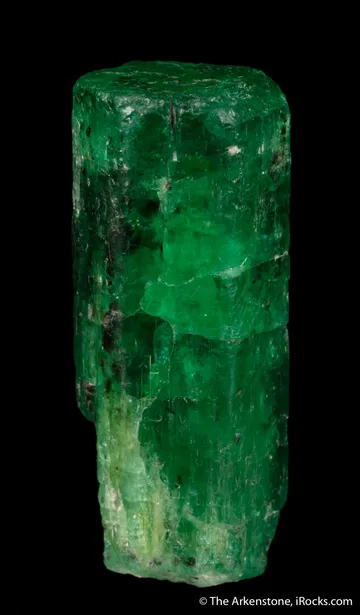
One of the strangest specimen-side episodes came not from feldspar but from emerald. At the 2017 Tucson Show, Kevin Ward’s Exceptional Minerals offered a loose 4.5 cm emerald crystal labeled from Kenticha, Kenticha pegmatite field, Seba Boru district, Sidamo-Borana Province, Ethiopia. The crystal was described as richly green, wholly gemmy, and somewhat rough-faced, part of what Ward called “a very small collection of incredibly fine emerald specimens from Ethiopia.” The asking price was $35,000. For a locality best known in the specimen world for amazonite and in industry for tantalum, the sudden appearance of a top-end emerald was startling—and it remains a reminder that Kenticha’s beryl-bearing pegmatite system is capable of surprises well beyond blue-green feldspar.