






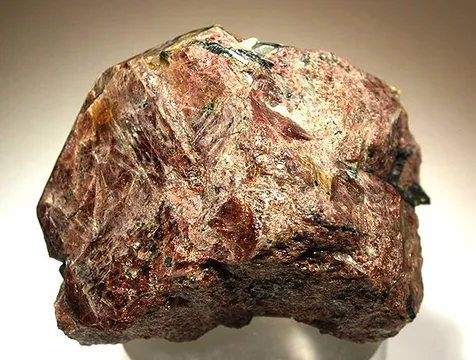
Ivigtut Mine, Greenland — type locality for cryolite, with icy-white translucent crystals amid siderite and aluminofluorides; prized for history and locality.
Key facts
Ivigtut—modern Ivittuut—occupies a singular place in mineral collecting: it was the world’s great natural cryolite deposit, a mined-out hydrothermal fluoride body in the roof of a small Mesoproterozoic alkaline granite stock on Arsuk Fjord in southwest Greenland, within the Kingdom of Denmark. For collectors, its appeal is both visual and historical. The classic pieces are icy white to colorless cryolite, often greasy-lustrous and blocky, set against warm brown siderite, dark sulfides, purple to reddish fluorite, quartz, topaz, and a bewildering suite of rare aluminofluorides and sulfosalts. The best specimens have the stark, unmistakable Ivigtut look: translucent, almost frozen-looking cryolite cleavages or pseudo-cubic crystals picked out by rusty-brown siderite, sometimes with metallic galena or sphalerite, and on rarer pieces with sharp secondary fluorides such as pachnolite, thomsenolite, hydrokenoralstonite, jarlite, or prosopite.
Regional View
Country View
The mine mattered far beyond mineral cabinets. Cryolite, Na2NaAlF6, was first made famous from this locality, and Ivigtut remained the only truly large commercial source of the mineral. It fed nineteenth-century chemical works, then became strategically important to aluminum production, especially during the Second World War. Mineralogically, the deposit is just as consequential: Ivigtut is the type locality of cryolite and of a remarkable cluster of rare fluorides and sulfosalts. Its specimens are therefore not merely examples of a species; many are pieces of the locality that defined the species, or of the deposit that supplied nearly the entire natural cryolite trade.

Photo: Didier Descouens, Wikimedia Commons

Photo: Rob Lavinsky, iRocks.com via Wikimedia Commons
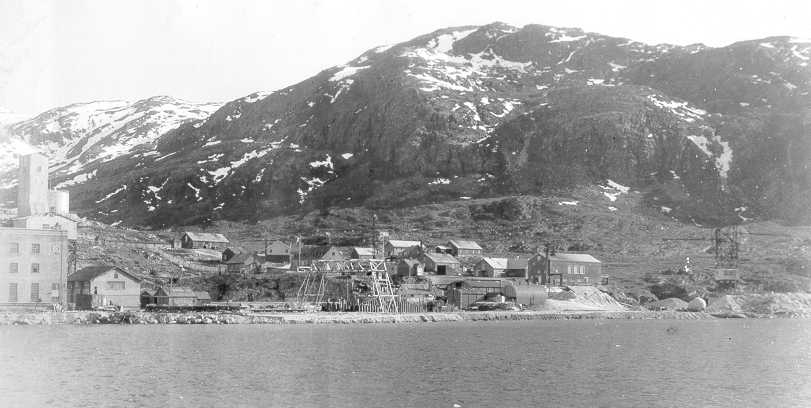
Photo: U.S. Coast Guard / Wikimedia Commons
Search for specimens: View all specimens from Ivigtut Mine, Denmark
Ivigtut Mine lies at Arsuk Fjord in southwest Greenland, at the abandoned mining settlement now spelled Ivittuut. Older labels may read Ivigtut, Ivigtût, Ivigtuk, Arksuk Fjord, Arsuk Firth, Kitaa, West Greenland, or simply “Greenland, Denmark.” The modern Mindat locality is Ivigtut Mine, Ivigtut stock, Arsuk Fjord, Sermersooq, Greenland, and the open pit is now flooded.
Geologically, the deposit is a rare hydrothermal cryolite body emplaced in a small, nearly cylindrical alkaline to A-type granite stock of Gardar age, about 1.27 billion years old. The granite belongs to the Gardar Province of South Greenland, a Mesoproterozoic rift-related igneous province famous for alkaline intrusions and unusual volatile-rich mineralization. At Ivigtut, fluorine-rich post-magmatic fluids intensely leached and metasomatized the upper central part of the granite pipe, producing greisenized granite around the ore and concentrating cryolite, quartz, siderite, fluorite, topaz, sulfides, and late secondary aluminofluorides.
The classic ore body was zoned. Pauly and Bailey’s synthesis describes a deposit divided into siderite-cryolite, pure cryolite, fluorite-cryolite, and fluorite-topaz units above a large siderite-quartz unit. The siderite-cryolite unit is especially important for collectors because it produced the familiar specimens in which brown siderite and sulfides form a three-dimensional network around centimeter-scale masses of cryolite. A substantial mass of pure white, coarse-grained cryolite was also found between the main siderite-cryolite and the fluorite-rich shell; early accounts describe it as roughly 150 m long, 40 m wide, and 30 m thick. The deposit as a whole was lens-like to turtle-shell-like in form, and sources differ slightly in tonnage depending on whether they refer to the ore body, mined cryolite, or reserves; published figures range from about 3.5 to 4.0 million tons of cryolite mined, while geological reconstructions describe a larger cryolite-bearing system of about 12.3 million tons including associated material.
The mineralization is not a simple monomineralic ore. Cryolite made up the bulk of the famous material, but it was intergrown with siderite, galena, sphalerite, chalcopyrite, pyrite, pyrrhotite, quartz, fluorite, topaz, cassiterite, columbite-group minerals, mica, and an extraordinary suite of late fluorides. In the late stages, Na-poor, Ca-F-rich and water-bearing fluids reacted with earlier cryolite and filled fissures and cavities. These events produced secondary species such as thomsenolite, pachnolite, hydrokenoralstonite, prosopite, and related fluorides, as well as Sr-Ba minerals such as jarlite and bøgvadite in pockets and fissures. That late-stage chemistry is one reason Ivigtut is still studied: the mine is a natural laboratory for fluorine-rich granite fluids and fluoride mineral paragenesis.
The first European attention to cryolite predates mining by decades, but Inuit knowledge came first. The Greenlandic name orsugiak was used for the soft, workable mineral, which local people used, among other purposes, as fishing weights. The mineral entered European mineralogy in the late eighteenth century; Heinrich C. F. Schumacher presented the unfamiliar white heavy mineral in Copenhagen in 1795, and Peter Christian Abildgaard investigated it soon after. The name cryolite—“ice-stone”—was applied because the material looked like frozen ice, especially in water. Karl Ludwig Giesecke reached Greenland in 1806 and, stranded there for years by the Napoleonic Wars, studied the deposit and returned with a substantial sample suite.
Commercial mining began in the 1850s after Julius Thomsen developed a process for making soda and alum from cryolite. Initial hand mining and small shipments were followed by organized commercial extraction: in 1856 a private expedition with Danish miners and suitable tools returned with 137 tons of cryolite, and by 1865 the Kryolith Mine og Handels Selskab had been formed to control mining. The mined material was shipped mainly to Copenhagen for processing at Øresunds Chemiske Fabriker, and later also to the Pennsylvania Salt Manufacturing Company in the United States. In 1940 the mining and processing interests were consolidated as Kryolitselskabet Øresund A/S, with the Danish state as a major shareholder.
Mining conditions in the nineteenth century were severe. The early workforce faced isolation, disease, Arctic weather, difficult shipping, and a quarry that eventually had to be worked below sea level. Modernized hoisting, sorting, and shipping improved the operation, but the mine remained a remote industrial enclave. From the mid-nineteenth century through 1939 the summer workforce commonly numbered around 120 men, with fewer in winter; during the Second World War, production and military attention increased sharply.
Ivigtut’s strategic importance rose with aluminum. Natural or synthetic cryolite is a flux in the electrolytic production of aluminum from alumina, and wartime aircraft production made the mine a prized supply point. After Germany occupied Denmark in April 1940, Allied and American planners focused quickly on Greenland, and especially on Ivigtut. U.S. Coast Guard personnel were quietly placed at the mine as guards, later followed by a larger American military presence and the establishment of the nearby Bluie West Seven base at Grønnedal/Kangilinnguit. During the war, cryolite shipments to the United States increased dramatically; published Danish sources give wartime production near 90,000 tons per year, and another widely cited figure records a peak of about 80,000 tons of cryolite ore in 1943.
The main open-pit extraction of high-grade cryolite ended in 1962, when the mine was considered essentially exhausted and the pit flooded. Remaining low-grade cryolite material, including material used in roads, dumps, fill, and harbor works, continued to be recovered and shipped until the final closure in 1987. In 1982, the flooded pit was pumped out to recover additional cryolite from the bottom. Since final closure, the principal industrial source of cryolite has been synthetic material rather than natural Ivigtut ore.
Collecting access today is not comparable to a working specimen mine or an open dump locality. The pit is flooded, unstable, and historically contaminated by low-grade cryolite waste containing lead and zinc minerals; environmental studies have documented lead and zinc impacts in parts of Arsuk Fjord from coastal fill and waste rock. The site is also within a modern exploration-license area. Eclipse Metals acquired the Ivigtût Project in 2021 and has evaluated remaining quartz, fluorite, siderite, zinc-sulfide, hafnium, and rare-earth potential in and around the historic mine and nearby Grønnedal carbonatite. For collectors, the practical market is almost entirely old material: mine-era specimens, museum duplicates, dealer inventory from older collections, and occasional pieces from historic dumps that entered collections before access tightened.
The notable specimen-producing environments are the mine’s own paragenetic zones. The siderite-cryolite ore produced the classic cryolite-siderite association. The pure cryolite unit supplied massive white and translucent cryolite, sometimes in large blocks and cleavage pieces. The fluorite-cryolite and fluorite-topaz units yielded the more exotic fluoride associations, including purple, red-brown, and thorium-bearing fluorite, cryptocrystalline topaz, prosopite, jarlite, mica aggregates, and late secondary aluminofluorides. Cavities and fissures in altered cryolite produced some of the best thomsenolite, pachnolite, and hydrokenoralstonite pieces. An unusual red-brown fluorite-bearing subfacies of the siderite-cryolite ore was exposed in 1889 when the quarry bottom was about 28 m below sea level, a detail that explains some of the most distinctive polished Ivigtut fluorite-in-cryolite specimens.
Ivigtut is the defining locality for cryolite: its type locality, its only great commercial deposit, and the source of most historic natural specimens. The mine produced cryolite as white, colorless, gray, brown, and locally dark massive material, coarse cleavable blocks, and lustrous pseudo-cubic to blocky crystals; good collector pieces show glassy to greasy translucent cryolite rather than dull chalky masses, and the most desirable examples preserve distinct crystals or cleavages on contrasting brown siderite, metallic sulfides, fluorite, quartz, or late fluoride crusts. Sizes range from thumbnail crystal specimens to cabinet and large cabinet masses, but the aesthetically strongest pieces are usually small-cabinet to cabinet specimens with clean, recognizable cryolite and a sharp color contrast. The most typical specimens came from the siderite-cryolite and pure cryolite portions of the ore body; rarer pieces show cryolite affected by late-stage alteration, with pachnolite, thomsenolite, hydrokenoralstonite, prosopite, or other secondary fluorides in cavities and fissures.
Siderite from Ivigtut is not usually collected as showy freestanding rhombs in the alpine or hydrothermal-vein sense; its importance is as the brown, iron-carbonate framework that gives the classic cryolite specimens their identity. In the siderite-cryolite unit, siderite and sulfides formed a network texture enclosing centimeter-sized masses of cryolite, and in places the brown siderite occurs as reddish-brown to rust-brown crystals and cleavages, commonly a few millimeters to about a centimeter across, set in or on white to colorless cryolite. Good Ivigtut siderite pieces are those where the siderite is visually legible rather than merely staining the cryolite: sharp brown crystal faces, crisp bands or seams, attractive association with galena, sphalerite, fluorite, quartz, or white cryolite, and minimal bruising along the soft cryolite edges. Siderite also belongs to the deeper siderite-quartz unit and appears in the broader fluorine-rich assemblage, but the collector’s archetype remains brown siderite decorating or veining icy cryolite.
Beyond cryolite and siderite, Ivigtut is one of the world’s great type-locality mines for rare fluorides and sulfosalts. Type-locality and historically important species include cryolite, thomsenolite, pachnolite, hydrokenoralstonite, bøggildite, bøgvadite, cryolithionite, jarlite, jørgensenite, stenonite, and arcubisite; the deposit is also central to work on Pb-Ag-Bi sulfosalts and lillianite homologues such as vikingite, eskimoite, ourayite, and related phases. Collector-notable associated species include fluorite, topaz, prosopite, chiolite, weberite, hagemannite, acuminite, gearksutite, elpasolite, galena, sphalerite, chalcopyrite, pyrite, pyrrhotite, cassiterite, columbite-group minerals, quartz, microcline, muscovite or zinnwaldite, baryte, celestine, native bismuth, native silver, hessite, matildite, canfieldite, acanthite, and numerous rare Pb-Ag-Bi-Cu sulfosalts. Many of these rarities are microscopic or best appreciated in polished sections, but the late fluorides can form visually satisfying cabinet specimens, especially pachnolite-thomsenolite-hydrokenoralstonite crusts and cavity linings on cryolite.
Ivigtut material is not usually burdened by elaborate, locality-specific fakery; the principal collecting risk is misidentification, incomplete labeling, or overconfident attribution. Massive white cryolite can be mistaken for quartz, feldspar, calcite, or massive fluorite by non-specialists, while brown siderite on cryolite is often casually called limonite, “iron,” calcite, or dolomite. A simple field distinction is hardness: cryolite is soft, typically around 2.5–3 on Mohs for massive material, and can be scratched by steel; quartz will not. Calcite reacts readily with dilute acid, whereas cryolite does not behave like a carbonate. Siderite is softer than quartz, may show rhombohedral cleavage, and can weather brown.
Condition matters greatly. Cryolite is soft, cleavable, and easily bruised along edges; many old pieces show saw marks, polished faces, nicks, or abraded crystal corners. These are not automatically disqualifying—Ivigtut was an industrial mine, and many specimens were cut from ore—but clean natural crystal surfaces, undamaged translucent cleavages, and intact secondary fluoride sprays command a premium. On older cabinet pieces, a cut base or trimmed side is acceptable if the display face is strong and the label history is good.
Fluorescence is a curiosity rather than a dependable buying criterion. Some Ivigtut cryolite specimens fluoresce pink, red-orange, violet-red, or yellow under ultraviolet light, especially shortwave, and some references note phosphorescence, but many pieces are inert or weak. Fluorescent cryolite from Ivigtut is unusual enough to be worth documenting with lamp wavelength and photographs, but fluorescence alone should not be used to authenticate the locality.
Handle Ivigtut secondary fluorides with particular care. Pachnolite, thomsenolite, hydrokenoralstonite, prosopite, jarlite, and related late-stage minerals may occur as small crystals, crusts, radiating aggregates, or friable cavity linings on a relatively soft cryolite substrate. Avoid ultrasonic cleaning, aggressive water soaking, acids, and repeated handling. A soft brush, air bulb, and stable box mount are safer than attempting to “improve” an old specimen.
Rarity varies enormously. Massive cryolite with siderite still appears regularly from old collections, though attractive, undamaged cabinet specimens are no longer abundant. Fine crystal groups, cryolite with strong contrast and provenance, red-brown fluorite associations, and specimens carrying well-formed late fluorides are scarcer. Type-locality rare species from Ivigtut are often research-grade, micro, or polished-section material rather than cabinet display specimens. Labels matter: old Danish, Copenhagen, Philadelphia/Pennsalt, university, or early dealer labels can add both confidence and historical value, especially where the spelling preserves “Ivigtut” or “Ivigtût.”
Before there was a mine, there was orsugiak. Inuit in the Arsuk Fjord region knew the strange white mineral long before European mineralogists gave it a Greek name. It was soft enough to carve and heavy enough to be useful, and local accounts describe it being used as fishing-line weights; older Danish accounts also record its use as an additive in snuff. To a collector holding a clean white chunk today, that pre-industrial life of cryolite is easy to miss. The same softness that makes a specimen vulnerable in a drawer made the material useful in the hands of people who knew the fjord before it became a strategic resource frontier.
The European story begins as a mineralogical puzzle. In 1795, Heinrich C. F. Schumacher presented the white heavy material in Copenhagen as a kind of “tungspath of white color.” Peter Christian Abildgaard examined it, and José Bonifácio de Andrada e Silva gave it the name cryolite—ice-stone—because it seemed to resemble frozen ice. Karl Ludwig Giesecke was sent to Greenland in 1806 to search for useful mineral occurrences, but war in Europe stranded him there for seven years. That forced delay turned into a geological advantage: he had time to study the Greenlandic mineral occurrences closely, including Ivigtut, and returned to Europe with substantial cryolite material.
The first extraction was almost improvised. Julius Thomsen’s chemical work created a practical reason to mine cryolite, but the ore first had to be wrested from a remote fjord. In 1853 the Royal Greenland Trade instructed Jonathan Mathiesen at Arsuk to hire local Greenlanders to break the mineral by hand. The cryolite was carried out of the fjord by umiak, the traditional women’s boat, to meet a ship that could take it to Denmark. The first shipments were tiny by later standards: about 15 tons in 1854, none in 1855, and about 11 tons in 1856 from Greenlandic labor. Then, after Thomsen and Johan Howitz received permission to send a private ship on March 5, 1856, Danish miners and proper tools arrived; the vessel came back with 137 tons, and the commercial mine had effectively begun.
The early years were brutal. One Danish source records a scurvy epidemic in the winter of 1862–1863 in which 14 of 22 workers died. Over the first 50 years, 21 ships carrying cryolite toward Denmark were lost. Those numbers should sit beside the tidy tonnages in any history of the mine. Ivigtut produced a mineral that made chemical and aluminum industries easier, but its own early logistics were anything but easy: Arctic isolation, seasonal shipping, disease, hard manual work, and a growing quarry on the edge of the sea.
By the twentieth century, Ivigtut had become a small industrial world with its own rhythms and restrictions. Summer employment before the Second World War often ran around 120 men, dropping to roughly half in winter. The mine’s profits were large enough that Kryolitselskabet Øresund was permitted, for nearly a century, to issue its own coins for local use in Ivigtut. Yet the prosperity came with a complicated local legacy. Arsuk, the nearby Greenlandic settlement, was deeply affected by the influx of European workers. Danish accounts record social restrictions in the early twentieth century, including limits on women’s travel into the fjords around Ivigtut that lasted into the 1950s.
Then the mine became a wartime prize. After Germany occupied Denmark in April 1940, Greenland’s position was suddenly uncertain, and Ivigtut’s cryolite was not just a mineral commodity but an aluminum-chain resource. Canada considered action to secure the mine; the United States pressed to protect Greenland’s neutrality while ensuring Allied access. A small, strange arrangement followed: Coast Guardsmen were recruited for a secret assignment, discharged from the service on paper, and hired as civilian mine guards. They were paid more than their Coast Guard wages and sent north in police uniforms so that Greenland would not appear openly militarized. The mine company ship Julius Thomsen, already part of the cryolite trade, carried both the old industrial world and the new military one.
The guard detail soon grew into a larger wartime presence. American forces protected Ivigtut and the nearby installations, and Bluie West Seven was established at Grønnedal/Kangilinnguit across the fjord. Danish and American accounts differ in some details of early numbers, but the shape of the story is clear: the mine that began with hand-broken cargo in umiaks became a guarded strategic node in the Allied aluminum supply chain. Cryolite shipments went to the United States through the war, and production reached its highest levels in that period.
The end was quieter. By 1962 the main ore body was considered exhausted and the open pit filled with seawater. Yet cryolite still lay in low-grade dumps, roads, fill, and harbor works, so Ivigtut’s afterlife as a mine continued in a scavenged, industrial way. In 1982 the pit was pumped out to recover the last cryolite from the bottom. Final closure came in 1987. What remains is a water-filled pit, empty buildings, contaminated fill, old roads, musk ox tracks, and a name that still carries disproportionate weight in mineralogy.


