






Greenland - Arctic Ilímaussaq complex yields rare minerals like eudialyte, arfvedsonite, and sodalite; iconic specimens and fluorescence appeal to collectors.
Key facts
Greenland is not a single collecting locality in the ordinary sense; for mineral collectors it is a constellation of world-class mineral provinces spread across an Arctic landmass, with South Greenland’s Ilímaussaq alkaline complex at the center of its fame. Ilímaussaq, near Narsaq in the Gardar Province, is one of the classic agpaitic nepheline-syenite complexes of the world: a layered, peralkaline intrusion whose sodalite foyaite, naujaite, kakortokite, lujavrite, pegmatites, and late hydrothermal veins concentrated Zr, Nb, Be, REE, Li, U, Th, F, and Cl into an extraordinary suite of rare minerals. It is the type locality for a long roster of species, including eudialyte, arfvedsonite, sodalite, rinkite, aenigmatite, polylithionite, naujakasite, kvanefjeldite, semenovite, sorensenite, and several others; for a systematic collector, the name “Greenland” most often evokes this peculiar sodium-rich mineral chemistry before it evokes ice.
The look of the best Ilímaussaq specimens is unmistakable. Eudialyte appears as cherry-red to raspberry-red grains and crystals set against pale feldspar, nepheline, sodalite, albite, natrolite, or analcime, often sharpened visually by black-green aegirine or black arfvedsonite. Steenstrupine is far less showy but more scientifically potent: black to brownish-black, commonly metamict, locally as stout hexagonal crystals or irregular poikilitic grains in lujavrite, albite-ussingite-rich rocks, and late veins. Chkalovite and its replacement product tugtupite add a collector’s second language to the locality — fluorescence and tenebrescence — with pink to red tugtupite, pale chkalovite, sodalite, analcime, natrolite, and polylithionite producing some of the most recognizable Greenland fluorescent specimens.
Regional View
Country View
Greenland’s mineralogical importance is not limited to Ilímaussaq. Ivittuut, the famous cryolite deposit in southwest Greenland, supplied the classic cryolite specimens and a suite of unusual fluorides for more than a century of mining. Disko Island and nearby West Greenland localities supplied one of mineralogy’s great historical puzzles: terrestrial native iron in basalt, once argued over as meteoritic material and later established as telluric iron. The best Disko specimens are not “pretty” in the cabinet-mineral sense, but they are irresistible to element collectors: dark basalt cut or broken to reveal metallic iron specks, nodules, or iron-carbide-bearing masses from one of Earth’s few major natural occurrences of native iron in igneous rocks.

Photo: Wikimedia Commons
The finest Greenland specimens reward locality precision. “Greenland” on a label is useful, but “Naujakasik, Tunulliarfik Fjord,” “Kangerluarsuk Fjord,” “Kvanefjeld adit,” “Taseq slope,” “Tuttup Attakoorfia,” “Ivittuut,” or “Uivfaq, Disko Island” tells the real story. Each name narrows the specimen to a different chapter: magmatic eudialyte, hyper-agpaitic steenstrupine, Be-mineral replacement, cryolite-fluoride alteration, or reduced basaltic native iron.
Search for specimens: View all specimens from Greenland, Denmark
The collector material sold under Greenland, Denmark is dominated by several distinct geological environments. The most important for rare-species collectors is the Ilímaussaq alkaline complex of South Greenland, a Mesoproterozoic intrusion about 17 by 8 km in exposed extent, emplaced in the Gardar rift province. Its agpaitic phase includes a roof series that crystallized downward from pulaskite and foyaite into sodalite foyaite and naujaite, a floor series of layered kakortokite, and intervening lujavrites. In the strict petrological sense, these rocks are “agpaitic” because Zr and Ti reside in complex silicates such as eudialyte and rinkite rather than in the more familiar zircon, titanite, or ilmenite. That single distinction explains why the complex is so fertile for collectors: the residual magma did not merely concentrate rare elements; it built them into large, often recognizable mineral phases.
The main Ilímaussaq specimen-producing zones correspond to the rock units and late-stage veins. Kakortokite, especially in the southern part of the complex around Kringlerne and Kangerluarsuk Fjord, is famous for rhythmic black-red-white layering, with red layers enriched in eudialyte, black layers enriched in arfvedsonite and aegirine-group mafic minerals, and white layers dominated by nepheline and alkali feldspar. Naujaite and sodalite foyaite produced classic red eudialyte in pale matrix, commonly with aegirine, arfvedsonite, sodalite, nepheline, microcline, rinkite, aenigmatite, or other agpaitic associates. Lujavrites, especially around Kvanefjeld, Tuperssuatsiaat, and the northern part of the complex, are darker, finer grained, and economically important because they host uranium and rare-earth mineralization, with steenstrupine and eudialyte as important carriers of rare elements.
The most evolved rocks are hyper-agpaitic. In them, mineralogy becomes more fragile, sodium-rich, and exotic: steenstrupine, naujakasite, ussingite, villiaumite, vitusite, vuonnemite, lovozerite, chkalovite, sorensenite, tugtupite, natrolite, analcime, and late replacement assemblages occur in lujavrites, pegmatites, hydrothermal veins, and fenitized roof rocks. Beryllium minerals are especially tied to pegmatites and veins. Chkalovite appears as an earlier Na-Be silicate in these rocks and is commonly involved in later reactions to tugtupite, beryllite, and related Be minerals. This is why many fluorescent Greenland specimens are texturally complicated: the most beautiful red-pink tugtupite is often the visible afterlife of chkalovite in a rock that has been repeatedly overprinted by sodium-rich, low-silica, late-magmatic fluids.
Ilímaussaq has a long scientific history. Karl Ludwig Giesecke visited the Kangerluarsuk and Tunulliarfik fjord area in 1806 and 1809, and minerals he collected became the basis for early descriptions of sodalite, eudialyte, and arfvedsonite. N.V. Ussing mapped the complex in 1900 and 1908 and introduced the term agpaitic nepheline syenite in his 1912 memoir. After limited activity from 1912 to 1955, the Danish Atomic Energy Commission and the Geological Survey of Greenland began radiometric exploration, encouraged by Niels Bohr’s recommendation that Greenland uranium prospects be examined. Kvanefjeld was discovered in 1956 during that work, and the following decades brought drilling, tunneling, metallurgical testing, geochemical surveys, and an explosion of mineralogical publications.
Kvanefjeld is the great non-producing “mine story” of Ilímaussaq. In 1958, 36 drill holes totaling 3728 m were completed. In 1962, about 180 metric tons of ore were taken from a 20 m adit in the most radioactive part of the deposit for metallurgical tests. From 1978 to 1983, the Kvanefjeld Uranium Project drove a 960 m horizontal adit through the deposit and extracted about 20,000 metric tons of ore, of which 4700 metric tons were shipped to Risø for pilot-plant treatment. That work produced many research specimens and drill-core materials, including rare phases later described from the deposit, but it did not create a specimen mine in the commercial collector sense.
Eudialyte-rich rocks of the southern complex were also investigated as possible Zr-Nb-REE resources. A/S Carl Nielsen explored the kakortokites and marginal pegmatites in the mid-1980s, including drilling of the red kakortokite layer +16 in 1986. Highwood Resources, later joined by Platinova Resources and Aber Resources, explored eudialyte-rich rocks between Tunulliarfik and Kangerluarsuk, with bulk sampling, drilling, and metallurgical testing. Mineral Development International A/S investigated sodalite-rich naujaites in the northern complex in the early 1990s. These projects are important for specimen provenance because some available material derives from old exploration, drill core, dumps, or collector visits rather than from active specimen mining.
Collecting access today must be treated conservatively. Greenland’s mineral rules are not the casual open-access system many North American collectors are used to. The Government of Greenland’s mineral authority states that only permanent residents of Greenland are allowed to collect stones or mineral resources, and export of stones or minerals requires either documentation of purchase from a shop, local craftsperson, or small-scale licensee, or a specific export approval. Small-scale licences are issued to residents of Greenland, and exclusive small-scale areas, commercial mineral licences, safety restrictions, environmental concerns, and radioactive-material issues can all affect whether a specimen can be collected, sold, or exported legally. For the serious buyer, a dated label, lawful export trail, and clear seller provenance are part of the specimen.
Outside Ilímaussaq, two Greenland names matter especially. Ivittuut was the classic cryolite mine, a fluorine-rich granite-related deposit worked for more than a century and famous for cryolite, siderite, quartz, topaz, columbite-group minerals, cryolithionite, thomsenolite, pachnolite, and other fluoride-suite species. Disko Island, particularly Uivfaq, Blaafjeld, Asuk, and related native-iron occurrences, belongs to a very different geological setting: Paleogene basalts and related rocks affected by extremely reducing conditions, where basaltic magma interacted with carbonaceous sediments and generated native iron, cohenite, troilite, graphite, schreibersite, and highly reduced oxide-silicate assemblages. Those pieces belong in an element or historical suite more than in a color cabinet, but few localities better illustrate that a “mineral specimen” can also be a solved scientific argument.
Greenland eudialyte is the signature mineral of Ilímaussaq: red to raspberry, locally brownish-red or pink-red, commonly as grains and imperfect crystals in naujaite, kakortokite, sodalite foyaite, pegmatite, and some lujavrites, and especially prized when it forms distinct crystals on pale feldspar-nepheline-sodalite matrix with contrasting aegirine or arfvedsonite. Kangerluarsuk Fjord and the Tunulliarfik Fjord localities, including Naujakasik, supplied classic specimens, and crystal sizes of one to several centimeters are meaningful here; a 20 mm red crystal on aegirine is already a strong specimen, while a well-formed multi-centimeter crystal with visible faces is exceptional by locality standards. The best pieces avoid the problem that afflicts much Ilímaussaq eudialyte: granular red patches in sawn rock may be attractive lapidary material, but collector-grade specimens need sharp color separation, visible crystal form, attractive association, and an honest label that recognizes the modern eudialyte-group problem — many older “eudialyte” specimens are probably unanalysed eudialyte-group minerals rather than confirmed eudialyte sensu stricto.
Steenstrupine-(Ce) from Greenland is a connoisseur’s radioactive rare-earth phosphate-silicate rather than a bright display mineral: it occurs in Ilímaussaq as black to brownish-black, commonly metamict crystals and irregular poikilitic grains in lujavrite, late veins, naujaite adjacent to those veins, and albite-analcime-natrolite replacement bodies in zoned naujaite pegmatites. Sørensen’s classic work emphasized Qeqertaussaq, the head of Kangerluarsuk, and the north coast of Tunulliarfik as key modes of occurrence, with steenstrupine in black lujavrite-like veins, aegirine felt, and albite-analcime-natrolite rocks; Kvanefjeld is the economically famous expression, where steenstrupine-rich lujavrite is the principal uranium-bearing material. Good specimens show discrete, preferably sharp hexagonal or stout black crystals — sometimes to centimeter scale in collector material — in a contrasting pale albite, ussingite, microcline, analcime, natrolite, or lujavrite matrix; ordinary pieces are dark, altered, massive, and visually difficult, though still scientifically interesting if well localized.
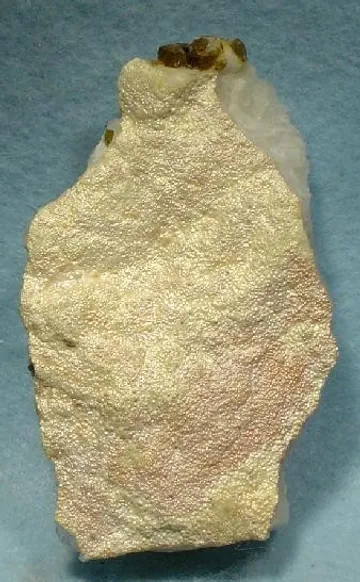
Greenland native iron is most famously the telluric iron of Disko Island, especially Uivfaq and nearby occurrences, where metallic iron occurs in basaltic rocks rather than as meteorite material. The best collector specimens are usually old, cut, sawn, or broken basalt pieces showing bright metallic flecks, grains, blebs, or nodular iron, commonly with reduced associates such as cohenite, troilite, graphite, schreibersite, ilmenite, ulvöspinel, or related Fe-rich phases; the display scale is often millimetric rather than sculptural, but the historical importance is enormous. Large masses from Uivfaq reached many tons, yet cabinet specimens are typically small slices or nodules from old museum-era or expedition material, and quality is judged by confirmed Disko provenance, visible fresh metal, minimal rusting, and evidence that the piece is terrestrial native iron in basalt rather than a mislabeled meteorite fragment or an industrial iron contaminant.
Greenland chkalovite is a late-stage Na-Be silicate of the hyper-agpaitic Ilímaussaq assemblage, tied especially to pegmatites and hydrothermal veins in the Kvanefjeld–Kangerluarsuk–Taseq part of the complex. It is usually pale, whitish to greyish or colorless in matrix, and far more often appreciated through association than through dramatic freestanding crystals: it occurs with tugtupite, sodalite, polylithionite, analcime, natrolite, albite, ussingite, aegirine, and other Be-bearing minerals. The collector appeal lies in texture and paragenesis — chkalovite replaced by tugtupite, chkalovite-bearing “fantasy rock” fluorescence assemblages, and pieces where pale chkalovite forms a clear matrix or vein material for vivid red-pink tugtupite; the best examples have confirmed Ilímaussaq sublocality data, visible association, and strong UV response from companion minerals, while undiagnostic pale masses without tugtupite, Be-mineral context, or analytical support are much less secure.
Aegirine at Greenland’s Ilímaussaq complex is both a rock-forming mineral and a visual frame for rarer species: it occurs as dark green to black needles, prisms, felted aggregates, and mafic lujavrite components in sodalite foyaite, naujaite, lujavrite, pegmatites, and late veins. The “aegirine felt” described around Qeqertaussaq, Kangerluarsuk, and Tunulliarfik is especially characteristic, and green aegirine lujavrite is one of the major lujavrite varieties. As a collectible species in its own right, Greenland aegirine is usually less about large lustrous isolated prisms than about locality-specific association: sharp dark sprays or needles with eudialyte, steenstrupine, rinkite, sodalite, albite, microcline, natrolite, tugtupite, or rare Ilímaussaq species; the strongest pieces have crisp individual crystals or sprays that enhance contrast rather than disappearing into a dark, massive lujavrite groundmass.
Other Greenland minerals give this country-level locality its depth. Ilímaussaq alone has about 220 documented minerals and is the type locality for 27 species in the classic GEUS inventory, with chalcothallite, karupmøllerite-Ca, kvanefjeldite, nabesite, nacareniobsite-(Ce), naujakasite, rohaite, semenovite, and sorensenite then regarded as unique to the complex. Tugtupite is the best-known fluorescent and tenebrescent collector mineral from the complex, while ussingite, polylithionite, sodalite, aenigmatite, arfvedsonite, rinkite-(Ce), villiaumite, naujakasite, vitusite-(Ce), vuonnemite, lomonosovite, epistolite, beryllite, sorensenite, leifite, lovdarite, fersmite, turkestanite, and tuperssuatsiaite broaden the systematic field. Beyond Ilímaussaq, Ivittuut is indispensable for cryolite and rare fluorides, Narsaarsuk is classic for narsarsukite and rare pegmatite minerals, Disko Island is essential for native iron, and Greenland’s metamorphic ruby and pink sapphire occurrences around the Qeqertarsuatsiaat area add an entirely different gem-corundum chapter.
The first authenticity issue is locality precision. “Greenland” can mean Ilímaussaq eudialyte, Kvanefjeld tugtupite, Ivittuut cryolite, Disko native iron, Narsaarsuk narsarsukite, or Aappaluttoq corundum; those are not interchangeable labels. Ask for the sublocality whenever possible, especially for rare-species material. A specimen labeled simply “Kvanefjeld, Greenland” may be acceptable for common fluorescent assemblage material, but a rare systematic such as kvanefjeldite, nacareniobsite-(Ce), sorensenite, vitusite-(Ce), or steenstrupine deserves more rigorous documentation.
Eudialyte requires modern caution. Many historical and dealer labels use “eudialyte” for red eudialyte-group material, and that practice is understandable for older specimens, but confirmed species-level identity may require analytical work. For display specimens, the market generally tolerates the classic label if the visual and geological context is correct; for systematic species collecting, “eudialyte group” is the safer designation unless the specimen is supported by analysis or comes from a documented analysed find.
Radioactivity is a real handling issue, not a reason for panic. Steenstrupine-bearing lujavrites from Kvanefjeld and related Ilímaussaq material can be appreciably radioactive because steenstrupine carries U, Th, and REE. Some eudialyte-bearing rocks are weakly radioactive as well. Keep such pieces labeled, avoid grinding or sawing without proper controls, do not store radioactive fragments in a desk drawer or bedroom cabinet, and isolate friable material in a box or membrane tray. The sensible collector approach is distance, containment, and information.
Fluorescent Greenland material is often more complex than the label suggests. Tugtupite, sodalite, analcime, natrolite, chkalovite, polylithionite, beryllite, and other phases may occur in the same specimen, and shortwave, midwave, and longwave ultraviolet responses can differ sharply. Tugtupite is famous for tenebrescence: color can intensify after UV exposure or strong light and then fade. A seller photo taken immediately after UV stimulation may not represent the resting daylight appearance of the specimen. For high-value pieces, ask for daylight, longwave UV, and shortwave UV photographs, preferably before and after stimulation.
Native iron from Disko Island has two problems: misidentification and corrosion. Historically the Uivfaq masses were debated as meteorites, and today small pieces of iron-bearing rock can still be confused with meteorite slices, slag, drill steel, or altered basalt containing iron oxides. A good Disko native-iron specimen should have old provenance or a credible chain to Uivfaq, Blaafjeld, Asuk, or another documented occurrence, and it should show metal in basaltic matrix rather than isolated loose “iron.” Rust is common; some old sections were lacquered or otherwise protected. Avoid high humidity, avoid touching metal-rich cut faces, and store with desiccant if the specimen is valuable.
Ilímaussaq material is condition-sensitive in less obvious ways. Some late-stage sodium minerals are water-soluble or hydration-sensitive; villiaumite and some evaporitic sodium phases require caution, and broken drill-core material may have lost soluble minerals before it was ever collected. Tugtupite-bearing pieces can be tough enough for display, but associated natrolite, analcime, thin feldspar laths, altered steenstrupine, or friable lujavrite can be crumbly. Do not wash complex Greenland rare-mineral specimens unless you are certain the assemblage tolerates water.
Legality and export are part of authenticity. Greenland’s current mineral authority guidance distinguishes purchased material, which should be documented by receipt, from self-collected or otherwise acquired material requiring export approval. Non-residents should not assume they can freely collect and remove stones. For older specimens already in European or North American collections, provenance labels, museum duplicates, old dealer labels, and references to exploration-era material add value because they help separate legitimate historical specimens from vague recent claims.
Karl Ludwig Giesecke’s Greenland collecting in 1806 and 1809 reads now like the opening scene of modern agpaitic mineralogy. He visited the fjord country around Kangerluarsuk and Tunulliarfik — an Arctic landscape that would later be recognized as the Ilímaussaq alkaline complex — and brought back minerals that European chemists and crystallographers could not fit into the familiar catalogue. Within little more than a decade those specimens had yielded sodalite in 1810, eudialyte in 1819, and arfvedsonite in 1823. For collectors, that matters because Ilímaussaq is not merely a place where rare minerals were later found by microprobe; it is one of the places where early nineteenth-century mineralogy expanded its vocabulary.
The Kvanefjeld story begins not as a collector’s tale but as Cold War science and state geology. In 1955, after recommendations associated with Niels Bohr and the Danish Atomic Energy Commission, Greenland uranium prospecting began in Ilímaussaq, then the only known Greenland occurrence of radioactive minerals apart from allanite in pegmatites. The first survey was primitive: military personnel with Geiger counters covered the southern half of the complex in 1955 and the northern half in 1956. That 1956 work found Kvanefjeld. The numbers that followed are striking: 36 drill holes totaling 3728 m in 1958; a 20 m adit and 180 metric tons of ore in 1962; then, during the 1978–1983 Kvanefjeld Uranium Project, a 960 m horizontal adit, 20,000 metric tons of extracted ore, and 4700 metric tons shipped to Risø for pilot-plant treatment. Many collectors see only a black steenstrupine-bearing lujavrite fragment in a tray; behind it is a full state-sponsored attempt to decide whether a rare-mineral mountain could become a uranium mine.
Ilímaussaq also has a cautionary collector story, and it is uncomfortably concrete. By the 1970s, collector visits had already transformed some rare-mineral occurrences into broken boulder heaps. One photographed tugtupite locality on the Kvanefjeld plateau in July 1974 was described as damaged by excessive blasting; later, the same spot had become a “veritable crater,” about 20 m in diameter and a few metres deep, made in the hunt for deeper tugtupite veins. The scale in the original photograph was Professor Brian Mason of Washington, D.C. The anecdote is memorable because it joins beauty and destruction in the same frame: a locality famous for fluorescent red tugtupite became a pit dug by desire.
Disko Island supplied a different kind of drama. In 1870, Adolf Erik Nordenskiöld brought enormous iron masses from Uivfaq back to Scandinavia, believing them to be meteorites. One of the largest weighed roughly 22 tons and still stands as an object of historical mineralogy. Knud Johannes Vogelius Steenstrup later challenged the meteoritic interpretation, arguing that the iron belonged to the basaltic rocks of Disko rather than to space. The argument mattered because Widmanstätten-like structures and nickel-bearing iron were then powerful meteorite clues. Steenstrup’s field evidence helped establish that Greenland’s iron was telluric — native iron formed on Earth under extraordinarily reducing conditions. The irony is elegant: Steenstrup, whose name is carried by steenstrupine from South Greenland’s agpaitic rocks, also helped solve the origin of West Greenland’s native iron.
Petersen, Ole V. 2001. “List of all minerals identified in the Ilímaussaq alkaline complex, South Greenland.” Geology of Greenland Survey Bulletin 190, 25–33. A compact inventory of about 220 documented Ilímaussaq minerals, noting 27 type-locality minerals and then-unique species such as naujakasite, kvanefjeldite, semenovite, sorensenite, and nacareniobsite-(Ce).
Sørensen, Henning. 2001. “Brief introduction to the geology of the Ilímaussaq alkaline complex, South Greenland, and its exploration history.” Geology of Greenland Survey Bulletin 190, 7–23. Essential geological and exploration history, including the intrusive sequence, the 1955 uranium survey, Kvanefjeld drilling and adit work, eudialyte-resource exploration, and collector impact.
Sørensen, Henning. 1962. “On the occurrence of Steenstrupine in the Ilímaussaq massif, Southwest Greenland.” Meddelelser om Grønland 167(1), 1–251. The classic detailed treatment of steenstrupine in lujavrites, late veins, naujaite, and replacement bodies at Qeqertaussaq, Kangerluarsuk, and Tunulliarfik.
Sørensen, Henning and Lotte Melchior Larsen. 2001. “The hyper-agpaitic stage in the evolution of the Ilímaussaq alkaline complex, South Greenland.” Geology of Greenland Survey Bulletin 190, 83–94. Key paper for understanding why steenstrupine, chkalovite, tugtupite, ussingite, villiaumite, vitusite, vuonnemite, and naujakasite occur in the most evolved Ilímaussaq rocks.
Petersen, Ole V. and Karsten Secher. 1993. “The Minerals of Greenland.” The Mineralogical Record 24(2), 1–67. The classic collector-oriented reference for Greenland mineralogy, covering major provinces including Ilímaussaq, Ivittuut, Disko, and other Greenland localities.
Borst, Anouk M. et al. 2016. “Zirconosilicates in the kakortokites of the Ilímaussaq Complex, South Greenland: implications for fluid evolution and high-field-strength and rare-earth element mineralization in agpaitic systems.” Mineralogical Magazine 80(1), 5–30. Important modern work on eudialyte alteration and zirconosilicate replacement in kakortokites; useful for understanding altered eudialyte, catapleiite, gittinsite, and REE-HFSE redistribution.
Mindat: Greenland — The broad database entry point for Greenland localities, minerals, photographs, and reference trails.
Mindat: Eudialyte from the Ilímaussaq complex — Photo-rich locality/species entry showing common eudialyte associations from Ilímaussaq.
Mindat: Kvanefjeld adit, Ilímaussaq complex — Useful sublocality list for steenstrupine, chkalovite, tugtupite, kvanefjeldite, vitusite, and associated lujavrite minerals.
Mindat: Native Iron from Disko Island — Species/locality page for Greenland’s classic telluric native iron occurrence.
Mindat: Uivfaq, Disko Island — Historical native-iron locality, including the large masses once brought to Sweden as presumed meteorites.
GEUS: “Brief introduction to the geology of the Ilímaussaq alkaline complex” — Best concise source for Ilímaussaq geology, exploration history, drilling, adits, and collector impact.
GEUS: “List of all minerals identified in the Ilímaussaq alkaline complex” — Essential mineral inventory and type-locality summary.
GEUS: “The hyper-agpaitic stage in the evolution of the Ilímaussaq alkaline complex” — Best overview of the highly evolved lujavrite, pegmatite, and hydrothermal assemblages.
Meddelelser om Grønland: Sørensen 1962, “On the occurrence of Steenstrupine” — Classic monograph on steenstrupine’s field and petrographic occurrence at Ilímaussaq.
Open University Virtual Microscope: Greenland Eudialyte Kakortokite — Thin-section and hand-sample teaching resource for eudialyte-bearing kakortokite.
Open University Virtual Microscope: Greenland Tugtupite Syenite — Useful visual reference for tugtupite- and chkalovite-bearing Ilímaussaq material.
Johnsen, Ole, Joel D. Grice, and Robert A. Gault. 1999. “The crystal chemistry of the eudialyte group.” The Canadian Mineralogist 37, 865–891. A foundational modern reference for why older “eudialyte” labels require caution at eudialyte-group localities such as Ilímaussaq.
Bird, John M. and Maureen S. Weathers. 1981. “Petrogenesis of Uivfaq Iron, Disko Island, Greenland.” Journal of Geophysical Research: Solid Earth 86(B12), 11787–11805. Classic study of the massive native iron and iron-carbide assemblages at Uivfaq, including the basaltic setting and reduced mineral suite.
Pauly, Hans. 1977. “Native Iron Occurrences of Disko Island, Greenland.” The Journal of Geology 85(3), 371–385. A key locality paper on native iron occurrences across Disko Island.
Śliwiński, Jakub T. et al. 2024. “Telluric iron assemblages as a source of prebiotic phosphorus on the early Earth: Insights from Disko Island, Greenland.” Geoscience Frontiers 15(5). Recent work linking Disko telluric iron assemblages to reduced phosphorus mineralogy and broader geochemical significance.
Karup-Møller, Sven and Ole V. Petersen. 1984. “Tuperssuatsiaite, a new mineral species from the Ilímaussaq intrusion in South Greenland.” Neues Jahrbuch für Mineralogie Monatshefte 1984, 501–512. Type-mineral reference for tuperssuatsiaite, one of the rare late-stage Ilímaussaq species of interest to systematic collectors.
Petersen, Ole V., Johnsen, Ole, Leonardsen, Erik S., and Rønsbo, Jørgen G. 1984. “Kvanefjeldite, a new mineral species from the Ilímaussaq alkaline complex, Southwest Greenland.” The Canadian Mineralogist 22, 465–467. Type-mineral reference for kvanefjeldite from the Kvanefjeld area.
Petersen, Ole V., Rønsbo, Jørgen G., and Leonardsen, Erik S. 1989. “Nacareniobsite-(Ce), a new mineral species from the Ilímaussaq alkaline complex, South Greenland, and its relation to mosandrite and the rinkite series.” Neues Jahrbuch für Mineralogie Monatshefte 1989, 84–96. Type-mineral reference for nacareniobsite-(Ce), another Ilímaussaq rarity.
Petersen, Ole V. and Rønsbo, Jørgen G. 1972. “Semenovite — a new mineral from the Ilímaussaq alkaline intrusion, south Greenland.” Lithos 5, 163–173. Type-mineral reference for semenovite, one of the rare species historically regarded as unique to Ilímaussaq.
Semenov, E.I., Gerassimovsky, V.I., Maksimova, N.V., Andersen, S., and Petersen, O.V. 1965. “Sorensenite, a new sodium-beryllium-tin-silicate from the Ilímaussaq intrusion, South Greenland.” Bulletin Grønlands Geologiske Undersøgelse 61, 19 pp. Type-mineral reference for sorensenite, an important Be-bearing Ilímaussaq rarity.
Fluorescent Mineral Society: Tugtupite, Chkalovite, Polylithionite — Ilímaussaq — Fluorescent specimen entry illustrating a classic Greenland UV assemblage.
Naalakkersuisut Mineral Resources Authority: Export information — Current official guidance on export documentation for stones and mineral resources from Greenland.
Naalakkersuisut Mineral Resources Authority: Small-scale mining guidelines — Official guidance on small-scale mineral licences and resident requirements.
