






オーストラリア、ブロークンヒル産のイナサイト - ローズレッドからオレンジブローン色のスプレー状結晶、シャープな放射状結晶、そして強い収集の由来を持つ、典型的なマンガン珪酸塩。
Key facts
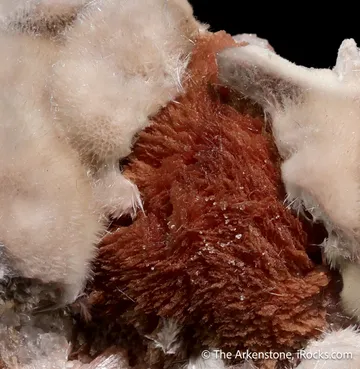
Broken Hill inesiteはオーストラリアの古典的なマンガン-シリケート標本のひとつで、コンパクトで光沢のある放射状の束や刃状の放射集合体が、ローズレッド、ピンクがかった茶、ハニーブラウン、オレンジブラウンのトーンで現れ、しばしば明るくガラス質のアポフィライトにより際立ちます。通常、飽和したラズベリー色や大きな独立結晶群では、最高峰のカラハリ inesite に競合することはありません;その魅力は別のところにあります。良品の Broken Hill piece は世界的に有名な Line of Lode の系譜を携え、最高の例は“古い鉱山”の風貌が unmistakable に現れます—密集した絹のようなファン、砂糖のようなシュドライズドのアポフィライト、そして暖かいマンガン色のポケットが硬い Broken Hill の基質に組み込まれています。

鉱物学的には、 inesite は Broken Hill を有名にした系統的収集家の間で特に満足感が高い部類で、マンガンに富む同じ世界に属しています。ロドナイト、バスタマイト、ピロキシマンガイト、ピロスマライト、バニスタライト、ヘデンベルグ石、フルオパタイト、スペサルティン、その他多くのシリケートが脈系の周囲で現れます。 inesite の式 Ca2(Mn,Fe)7Si10O28(OH)2·5H2O は水和カルシウム-マンガンシリケートであり、Broken Hill では金属鉱床後の vein-and-vug のアセンブリの一部であり、セリウス石、アズライト、あるいは ピロモルファイト のような見事な二次酸化帯鉱物ではありません。
コレクターは、放射状結晶構造がはっきりと読み取れるときに Broken Hill inesite を最も高く評価します。最良の標本は、個々の針状から刃状の放射が、曖昧な大規模な斑状ではなく識別できる形を示します。コントラストは主要な品質要因です:淡い方解石上のローズからブラウン inesite、あるいは水晶のように透明な白アポフィライトで覆われたものは、色の濃いけれど視覚的に平坦な塊よりもずっと魅力的であることがあります。産地情報も重要です。亜鉛鉱山、New Broken Hill Consolidated Mine、North Mine などのラベル、あるいは信頼できる古いコレクション名は、標本の興味を大きく高めます。なぜなら、収集可能な材料の多くが現代の連続生産よりも古い地下発見に遡るからです。

*写真: Wikimedia Commons*歴史的に、Broken Hill は単なる鉱物産地以上の存在です。1883年にチャールズ・ラスプが発見した銀-鉛-亜鉛鉱床は、1885年にBroken Hill Proprietary Companyを設立するきっかけとなり、現BHPの祖となりました。鉱体は世界有数の Pb-Zn-Ag 載掘床のひとつとなり、その鉱山は希少でわかりにくい鉱物が発見され、保存され、分析され、取引され、最終的には主要な公私のコレクションで展示される収集文化を支えました。Inesite は、Broken Hill の材料が1960年代に詳しく研究されるまでオーストラリアから記載されておらず、その論文はこの locality における種の基準文献としていまもanchor reference のままです。## Featured Specimens
Search for specimens: View all inesite specimens from Broken Hill, Australia
ブロークンヒルはニューサウス Walesの最西端に位置し、カーナモナ盆地のブロークンヒル・ドメイン内にあります。鉱床はウィリヤマ・スーパーグループの高品位な前太古代岩類に載り、変成沉積岩と火成岩を含む複雑な組層を形成しており、長い地質史の過程で屈曲・再結晶・再移動を経ています。主要なブロークンヒル鉱脈系は巨大な銀-鉛-亜鉛鉱床であり、採集者向けの鉱物は一次脈、マンガンに富む珪酸塩岩、後期脈、クラック、空隙、および史料・現代の鉱山開発によって露出した有名な酸化帯など、いくつかの重複する環境に現れます。
この鉱床はしばしば「Broken Hill型」Pb-Zn-Ag鉱化の典型例として議論されてきました。しかし採集者の言葉では、「Broken Hill」は地中の単なる一つの穴というよりも、Lode線を挟んでその周辺に広がる相互関連する鉱山の家族のようなものです。inesiteにとって最も重要な名称は、ジンク・コーポレーション鉱山、ニュー・ブロークンヒル・コンソリデーテッド鉱山、南部操業エリア、および北鉱山です。MindatはBroken Hill全般、南部操業鉱山、ジンク・コーポレーション鉱山、北鉱山から inesite を記録しており、関連する写真データ鉱物には角閃石群鉱物、フルオラポフィライト-(K)、方解石、閃亜鉛鉱、菱鉄鉱、黄鉄鉱、方鉛鉱、石英などが含まれます。
最初に詳述された Broken Hill の inesite は、 district のセロファイド(酸化帯)停留所ではなく、地下の硫化物帯の作業から見つかったものでした。William R. Ryall と Ian M. Threadgold の American Mineralogist の研究は、 inesite がオーストラリアでは従来記載がなく、1949年にジンク・コーポレーション鉱山の16階から初めて観察されたと述べています。後にはニュー・ブロークンヒル・コンソリデーテッド鉱山の19階でより重要な産状が見つかり、この鉱物を単なる分析上の好奇心ではなく、ブロークンヒルの採集者にとって実在の種として可視化しました。
ブロークンヒルの採掘史は、Charles Rasp が「ブロークンヒル」露頭で銀と鉛を発見し、1885年に Broken Hill Proprietary Company の浮遊化を開始したことに始まります。元の BHP 鉱山は1939年にブロークンヒルの採掘を停止しましたが、他の操業は Lode 線の北端・南端で継続されました。後の企業や再編成により地区の一部は活発な鉱山地区として存続し、南部操業エリアと関連する採掘は現在も産業的な鉱山サイトであり、気楽な採集場ではありません。採集アクセスは保守的に扱うべきです。ブロークンヒルには古い捨て場、遺産的特徴、現役および former の鉱山リース、不安定な露頭、鉛を含む 粉塵、私有地、および管理された運用区域などがあります。真剣な収集家は、ブロークンヒルのイネサイトを、確立されたディーラー、旧コレクション、コレクションの分散、または適切に文書化された地域ソースを通じて入手するのが一般的です。鉱山敷地での現地採集には土地所有者または操業者の許可が必要で、地下アクセスは casual rockhounding(気軽な鉱物採集)事案ではありません。現地の採集伝統は強いですが、常に人間関係、許可、そしてブロークンヒルが鉱物の locality であると同時に作業中の鉱業都市であるという認識に依存してきました。
イネサイトの顕著な発見は、継続的ではなく断続的であったようです。ディーラーやオークションの記録は繰り返し、ブロークンヒルのイネサイトを希少、珍しい、または見つけにくいと記述しており、いくつかの標本は古い発見や旧コレクションに帰属しています。 最もよく知られた標本様式は、アポフィライトを伴う、リッチな茶色からローズブラウンの放射状イネサイトで、時には方解石や硫化物を含むマトリクス上にあります。 特に魅力的な組み合わせは、透明から白色のアポフィライト結晶が、赤褐色のイネサイトの花のように散在しており、アポフィライトが、滑らかなマンガン-ケイ酸塩表面に輝きを与えています。## Broken Hill, Australia産 inesite の特徴
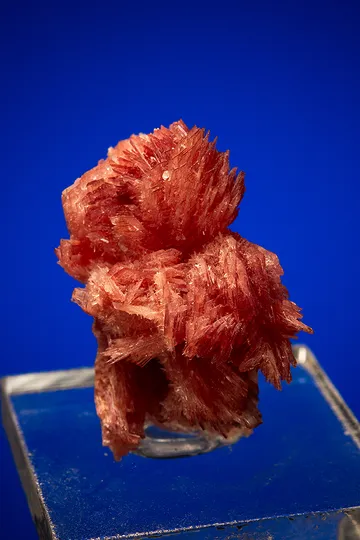
Broken Hill産 inesite は通常、コンパクトな放射状集合体、繊維状から針状のスプレー、刃状の球体、 crusts、密集した縞模様またはマトリクス上のパッチとして形成されます。個々の結晶は通常小さいですが、集合体の構造は大胆で、絹のようなファン状、輝く半球、そして緊密に放射状に広がる塊がその産地の特徴です。市場で記載される標本は約3 cm程度のサムネイルから、約5–7 cm程度の小さなキャビネットサイズ、時にはより大きな博物館用や display 用ピースも含まれます。 apophyllite を伴う Smithsonian に展示された Broken Hill inesite の約20 cm クロスのものが記述されており、より大きな歴史的ピースが存在することを示していますが、商業市場では非常に普通ではありません。
色は、南アフリカの Wessels Mine で一般に連想される明るいピンクの inesite より、通常は温かく土色寄りです。Broken Hill の色には rose-red(ローズレッド)、reddish brown、golden brown、pinkish brown、orange-brown、brown が含まれます。いくつかのピースは、半透明材料の薄い縁に沿って特にバックライト下で強いオレンジ-赤の輝きを示します。光沢は、繊維状スプレーではシルキー、より発達した刃状結晶ではガラス光沢に近く、結晶が密接に相互貫入している箇所では控えめな艶があります。
最も望ましい関連鉱物は apophyllite で、特に透明、白色、または淡色の結晶が inesite 全体にきらめきを与えます。 inesite と歴史的に結びついてきた Broken Hill の apophyllite の多くは、文献上 fluorapophyllite として扱われてきました。Broken Hill inesite に対する Mindat の写真データの関連付けはこの組み合わせを強く反映しています。方解石もアセンブリ内で一般的に見られ、伴生標本記録には sphalerite、galena、siderite、石英が現れます。 Ryall と Threadgold は、彼らが研究した鉱脈の伴生鉱物として方解石、アポフィライト、クロライトを指摘しました。
コレクターは三つの品質レベルを区別すべきです。第一は分析材料または産地材料:塊状から繊維状の茶色 inesite、体系的なスイートには重要だが特に美しいわけではありません。第二は優れた展示材料:見える放射状スプレー、魅力的な色、アポフィライトまたは方解石との認識できる関連付け。第三は古典的な Broken Hill キャビネット級:尖ったローズブラウンからレッド-ブラウンの放射状結晶群、 apophyllite からの強い輝き、傷みが最小限で、アトリビュートの伝統として Zinc Corporation Mine、NBHC Mine、North Mine、または信頼される収蔵コレクションに結びつく旧ラベルの出所。
locality の最良のピースは一つの巨大結晶によって定義されるのではなく、質感と関連性によって定義されます。損傷のないスプレー先端、活発な光沢、色の対比、三次元の浮き出しを探してください。マトリクス上の inesite の平らな茶色の広がりは科学的には妥当かもしれませんが、記憶に残る Broken Hill の標本は、光を多方向から捉える刺のある繊維状の構造を備えています。## Collector Notes
Broken Hill inesite is a scarcity-driven collector mineral. It appears periodically, but not in the steady volume associated with Kalahari manganese-field material. Recent dealer and auction examples show that modest Broken Hill pieces can still be obtainable, while rich old-provenance specimens are much less common and attract attention from manganese-mineral specialists, Australian locality collectors, and Broken Hill suite builders.
There is no prominent, locality-specific tradition of fake or treated Broken Hill inesite comparable to the better-known problems of dyed agates, glued composite specimens, or coated quartz. The main authenticity risk is provenance. Because “Broken Hill” carries a strong historical premium, a seller’s label should be examined carefully, especially when the specimen lacks the familiar Broken Hill associations of apophyllite, calcite, galena, sphalerite, or dense manganese-silicate matrix. Inesite from Wessels, N’Chwaning, Hale Creek, Fengjiashan, and other localities can be more colorful or more abundant, so locality substitution is a more realistic concern than artificial treatment.
Condition is critical. The sprays are fine and can be brittle; tiny broken tips are easy to miss until the specimen is rotated under a loupe. Apophyllite on Broken Hill inesite adds brightness but also adds another damage-prone component, especially where crystals project from the surface. Examine the high points for rubbing, missing terminations, glue repairs, and old contact scars. On thumbnail and miniature specimens, even a small broken area can dominate the display face.
Cleaning should be minimal. Avoid aggressive acids unless the entire assemblage is known and tested, because calcite may be present and apophyllite can be sensitive to rough handling. Dust removal with a hand blower or very soft brush is usually safer than soaking or ultrasonic cleaning. Broken Hill material may also contain lead-bearing sulfides or secondary lead minerals in associated matrix, so washing residues and dust should be handled sensibly.
For valuation, locality precision matters. “Broken Hill, NSW” is acceptable for many older specimens, but a mine-level label is better. “Zinc Corporation Mine,” “New Broken Hill Consolidated Mine,” “North Mine,” “Southern operations Mine,” or an old collection pedigree can justify a premium when the specimen is otherwise attractive. The best buys are often pieces with strong visual evidence of radiating inesite, honest older labels, and no exaggerated claims about crystal size or rarity.## Stories & Field Notes
Inesite entered the Broken Hill story quietly. It was not one of the minerals that drew prospectors across the Barrier Ranges, and it did not glint from the oxidized cap like cerussite or silver chloride. Its first recorded appearance was underground, on the 16 level of the Zinc Corporation Mine in 1949, where it was noticed among the complex manganese-bearing silicates of the lode. At that stage it was a scientific clue more than a collector sensation: a hydrous calcium manganese silicate in a mine famous for lead, zinc, and silver.
The more consequential moment came later on the 19 level of the New Broken Hill Consolidated Mine. There, inesite was encountered in sufficient quantity and quality to become a recognizable Broken Hill mineral. The 19-level association explains why so many classic specimens show the same appealing pairing: reddish to brown radiating inesite with tiny clear pyramidal apophyllites scattered over it like frost. To a collector, that combination is the visual fingerprint of the find—warm manganese color below, glittering apophyllite above.
Broken Hill’s mineral culture also owes much to Maurice Alan Edgar Mawby, an industrialist and mineralogist whose eye for rare species helped shape the way the district was understood. Mawby identified, or helped bring attention to, a remarkable suite of rare minerals among the silver-lead-zinc lodes, including apophyllite, bustamite, coronadite, inesite, pyromangite-related species, sturtite, and others. Part of his world-class collection eventually went to the National Museum of Victoria, helping preserve the scientific and specimen heritage of a district where many important finds were made in the course of hard industrial mining rather than leisurely collecting.
A good Broken Hill inesite specimen therefore carries two histories at once. One is geological: manganese-rich silicates crystallizing in a deeply metamorphosed, repeatedly deformed ore system. The other is human: miners, mine geologists, local collectors, and museum mineralogists recognizing that the brown-pink fibrous material on a level deep in the lode was not just “gangue,” but a rare mineral worthy of saving.## Mineralogical Records & Publications
William R. Ryall and Ian M. Threadgold, “Inesite from the Broken Hill lode, New South Wales, Australia,” American Mineralogist, 53, 1614–1634, 1968 — The key scientific paper for Broken Hill inesite, documenting the Australian occurrence, associated minerals, morphology, chemistry, optical properties, X-ray data, and thermal behavior.
Mindat occurrence record: Inesite from Broken Hill, Broken Hill district, Yancowinna Co., New South Wales, Australia — Concise locality record listing Broken Hill as an important inesite occurrence with associated minerals and references.
Mindat occurrence record: Inesite from the Zinc Corporation Mine, Southern operations Mine, Broken Hill — Mine-specific record for one of the important Broken Hill inesite localities, including association data and the Ryall–Threadgold and Birch references.
W. D. Birch, Minerals of Broken Hill, 2nd edition, Broken Hill City Council in conjunction with Museum Victoria, 1999, 289 pp. — The essential modern book-length treatment of Broken Hill minerals; cited by Mindat for the Zinc Corporation Mine inesite occurrence.
J. K. Gustafson, H. C. Burrell, and M. D. Garretty, “Geology of the Broken Hill Ore Deposit, Broken Hill, N.S.W., Australia,” Geological Society of America Bulletin, 61, 1369, 1950 — Classic geological treatment of the Broken Hill ore deposit and its setting.
K. Harada, H. Sekino, K. Nagashima, T. Watanabe, and H. Momoi, “High-iron bustamite and fluorapatite from the Broken Hill mine, New South Wales, Australia,” Mineralogical Magazine, 39, 601–604, 1974 — Useful context for the manganese-rich Broken Hill silicate assemblage; it notes the earlier Ryall–Threadgold inesite study.
Museum Victoria specimen M 27504: Inesite, Broken Hill — A museum-recorded Broken Hill inesite hand specimen associated with apophyllite and calcite, listed as on display in the Science & Life Gallery at Melbourne Museum.
HyperPhysics: Inesite specimen displayed in the Smithsonian National Museum of Natural History — Shows and describes a large Broken Hill inesite with apophyllite specimen, about 20 cm across, displayed at the Smithsonian.
Australian Academy of Science biographical memoir: Maurice Alan Edgar Mawby — Valuable historical context on Mawby’s role in identifying rare Broken Hill minerals, including inesite, and preserving important specimens.## Videos & Media
“Inesite” — Weinrich Minerals — Broken Hill inesite ミニチュアのディーラースペシimen ページで、基質全体にコンパクトな放射状結晶と関連サンプル動画がリストに記載されています。
“Inesite” — HyperPhysics / Georgia State University — 博物館展示写真と、スミソニアン国立自然史博物館に展示された大型Broken Hill inesiteとアポフィライトの標本の短い説明。
“Smithsonian National Museum of Natural History: Part 7 — Phosphates, Molybdates, & Silicates” — Minerals.net — アポフィライトを伴うBroken Hill inesite を含む、 Smithsonian の宝石・鉱物展示のフォトツアーページ。
“Apophyllite-(KF)-Inesite-133812.jpg” — Wikimedia Commons / Rob Lavinsky, iRocks.com — fluorapophyllite を伴う、3.0 x 2.0 x 1.3 cm の Broken Hill inesite のライセンス画像と標本説明。
“Inesite-Natroapophyllite-4aa5a.jpg” — Wikimedia Commons / Rob Lavinsky, iRocks.com — 古い鉱山材料からの小型 Broken Hill inesite-アポフィライトの組合せ標本のライセンス画像。## さらなる読み物と外部リンク- Mindat: Inesite from Broken Hill — 地区レベルの産出、関連鉱物、写真、文献の最良のクイックリファレンス。
Mindat: Broken Hill, Broken Hill district, Yancowinna Co., New South Wales — Broken Hill地区とその多くの登録種に関する広範な鉱物学エントリ。
Mindat: Zinc Corporation Mine, Southern operations Mine — Broken Hill inesite に関連する主要鉱山エリアの詳細ローカリティページ。
Mindat: North Mine, Broken Hill — 別の記録された Broken Hill inesite 探鉱の鉱山固有のローカリティページ。
Handbook of Mineralogy: Inesite PDF — 化学式、物理特性、産出、参考文献を含む種の小型鉱物データシート。
Geoscience Australia: “New visitor experiences showcase the minerals of Broken Hill” — Broken Hill の地質的重要性、鉱体規模、鉱物遺産のアクセス可能な概要。
BHP: Our history — 1883年のBroken Hill発見と1885年のBHP浮選に始まる企業史的年表。
Visit Broken Hill: Mining & Geology — Broken Hill の採鉱・鉱物収集史を強調する地域遺産の概要。
Cambridge Core: “Zinc, sulfur and cadmium isotopes and Zn/Cd ratios as indicators of the origin of the supergiant Broken Hill Pb–Zn–Ag deposit…” — 超巨大 Broken Hill 掘削鉱床とそのホスト岩に関する現代の技術的文脈。
USGS Publications: “Origin and significance of tourmaline-rich rocks in the Broken Hill district, Australia” — Broken Hill 地区の岩類および鉱物化に関する有用な地質背景。
MineralAuctions: Inesite from North Mine, Broken Hill — Broken Hill inesite 標本の希少性、サイズ、色、産地、オークション結果を示す最近の市場例。
MineralAuctions: Inesite, ex Kay Robertson Collection — 古いオークション記録で、かつての NBHC 19階層採掘由来とされる豊富な Broken Hill inesite 標本を記述。
Blue Gems: Inesite and apophyllite from Broken Hill — 光沢のある放射状の茶色い針状 inesite と白〜透明な apophyllite を組み合わせたディーラーの例。
The Mineral and Gemstone Kingdom: 放射状の褐色イネサイト(Broken Hill) — 突出した放射状の針状球体としての Broken Hill イネサイトの可視参照。
-Inesite-133812.jpg)
