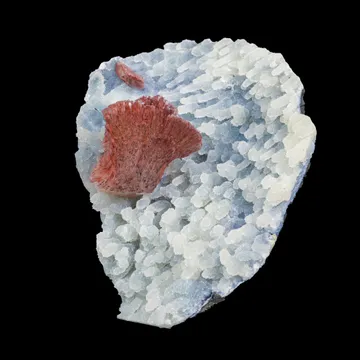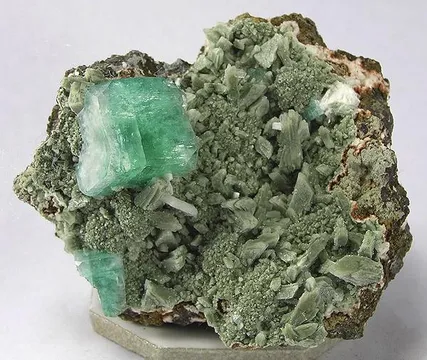
Heulandite — くさび形のパステルカラーの結晶が玄武岩の気孔内で形成される。美観と多様性、手頃な価格で評価され、インド産およびアイスランド産の材料を含む。
Key facts
Heulandite is a classic zeolite-group mineral beloved for its elegant, wedge-shaped crystals and soft palette of colors—colorless, white, peach, salmon-pink, orange, and occasionally red or green. Crystals are typically tabular to bladed and often form handsome fans, sheaves, or stacked layers lining basalt amygdales. Luster ranges from glassy on faces to pearly on the perfect {010} cleavage. The species commonly occurs with other zeolites such as stilbite, chabazite, scolecite, and mordenite, plus apophyllite in the famous Deccan Trap vesicles. The best display specimens combine sharp, lustrous heulandite crystals against dark basalt or pale quartz/chalcedony, with contrasting companions adding drama.
Collectors value heulandite for its aesthetics, abundance of well-formed crystals, and approachable price point. While fine plates from India are widely available, truly exceptional pieces—large, undamaged, gemmy crystals with saturated orange-red color or striking combinations—are markedly rarer. Classic material from Iceland and Nova Scotia adds historic charm with pristine, textbook crystal form. Heulandite is also a gateway species for zeolite collectors: with variety in habit, color, and associations, it’s possible to build a visually diverse suite within a single mineral.
Heulandite has been a staple of mineral cabinets since the 19th century, when Icelandic and Nova Scotian zeolites reached European collectors. Its modern surge in popularity traces to India’s Deccan Traps, which since the 1970s–1990s unleashed a tidal wave of world-class zeolites. Among them, heulandite stands out for aesthetic balance: sharp crystals with warm hues, often accompanied by radiating stilbite or sparkling quartz. “Red heulandite” from Maharashtra became a contemporary classic, prized for saturated salmon-to-brick tones and crisp form. While common grades remain affordable, top-tier pieces—large, clean clusters with vivid color and choice associations—command strong prices and compete for space in advanced collections.
The following localities are renowned for producing distinctive, collectible heulandite. Each offers a recognizable “look,” from the fiery oranges of Maharashtra to the water-clear, textbook crystals of Iceland.
Jalgaon’s Deccan Trap quarries turned out beautifully composed plates of heulandite with apophyllite, stilbite, and quartz. Colors range from transparent to soft peach and deep orange; crystals often form tidy stacks, sheaves, and layered fans that display exceptionally well. The best pieces feature isolated, undamaged crystals 2–6 cm, perched on sparkling druse or celadonite-coated basalt for strong contrast. Occasional green tints may occur from included celadonite—striking but uncommon.
Nashik yields elegant, cleaner-colored heulandite: colorless to pale peach blades and fans, often on basalt coated with green celadonite or fine quartz druse. These pieces emphasize textbook morphology and lustrous terminations over intense color, and the best are airy, balanced compositions with stilbite or chabazite for visual interest. Attractive, moderately priced, and perfect for illustrating classic zeolite paragenesis.
Color and saturation: Heulandite is most desirable when color is distinct and vibrant—peach, salmon, and red-orange plates from Maharashtra are perennial favorites. Colorless, water-clear crystals can also be excellent if they are sharp, lustrous, and well-composed. Green hues are rare and usually due to celadonite inclusions or coatings; they can be very attractive when even and bright.
Luster and clarity: Look for bright, glassy faces and sharp terminations. Many fine crystals are partly transparent to gemmy at the edges. Dull surfaces or etched faces reduce impact unless compensated by size or composition. Pearly reflections on cleavage are normal, but the main display faces should be crisp and reflective.
Crystal form and size: Classic heulandite shows wedge-shaped, tabular blades with excellent monoclinic geometry. Fans and stacked layers can produce great “sparkle.” Single aesthetic crystals 2–6 cm are excellent; larger blades exist but are harder to find undamaged. Clusters with varying heights and orientations usually display better than a single flat plate.
Matrix and associations: Contrast is key. Dark basalt or green celadonite underlay makes peach/orange crystals pop, while snow-white quartz or chalcedony druse provides a clean backdrop. Balanced associations with stilbite, chabazite, scolecite, or apophyllite add value; rare pairings (e.g., cavansite) can be showstoppers.
Condition: Heulandite has perfect cleavage and is relatively soft (Mohs ~3.5–4), so damage is common. Favor specimens with pristine edges and tips; even tiny nicks can show as white flashes. Because many Indian pieces are recovered from large, broken pockets, discrete repairs are common—acceptable on significant pieces if well-executed and disclosed.
Aesthetics and composition: Step back and assess overall balance, contrast, and depth. Does the piece have a prime viewing angle? Is the color visible in ambient light? Is the arrangement dynamic (fans, tiers, or radiating sprays) rather than flat and crowded? The best specimens feel lively, with clean lines and a harmonious mix of negative space and crystal mass.
Repairs and reattachments: Indian zeolites are frequently reattached to original matrix or reassembled from pocket fragments. Inspect for straight glue lines, mismatched striations, or slight offsets across a break. Check crystal bases where they meet the matrix; look for glossy resin films or granular filler. A longwave UV lamp can help—some epoxies fluoresce.
Composited matrices: Beware of “built” plates where crystals from one pocket are mounted on unrelated basalt. Clues include odd matrix textures, saw marks without natural rind, or incompatible accessory minerals. Provenance and reputable dealers help mitigate these risks.
Surface enhancements: True color treatments are uncommon for specimens, but strong oxalic or other acid cleaning can subtly etch zeolites or leave a “matte” look on faces. Overly glossy, perfectly flat “terminations” may indicate polishing of a contact or chip—this should be disclosed.
Heulandite is a hydrated zeolite with perfect cleavage and relatively low hardness. With gentle handling, it will remain beautiful for decades.
Handling: Support matrix pieces with two hands. Avoid pressure on crystal tips and edges—heulandite cleaves readily. When transporting, use soft tissue, foam, or micro-cellular foam to immobilize.
Light and temperature: Colors are stable in normal lighting, but avoid prolonged, hot direct sun or display cases that build heat. Heating can drive dehydration (formation of metaheulandite), leading to cloudiness and potential fracturing.
Cleaning: Dust gently with a soft brush or bulb blower. For grime, use lukewarm water with a drop of mild dish soap and a very soft brush; rinse well and air-dry. Avoid ultrasonic and steam cleaners. Strong acids can attack zeolites or their matrices; if rust stains must be removed, use a mild, well-controlled reducing cleaner (e.g., sodium dithionite “Iron Out”) with testing and careful rinsing.
Storage environment: Normal indoor humidity is fine; avoid extremes, desiccants, or heat sources. Keep each specimen padded or individually boxed to prevent jostling. Do not let heavier or harder specimens rest against heulandite.
Display and mounting: Use minimal, clean mineral tack or custom stands; do not force-fit crystals into tight shelves. Inspect occasionally for loosening putty or stress points. Label provenance—locality and date of acquisition matter, especially for classic Malad and early Wagholi pieces.
By prioritizing sharp form, lustrous faces, pleasing color, and clean condition—and by caring for the mineral’s inherent fragility—you can assemble a heulandite suite that captures the charm and diversity of the zeolite world.