Apex Mine, Mexico — Chihuahua locality famed for caramel to honey-brown vanadinite and rare wulfenite in an oxidized skarn system, prized by collectors.
Key facts
Apex is the name serious collectors should know behind many old labels reading “San Carlos Mine,” “Mina San Carlos,” or simply “San Carlos, Chihuahua.” The mine lies in the Sierra Azul/Sierra San Carlos area of Manuel Benavides Municipality in far northeastern Chihuahua, close in a regional sense to the Big Bend country, and it is a small but mineralogically memorable lead-zinc-silver-iron deposit developed where Cretaceous carbonate rocks were altered by Tertiary igneous activity. In specimen terms, that geological setting matters because Apex is not a barite-rich Moroccan-style vanadinite locality; it is an oxidized skarn and carbonate-replacement system, and its best pieces carry the look of a compact, old Mexican lead mine: orange-brown vanadinite, colorless to white calcite, rare brilliant wulfenite, mimetite, descloizite, hematite, magnetite, and remnants of the sulfide ore system that made the mine worth working.
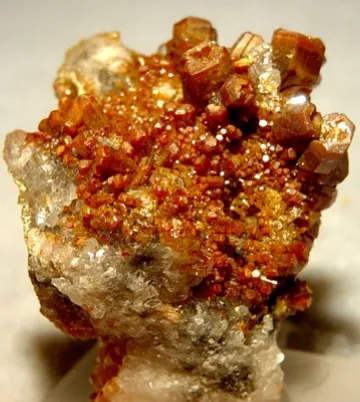
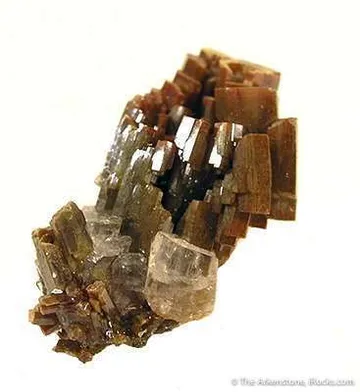
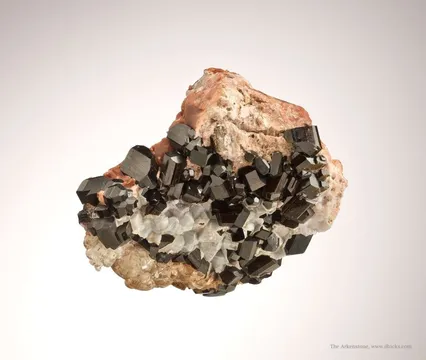
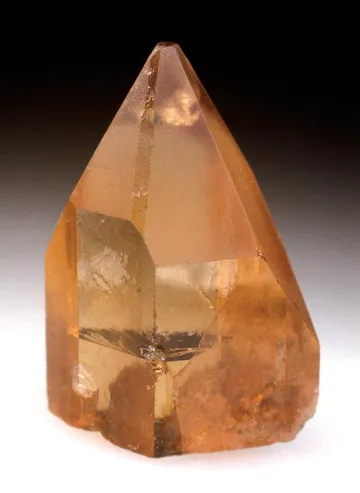
The classic Apex aesthetic is architectural rather than loud. The vanadinite is commonly caramel, butterscotch, honey-brown, orange-brown, rust-red, or olive-brown, in elongated hexagonal prisms and hoppered crystals rather than the squat, blazing red barrels that dominate much of the modern vanadinite market. Fine specimens may show sprays of parallel crystals, doubly terminated individuals, skeletal terminations, and calcite that grew among or over the vanadinite so that the crystals appear frozen into clear carbonate. The locality’s wulfenite is much rarer, but at its best it is among the most coveted Mexican wulfenites: glassy, electric orange-red, and associated with mimetite, calcite, or dolomite.
Historically, Apex matters because its mineral specimens outlived a relatively compact mining story. The argentiferous galena deposit was noted in the late nineteenth century, examined in the early twentieth, and worked substantially in the mid-twentieth century, with ASARCO production ending in the early 1950s. The old workings and later collecting episodes supplied a trickle of specimens for decades, enough to build a classic reputation but never enough to make the locality common. Renewed vanadinite finds in 2018 and 2019 pushed Apex back into collector conversation, while small later appearances of descloizite underscored that this is still a locality capable of surprising specialists.
Regional View
Country View
The best Apex specimens reward close looking. A seemingly modest miniature may carry better locality character than a larger plate: hollow-ended prisms, stacked and curved crystal growth, transparent calcite rhombs wrapping the vanadinite, or a clean single hoppered crystal rising from matrix. Cabinet pieces exist, but many older classics are thumbnails and miniatures, and their value rests on form, luster, provenance, and lack of damage.

Search for specimens: View all specimens from Apex mine, Mexico
The Apex mine is in the San Carlos area of Manuel Benavides Municipality, Chihuahua, Mexico, at approximately 29° 7' 10" N, 103° 57' 46" W. The better-known old specimen-label name, “San Carlos Mine,” has been used so long that it remains standard in many collections and dealer records, but modern locality databases treat Apex mine as the specific mine and note “San Carlos Mine” as an older or incorrect historical usage. In collector practice, the important point is to distinguish Apex/San Carlos material from the many other Chihuahua lead-vanadate and lead-molybdate localities.
Geologically, the deposit is a small oxidized magnetite-rich zinc-lead skarn and carbonate-replacement deposit in the Sierra Azul structural setting. The San Carlos lead-zinc-silver skarn lies on the crest of the Sierra Azul anticline, a Laramide structure later intruded and uplifted by a granitic pluton associated with the San Carlos caldera. Lower Cretaceous carbonate rocks, described in regional work as limestone, dolomitic limestone, and calcareous siltstone units, were converted around the intrusive core into a contact-metamorphic and metasomatic assemblage. The skarn zoning described in geological studies includes forsterite and diopside nearer the heat source, grading outward into tremolite and recrystallized carbonate zones, with later ore-stage replacement dominated by magnetite, calcite, galena, and sphalerite.
The ore bodies were lenticular to irregular stratiform replacement bodies and mantos, locally discontinuous and subparallel to bedding. Regional geological reporting describes the mineralized structures at San Carlos as hosted in skarn and Cupido Formation limestones, with average mineralized thicknesses around 3 m over a surface length of about 200 m, while thinner banded intervals of magnetite, hematite, and calcite were also recorded. The primary economic suite was lead, zinc, silver, iron, and minor gold, while the collector suite developed in the oxidized portions of the system, where lead-bearing sulfides and reactive carbonate/skarn host rocks produced vanadinite, wulfenite, mimetite, hedyphane, descloizite, calcite, goethite, hematite, and related secondary minerals.
Mining began on a small scale before the locality became known to specimen collectors. Nineteenth-century accounts noted the region’s silver and galena potential; early twentieth-century examination recommended additional development; and the mine was worked most significantly from about 1942 to 1952 by ASARCO. Mexican geological reporting credits ASARCO with approximately 1.5 million metric tons of production containing lead, zinc, silver, iron, and lesser gold. After that period, the mine did not become a famous collecting destination in the manner of Ojuela or Naica. The workings were later described as abandoned, with shafts, pits, and adits inaccessible, and access roads in poor condition.
For collectors today, Apex should be treated as an old, hazardous, abandoned mine locality rather than a casual collecting site. Published regional reports describe deteriorated access, abandoned installations, inaccessible workings, and roads that may become impassable in the rainy season. Any field visit would require current local permission, competent mine-safety judgment, and realistic expectations; the specimens that circulate now are chiefly from old collections, commercial dispersals, and limited later recoveries rather than open, routine collecting.
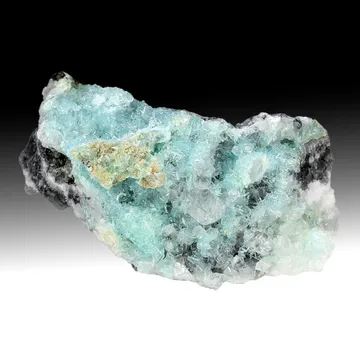
The notable specimen history falls into several waves. Classic vanadinite with calcite entered collections by the 1950s and 1960s, and many older pieces are accompanied by labels using some form of “San Carlos.” These are the pieces with the familiar butterscotch to rust-brown prisms, hoppered terminations, and clear to white calcite. The wulfenite was always much scarcer, and good examples are disproportionately important: orange-red, glassy crystals associated with mimetite, calcite, or dolomite, sometimes in thumbnail to miniature specimens rather than large plates. The 2018 and 2019 vanadinite finds were significant enough to be described as overshadowing earlier production in abundance and crystal development, although many of the newer clusters lack the abundant calcite association of the classic old material. More recently, small descloizite specimens appeared as red-brown spherical aggregates of microcrystals on cryptocrystalline quartz, a reminder that Apex still has a secondary vanadate story beyond vanadinite alone.
Vanadinite is the signature Apex mineral and the reason most collectors know the locality at all. The classic material forms lustrous, elongated hexagonal prisms in butterscotch, caramel, honey-brown, orange-brown, rust-red, and locally olive-brown tones, commonly with skeletal or hoppered terminations and parallel to subparallel growth. Older specimens are especially prized when the vanadinite is intergrown with colorless to white calcite rhombs, either perched on calcite, partly enclosed by it, or accented by sparkling carbonate overgrowths; later finds produced larger and more abundant vanadinite clusters, often with less calcite. Individual crystals on many older pieces are only a few millimeters, but important examples reach centimeter scale, and documented specimens include hoppered single crystals and cabinet combinations with prisms exceeding 1 cm. Fine Apex vanadinite is separated from ordinary material by undamaged terminations, wet luster, three-dimensional crystal architecture, visible hollow growth, and unmistakable calcite association rather than by pure red color alone.
Calcite at Apex is not merely background gangue; it is a major part of the locality’s specimen identity. It occurs as colorless, white, glassy, or slightly frosted rhombohedral crystals, drusy coatings, and carbonate growths that host, surround, or overgrow vanadinite, giving many classic specimens their “crystals in ice” look. Mindat photo data overwhelmingly links Apex calcite with vanadinite, and smaller numbers of calcite associations are documented with wulfenite and descloizite. Some calcite-rich pieces show vanadinite crystals embedded in or emerging through the calcite, while others carry small calcite rhombs sprinkled across vanadinite aggregates; at least one documented specimen notes green fluorescence in portions of the calcite under ultraviolet light. The best calcite pieces are those in which the carbonate sharpens the visual contrast and preserves open space around the vanadinite or wulfenite, rather than smothering the lead minerals into a dull crust.
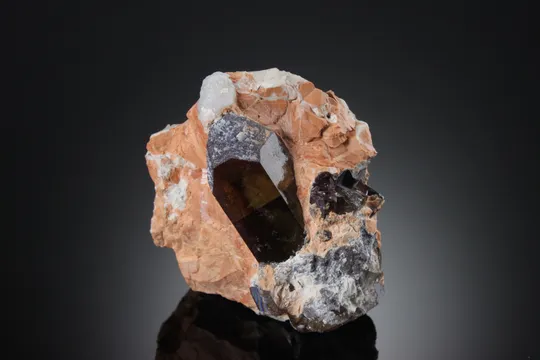
Wulfenite from Apex is much rarer than the vanadinite but can be the more elite prize. The finest examples are glassy to gemmy, orange-red to fiery orange, and tabular to thick-tabular crystals associated with mimetite, calcite, or dolomite; modern locality summaries describe exceptional crystals to 7 cm and rank the best examples among the finest wulfenites for size, color, and transparency. More commonly seen collector pieces are thumbnails or miniatures, with crystals measured in millimeters to low centimeters, including orange-red wulfenite on yellow to orange mimetite-coated matrix or wulfenite accented by calcite. Because only a small number of pieces circulate compared with vanadinite, quality depends heavily on transparency, undamaged edges, color saturation, and a visible, natural association rather than size alone. Apex wulfenite should not be confused with the more abundant and stylistically different material from Los Lamentos, Ojuela, or Sonoran wulfenite localities.
Other documented Apex minerals include galena, sphalerite, magnetite, hematite, goethite, mimetite, hedyphane, descloizite, dolomite, magnesite, hydrozincite, jarosite, quartz, opal, pyrite, chalcopyrite, bornite, tetrahedrite-group minerals, and skarn silicates such as andradite, actinolite, vesuvianite, brucite, serpentine-subgroup minerals, and staurolite. The locality does not appear to be a type locality for any valid mineral species in the verified mineral lists, but it is notable for rarities within its own paragenesis: gemmy descloizite microcrystals to about 4 mm in recent reports, hedyphane, unusual hematite crystals, and mimetite closely associated with wulfenite. These secondary lead arsenate-vanadate-molybdate minerals are a major part of the Apex story because they mark subtle chemical differences in the oxidized ore zone and help distinguish the locality from other Mexican lead deposits.
The first authenticity issue is labeling. Genuine Apex specimens may be labeled “Apex mine,” “San Carlos Mine,” “Mina San Carlos,” or simply “San Carlos, Chihuahua.” That variation is common and not automatically suspicious, but a label giving only “Chihuahua, Mexico” is too vague for a serious locality specimen. Apex material should be compared against the known style: elongated to hoppered orange-brown vanadinite, commonly with calcite; rare orange-red wulfenite with mimetite, calcite, or dolomite; and a compact skarn/replacement-mine matrix rather than thick white barite.
Mislabelling with other Chihuahua localities is a real concern. Vanadinite and arsenic-bearing vanadinite labels can drift among San Carlos, Los Lamentos, Santa Eulalia, Ahumada-area localities, and generic “Mexico” labels. One documented Mindat gallery note describes a specimen that had been labeled Santa Eulalia before being reconsidered because vanadinite is not recorded from the West Camp there. Old labels using “endlichite” should also be read carefully: in modern usage, endlichite is generally treated as arsenic-bearing vanadinite rather than a separate valid species, and brownish or arsenic-bearing material from different Chihuahua districts can be confused if the specimen lacks good provenance.
No widely documented, locality-specific program of dyed, glued, or laboratory-grown Apex fakes surfaced in the verified sources, but ordinary mineral-market caution still applies. Check for repairs on isolated vanadinite sprays, glued crystals on calcite, mismatched matrix, and improbable combinations. Vanadinite and wulfenite are dense lead minerals, so loose crystals should feel heavy for their size; unusually light pseudomorphic material may be something else, including reported calcite after vanadinite-style material. Avoid cleaning with acids: calcite is a defining associated mineral at Apex, and acid treatment can destroy the very feature that confirms the locality style.
Condition is critical. Apex vanadinite commonly forms exposed prisms and hoppered crystals, so broken terminations, bruised edges, and missing parallel crystals are common on older pieces. Jackstraw or spray-like aggregates are especially vulnerable. Wulfenite is softer and more easily nicked at crystal edges; a pristine display face can matter more than a perfect reverse on these rare pieces. Calcite overgrowths may protect some vanadinite crystals but can also hide damage or make cleaning risky. Handle all lead-bearing species with common-sense hygiene: do not grind, lick, or ultrasonic-clean friable material, and wash hands after extended handling, especially after contact with descloizite, mimetite, vanadinite, or wulfenite.
Market availability is uneven. Apex vanadinite appears regularly enough that patient collectors can find examples, but fine old calcite-rich pieces, sharp hoppered crystals, and cabinet specimens with provenance are much less common. The 2018–2019 finds increased availability of vanadinite, including larger and cleaner clusters, but older “San Carlos” material with abundant calcite retains a distinct collector following. Apex wulfenite is genuinely scarce and commands attention whenever a good specimen appears; descloizite is still more of a specialist’s rarity, most effective under magnification. For a focused collection, a strong miniature with undamaged hoppered vanadinite and calcite is often a better acquisition than a larger but visually confused plate.
Apex has always had a paradoxical personality: geographically near the United States, yet historically obscure. The mine sits in the northeastern Chihuahua borderlands, not in a remote overseas mineral province, and yet it never became a standard field-collector pilgrimage stop. Its specimens instead traveled quietly through old collections under shifting names. One drawer label might say “Mina San Carlos,” another “Apex,” another “San Carlos, Chihuahua,” and the specimen itself would carry the truth: caramel prisms, hollow tips, and bits of calcite caught between them. That label ambiguity became part of the mine’s afterlife, making provenance and visual style unusually important.
In 2008, Thomas P. Moore wrote that he had just finished a Mineralogical Record article on the locality and singled out a small vanadinite specimen as “the best little specimen” he had seen from Apex. The specimen belonged to Kiyoshi Kiikuni and was only a 3 cm crystal, but it displayed exactly what collectors prize from the mine: lively orange color and the typical hoppered form. That small object captures Apex better than many larger specimens. The locality’s classics are not always giants; they are often intimate, precise, and unmistakably different from the flood of modern red vanadinite from Morocco.
The later market pulses changed the conversation. In 2018 and 2019, major vanadinite finds brought Apex back into view, with specimens that outshone older finds in abundance and, in some cases, crystal size. But the trade-off was clear to experienced collectors: many of the newer clusters lacked the white to colorless calcite that gives old San Carlos pieces their unmistakable contrast. Then came a quieter surprise. In a 2023 Mineralogical Record online report, Isaias Casanova of IC Minerals was noted offering new miniatures from Apex—not vanadinite and not the long-absent superlative wulfenite, but descloizite. The described pieces were small, one 3.8 cm and another slightly larger, priced at $70 and $80, with gleaming red-brown spherical aggregates of microcrystals scattered on cryptocrystalline quartz. For a locality whose fame rests on lead vanadate and lead molybdate showpieces, those modest descloizites were a specialist’s reminder that the oxidized zone still had chapters left.
One of the more charming collector-side anecdotes concerns a purported calcite after vanadinite pseudomorph from Apex. A Friends of Minerals Forum contributor described acquiring a specimen formerly in Gene Tribbie’s collection, itself said to have been acquired in the 1970s–1980s era. The crystals retained orange-brown color and the skeletal hexagonal form expected of Apex vanadinite, but the owner noted that the specimen had “lost its heft as a vanadinite.” He was not willing to do destructive testing, but the observation is exactly the kind of tactile mineralogical clue old collectors remember: at Apex, form alone can deceive, and density may tell part of the story.