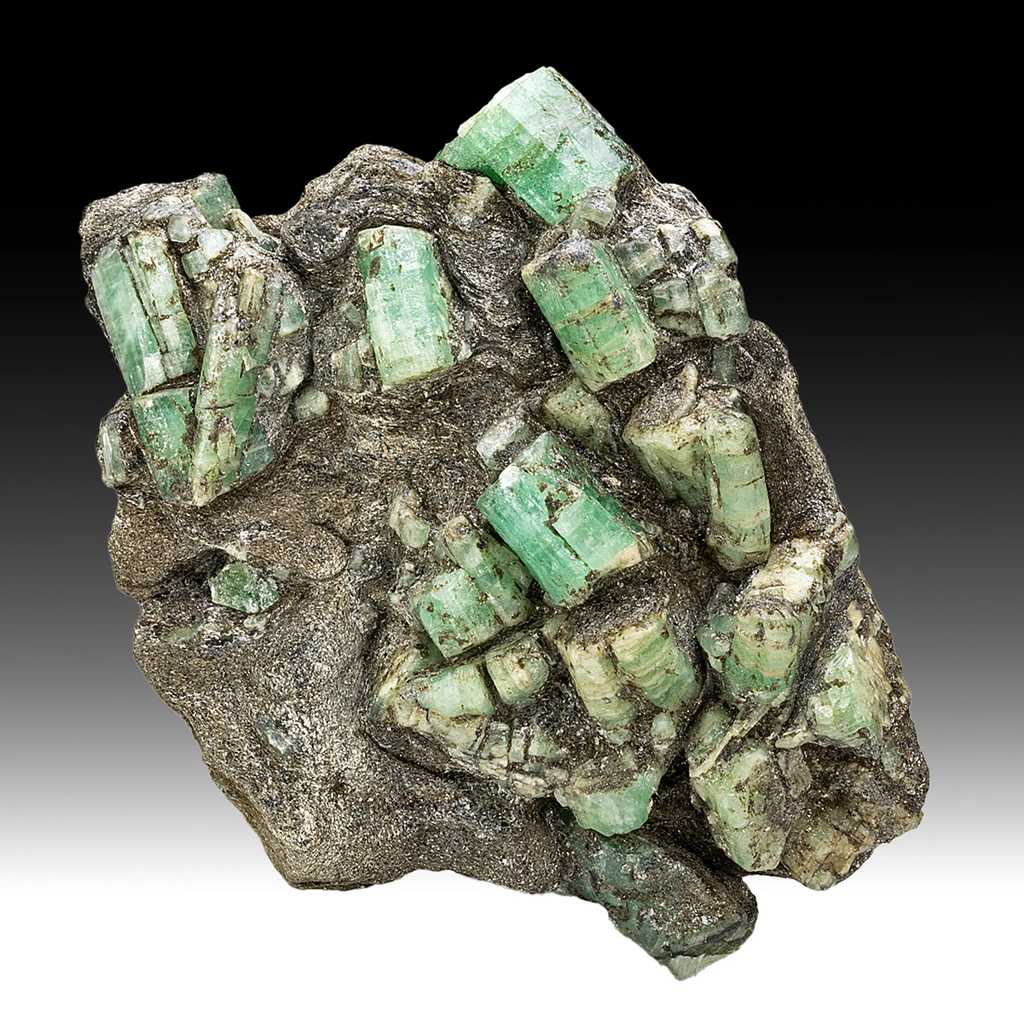
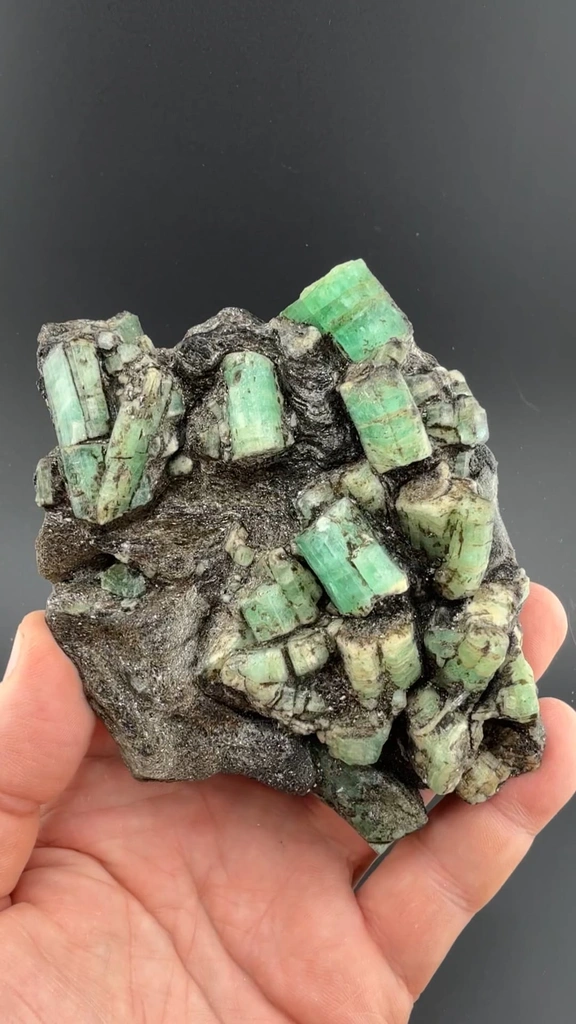
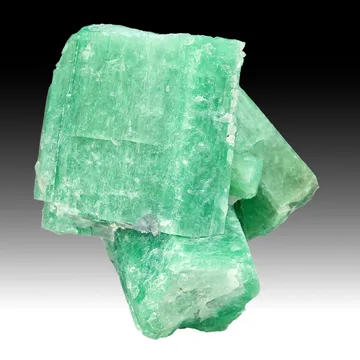
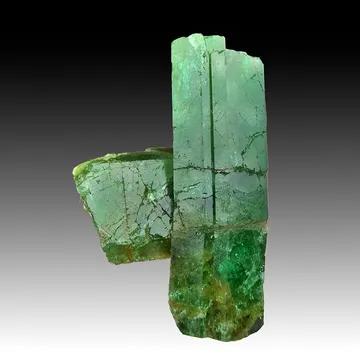
Green translucent lustrous crystals of beryl, the variety known as emerald, to 1.8 cm in length across the top of a schist matrix. Classic Russian specimen, this is in good condition.
The Izumrudnye Kopi, centered around the settlement of Malyshevo in the Sverdlovsk Oblast of Russia, is a historic mining district discovered in 1830 when emeralds were first found along the Tokovaya River. Commercial operations began in 1831 and have continued with various historical interruptions, state nationalizations, and modern revivals, making it an active producer today. Geologically, the district is situated along a deep tectonic contact zone between the Aduisk granite pluton and chromium-rich ultramafic host rocks. The interaction of beryllium-bearing granitic and pegmatitic fluids with these mafic-ultramafic rocks resulted in extensive metasomatism, producing beryl, emerald, chrysoberyl (including alexandrite), and phenakite within unique phlogopite-actinolite schist zones.
Comments