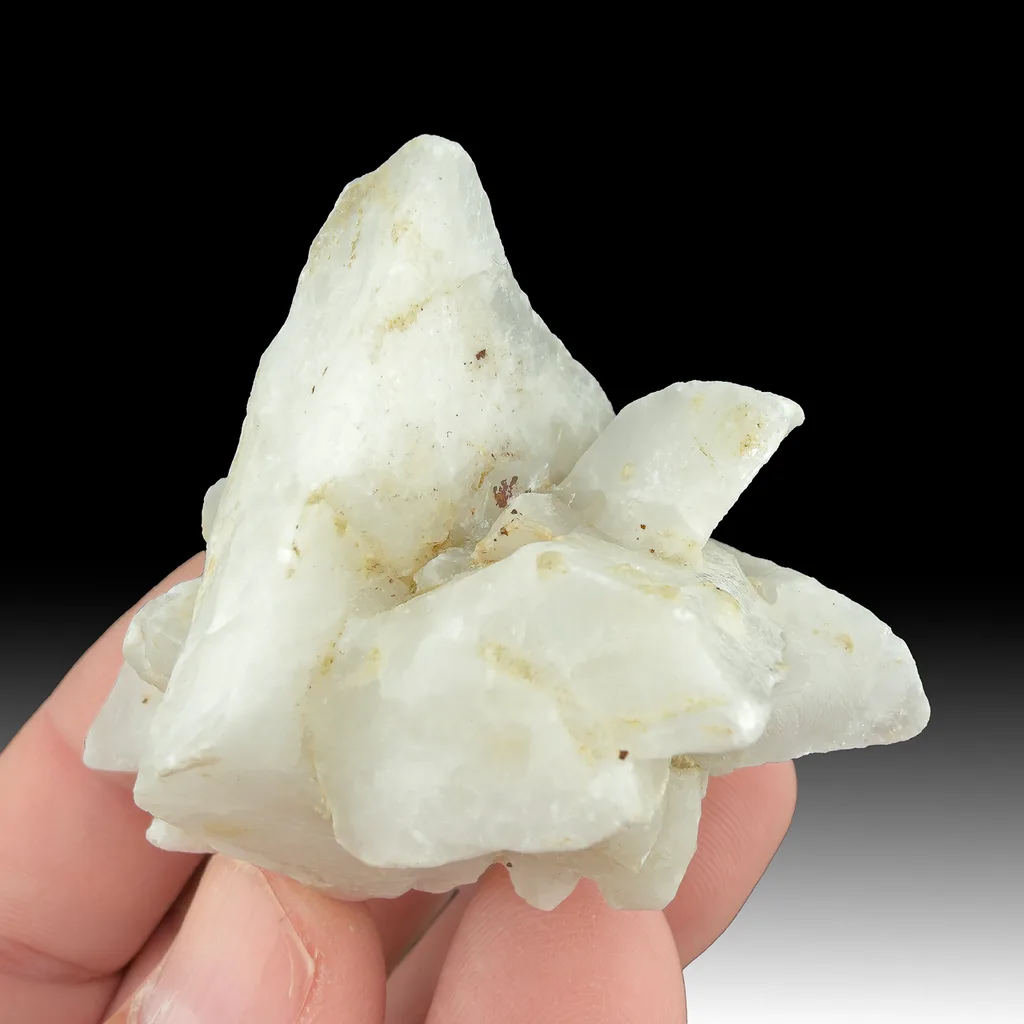
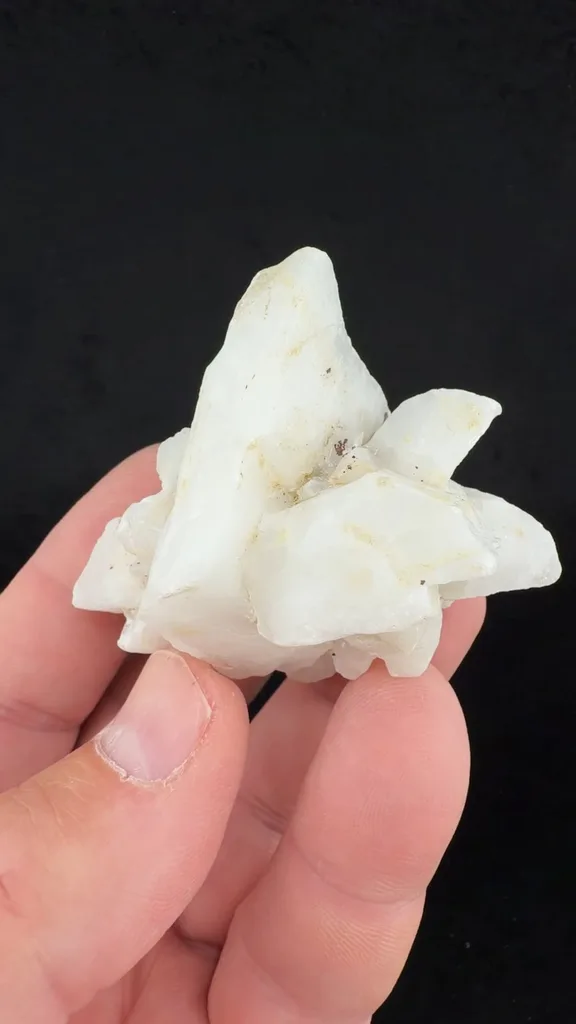
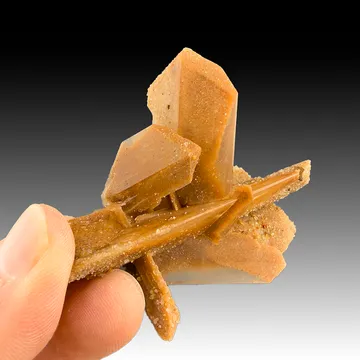
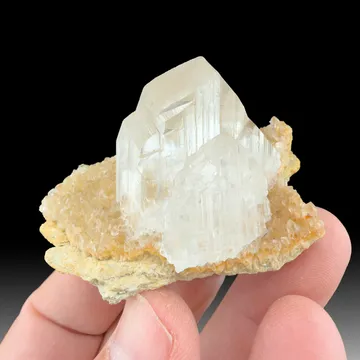
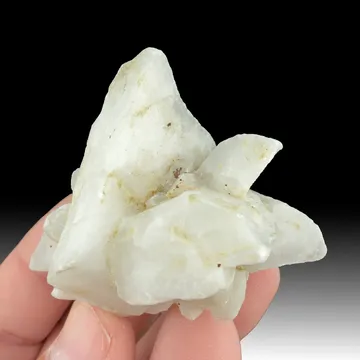
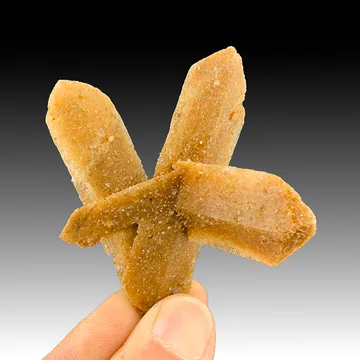
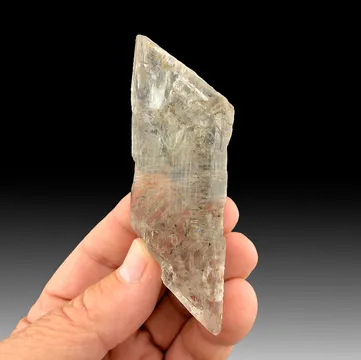
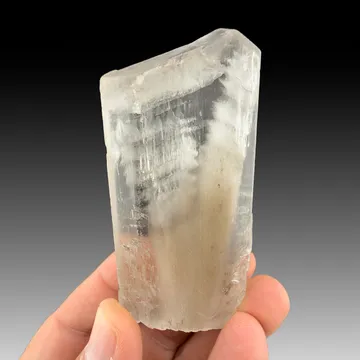
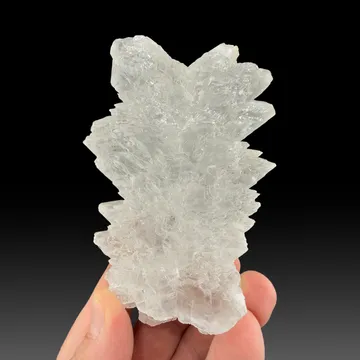
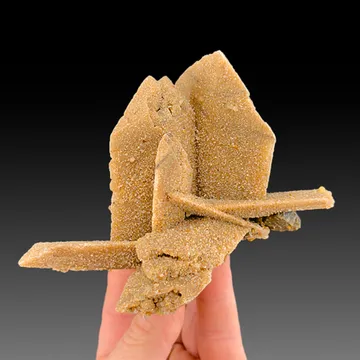
A cluster of large sharp crystals of what were once glauberite, these now replaced by white gypsum. No points of attachment and complete all around, in good condition.The geology of the Verde Valley near Camp Verde in Yavapai County, Arizona, is defined by the extensive Miocene-Pliocene Verde Formation, a thick sequence of ancient lakebed sediments, evaporites, limestones, and shales deposited in a closed internal drainage basin. Historically, the area gained renown for its salt deposits, which were mined by prehistoric indigenous groups centuries ago and later exploited by 19th-century pioneers at the local evaporite and salt mines. Mineral collectors and museums prize this district globally for exceptional pseudomorphs known as gypsum after glauberite. These unique specimens formed when primary sulfate crystals grew within the alkaline muds of evaporating saline lakes. As environmental conditions, temperature, and groundwater chemistry shifted over time, the original soluble sulfate mineral dissolved or reacted, and hydrous calcium sulfate molecules replaced the former crystals molecule by molecule. This pseudomorphic replacement process preserved the sharp, distinct tabular and prismatic shapes of the precursor crystals, leaving behind structurally precise white to pale-tan mineral sculptures that are celebrated as textbook examples of pseudomorphism.
Comments