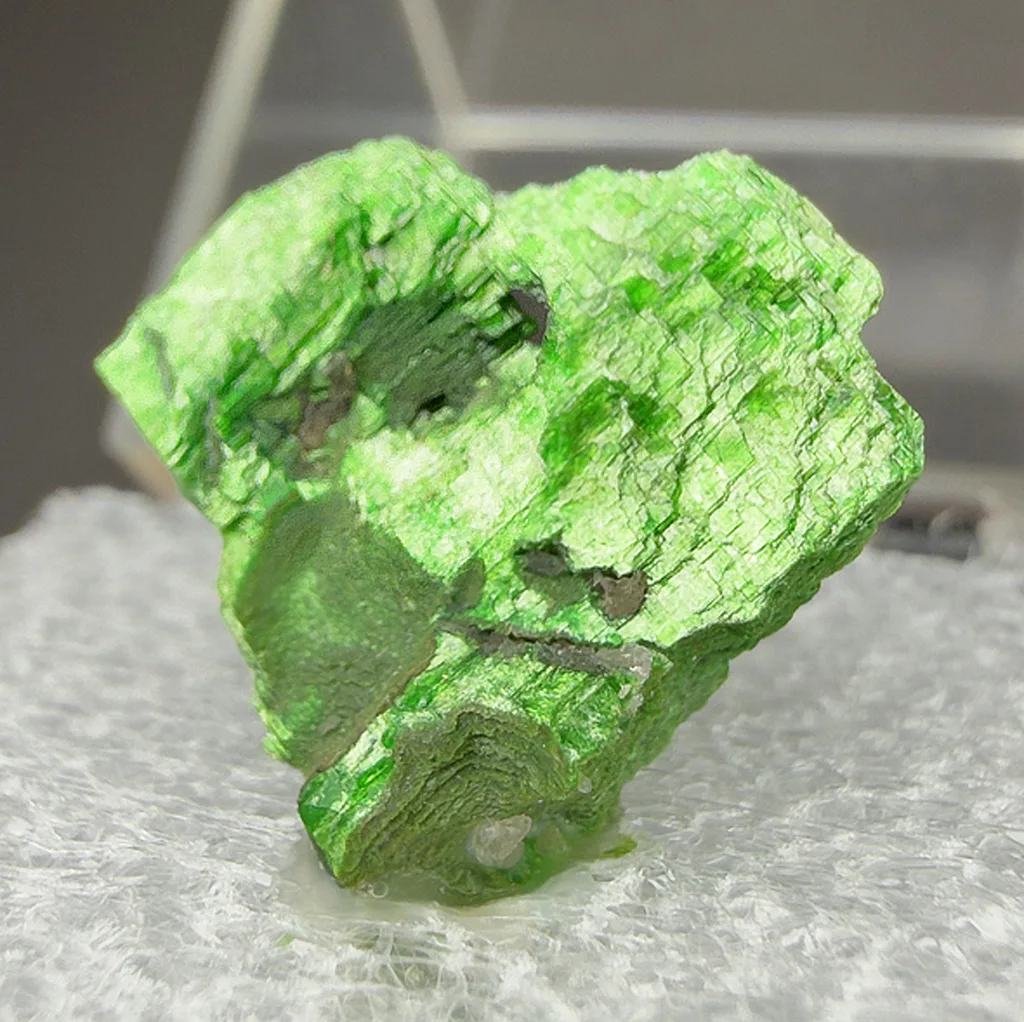
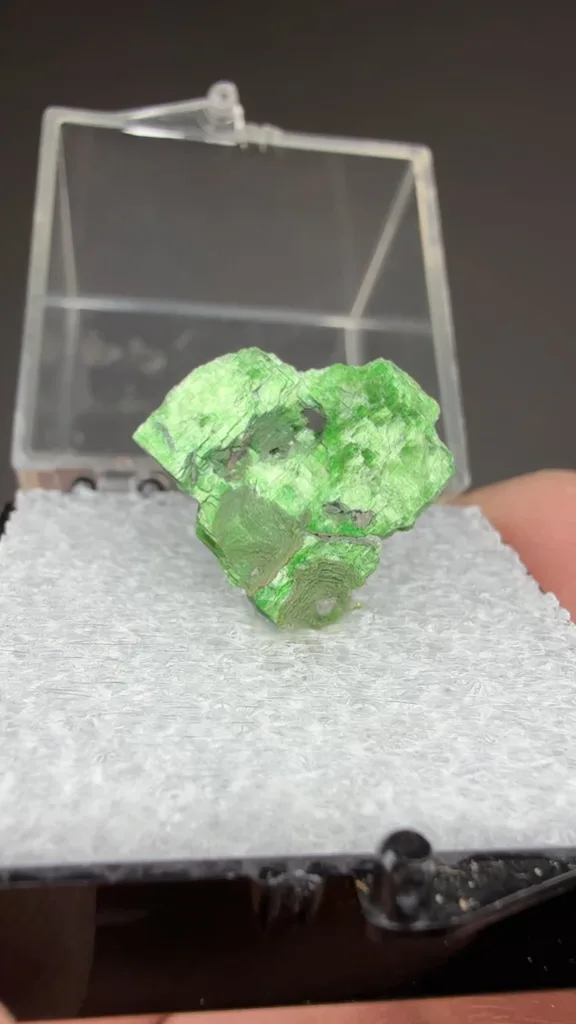
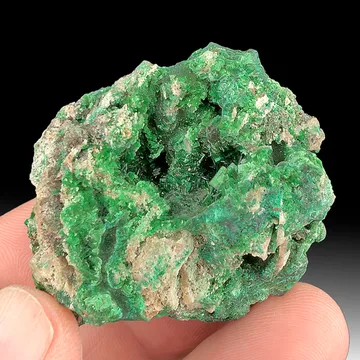
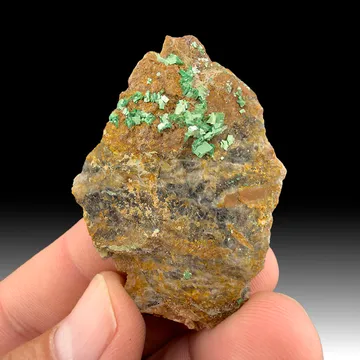
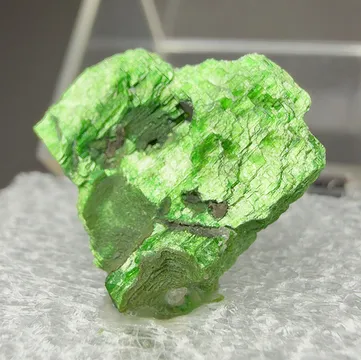
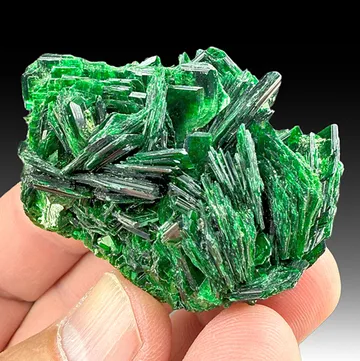
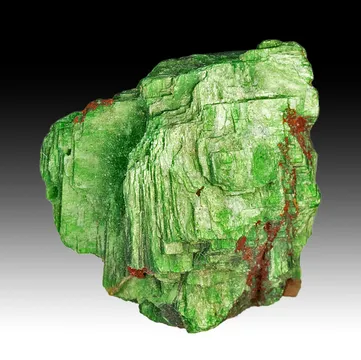
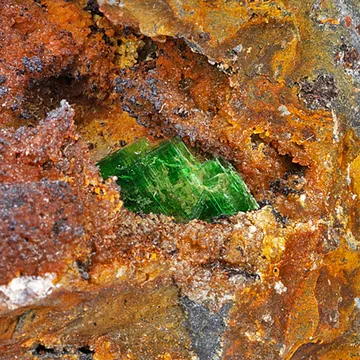
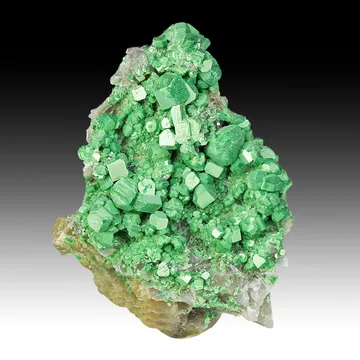
Classic British thumbnail specimen consisting of a thin loose platy crystal grouping of metatorbernite.The Gunnislake Old Mine, situated near Callington in Cornwall, is celebrated for producing some of the finest British secondary uranium minerals. Geologically, the deposit consists of several steep-dipping hydrothermal veins hosted within Devonian-aged killas (metasedimentary rocks) near the eastern margin of the Gunnislake Granite. While the mine was primarily worked for copper and tin, it became world-famous in the early 1800s, specifically around 1810 to 1820, for an extraordinary discovery of torbernite in the upper oxidation zones. These specimens were found as brilliant, emerald-green tabular crystals, often forming as square plates or "books" with a micaceous cleavage. Historically, these early 19th-century finds are considered the definitive classic for the species in England, as the crystals displayed a size, transparency, and saturation of color that rivaled or exceeded any other European locality of the period. Because the mine has been closed and the dumps largely reclaimed for over a century, these historical Gunnislake torbernites are now extremely rare and represent significant treasures of Cornish mineralogical heritage.
Comments