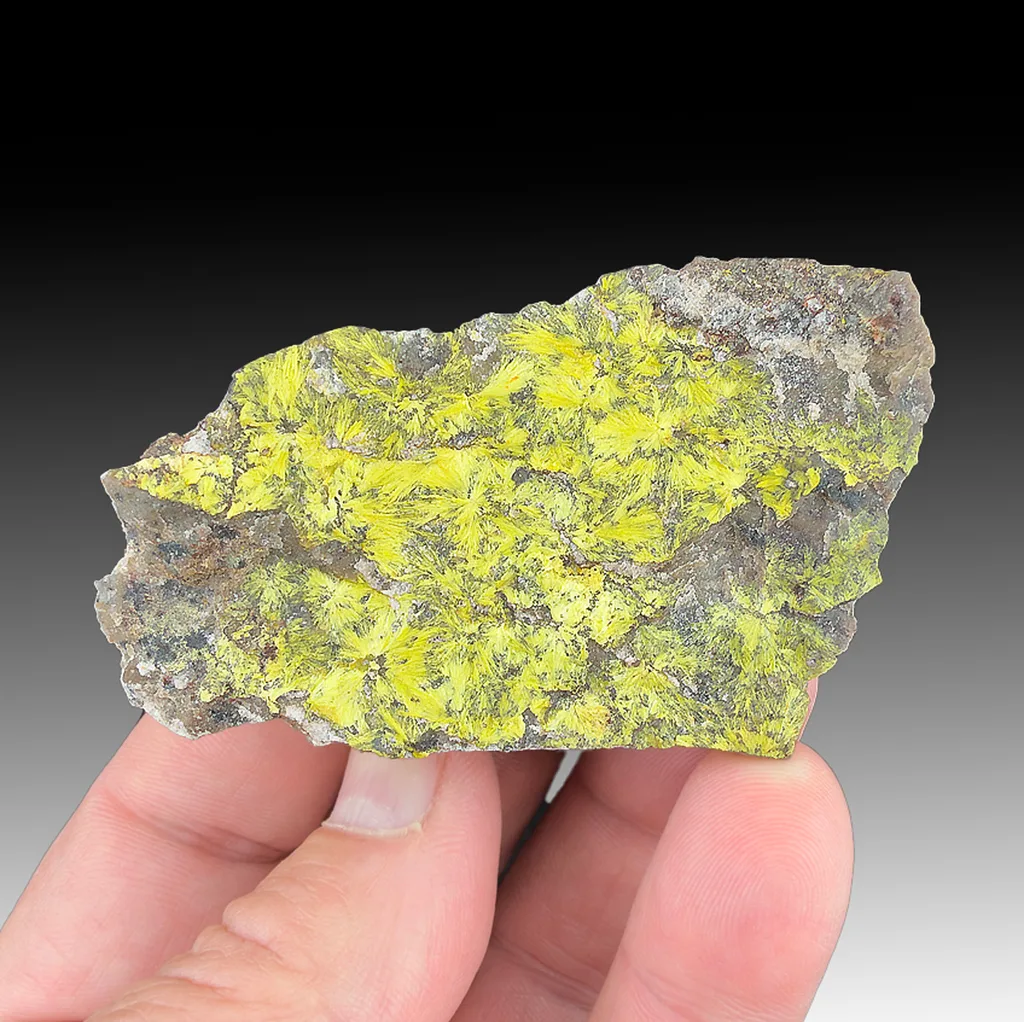
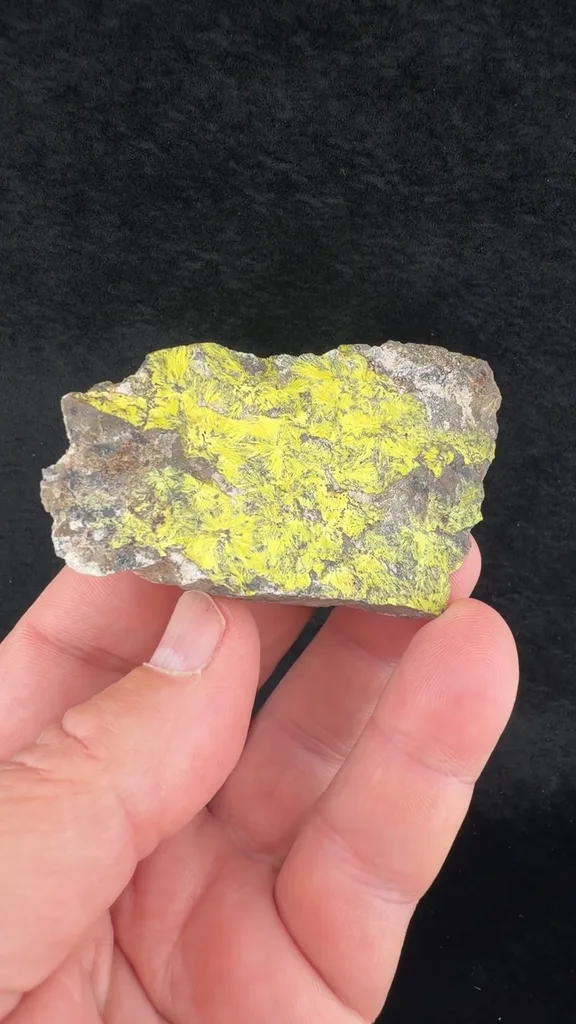
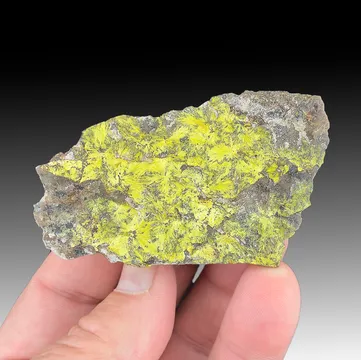
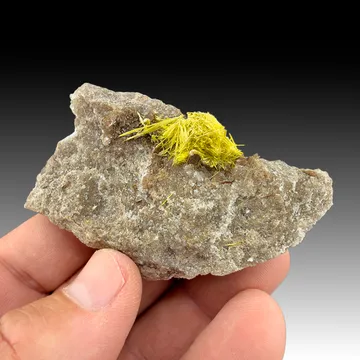
The top side of this matrix is mostly covered with radiating acicular yellow crystal groupings of uranophane, these lying flat, to 0.4 cm in size. In good condition. The specimen comes with a previous label from the collection of Ray DeMark. He collected the piece on November 6, 1977.
Located in the Ambrosia Lake subdistrict of the Grants Uranium District in McKinley County, New Mexico, Poison Canyon is renowned for its sandstone-hosted uranium deposits within the Jurassic Morrison Formation. Discovered in 1951, the Poison Canyon Mine became the first major sandstone uranium discovery in the region, triggering an economic boom that led to decades of both open-pit and underground mining operations to supply military and energy sectors. Groundwaters circulating through fault zones and organic-rich sandstone layers oxidization-altered primary minerals, resulting in rich secondary mineral zones. Among these secondary minerals, uranophane formed as striking bright yellow, needle-like acicular crystals and radial clusters coating matrix cavities and fracture surfaces. Although active extraction ceased late in the twentieth century, specimens preserved from past workings have made the area historically significant to collectors of rare radioactive minerals.
Comments