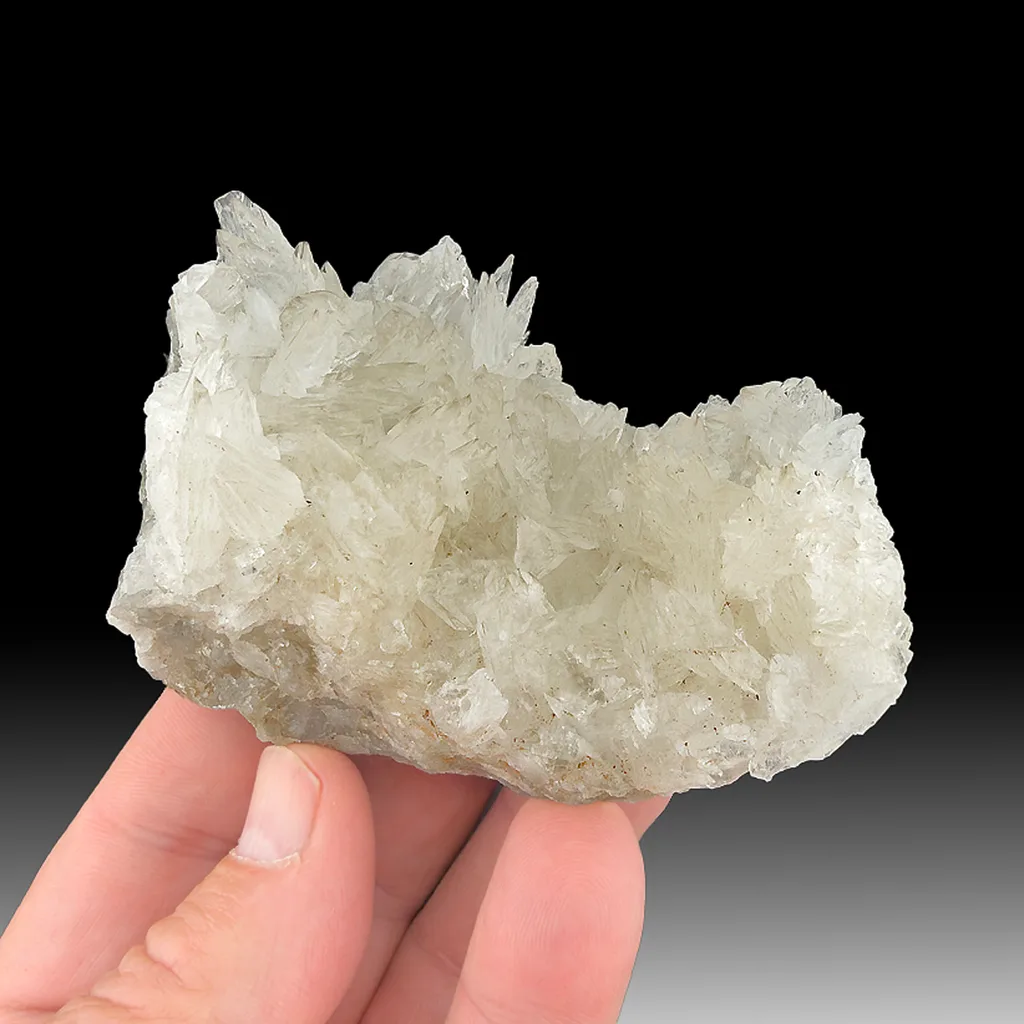
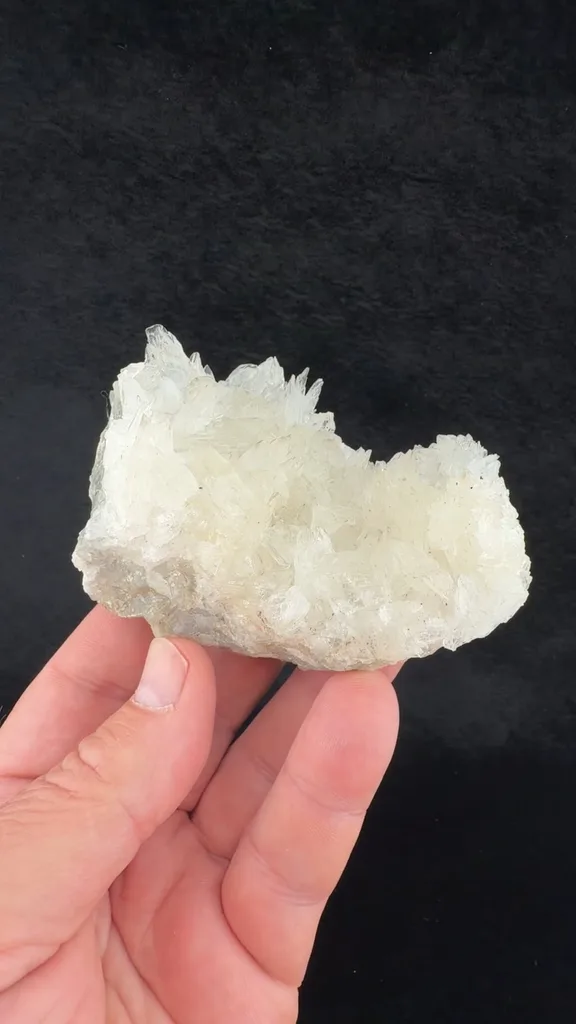
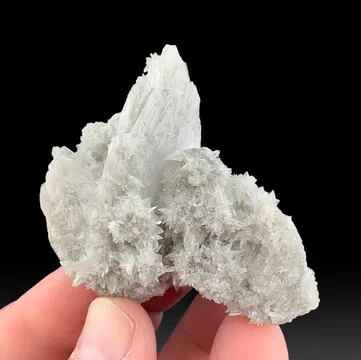
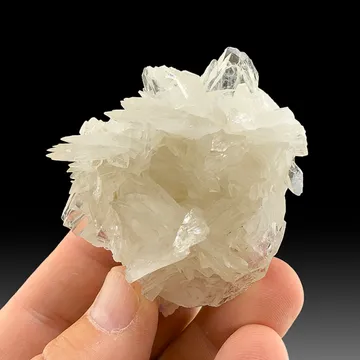
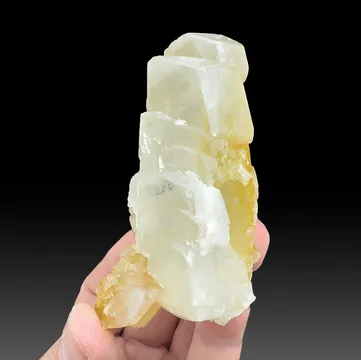
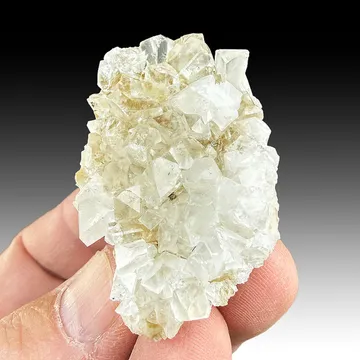
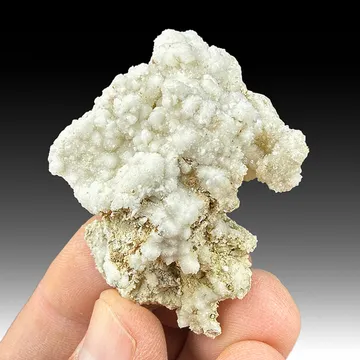
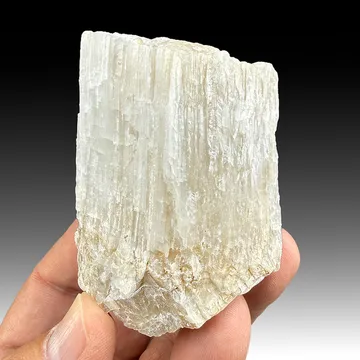
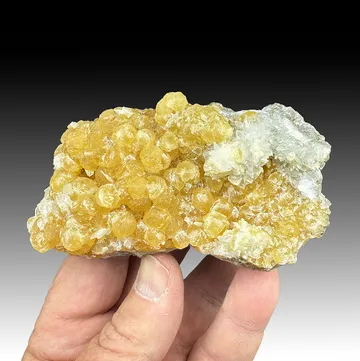
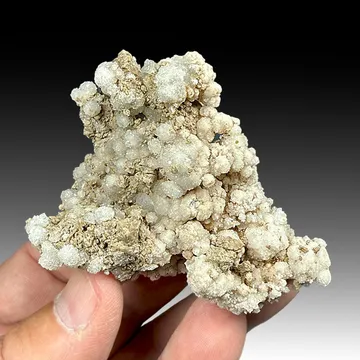
The top of this matrix is almost completely covered with colorless bladed semi lustrous translucent crystals of colemanite measuring to 1.0 cm in size. In good condition with very minimal damage present. The specimen comes with a previous label from the collection of Ray DeMark. He collected this in November, 1975.
Located in the western Mojave Desert of Kern County, California, the Kramer Deposit at Boron was formed during the Miocene Epoch when volcanic thermal springs deposited soluble borate minerals within an ancient playa lake basin. The massive deposit was discovered in 1925 by Dr. W. T. Schaller and prospector Suckow, leading to the establishment of large-scale underground mining operations by the Pacific Coast Borax Company. Over time, the operation transitioned into one of the largest open-pit borate mines in the world. Beyond its massive commercial production of industrial borates, the location is famous among mineral collectors for yielding world-class geological specimens of core hydrated sodium borates such as kernite and borax.


 Ships from USA
Comments