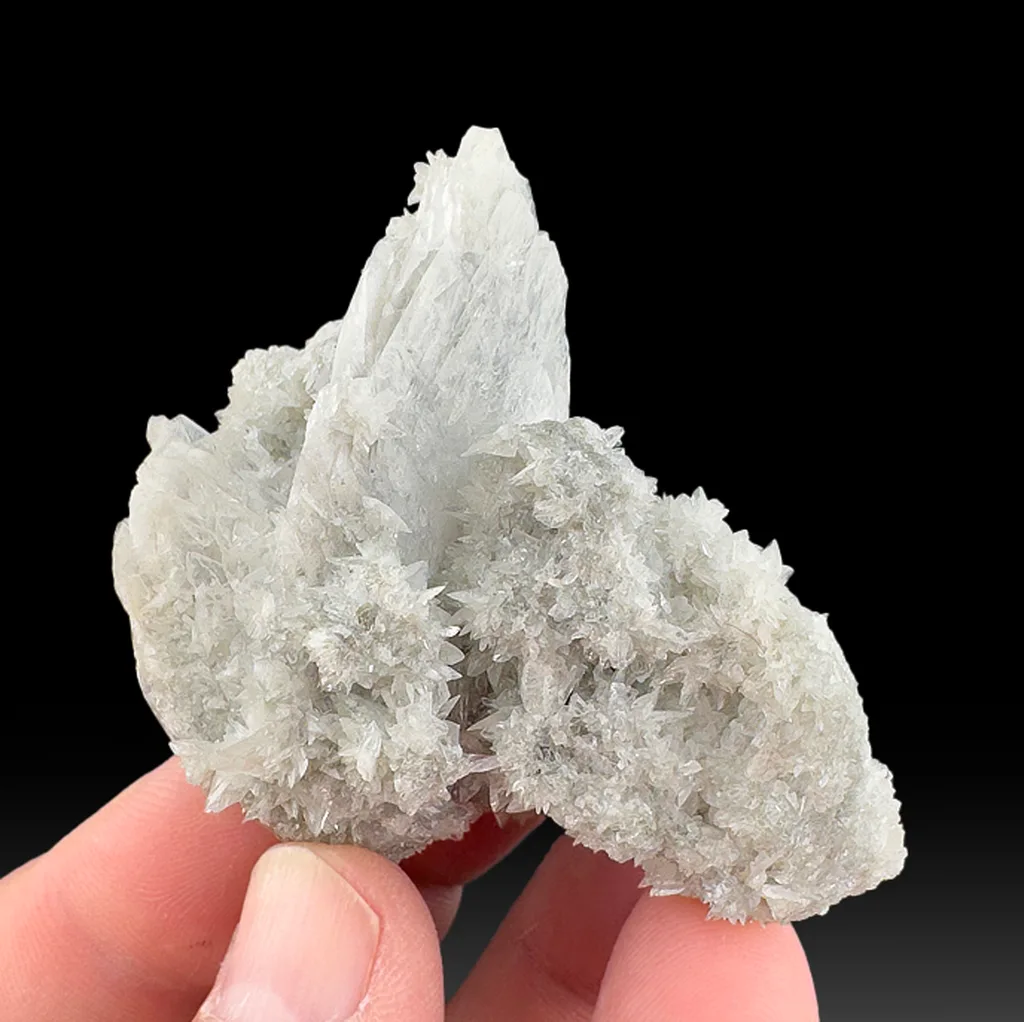
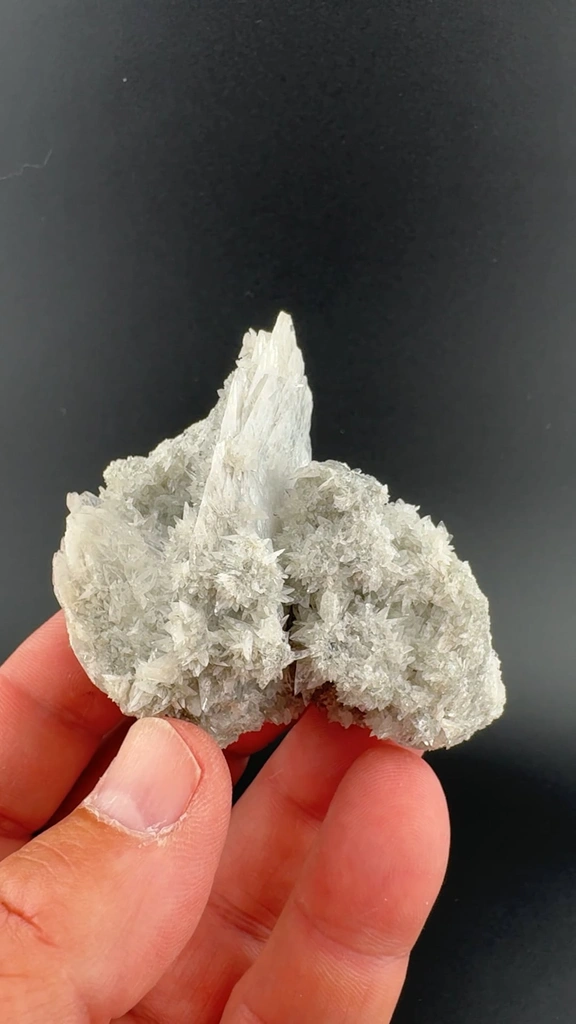
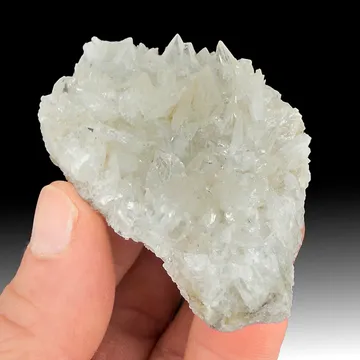
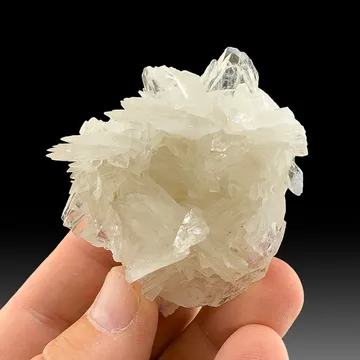
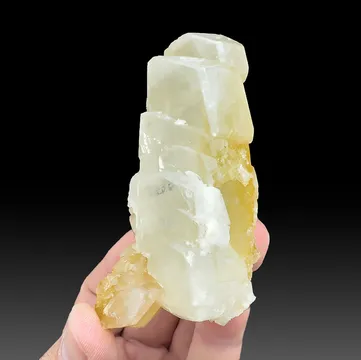
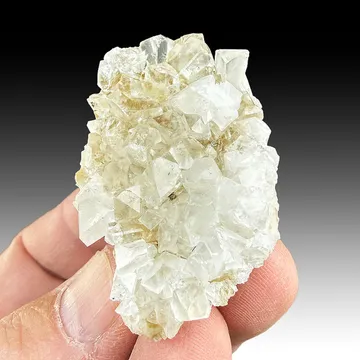
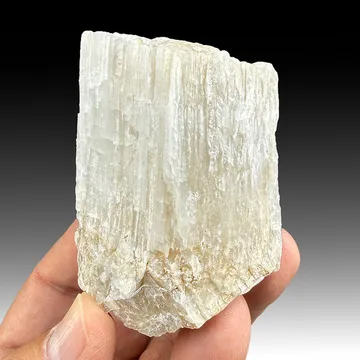
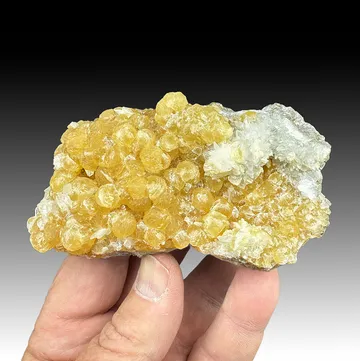
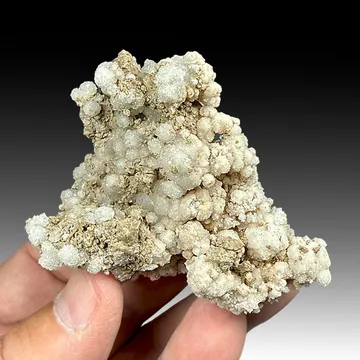
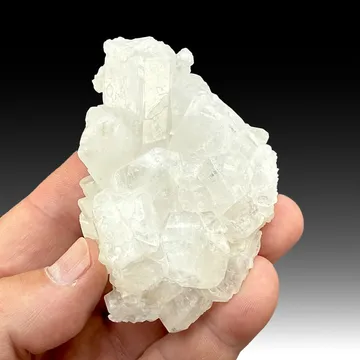
Colorless bladed crystals of colemanite to 3.0 cm in size on matrix. In good condition.The Boron deposit, located in the Kramer borate district of Kern County, California, has a history dating back to its discovery in the early twentieth century, growing into one of the world's largest sources of boron-bearing minerals. Geologically, the deposit is hosted within Miocene-aged lacustrine sedimentary rocks of the Tropico Group, filling a structural basin associated with volcanic activity. The borates formed through the evaporation of boron-rich thermal and mineral springs in a closed lake basin. While the primary economic mineral of the massive deposit is sodium borate (kernite and borax), the surrounding and earlier-formed zones are well known for producing magnificent, highly modified monoclinic crystals of colemanite, a hydrated calcium borate formed through secondary alteration and crystallization processes.
Comments