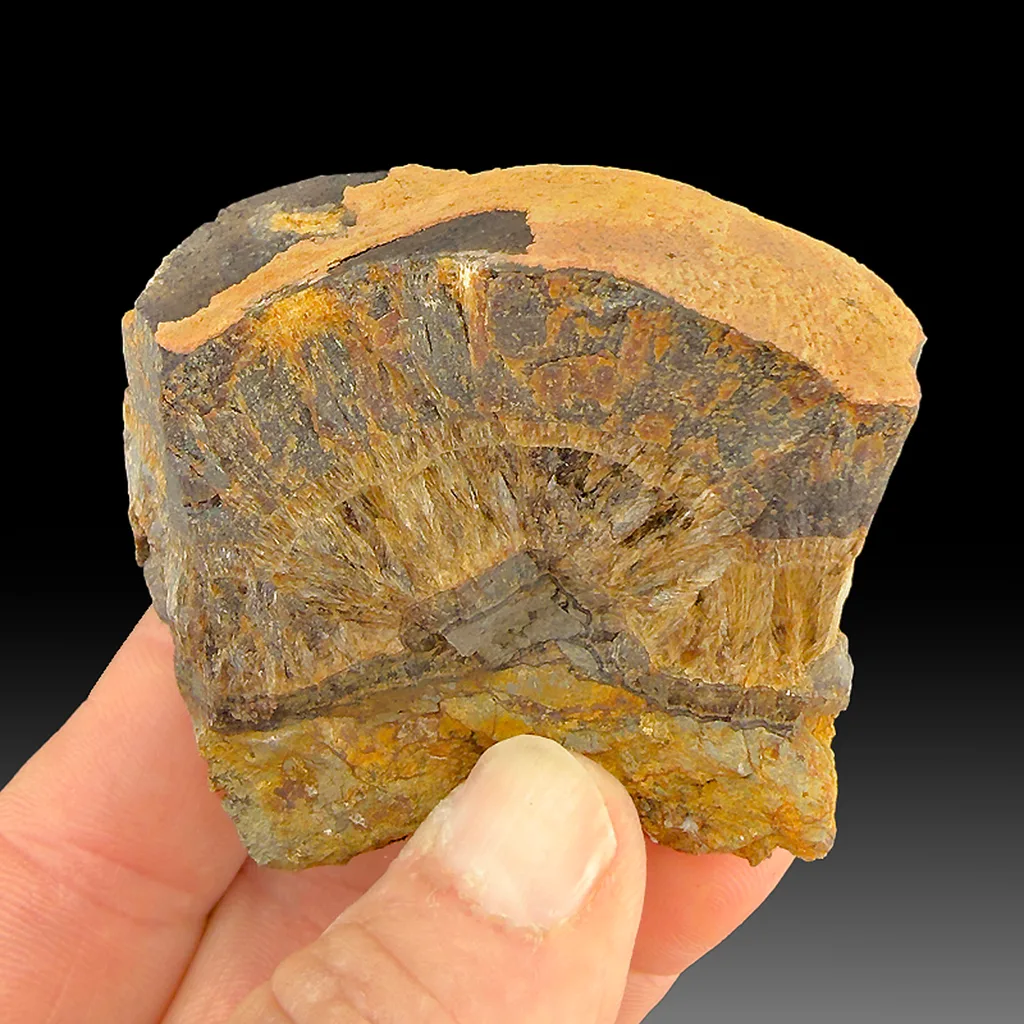
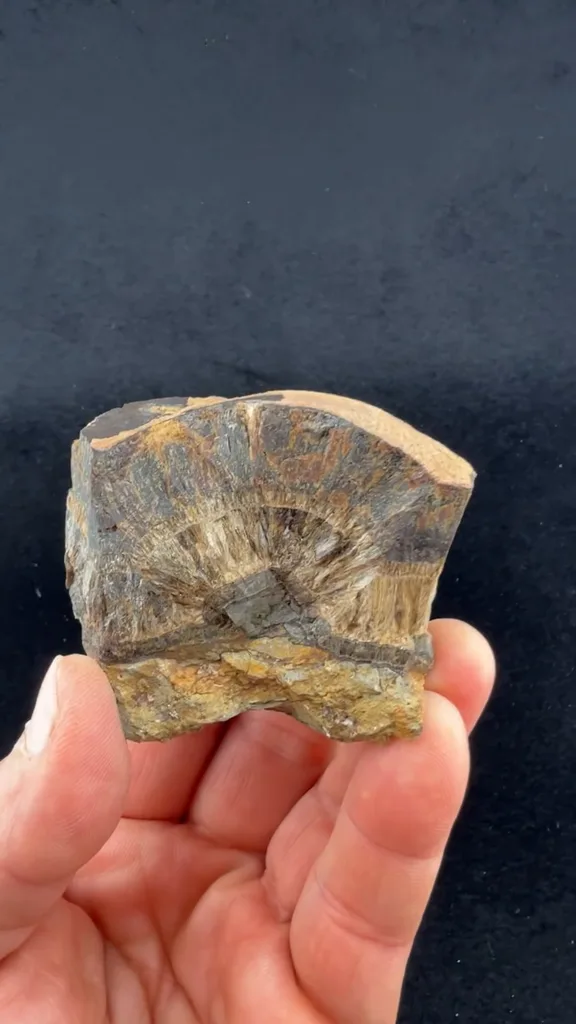
Classic for the species, radiating brown crystallized collinsite as a vein within matrix. Co3-hydroxylapatite Is present as well. The specimen comes with a previous label from the collection of Jack Nieburger.Francois Lake, located in British Columbia, Canada, is world-famous among mineral collectors as the type locality for collinsite, a rare hydrated iron magnesium calcium phosphate mineral. Discovered in the early 1920s along the lake's northern shore, collinsite occurs as distinctive brown to light-amber fibrous veinlets and botryoidal crusts lining fractures within dark andesite host rocks. The mineral formed through low-temperature hydrothermal alteration of sedimentary phosphate nodules and surrounding volcanic rocks. Although no large-scale commercial mining occurred at the site, the unique nodules attracted significant interest from mineralogists and collectors, making specimens from this locality highly prized in private and museum collections.
Comments