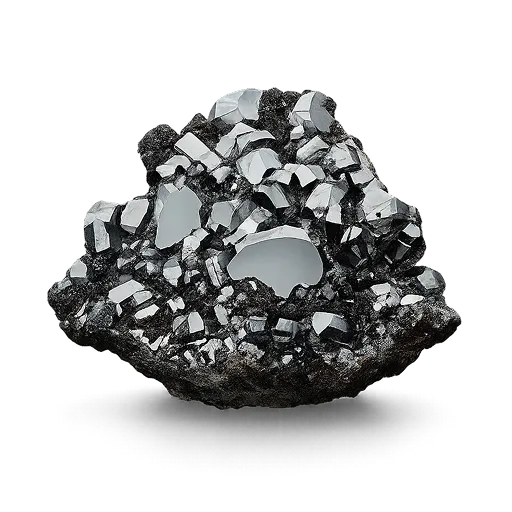
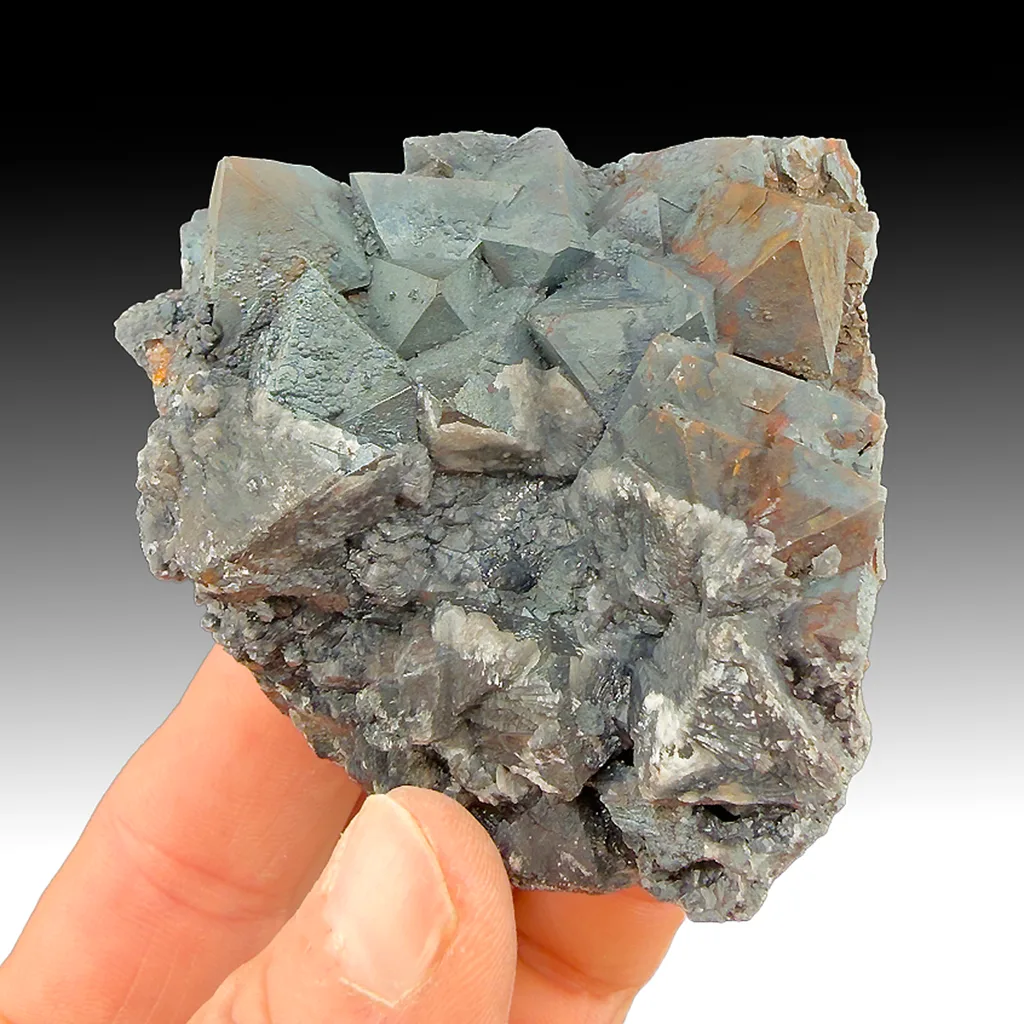
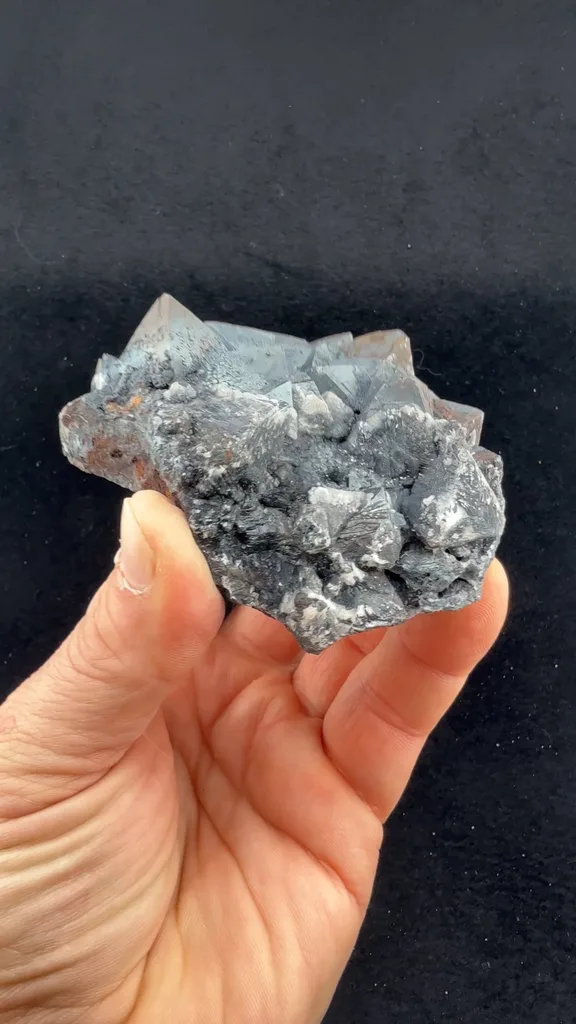
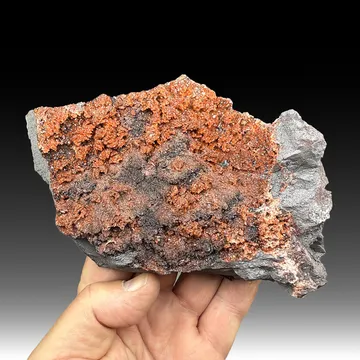
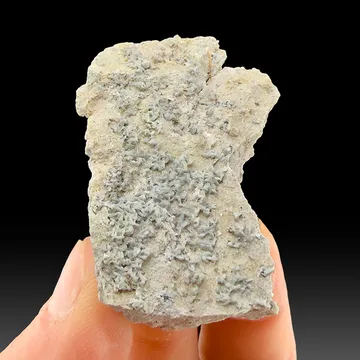
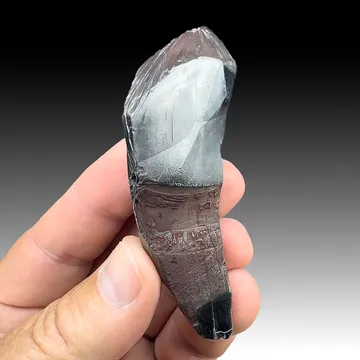
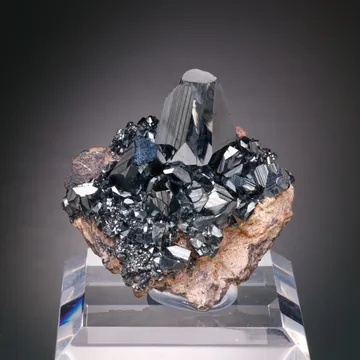
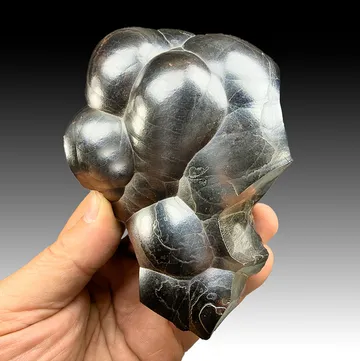
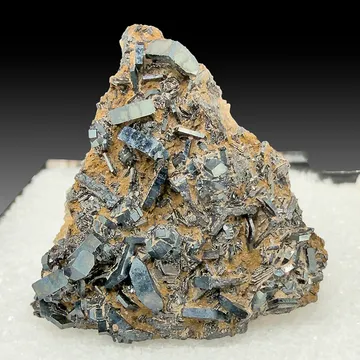
Classic pseudomorph specimen for this locality, sharp octahedral crystals of what were once magnetite measuring to 2.0 cm in size across the top of matrix and replaced by hematite. In good condition.The Cerro de Mercado mine, located on the northern outskirts of Durango City near Cerro de los Remedios, is a renowned iron deposit discovered in the mid-sixteenth century and named after Captain Gines de Mercado. Initially sought by early Spanish explorers for mythical precious metals, it transitioned into a premier commercial iron producer during the nineteenth and twentieth centuries. Geologically, the deposit sits within the Chupaderos Caldera complex of the Sierra Madre Occidental volcanic province, formed during the Tertiary period. The mineralization consists primarily of massive iron oxides hosted in silicic volcanic and felsic rocks, characterized by extensive primary iron phases accompanied by notable quantities of accessory minerals like fluorapatite and hematite pseudomorphs after magnetite within a sub-aerial volcanic environment.Martite is a pseudomorph in which hematite replaces magnetite, preserving the original crystal shape of the magnetite such as its characteristic octahedral form. This alteration occurs through the oxidation of magnetite to hematite, a process where iron(II) is oxidized to iron(III) while the crystal structure undergoes a transition from cubic to trigonal. Although the external morphology remains that of magnetite, the internal mineral composition and physical properties change to those of hematite, including its distinctive reddish-brown streak.
Comments