
$145Median
14Sold (12 mo)
$125Last sale
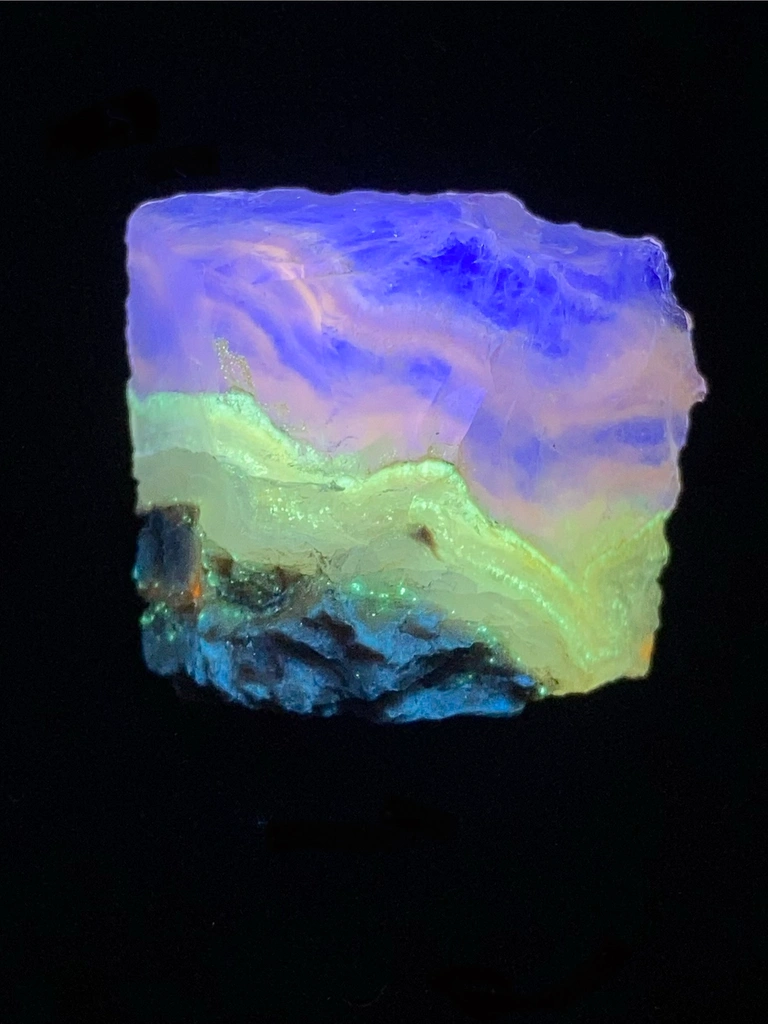
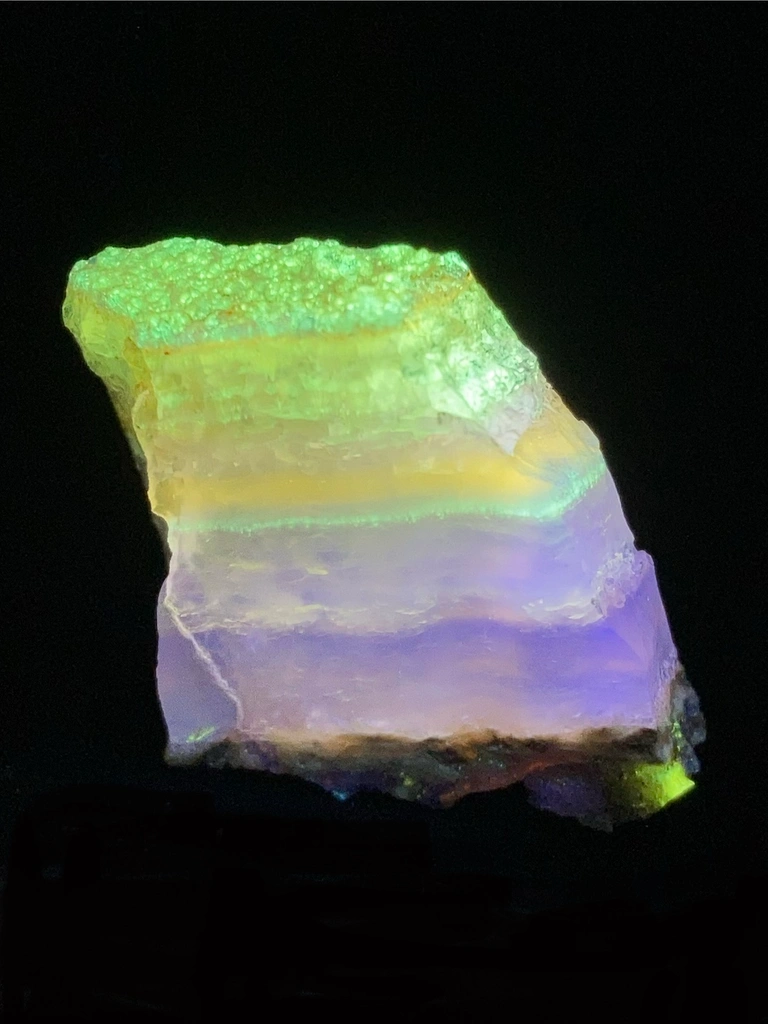
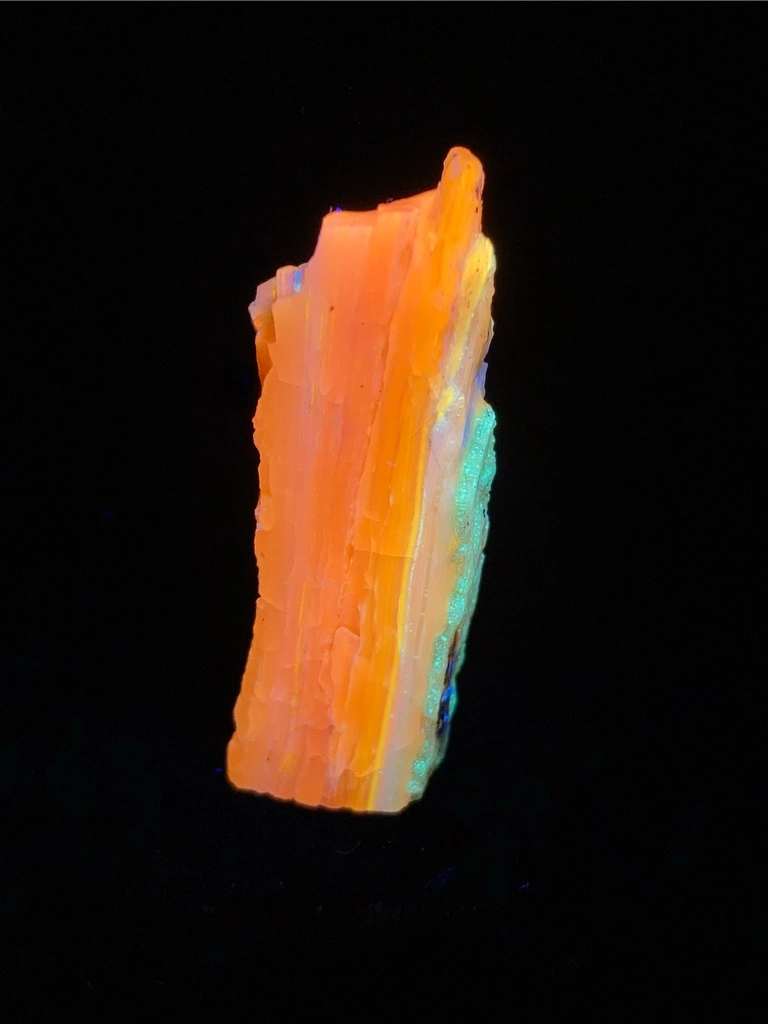
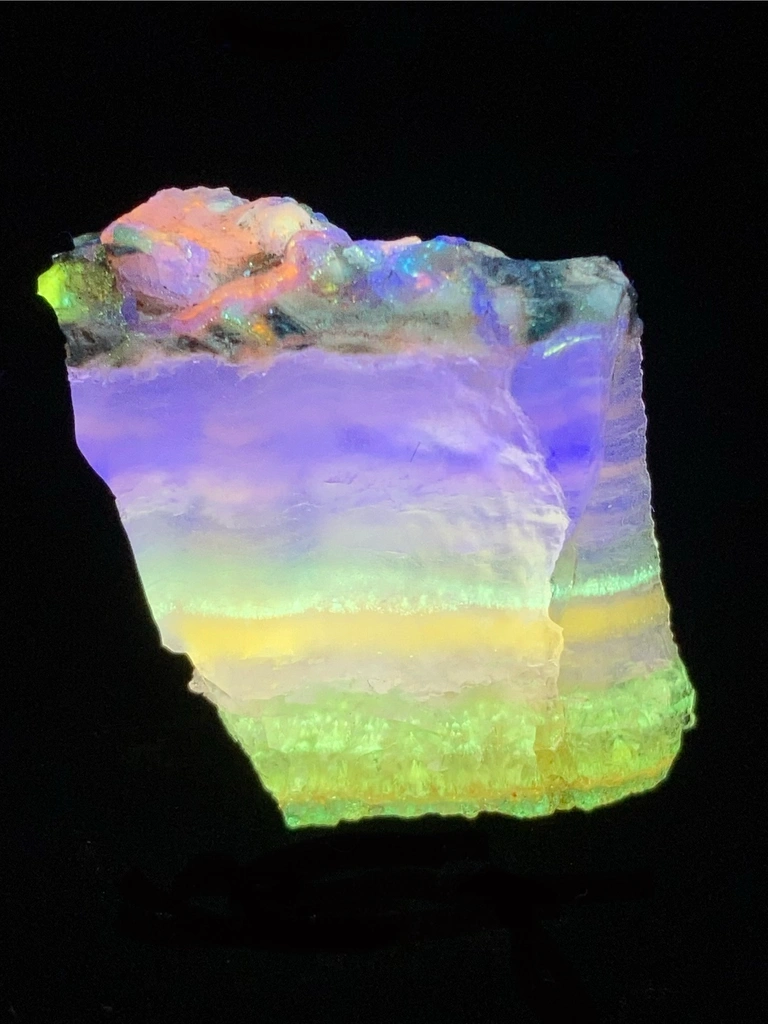
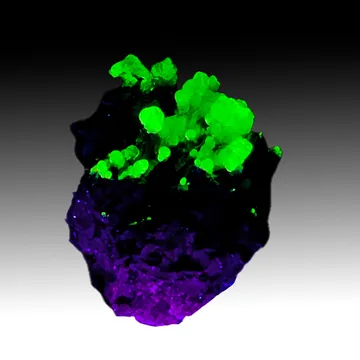
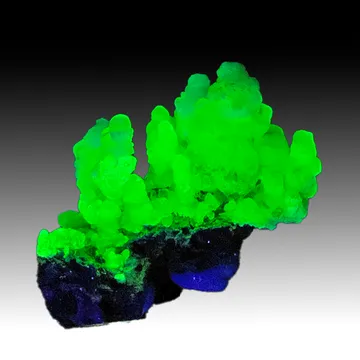
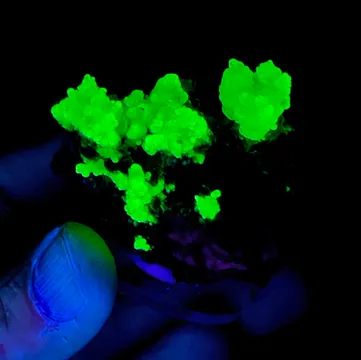
What do you think is making this opal glow?
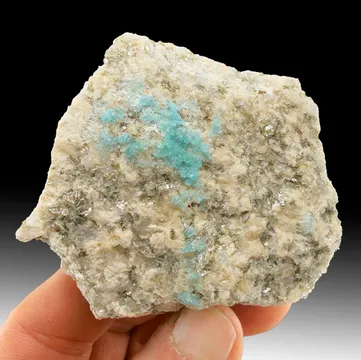
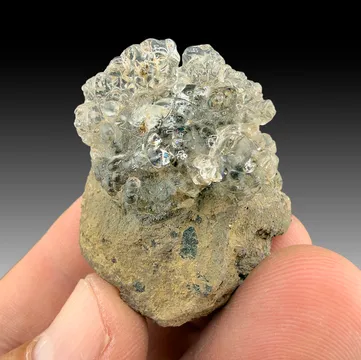
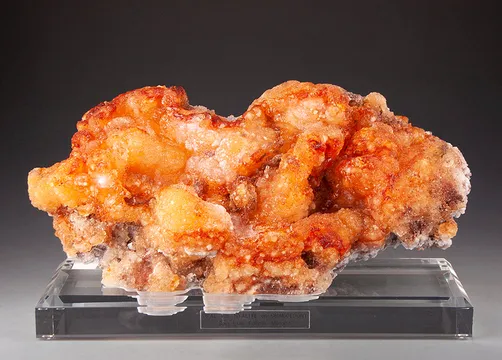
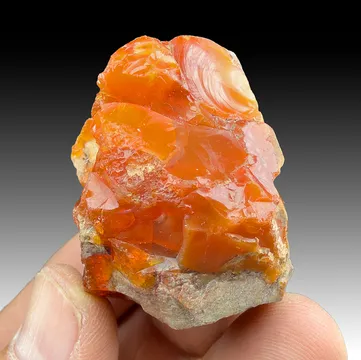
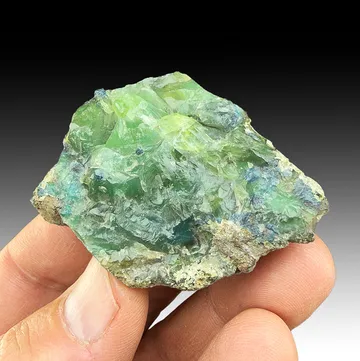
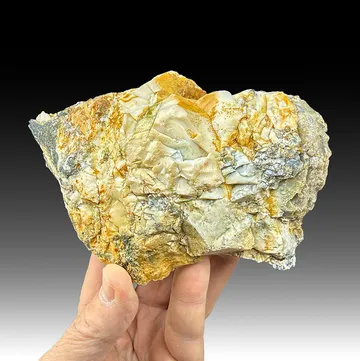
Opal from the Shikaribetsu area of Hokkaido, Japan, exhibits vivid fluorescence when exposed to ultraviolet light.
At first glance, it may appear to be simply another unusual fluorescent opal. But when its fluorescence is examined more closely, something rather unexpected emerges.
Studies suggest that the fluorescent substances involved are not rare-earth elements or other typical inorganic activators, but organic molecules known as polycyclic aromatic hydrocarbons (PAHs).
And there is something even more intriguing.
Within some Shikaribetsu opal, certain PAHs are present not merely as trace components, but in a crystalline form.
One of these is hokkaidoite.
Hokkaidoite was discovered in Hokkaido and officially approved as a new mineral in 2023. Its chemical formula is C₂₂H₁₂, and it is known as a crystal composed of benzo[ghi]perylene.
In other words, within this opal, silica-rich opal coexists with a mineral composed solely of carbon and hydrogen.
What kind of chemical and geological processes could have taken place within what appears to be such a vivid piece of opal?
Beginning with the question of what makes this opal fluoresce leads into a fascinating geochemical world unique to Shikaribetsu—one where the boundary between organic matter and minerals becomes surprisingly blurred.
References
Tanaka, R., Hagiwara, A., Ishibashi, T. & Inoue, Y. (2023). Hokkaidoite, IMA 2022-104. European Journal of Mineralogy, 35, 75–79.
Iimori, T., Fujii, Y. & Nakanishi, H. (2024). Fluorescence spectroscopy of opal from the Shikaribetsu area, Shikaoi, Hokkaido. Journal of Mineralogical and Petrological Sciences, 119, 231215.
Comments