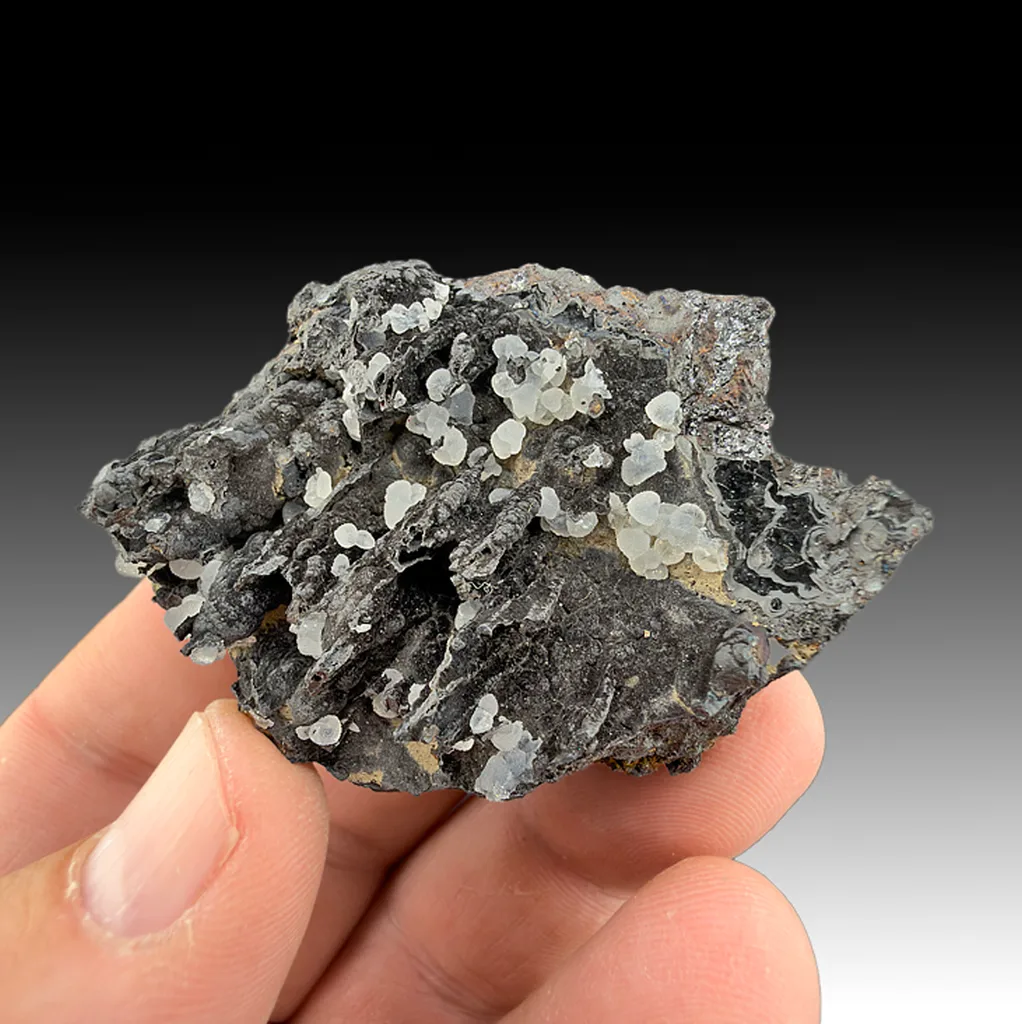
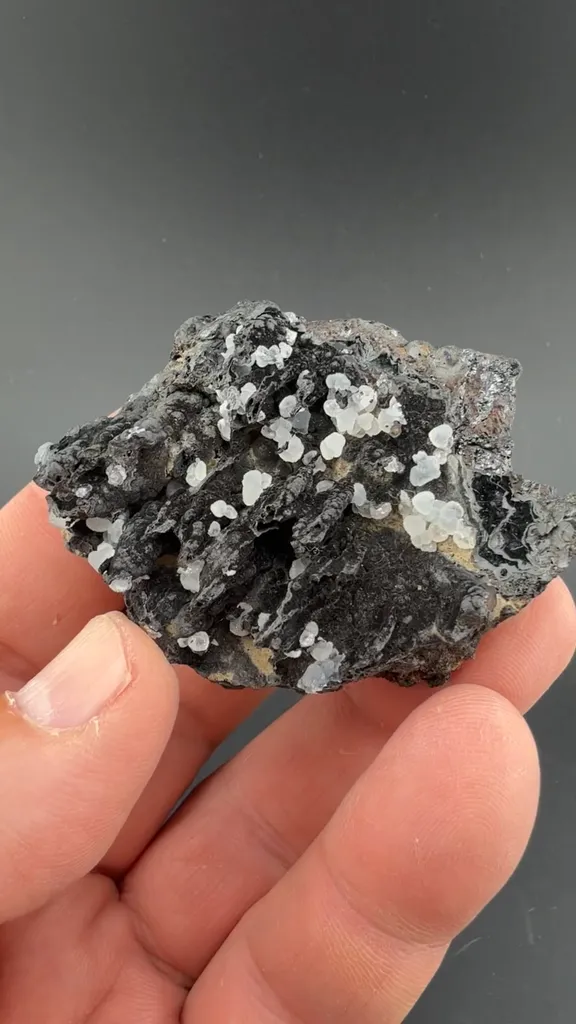
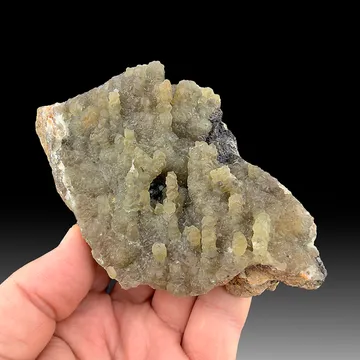
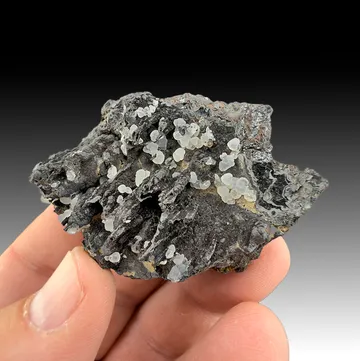
Colorless crystal groupings of translucent smithsonite to 0.3 cm in size across the stalactitic coronadite matrix. In good condition with minimal micro-damage present. Nice for this Australian classic.Broken Hill, located in far-western New South Wales, Australia, is home to one of the largest and most famous silver-lead-zinc ore deposits in the world. Geologically, the massive orebody formed approximately 1.7 billion years ago as a submarine sedimentary-exhalative deposit that was subsequently subjected to intense high-grade metamorphism and complex folding during the ancient Olarian Orogeny. Mineralogically, it is often called a mineralogical rainforest, boasting hundreds of distinct mineral species including major economic ores like galena and sphalerite alongside numerous rare secondary minerals. Historically, commercial mining began after a boundary rider named Charles Rasp staked a claim on the rugged outcrop in 1883, leading directly to the founding of the Broken Hill Proprietary Company, known today as BHP, and establishing a legendary mining community that has operated continuously for over a century.
Comments