


$320Median
168Sold (12 mo)
$1,100Last sale
 Ships from USA
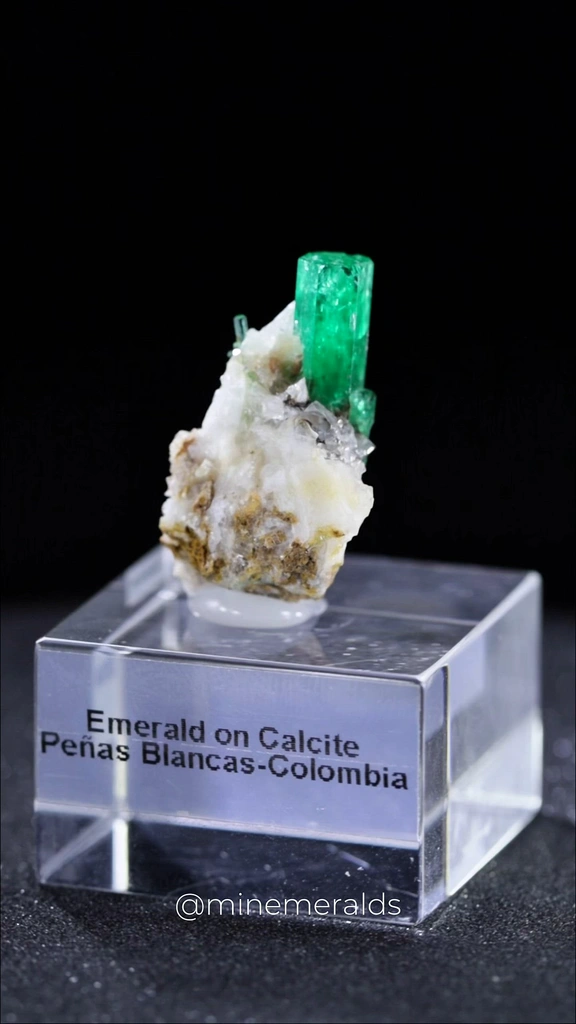
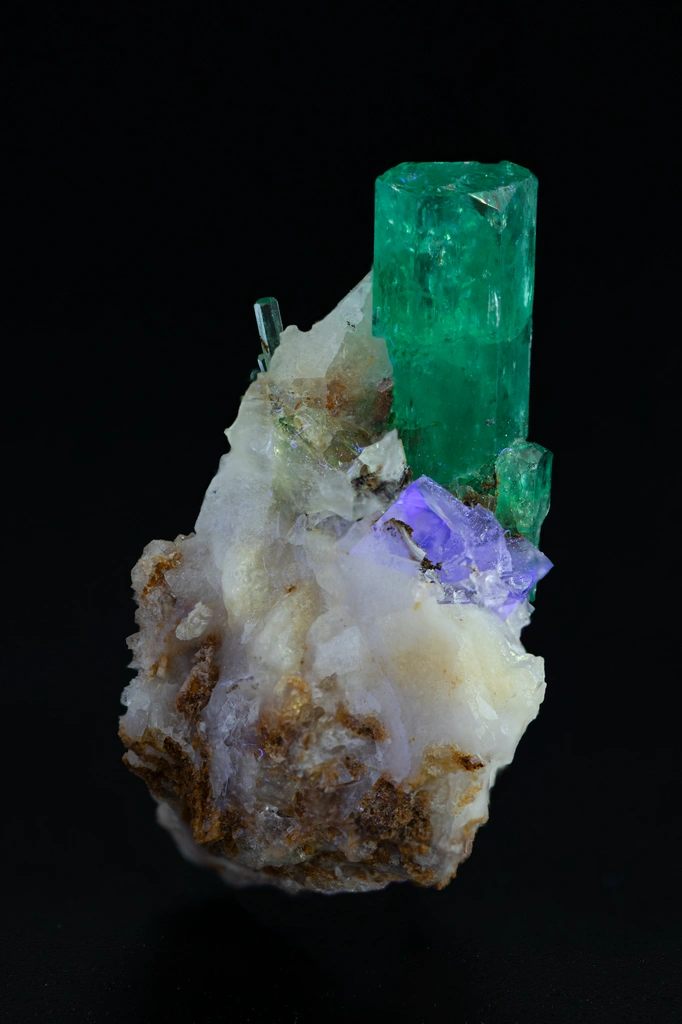
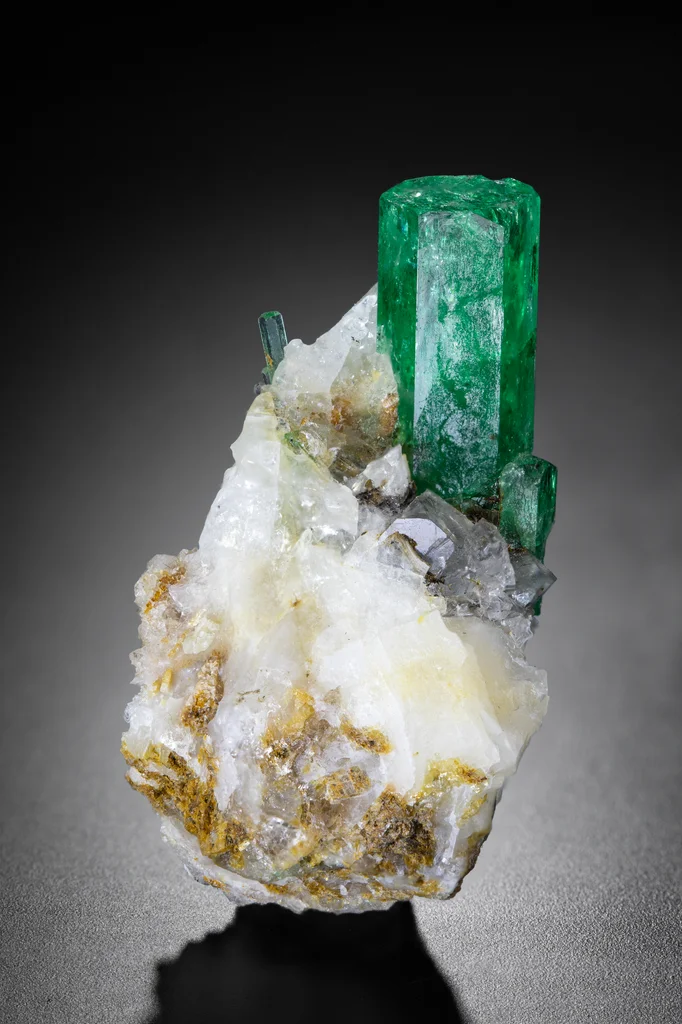
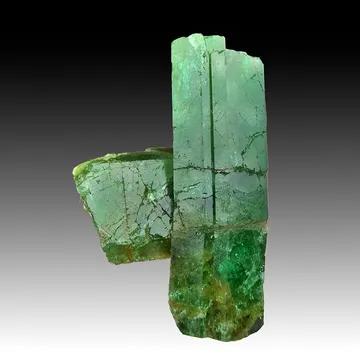
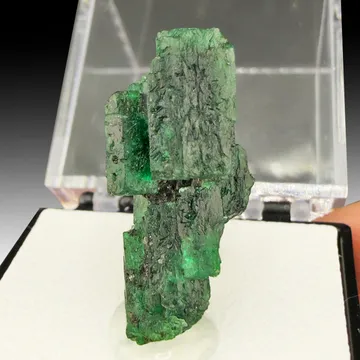
A well-developed emerald crystal with a hexagonal prismatic habit, prominently exposed on a calcite-rich matrix. The principal crystal is bounded by well-defined prism faces and terminates in a perfectly planar basal pinacoid {0001}. At the six points where the basal pinacoid meets the longitudinal prism edges, small triangular faces modify the termination, producing a distinctive sixfold outline.
A second, smaller emerald crystal occurs on the same matrix, adjacent to the principal crystal. It is strongly green and distinctly transparent, with an appearance consistent with gem-quality emerald.
The most distinctive feature of the specimen is a sharply formed cubic fluorite crystal situated directly at the base of the principal emerald prism. The fluorite exhibits well-developed cubic faces, sharp edges and a clearly preserved euhedral morphology, contrasting with the hexagonal symmetry of the emerald. In the accompanying photograph, the fluorite is illuminated by ultraviolet light and displays a violet fluorescence.
The crystals are set on a predominantly white to translucent calcite matrix. The association of emerald, calcite and fluorite is documented from the Colombian emerald deposits, and fluorite is particularly characteristic of the mineral assemblage at Peñas Blancas, where comparatively large fluorite crystals have been reported. The specimen is therefore notable not simply for the presence of fluorite, but for the exceptionally clear spatial association of a euhedral cubic fluorite crystal directly adjoining the base of a well-formed emerald crystal.
The specimen preserves a particularly well-defined basal termination of the principal emerald, together with a second gem-quality emerald crystal and a euhedral cubic fluorite crystal, all occurring in a calcite-rich assemblage characteristic of the Peñas Blancas emerald deposit.
minID: 1NK-4MP
Comments