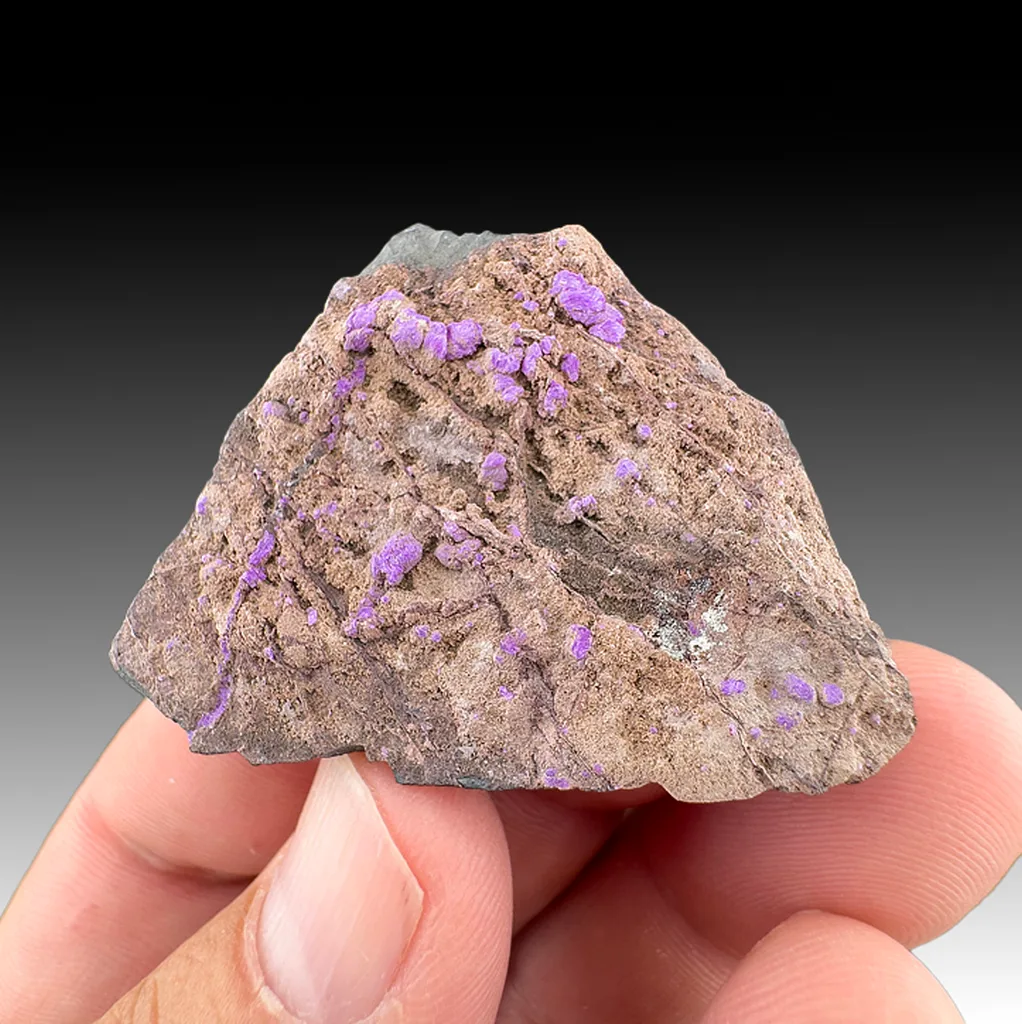
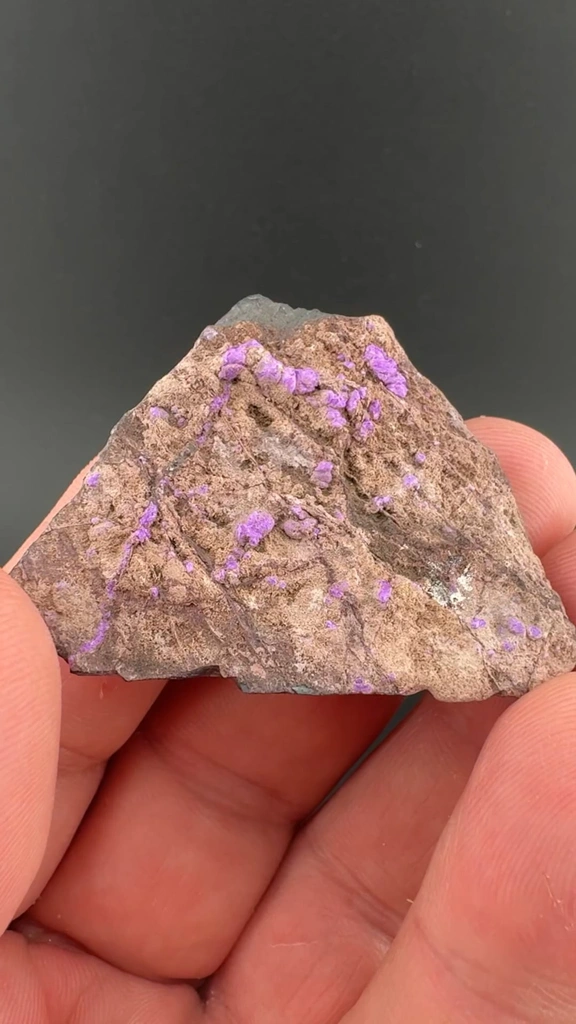
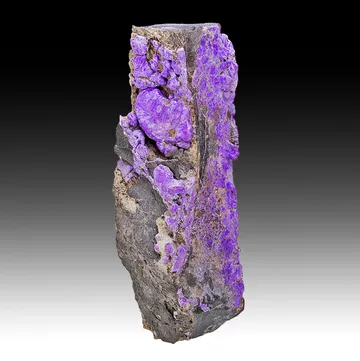
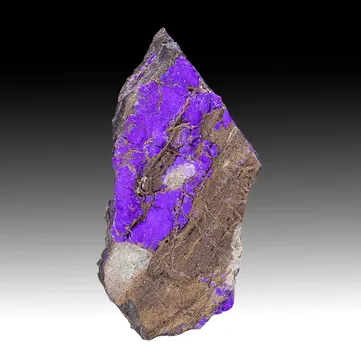
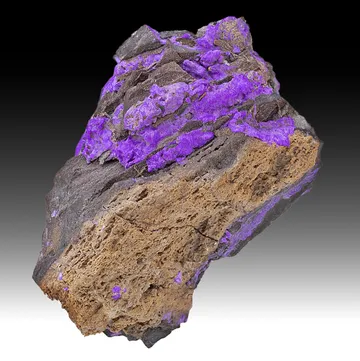
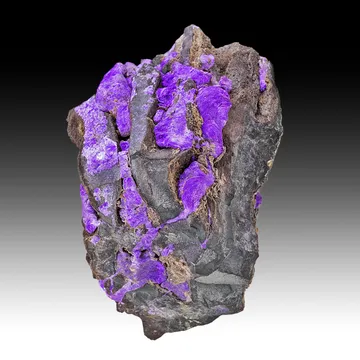
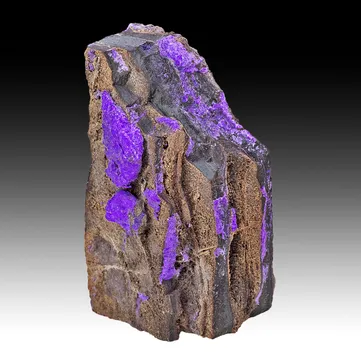
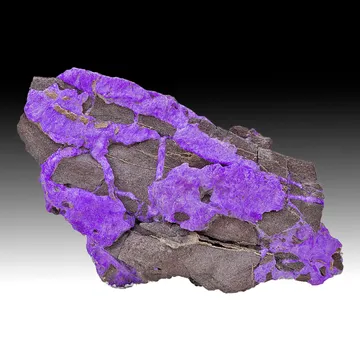
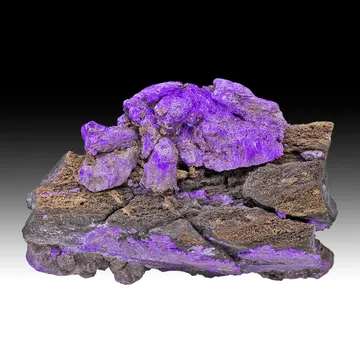
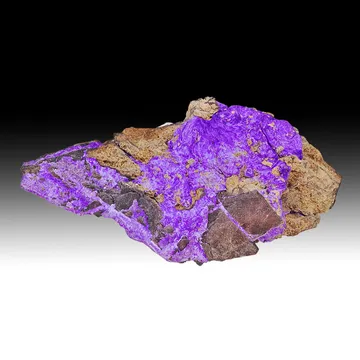
Purple crystallized sugilite across the top of matrix. In good condition and quite nice for the species.
The Wessels Mine, situated in the Kalahari Manganese Field of the Northern Cape province of South Africa, is a premier underground operation renowned for holding massive reserves of high-grade manganese ore. Brought into production by Samancor in the 1970s, the mine sits within the geologically ancient Transvaal Supergroup. Its significance to mineralogy stems from a pervasive hydrothermal alteration event, often called the Wessels event, where hot fluids leached primary carbonates and introduced exotic elements, creating an extraordinary variety of rare secondary silicate, hydroxide, and borate minerals.
Sugilite is a rare cyclosilicate mineral celebrated for its striking pink, violet, and deep purple colors, which are imparted by trace amounts of manganese. Originally discovered in Japan in the mid-twentieth century, it gained global renown when massive gem-quality deposits were uncovered at the Wessels Mine in South Africa. Crystallizing in the hexagonal system, sugilite typically forms dense, massive aggregates along fault zones and ore contacts, making it highly coveted by both advanced mineral collectors and lapidaries for high-end cabochons and fine jewelry.


 Ships from USA
Comments