$140Median
97Sold (12 mo)
$750Last sale
What are your “familiar strangers” in a collection? For me, one is epidote, a common secondary mineral in hydrothermal and metamorphic systems, uncommon in magmatic system, yet often overlooked in both research and collecting. But every mineral, no matter how ordinary, preserves a record of Earth’s processes, and the more you study them, the more captivating they become.
In hydrothermal systems, epidote is a common phase in porphyry and related skarns, often forming alongside copper and molybdenum mineralization. Many porphyry deposits contain epidote-bearing rocks that crystallized contemporaneously with Cu ore. Though rarely analyzed, epidote-hosted fluid inclusions can capture the physico-chemical evolution of hydrothermal fluids, offering insights into the formation of giant Cu porphyries. In magmatic contexts, Fe³⁺ readily substitutes into epidote’s structure, making it a useful proxy for estimating magma oxygen fugacity when Fe–Ti oxides and mafic phases are absent. Texture of partial resorption of magmatic epidote becomes very interesting when paired with tools like Al-in-hornblende barometry and elemental diffusion modeling, may help to constrain magma transport rates at pressures.
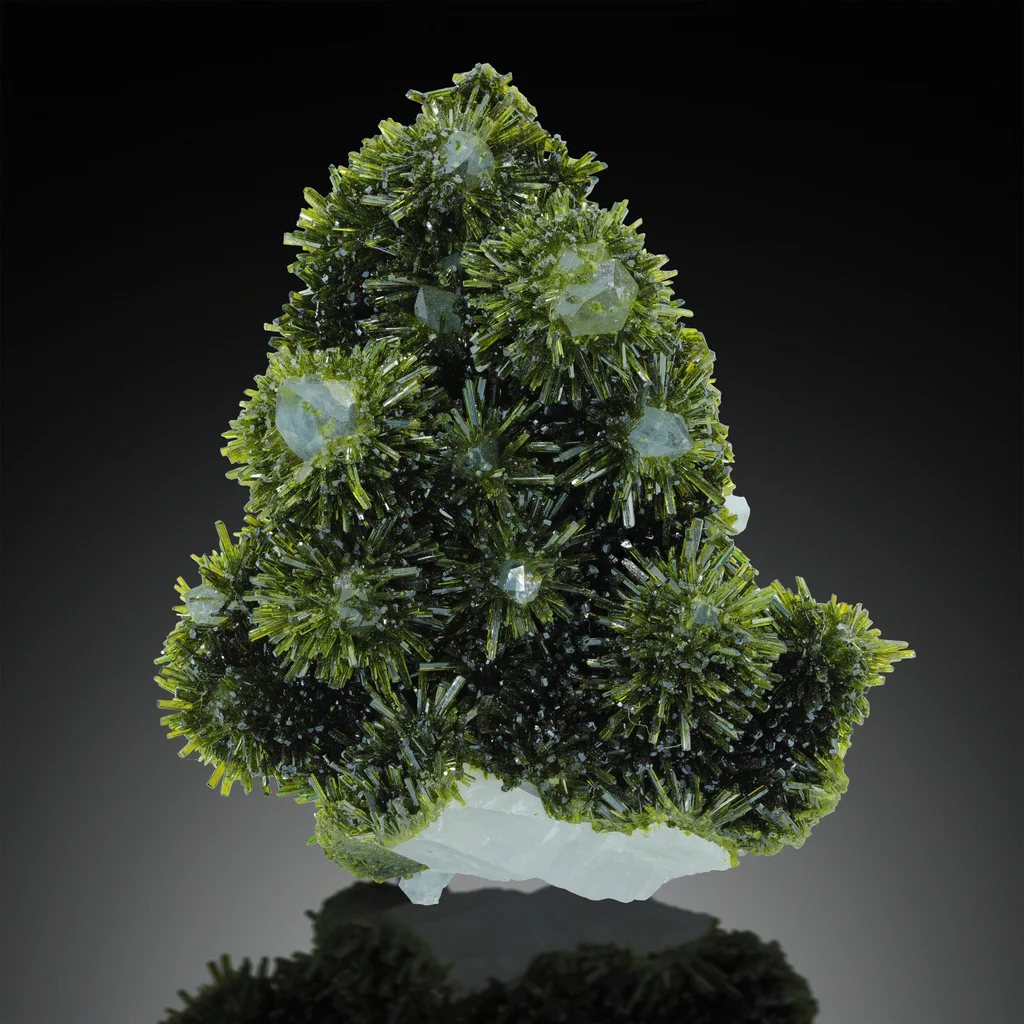
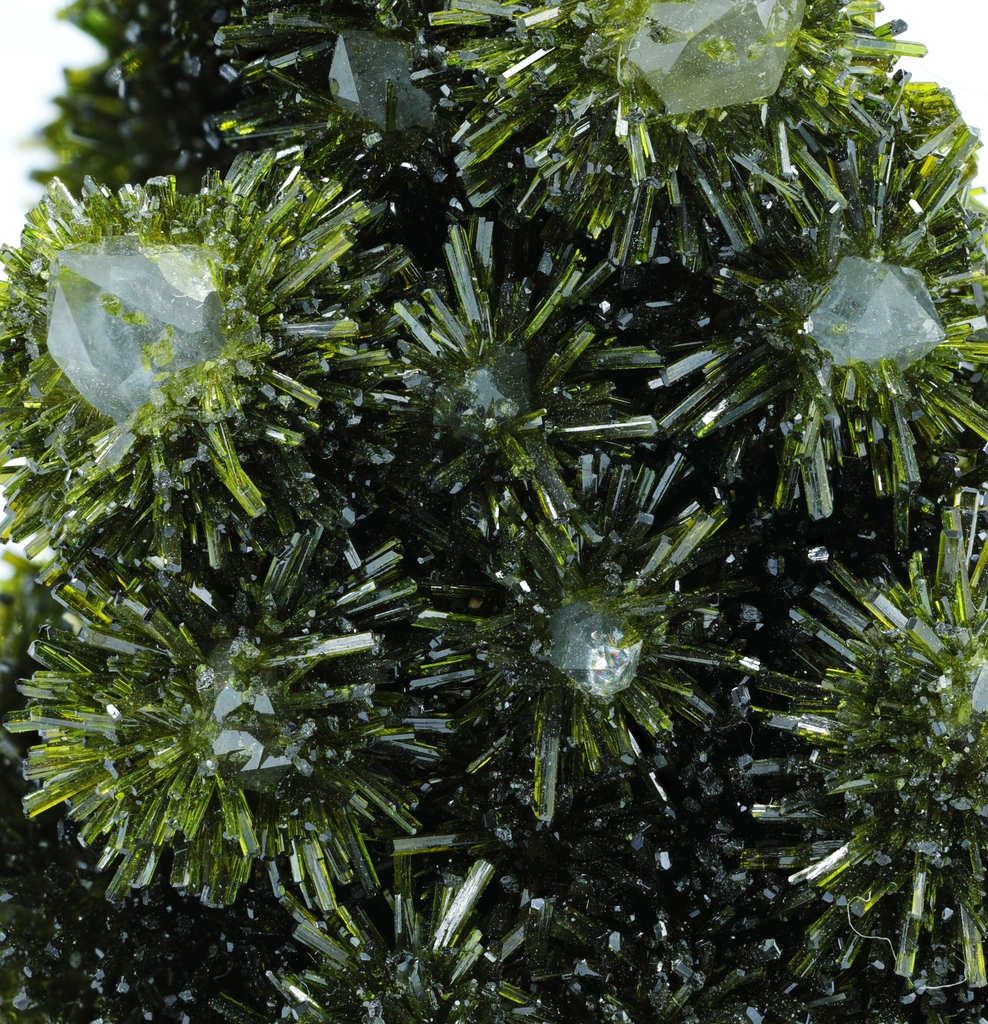
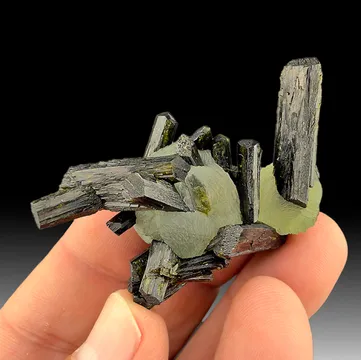
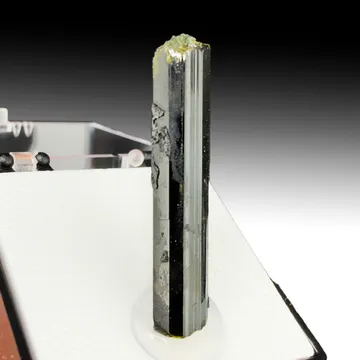
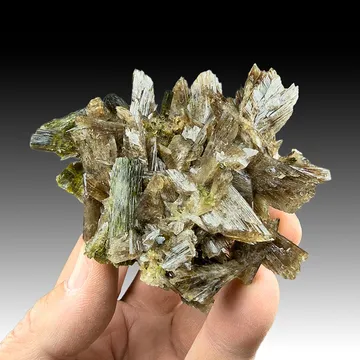
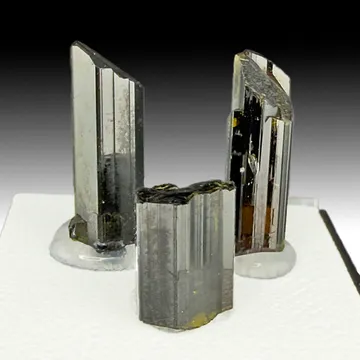
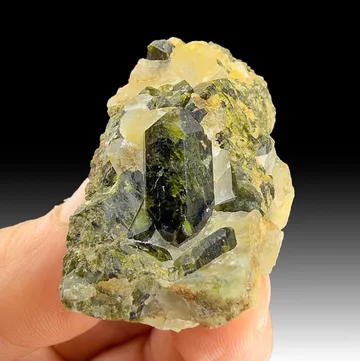
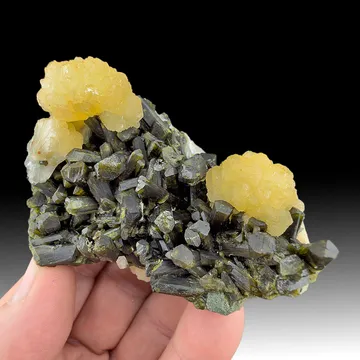
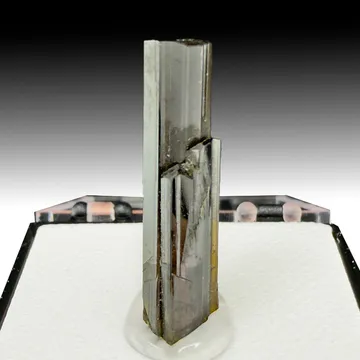
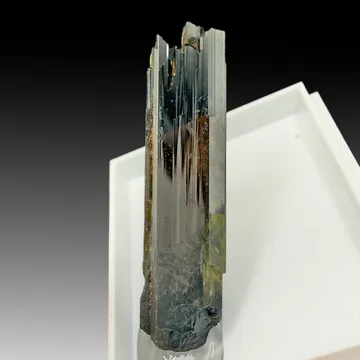
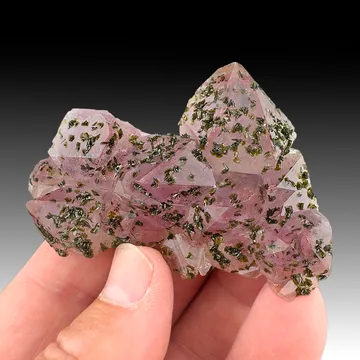
The specimen shown here, from a small 2020 find in Peru near a carbonated copper porphyry deposit. Gemmy, needle-like epidote crystals radiate among quartz. Their vibrant green contrasts well with the quartz matrix. The exposed terminations of the quartz suggest that epidote growth ceased just before the quartz was fully overgrown.
Epidote on Quartz, 4.2cm, La Gringa Mine, Chiurucu, Huallanca District, Bolognesi Province, Ancash, Peru
Jingnan (Tom) Zhang Coll & Photo
Comments