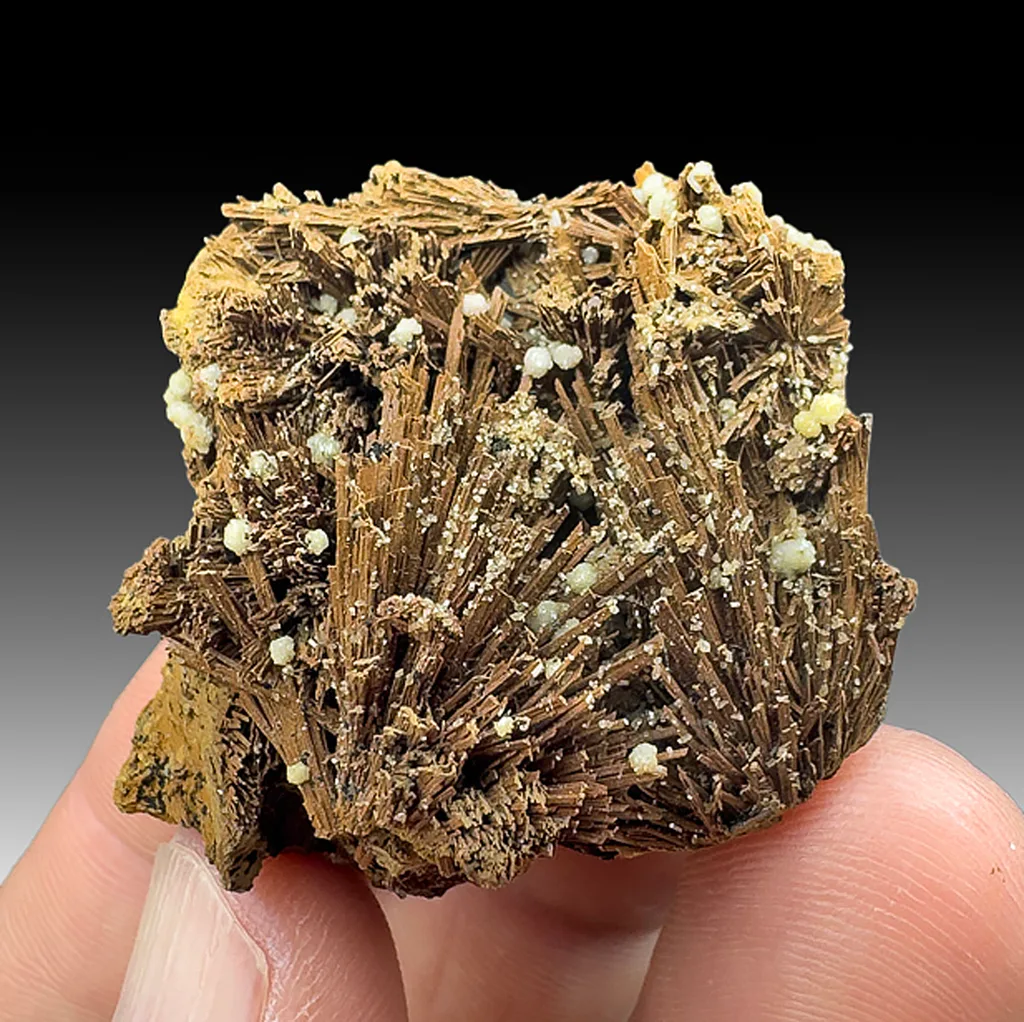
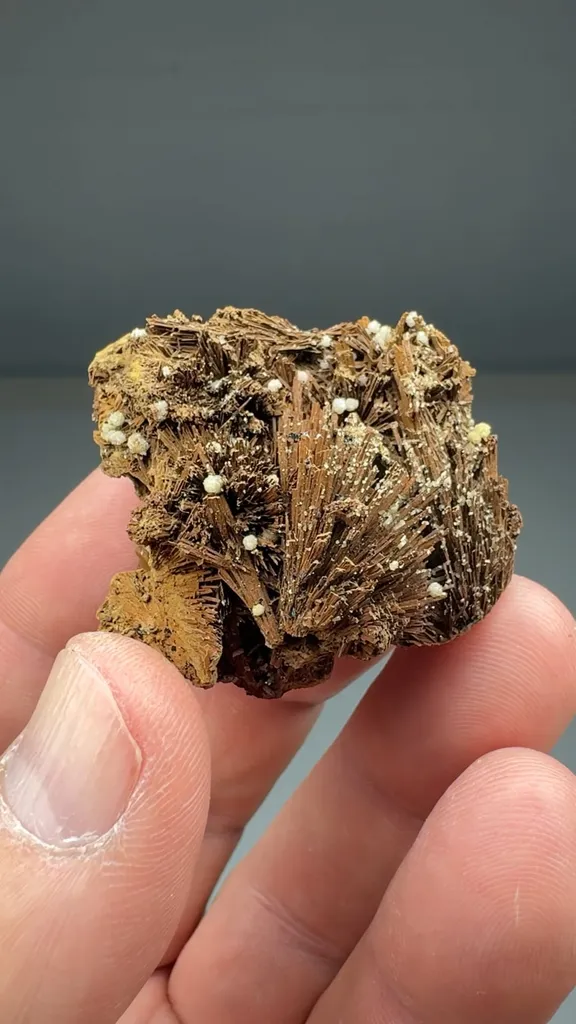
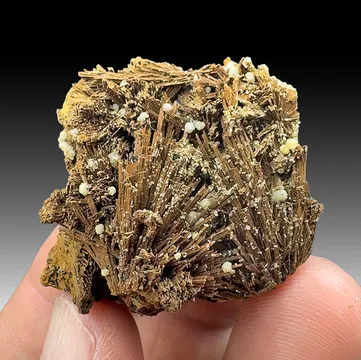
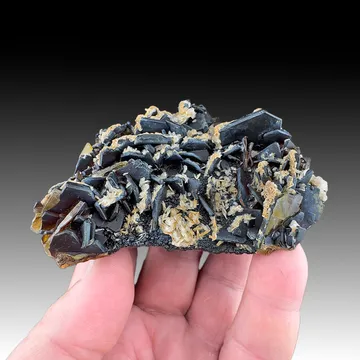
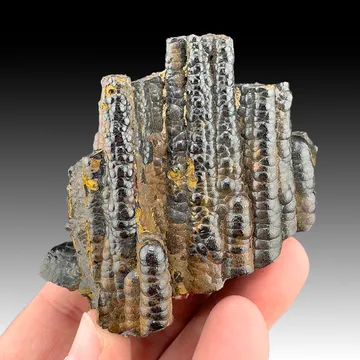
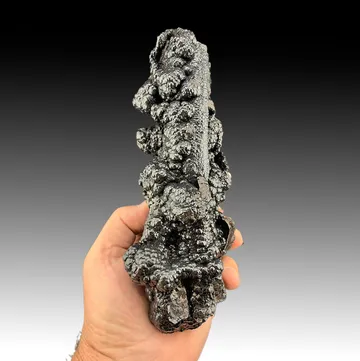
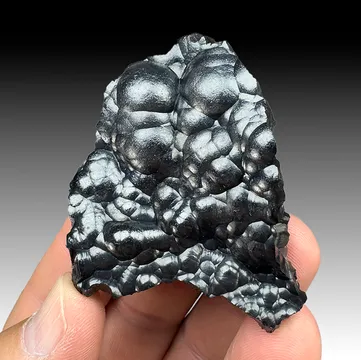
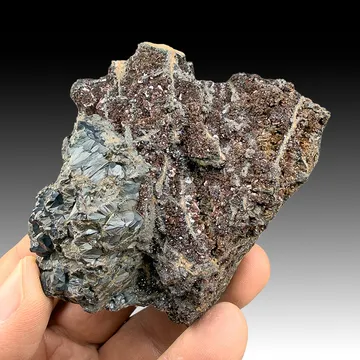
Crystal sprays of what were once kottigite, these now replaced by sparkling brown goethite.
The Ojuela mine, located near Mapimi in the state of Durango, Mexico, is a world-famous underground mining operation legendary for its spectacular karst-associated oxidation zone that has produced over one hundred and forty distinct mineral species, including magnificent collector specimens of adamite, legrandite, and hemimorphite. Geologically, the deposit is a premier example of a carbonate replacement system, where high-temperature polymetallic hydrothermal fluids associated with Tertiary-age igneous intrusions replaced thick Cretaceous-age Aurora Limestone beds along structural intersections, regional faults, and solution collapse breccias. Deep, prolonged supergene weathering subsequently oxidized the primary galena, sphalerite, and arsenopyrite ores down to a depth of over five hundred meters, creating an intricate network of mineral-lined caves and pockets rich in secondary lead, zinc, copper, and arsenic compounds. Historically, Spanish explorers discovered the rich outcroppings in 1598, initiating centuries of intermittent silver, gold, and lead mining that culminated in large-scale corporate industrialization under the Compania Minera de Penoles starting in 1888. Penoles constructed a massive underground complex involving over one hundred miles of tunnels and erected the historic, three hundred-meter-long Puente de Ojuela suspension bridge in 1892 to transport ore across a deep canyon to the Mapimi smelter. Regular corporate underground extraction for industrial base metals operated continuously until rising water levels and ore depletion forced the cessation of large-scale corporate operations in 1932, after which the mine was turned over to local miner cooperatives (mineritos) who continue selective manual mining to extract pristine crystal specimens for the global collector market through 2026.
A mineral pseudomorph occurs when a mineral undergoes a chemical alteration or complete replacement process where its internal composition changes but its original external crystal morphology is perfectly preserved. Geologically, this phenomenon typically happens when a primary mineral becomes chemically unstable due to changes in environmental factors like temperature, pressure, fluid chemistry, or exposure to oxygen-rich meteoric water. In the specific case of goethite after kottigite, the primary zinc arsenate hydrate mineral, kottigite, is subjected to intensive weathering and oxidizing conditions. Over time, circulating meteoric fluids leach away the zinc and arsenic ions while introducing iron, gradually precipitating the iron oxide-hydroxide mineral, goethite, directly into the spatial framework of the dissolving host crystal. Historically, these specific alterations are well-documented in the oxidized supergene zones of polymetallic ore deposits, where the resulting specimens display the distinct bladed, radiating, or prismatic habits characteristic of original kottigite crystals, but are entirely composed of earthy or submetallic goethite.
Comments