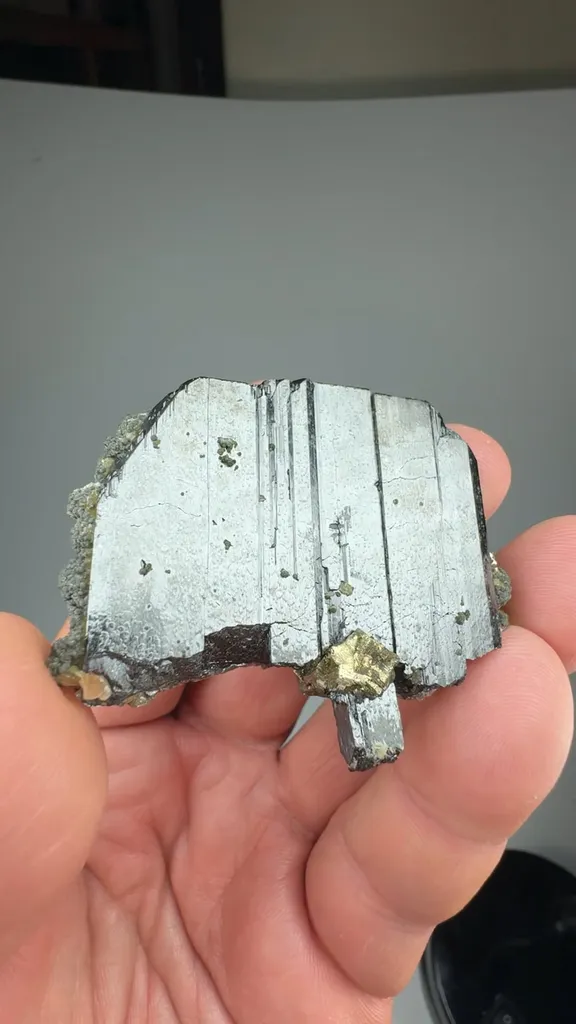
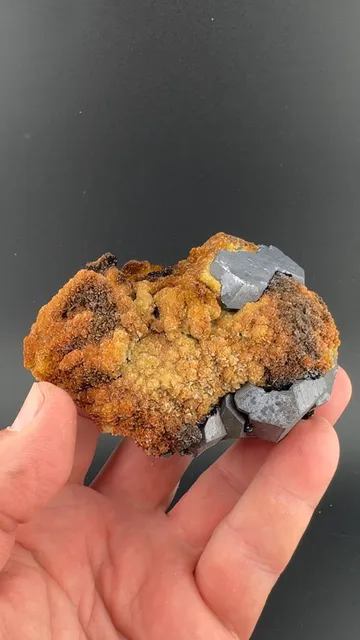
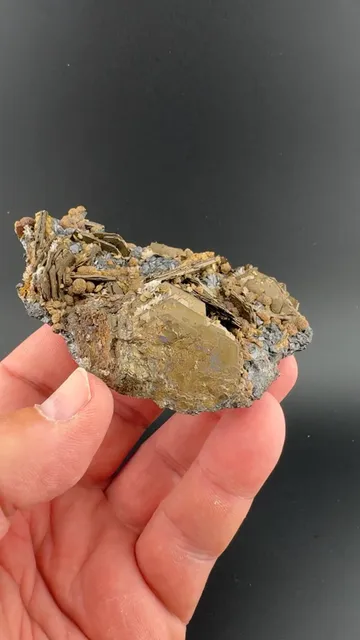
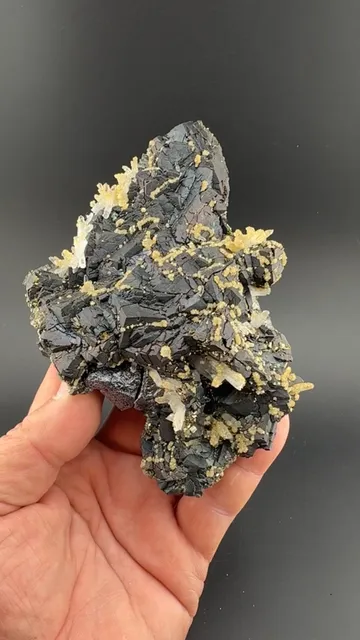
A grouping of lustrous metallic black ferberite crystals, these hosting siderite and of muscovite. A sharply formed crystal grouping that is in very good condition. Classic for this locality and species.The Panasqueira Mines, located in the Castelo Branco district of central Portugal, represent one of the largest and most significant wolframite-vein deposits in the world. Geologically, the site consists of a vast system of near-horizontal hydrothermal quartz veins hosted within the Beira Schist complex, which were fractured and mineralized by the underlying Panasqueira granite intrusion during the Hercynian orogeny. The mines are a premier locality for ferberite, the iron-rich endmember of the wolframite series, which occurs as large, lustrous, jet-black tabular crystals often associated with arsenopyrite, siderite, and apatite. Historically, mining and quarrying at Panasqueira began in the late 1880s following the discovery of tungsten-bearing ore, with formal operations commencing around 1896. The mines reached international prominence during the mid-20th century, particularly during World War II, when they served as a vital source of tungsten for the European industrial market. Unlike many other historic districts, Panasqueira has maintained nearly continuous production for over 125 years and remains an active, world-class producer of high-grade tungsten concentrates and museum-quality mineral specimens through 2026.



 Ships from USA



Comments