$350Median
1Sold (12 mo)
$350Last sale
Recent salesSee more
2 in the gallery
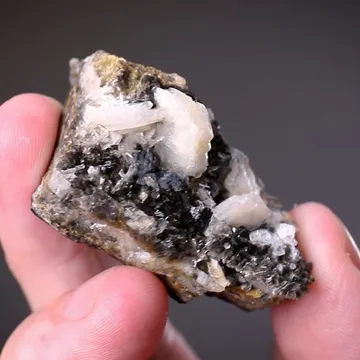
Whitlockite is a phosphate mineral that belongs to the apatite supergroup, typically forming as transparent to pale-colored prismatic crystals with a vitreous lustre. It occurs in environments where phosphate-rich fluids crystallize under low to moderate temperature conditions, and it can display a range of hues from colorless to pale brown depending on impurities. Crystallization habit is often granular to acicular, with well-formed crystals reported from several notable phosphate-bearing localities. In prominent collections, Whitlockite crystals are valued for their compact, blocky habits and its association with other phosphates and apatite group minerals.
Collectors prize Whitlockite for its rarity and its context within phosphate mineral assemblages. Notable specimens come from Canada and the USA, where high-quality crystals have been recovered from igneous and hydrothermal environments. Its relative rarity adds to the appeal for cabinets seeking a distinct member of the apatite family, especially when crystals exhibit good termination faces or pleasing lustre. As with other minerals in this group, Whitlockite offers a window into phosphate mineralization processes and the diversity of the apatite supergroup, making it a thoughtful addition to serious mineral collections.