Uranocircite
14 in the gallery
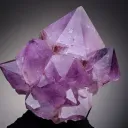
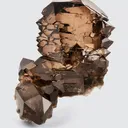
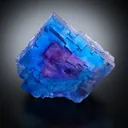
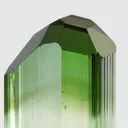
Uranocircite is a uranium- and barium-containing phosphate mineral that crystallizes as colorless to yellow to orange prismatic crystals often with a vitreous to resinous lustre. It typically forms in hydrothermal and pegmatitic environments, commonly displaying transparent to translucent grains or well-formed crystals that can be isolated or clustered.
- Formula
- Ba(UO2)2(PO4)2 · 10H2O
- Rarity
- Rare
- Stability
- Moderately Stable
- Collector interest
- High Interest
- Classification notes
- Phosphate; uranyl phosphate, autunite group
Key characteristics
- Crystal system
- tetragonal
- Mohs hardness
- 2–2.5
- Specific gravity
- 3.45–3.46
- Luster
- vitreous, pearly
- Transparency
- transparent, translucent
- Color
- yellow, green
- Streak
- yellow
- Cleavage
- perfect
- Fracture
- uneven
- Crystal habit
- tabular, druzy, granular, massive
- Fluorescent: green
- Radioactive
- Classic / historic
Where Uranocircite is found
Top localities
- Streuberg Quarry5 specimens
- Bergen1 specimen
- Panasqueira Mines1 specimen
- São Pedro claim1 specimen
About Uranocircite
Notable specimens come from Brazil, Germany, and Portugal, where uranium-bearing granitic and pegmatitic rocks have produced well-crystallized aggregates. The mineral’s orange-yellow color and translucent to transparent appearance make it distinctive among uranium phosphates, and its association with alteration halos and secondary phosphates adds to its collectability. Uranocircite is sought after for its rare occurrence and the historical context of its localities, as well as its suitability for display due to its size and luster. Collectors value pieces that show sharp faces and clean terminations, especially when coupled with contrasting matrix material.